.png)
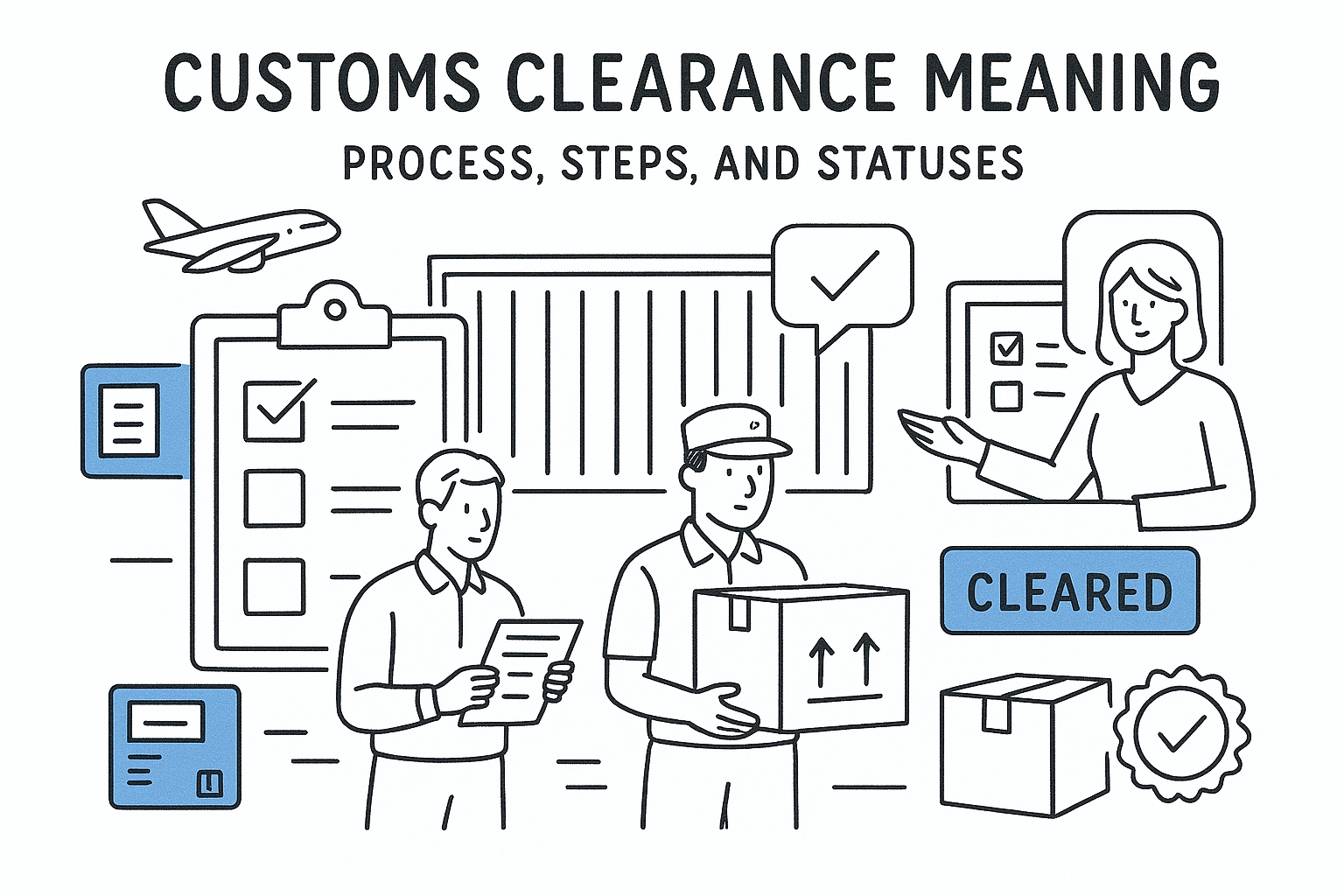
Every shipment crossing an international border must pass through a regulatory checkpoint before reaching its destination. This checkpoint is customs clearance, a legal process that determines whether goods can enter or leave a country. Understanding the customs clearance meaning is essential for anyone involved in air cargo operations, from freight forwarders arranging urgent charters to supply chain managers tracking high-value shipments.
When you see a shipment status showing "customs clearance in progress" or "awaiting customs clearance," you need to know exactly what's happening and why. Delays at this stage can disrupt carefully planned logistics, add unexpected costs, and damage client relationships. For time-sensitive air cargo, where every hour counts, a solid grasp of the customs process becomes even more critical.
At CharterSync, we help logistics professionals arrange air cargo charters with speed and transparency. While our platform handles aircraft matching, loadability analysis, and real-time tracking, customs clearance remains a key milestone in every shipment's journey. This article explains what customs clearance actually means, walks you through each step of the process, and clarifies the status updates you'll encounter along the way.
Customs clearance determines whether your shipment complies with import and export regulations in every country it touches. Without proper clearance, your cargo sits in a bonded warehouse or holding area, unable to proceed to its final destination. This regulatory checkpoint protects national security, enforces trade agreements, and ensures governments collect the correct duties and taxes on goods crossing their borders.
Every country maintains sovereign control over what enters and exits its territory. Customs authorities verify that your shipment contains only declared goods, meets safety standards, and complies with trade restrictions. You face legal penalties, fines, and potential criminal charges if you attempt to bypass this process or submit false documentation.
Understanding the customs clearance meaning also protects your business reputation. Repeated clearance failures or documentation errors can trigger enhanced scrutiny for future shipments, leading to longer inspection times and higher costs. Your shipment could be seized entirely if authorities discover prohibited items, counterfeit goods, or materials that violate international sanctions.
Customs violations don't just delay one shipment; they can compromise your entire shipping history and trigger audits of past transactions.
Customs clearance directly affects your bottom line through duties, value-added tax (VAT), and processing fees. Incorrect classification codes or valuation errors can result in overpayment, while underdeclaration triggers penalties that far exceed the original duty amount. You need accurate customs processes to forecast costs and maintain competitive pricing for clients.
Delays at customs create hidden expenses that compound quickly. Storage fees accumulate for every day your cargo sits in a bonded warehouse. Demurrage charges apply when containers exceed their free time allowance. For air cargo charters arranged through platforms like CharterSync, these delays can neutralise the speed advantage that justified the higher cost of air freight in the first place.
Air freight exists because speed matters. You choose air cargo for urgent manufacturing components, perishable goods, or time-sensitive project deliveries. Customs delays undermine this entire value proposition, turning an express shipment into a liability. Your client expects delivery within hours or days, not weeks spent resolving clearance issues.
The financial stakes increase dramatically when delays affect production schedules or contractual commitments. A £50,000 charter becomes a poor investment if customs holds turn a 72-hour delivery window into a week-long saga. You lose client trust, face penalty clauses, and potentially watch competitors capture the business you couldn't deliver.
Proper customs preparation determines whether your high-value charter achieves its purpose or becomes an expensive lesson. When you arrange aircraft through CharterSync's platform, the technical feasibility and loadability analysis happen within minutes. Customs clearance, however, requires advance planning, accurate documentation, and understanding of each jurisdiction's specific requirements. This preparation separates successful air cargo operations from costly failures that erode your professional credibility and client relationships.
The customs clearance process follows a structured sequence that begins before your cargo arrives and concludes with official release for delivery. Each stage involves specific documentation, inspections, and approvals that determine whether your shipment proceeds or faces delays. Understanding this workflow helps you anticipate requirements and prepare accurate submissions that keep your cargo moving.
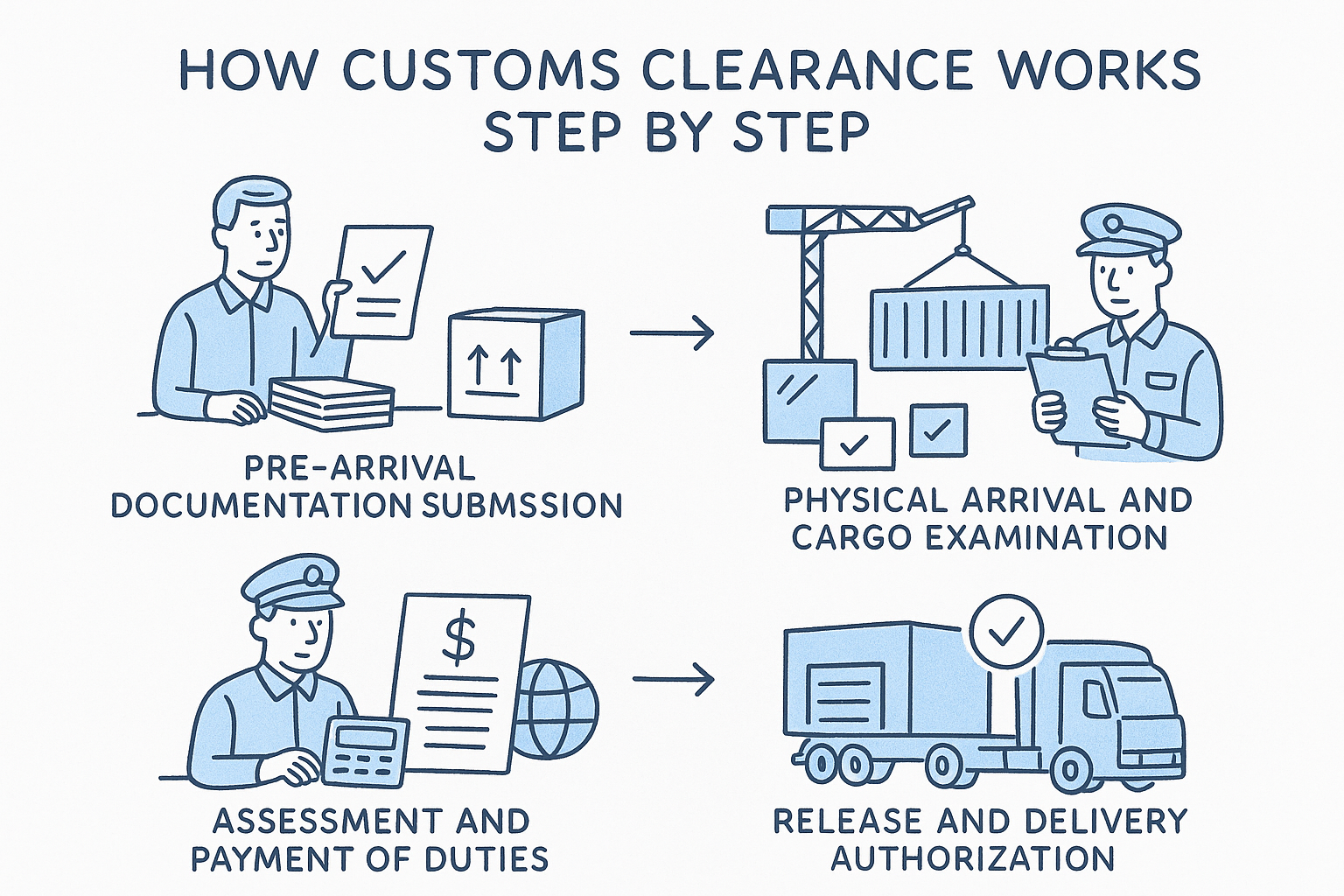
You must submit your customs declaration before your cargo arrives at the destination airport or border crossing. This advance notification includes the commercial invoice, packing list, and transport documents that describe your shipment's contents, value, and origin. Customs authorities use this information to assess risk levels and determine whether your cargo requires physical inspection.
Electronic submission through customs systems allows authorities to review your declaration while your aircraft is still in transit. You gain faster clearance when officials can complete preliminary checks before your cargo touches the ground. This pre-clearance capability becomes particularly valuable for air charters where every hour of delay carries significant cost implications.
Your cargo enters a bonded area upon arrival, where it remains under customs control until cleared. Authorities decide whether to conduct a physical inspection based on your shipment's risk profile, commodity type, and your compliance history. High-risk categories or random selection protocols trigger detailed examinations that verify your declarations match the actual contents.
Inspections can range from document reviews to complete unpacking and product testing. You face delays if customs discovers discrepancies between your paperwork and physical cargo, as authorities investigate potential fraud, safety violations, or prohibited goods.
Physical examinations add hours or days to clearance times, making accurate initial declarations critical for time-sensitive air freight.
Customs calculates applicable duties and VAT based on your cargo's classification, declared value, and country of origin. You receive an official assessment that itemizes these charges, which you must pay before release. Payment methods vary by jurisdiction, ranging from electronic transfers to guaranteed bonds for established importers.
Authorities issue a release notification once you've paid all duties and met regulatory requirements. This authorization allows your cargo to exit the bonded area and proceed to final delivery. Your freight forwarder or customs broker receives electronic confirmation, enabling them to arrange onward transport to your specified destination. The entire process, from submission to release, determines the actual customs clearance meaning in practical terms: official permission for your goods to enter commercial circulation.
Customs authorities examine specific documents and electronic data to verify your shipment's legality, value, and compliance with import regulations. This verification process forms the backbone of the customs clearance meaning in practical operations. You must provide accurate, complete information across multiple document types, as any discrepancies trigger detailed investigations that halt your cargo's progress. Understanding which documents customs requires and how officials scrutinize them helps you prepare error-free submissions that accelerate clearance times.
Your customs declaration package must include the commercial invoice, which details the transaction value, payment terms, and buyer-seller relationship. Customs uses this document to calculate duties and verify that your declared value matches standard market prices. You also need a detailed packing list that specifies quantities, weights, dimensions, and packaging types for every item in your shipment.
Additional documents depend on your cargo type and destination regulations:
Missing documents or incomplete data fields stop your clearance process immediately. Customs officers cannot assess duties or approve entry without the information these documents provide.
Incomplete documentation accounts for the majority of preventable customs delays, turning routine clearances into multi-day investigations.
Modern customs systems require electronic submission through platforms like the UK's Customs Declaration Service or equivalent systems in other jurisdictions. You transmit detailed cargo information including HS codes, country of origin, and transaction values directly to customs databases before your aircraft lands. This advance notice allows authorities to assess risk profiles and select shipments for physical inspection.
Accurate electronic filing determines whether your cargo receives immediate release or faces examination. Systems automatically flag inconsistencies between your submitted data and historical patterns, triggering alerts that result in manual reviews. You must ensure your electronic declarations match your physical documents exactly, as customs officers cross-reference both sources during verification checks.
Financial charges form a critical component of the customs clearance meaning, determining the total cost of bringing goods into a country. You encounter three main categories of charges: import duties based on tariff codes, value-added tax (VAT) calculated on the total landed value, and specific fees for particular commodities or services. Understanding how customs calculates these amounts and who bears legal responsibility for payment prevents unexpected costs that can destroy your profit margins on international shipments.
Every product you import receives a Harmonised System (HS) code, a standardised six-digit classification that identifies the commodity type. Customs authorities use this code to determine the applicable duty rate, which varies dramatically between product categories. You must classify goods correctly, as a simple error can result in overpaying duties or triggering penalties for underdeclaration.
Your HS code selection directly affects the duty percentage applied to your shipment's declared value. Electronics might carry a 0% duty rate under certain trade agreements, while textiles face charges of 12% or higher. Misclassification doesn't just cost money; it creates compliance records that flag your future shipments for enhanced scrutiny and physical inspections.
A single-digit error in your HS code can shift your duty rate from zero to double figures, transforming a profitable shipment into a financial loss.
Customs calculates VAT based on the total landed cost, which includes the product value, freight charges, insurance, and any import duties already assessed. You cannot avoid VAT by undervaluing goods, as authorities compare your declared amounts against market intelligence databases that track typical product prices. Standard UK VAT applies at 20% of this total landed value, though reduced rates exist for specific categories.
The importer of record bears legal responsibility for all customs charges, regardless of shipping terms. You assume this liability when you arrange imports, even if your supplier agreed to cover costs under the original contract. Customs authorities enforce payment through cargo holds, financial guarantees, or legal action against the importer. Your shipping terms (Incoterms) determine whether you or your supplier manages payment logistics, but you remain ultimately accountable to customs for settling all assessed charges.
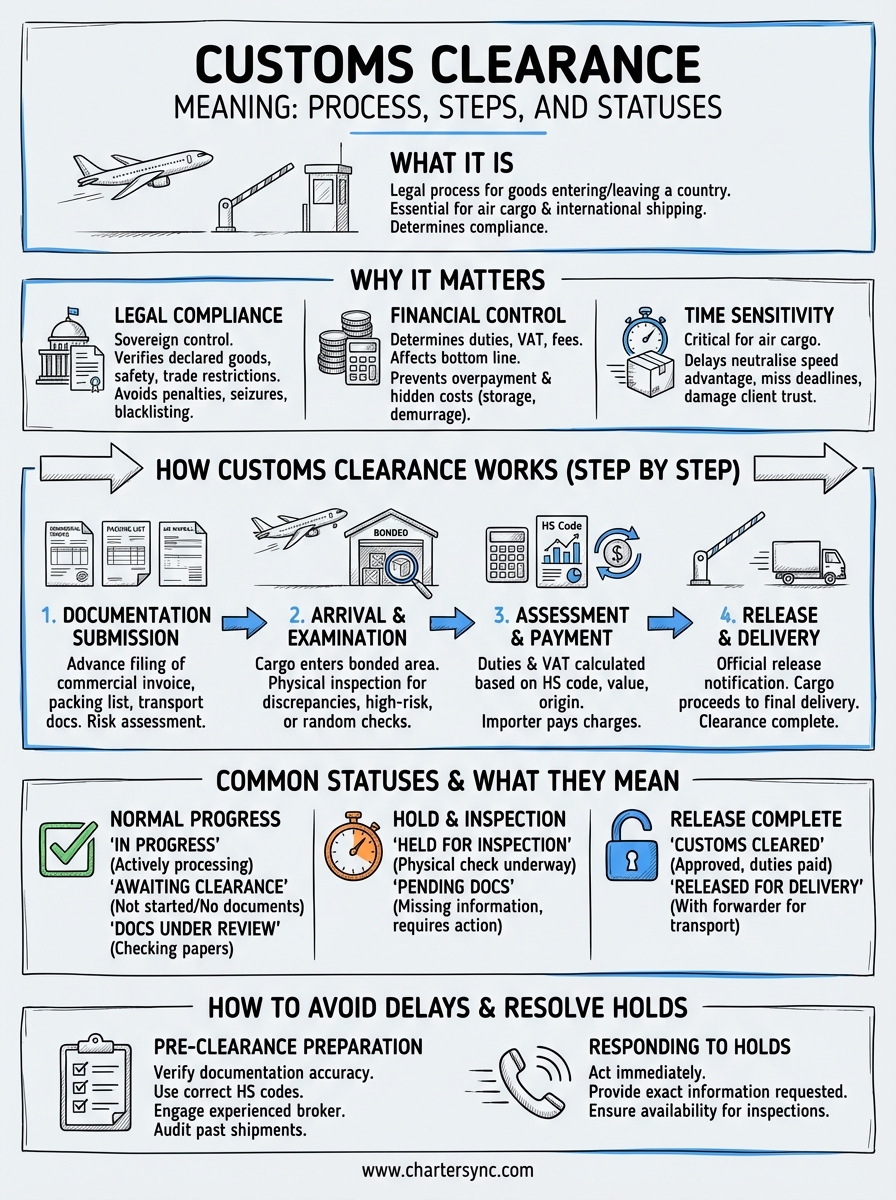
Your tracking system displays status updates that reflect your shipment's position within the customs clearance process. These notifications provide critical intelligence about whether your cargo progresses normally or requires intervention. Understanding what each status actually means allows you to anticipate next steps, communicate accurate timelines to clients, and identify problems before they escalate into serious delays. The customs clearance meaning becomes tangible through these status codes, translating bureaucratic processes into actionable information.

You see "Customs clearance in progress" when authorities actively process your declaration and supporting documents. This status confirms your submission reached customs systems and officials assigned your shipment for review. Your cargo remains in the bonded area during this phase, which typically lasts several hours to two days depending on the destination's processing capacity.
"Awaiting customs clearance" appears when your shipment arrived but documentation hasn't been submitted or customs hasn't started processing yet. This status signals you need to verify your broker filed all required paperwork. "Documentation under review" indicates customs officers examine your commercial invoices, certificates, and compliance records to verify accuracy and completeness.
Your status changes to "Held for inspection" when customs selects your cargo for physical examination. This notification doesn't necessarily indicate problems; authorities conduct random checks and target specific commodity types based on risk assessment protocols. You should expect delays of one to three days while officers verify contents match your declarations.
"Pending additional documentation" means customs identified missing certificates, incorrect HS codes, or insufficient proof of origin. You must provide the requested information immediately to restart the clearance process. Every hour you delay submission extends your cargo's hold time.
Customs holds generate storage fees and demurrage charges that accumulate daily, making rapid response to documentation requests financially critical.
"Customs cleared" confirms authorities approved your shipment for entry and you paid all assessed duties and VAT. Your cargo can now exit the bonded warehouse and proceed to final delivery. You receive this status once all regulatory requirements are satisfied and financial obligations settled. "Released for delivery" indicates your freight forwarder gained physical possession and your shipment enters the final transport phase to its destination address.
Preventing customs delays requires proactive preparation rather than reactive problem-solving. You control most factors that cause clearance issues by submitting accurate documentation, classifying goods correctly, and maintaining compliance records that demonstrate reliability. Understanding the customs clearance meaning in operational terms means recognising that your actions before submission determine whether your cargo clears smoothly or triggers investigations that add days to your timeline.
You eliminate the majority of delays by verifying documentation accuracy before your aircraft lands. Double-check that your commercial invoice matches your packing list exactly, with consistent quantities, descriptions, and values across all documents. Confirm your HS codes apply to the specific products you're shipping, not general categories that might seem similar.
Your broker or customs agent should review submissions for completeness before filing. Experienced professionals identify missing certificates, incorrect origin statements, or valuation errors that customs officers will flag immediately. You save substantial time by catching these issues during preparation rather than discovering them after your cargo enters the bonded warehouse.
Investing thirty minutes in documentation review before submission prevents multi-day delays from correcting errors after customs identifies problems.
Authorities issue hold notifications when they require additional information or identify discrepancies in your submission. You must respond immediately with the requested documentation, clarifications, or corrections. Check the specific reason for the hold, as generic responses waste time and fail to address the actual concern customs raised.
Contact your broker or appointed representative as soon as you receive hold notifications. They access detailed notes from customs officers that explain exactly what information authorities need. Provide complete responses rather than partial answers, as incomplete submissions restart the review process and extend your delay further.
Physical inspections require your presence or representative authorisation to proceed. Ensure someone with authority to answer questions and access detailed product specifications can attend examinations. You accelerate resolution by having technical documentation, safety certificates, or compliance records readily available during inspections. Customs officers release cargo faster when you demonstrate immediate cooperation and provide comprehensive information that addresses their regulatory concerns without requiring follow-up requests.
You now understand the customs clearance meaning and the specific steps involved in moving cargo across international borders. Apply this knowledge by reviewing your current documentation processes, verifying HS code accuracy, and establishing relationships with experienced customs brokers who can expedite clearance for time-sensitive shipments.
Start by auditing your most recent shipments to identify patterns in delays or holds. Document which commodity types face regular inspections and which suppliers consistently provide complete documentation. This historical analysis reveals where you need to strengthen processes before your next urgent charter.
When you arrange air cargo charters for high-value or time-critical shipments, customs preparation becomes as important as aircraft selection. CharterSync's platform handles the technical aspects of matching cargo to suitable aircraft, providing loadability analysis and real-time tracking, but successful clearance depends on the documentation quality you submit before your cargo arrives. Combine accurate customs preparation with efficient charter booking to deliver the speed and reliability your clients expect from air freight operations.

.png)