.png)
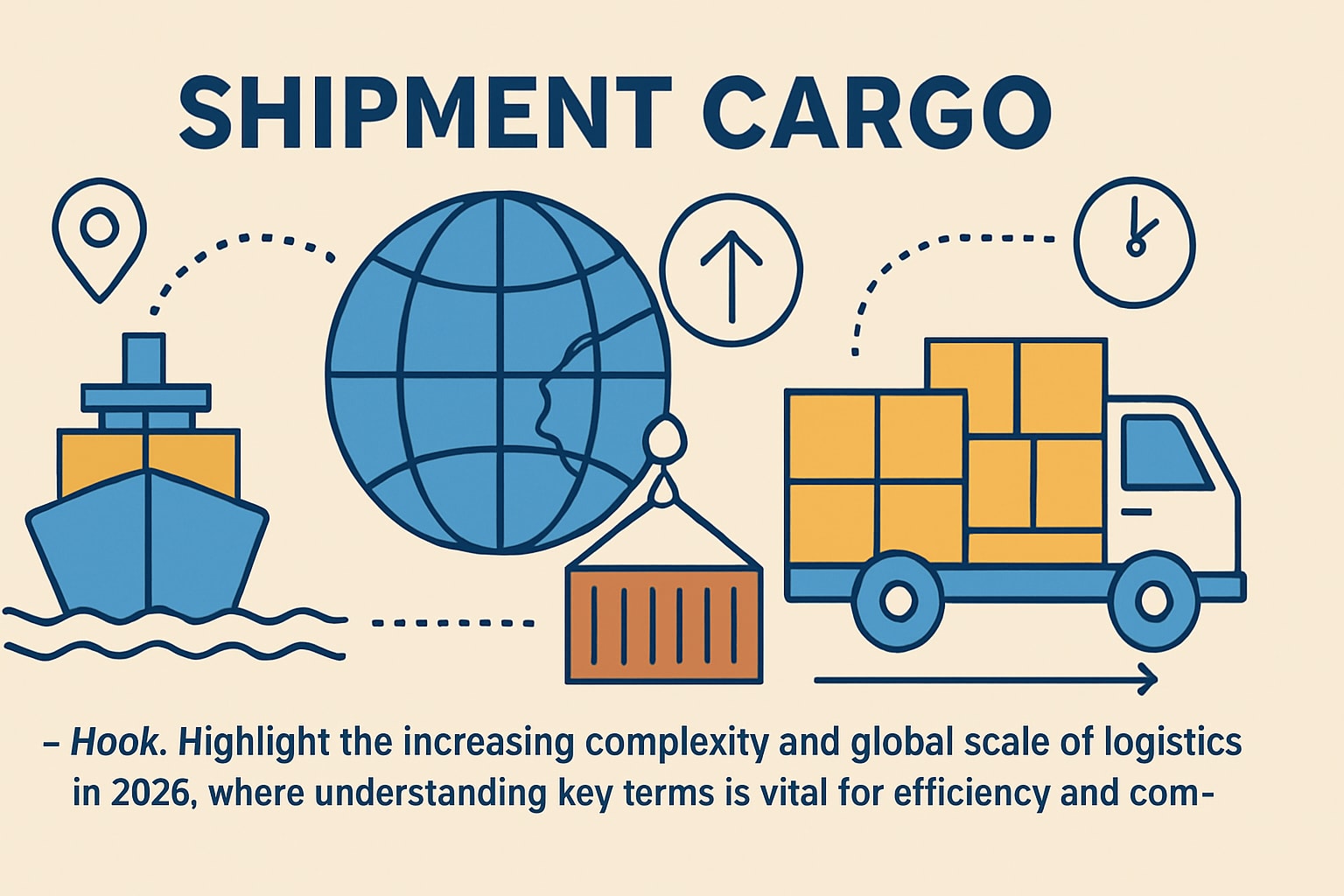
Are you confused by shipment cargo and freight in today’s fast-moving logistics world? The global supply chain in 2026 is more complex than ever, making it essential to understand these terms for smoother operations and compliance.
Misunderstanding shipment cargo can lead to costly mistakes and regulatory issues. This article demystifies these crucial concepts, helping you optimise logistics, reduce risk, and communicate with confidence.
Explore clear definitions, learn about different transport modes, discover industry best practices, and see how regulatory changes impact your business. Read on for a comprehensive breakdown of shipment cargo versus freight for 2026.
In today’s interconnected supply chains, clarity around shipment cargo and freight is more important than ever. The complexity of logistics in 2026 demands a strong grasp of these core concepts to avoid costly errors and stay compliant.

Cargo refers to the physical goods or commodities moved between locations. Traditionally, the term was associated with sea and air transport, but by 2026, cargo now applies to all modes of transport, including rail and road.
Examples of cargo include raw materials like iron ore, manufactured goods such as electronics, perishables like fresh produce, and high-value items. The scale is immense: about 95 percent of global cargo by volume is transported via ocean freight, according to the International Chamber of Shipping.
Cargo plays a pivotal role in shipment cargo operations, forming the backbone of global trade and supply chains. Every industry, from automotive to pharmaceuticals, relies on the safe and efficient movement of cargo.
Shipment is the entire process of moving goods from their origin to their destination. It covers every step, including packaging, documentation, handling, and final delivery. Whether sending a single parcel or a full container, each shipment involves careful planning.
For instance, a shipment of electronics might be dispatched from China to the UK, requiring air or sea transport, customs clearance, and last-mile delivery. Alternatively, medical supplies may be shipped via air for speed and security.
Shipment cargo can range from small packages to large container loads. The term “shipment” highlights the journey and all the logistics required to ensure goods reach their intended recipients efficiently.
Freight is a versatile term in logistics. It refers both to the goods being transported and the charges for moving them. The dual meaning often leads to confusion but is central to how the industry operates.
In daily operations, you will hear phrases like “freight charges” or “freight forwarding.” Freight may refer to a full truckload of goods moving from Manchester to Berlin or the cost associated with transporting those goods.
In the context of shipment cargo, freight describes not only the physical movement but also the commercial aspect, covering contracts, billing, and service agreements. This duality is fundamental to modern supply chain discussions.
The main distinction lies in how we use these terms. “Cargo” means the physical goods, “shipment” covers the process, and “freight” represents both the goods in transit and the associated service or cost. Overlapping usage can create confusion, especially as logistics language evolves with digitalisation and global integration.
Misunderstandings may impact contracts, regulatory compliance, and even insurance claims. That is why clarity is essential in every discussion about shipment cargo. For a deeper dive into these distinctions, you can explore this Shipment and cargo differences guide.
As logistics continues to advance, using the right terminology helps avoid costly mistakes and streamlines communication across the supply chain.
Navigating the landscape of shipment cargo in 2026 means understanding how goods move across the globe. Multiple transport modes shape the journey from origin to destination, each with unique strengths, challenges, and innovations. Let us break down these core methods and what they mean for modern logistics.

Sea freight remains the backbone of global trade, handling an estimated 95% of shipment cargo by volume. Ocean routes connect continents, making it possible to transport vast quantities of goods efficiently. This mode is crucial for bulk commodities like oil, coal, and agricultural products, as well as containerised manufactured goods.
Several vessel types cater to specific needs:
Environmental concerns are increasingly shaping sea freight operations. Decarbonisation trends, stricter emissions standards, and alternative fuel investments are transforming how shipment cargo moves by ocean. Companies are investing in cleaner ships and optimising routes to reduce their carbon footprint.
The importance of sea freight in the shipment cargo ecosystem cannot be overstated. It enables the cost-effective movement of large volumes and supports the supply chains of virtually every industry.
Air freight plays a specialised role in the movement of shipment cargo, prioritising speed and reliability over sheer volume. While it accounts for a smaller share of global cargo by weight, it is essential for high-value, time-sensitive goods like pharmaceuticals, electronics, and perishables.
Growth in the air freight sector is driven by demand for express services and rapid e-commerce fulfilment. The rise of dedicated cargo charters and advanced logistics networks enables swift delivery across continents. Projections suggest continued expansion, with market value and cargo volumes rising year on year.
For a deeper understanding of how air cargo is managed, including best practices and regulatory considerations, see the Air freight cargo shipping guide.
Efficiency, security, and speed make air freight a preferred choice for critical shipment cargo. New aircraft technologies and sustainable aviation fuels are also helping to address environmental pressures in this sector.
Road and rail transport are indispensable for regional and last-mile delivery of shipment cargo. Lorries provide flexibility and door-to-door service, handling everything from small parcels to full truckloads. This mode is vital for e-commerce, retail replenishment, and time-sensitive deliveries.
Rail freight excels in moving bulk commodities over long distances. Grain, minerals, and chemicals are commonly shipped by train, often as part of an intermodal journey that includes sea or road legs. Rail is also more energy-efficient than road for heavy or high-volume cargo.
Integration of road and rail with other transport modes allows for seamless movement of shipment cargo. Multimodal logistics hubs streamline transfers, reduce handling time, and improve reliability. This synergy is fundamental to building resilient supply chains.
2026 brings remarkable technological advancements to shipment cargo logistics. Real-time tracking, enabled by IoT devices and smart containers, offers unprecedented visibility across the supply chain. Shippers and consignees can monitor location, temperature, and even humidity, ensuring sensitive cargo arrives in optimal condition.
Digital platforms allow for instant booking, tracking, and management of shipments. Automation in warehouses and ports accelerates handling, while AI-driven analytics optimise routing and capacity planning. These innovations drive efficiency and enhance transparency for all parties handling shipment cargo.
Smart logistics is not just about speed, but about precision. Enhanced tracking reduces losses, improves customer satisfaction, and supports compliance with increasingly complex regulations.
The regulatory environment for shipment cargo is evolving rapidly. In 2026, carbon reporting and emissions standards are no longer optional. Operators must comply with strict guidelines on fuel use, emissions, and documentation.
Each mode of transport faces unique challenges. Sea freight must invest in cleaner energy, air freight adapts to sustainable aviation fuels, and road transport shifts toward electrification and alternative power sources. Rail, already energy-efficient, continues to innovate with greener locomotives.
Sustainability is now a key performance indicator. Logistics providers and shippers who adapt quickly enjoy a competitive edge, as customers and regulators demand greener solutions for shipment cargo. Compliance not only reduces risk but also supports long-term business resilience.
Understanding the historical and modern distinctions between shipment cargo and freight is essential for anyone navigating logistics in 2026. These terms have evolved alongside global trade, digitalisation, and industry integration.

Traditionally, the logistics sector used the term "cargo" to refer to goods transported by sea or air. Classic examples include cargo ships carrying containers across oceans and cargo planes moving urgent supplies between continents. In contrast, "freight" was commonly linked to land transport, such as freight trains or freight trucks.
This distinction reflected the modes of transport available in earlier decades. For instance, a shipment cargo of coal would be described as "cargo" if moved by ship, but as "freight" if transported by rail. Over time, as supply chains became more complex, these boundaries started to blur.
Language in logistics was shaped by operational realities. Shipping documents, insurance policies, and contracts would specify either cargo or freight, depending on the transport method. The separation helped prevent confusion in an era with less integrated global networks.
By 2026, the lines between shipment cargo and freight have become increasingly blurred. "Cargo" now refers to goods transported by any mode, including road and rail, not just sea and air. Meanwhile, "freight" serves a dual purpose, describing both the goods in transit and the cost or service of moving them.
Industry professionals now use terms like "freight forwarding" or "freight charges" across all types of logistics operations. This shift reflects the digitalisation and standardisation of supply chain processes, where clear communication is vital. For a deeper dive into how freight terminology has evolved, review Freight and forwarding explained.
The flexibility in language enables businesses to describe shipment cargo consistently, regardless of the transport method. This modern approach supports integrated, multimodal supply chains and aligns with regulatory and technological advancements.
Consider a company moving electronics from the UK to Germany using sea, rail, and truck. The shipment cargo is documented as "cargo" in maritime paperwork, "freight" on rail invoices, and as a "shipment" in customer updates. This scenario shows how all three terms can apply to the same goods, depending on context.
Another example involves urgent pharmaceuticals flown by air charter. Here, the shipment cargo is labelled "air cargo" in transport documents, while the cost is detailed as "air freight charges." Businesses often specify the terminology in contracts to avoid disputes, ensuring everyone understands the nature and scope of the service.
These real-world cases highlight the importance of context and clarity when referring to shipment cargo and freight, especially as logistics continues to globalise and adopt new technologies.
Why does terminology matter so much? Precise language minimises miscommunication, especially in contracts, insurance policies, and customs declarations. Using the correct term for shipment cargo can prevent costly delays, regulatory fines, or denied claims.
As global supply chains embrace digital platforms, standardised definitions are critical. Logistics professionals recommend adopting industry-approved language in all documentation to ensure compliance and smooth operations. Clear distinctions between shipment cargo and freight support accurate billing, insurance coverage, and regulatory reporting.
Ultimately, understanding these differences empowers businesses and individuals to navigate modern logistics with confidence, reducing risk and optimising efficiency.
In the fast-paced world of logistics, the terms you use can shape the outcome of every transaction. For businesses and individuals, understanding the practical implications of shipment cargo and freight is essential. Clear communication, operational efficiency, compliance, and risk management all depend on using the right terminology and processes.

Effective communication in logistics starts with precise terminology. Misunderstanding shipment cargo terms can lead to costly mistakes, especially when contracts or orders are involved. For example, if a business labels a consignment as "general cargo" when it requires special handling, customs clearance may be delayed.
Training staff to use shipment cargo language accurately reduces errors and prevents disputes. In customer interactions, clarity about whether you refer to the goods, the process, or the cost ensures expectations are aligned.
A small misstep, such as incorrect use of "freight" instead of "cargo," can disrupt the whole supply chain. For this reason, companies often develop glossaries or SOPs to standardise shipment cargo terminology across teams and partners.
Choosing the right service for shipment cargo directly influences operational costs and delivery timelines. For instance, selecting full container load (FCL) versus less than container load (LCL) depends on shipment size and urgency. The choice affects both the speed and the price of delivery.
Freight charges and billing processes are tightly linked to how shipment cargo is described and managed. Accurate terminology ensures correct quoting, so businesses do not overpay or undercharge. For consolidated shipments, knowing whether goods are classified as cargo or part of a freight service helps with cost allocation.
Consider using a table to compare cost models:
| Service Type | Pricing Model | Typical Use Case |
|---|---|---|
| FCL/FTL | Flat rate | Bulk shipment cargo |
| LCL/LTL | Per cubic metre | Small shipment cargo |
This approach streamlines budgeting and enhances overall efficiency.
Regulatory compliance is critical when managing shipment cargo. Customs authorities require accurate and consistent declarations of cargo and freight in documentation. In 2026, electronic customs clearance and digital paperwork are standard, making errors more visible and traceable.
Incorrect classification or terminology can result in regulatory fines. For example, misdeclaring hazardous goods as general cargo may trigger penalties and shipment delays. Training on the latest compliance trends, such as digital signatures and automated filing, helps businesses avoid such pitfalls.
For more on the importance of correct cargo classification, see Cargo classifications in shipping.
Risk management in shipment cargo hinges on precise definitions. Insurance policies are often specific about coverage for "cargo" losses versus "freight" disruptions. Misusing these terms in claims can lead to disputes or denied compensation.
For example, if a policy covers only the physical shipment cargo but a claim is made for lost freight charges, the insurer may reject it. Businesses should ensure their documentation matches insurance requirements, clearly distinguishing between goods and transport services.
Clarity in shipment cargo terminology also supports faster claims processing and minimises financial exposure during transit.
Leading logistics providers recommend a proactive approach to shipment cargo management. Adopting standard definitions in contracts, training programmes, and operating procedures promotes consistency.
Key best practices include:
By following these practices, both businesses and individuals can optimise their logistics operations, reduce risk, and ensure compliance in 2026.
Understanding the different types and classifications of shipment cargo and freight is essential for anyone involved in logistics or supply chain management. The right approach can optimise costs, improve transit times, and reduce risks during transportation.
Selecting the right shipment cargo type can significantly influence your logistics strategy. The two primary approaches are full and partial loads, each suited to different needs.
| Type | Description | Best For | Pros | Cons |
|---|---|---|---|---|
| FCL/FTL | Full Container/Truck Load | Large, single-shipper loads | Speed, security | Higher cost for small loads |
| LCL/LTL | Less than Container/Truck Load | Smaller, multiple shippers | Cost-efficient, flexible | Longer transit, more handling |
For example, a manufacturer shipping a large consignment of automotive parts might choose FCL, while an online retailer with smaller parcels could benefit from LCL. By matching shipment cargo type to your needs, you balance cost, speed, and security.
Not all shipment cargo is the same. Classifying cargo based on its nature and handling requirements helps ensure safe and compliant transport.
Each classification has specific packaging, labelling, and documentation requirements. For instance, pharmaceuticals shipped as shipment cargo must be temperature-controlled, while hazardous goods require strict safety protocols.
Freight services are as varied as the shipment cargo they move. Pricing models typically fall into two categories: spot rates, which are one-off prices for immediate shipments, and contract rates, which offer stability for regular volumes.
Freight forwarding services help manage international trade compliance and logistics complexity. Express and charter options cater to urgent or specialised needs. For example, a freight forwarder may coordinate a multi-leg journey for shipment cargo from Asia to Europe.
Recent trends show a steady increase in air cargo demand, as highlighted in the IATA's Air Cargo Demand Report, reflecting the growing preference for time-sensitive and high-value freight solutions.
The digital transformation of logistics is reshaping how shipment cargo and freight are managed in 2026. Digital platforms now enable seamless booking, real-time tracking, and automated documentation.
Smart contracts and blockchain technology are streamlining shipment cargo paperwork and reducing fraud. IoT-enabled devices monitor cargo conditions, providing transparency for sensitive shipments.
Adopting these innovations ensures greater efficiency and reliability across the shipment cargo lifecycle, from booking to delivery.
The landscape of shipment cargo and freight is evolving rapidly as we approach 2026. Businesses face a dynamic environment shaped by technology, sustainability, global trade, and changing customer needs. Understanding these trends is essential for staying competitive and compliant.
Technology is revolutionising shipment cargo operations. The adoption of IoT devices, AI, and automation is no longer optional but a necessity. Smart containers now provide real-time tracking, while AI-powered systems optimise cargo matching and predict freight demand.
According to the Global Air Freight Market Forecast, automation and digitalisation will drive significant growth in the sector, with the market expected to reach USD 506.2 billion by 2034. These advancements improve transparency, speed, and decision-making across supply chains.
Sustainability is at the forefront of shipment cargo strategies. Businesses are under pressure to reduce their carbon footprint and comply with emissions regulations. This shift has led to the adoption of electric trucks, carbon-neutral shipping lanes, and investment in alternative fuels.
Green corridors and emissions reporting have become standard, pushing logistics providers to innovate. Customers increasingly demand low-carbon options, so companies that prioritise sustainability gain a competitive edge in the market.
Global trade is experiencing significant realignment, impacting shipment cargo flows. Factors such as nearshoring, regionalisation, and geopolitical developments are reshaping supply chains. Companies are diversifying sources and routes to build resilience and manage risk.
Emerging markets, especially in Asia-Pacific, are playing a larger role. Insights from Air Freight Trends in APAC highlight regional shifts driven by e-commerce and new trade agreements. Adapting to these changes is vital for efficient freight movement.
Customer expectations for shipment cargo services are higher than ever. Clients demand on-demand logistics, real-time tracking, and guaranteed reliability. The rise of e-commerce has accelerated the need for flexible delivery models and transparent communication.
Logistics providers are responding with express services, digital platforms, and enhanced visibility tools. Meeting these expectations requires investment in technology and a customer-centric approach at every stage of the supply chain.
The workforce behind shipment cargo is evolving rapidly. There is a growing demand for professionals skilled in digital technologies, compliance, and data analysis. Training programmes now focus on digital tools, regulatory standards, and sustainability practices.
Companies that invest in upskilling their teams are better positioned to navigate industry changes. This evolution ensures that logistics operations remain efficient, secure, and adaptable in a complex global market.
Navigating the world of shipment cargo and freight in 2026 can be challenging. Here, we answer the most common questions to help you understand the essentials and avoid confusion.
What is the main difference between cargo and freight?
Cargo refers to the physical goods or commodities being transported, while freight can mean both the goods in transit and the cost or service of moving them. In modern logistics, shipment cargo describes what is actually being shipped, and freight often relates to the charges or transport process.
Can shipment, cargo, and freight be used interchangeably?
Although these terms are sometimes used interchangeably, they have distinct meanings. Shipment cargo is the actual goods, shipment is the movement from origin to destination, and freight covers both the transport process and the associated costs. Using the correct term improves communication and reduces risk.
How do shipment types (FCL, LCL, FTL, LTL) affect costs and transit times?
Full Container Load (FCL) or Full Truckload (FTL) means exclusive use of space, often resulting in faster transit and higher security for shipment cargo. Less than Container Load (LCL) or Less than Truckload (LTL) involves sharing space, which is cost-effective for smaller shipments but may lead to longer transit times.
What are the implications for insurance and risk management?
Insurance policies often distinguish between coverage for cargo and for freight. Accurately describing shipment cargo is critical for claims, as mislabelling can result in denied coverage or disputes during risk assessment.
How do technological advancements impact shipment cargo and freight in 2026?
Digital platforms, real-time tracking, and smart contracts have transformed how shipment cargo is managed. For example, global routes like those tracked in Northern Sea Route Cargo Statistics showcase how technology and alternative shipping paths impact freight flows and efficiency.
What regulatory changes should shippers be aware of?
Shippers must comply with stricter carbon reporting, digital documentation, and customs regulations in 2026. Properly identifying shipment cargo and freight details ensures compliance, prevents delays, and avoids regulatory fines.
As you’ve seen, understanding the distinctions between shipment cargo and freight is essential for navigating today’s complex logistics landscape. If you’re ready to simplify your air cargo charter process, gain real-time access to global aircraft, and ensure your terminology aligns with industry best practices, why not explore how CharterSync’s intelligent platform can help? You can experience their AI-powered tools and dedicated support firsthand—just request a demo to see how streamlined, compliant, and efficient your air freight operations could be.

.png)