.png)

The world of news air cargo is set for a dramatic shift as 2026 approaches, promising both significant challenges and new opportunities for the industry. Logistics professionals, freight forwarders, and industry leaders must prepare for rapid changes that will redefine how global air cargo operates.
This guide delivers expert insights and actionable strategies designed to help you thrive in the evolving landscape. You will gain practical knowledge on the latest trends, breakthrough technologies, and best practices to enhance efficiency, resilience, and growth within your operations.
Explore in-depth forecasts, discover emerging technologies, stay ahead of regulatory changes, and unlock proven strategies to secure a competitive advantage. Prepare to lead your organisation confidently into the future of air cargo.
As the world accelerates towards 2026, the news air cargo sector is set to experience significant transformation. The interplay between technology, global trade, and shifting consumer demands is reshaping how goods move by air. To stay competitive, industry professionals must understand market forecasts, major drivers, and the emerging risks that define the current landscape.

Global news air cargo volumes are expected to continue their upward trajectory in 2026, fuelled largely by the ongoing boom in e-commerce and cross-border trade. The International Air Transport Association (IATA) has projected a 2.6% year-on-year growth in air cargo demand for 2026, highlighting robust momentum across key markets. For more detailed insights, see IATA forecasts 2.6% air cargo growth in 2026.
Asia-Pacific remains at the forefront, driven by manufacturing output and rising middle-class consumer demand. Europe and North America continue to see steady growth, with increasing requirements for rapid, reliable delivery services. Consumer expectations are evolving, with customers now prioritising speed, transparency, and flexibility in their shipping options.
The growth in news air cargo is also underpinned by a surge in time-sensitive and high-value shipments. Sectors such as pharmaceuticals, electronics, and automotive are leveraging air cargo for their global supply chains, ensuring critical goods reach markets quickly. The 2024 IATA forecast pointed towards a 4% year-on-year increase then, and this momentum is set to carry forward, shaping the competitive landscape.
Several powerful forces are influencing the direction of news air cargo in 2026. Technological innovation stands out as a key driver, with automation, digital booking platforms, and smart tracking solutions streamlining operations. These advancements enable faster booking, real-time visibility, and enhanced efficiency, making air cargo a more attractive option for shippers.
Geopolitical factors and new trade agreements are also shaping the sector. The post-pandemic era has seen supply chain strategies evolve, with companies seeking greater resilience and flexibility. Trade flows are being redirected by shifting alliances and regulatory changes, leading to new opportunities and challenges.
The demand for time-critical and specialised shipments continues to grow. The automotive and pharmaceutical industries are particularly prominent, requiring temperature-controlled and secure transport solutions. These sectors are driving investment in advanced handling and monitoring technologies, reinforcing the strategic importance of news air cargo for high-value logistics.
Despite the positive outlook, the news air cargo industry in 2026 faces several pressing challenges. Capacity constraints are a persistent issue, especially at major airports experiencing congestion during peak periods. This can lead to delays and increased competition for available slots.
Labour shortages and workforce transformation are affecting efficiency, as the sector adapts to new digital tools and processes. Companies must invest in training and upskilling to keep pace with technological change.
Operational costs remain volatile, particularly due to fluctuating fuel prices. Security concerns are also on the rise, with stricter regulatory requirements demanding more rigorous compliance. The disruptions seen in 2025, caused by global supply chain bottlenecks, underscored the need for robust risk management strategies.
To navigate these risks, industry leaders are embracing flexible planning, digital innovation, and collaboration across the news air cargo ecosystem. Staying ahead of these challenges will be essential for ensuring resilience and sustained growth.
The pace of technological change in news air cargo is unprecedented. As we approach 2026, the sector is witnessing a digital revolution that is reshaping every facet of cargo movement and management. From automation to AI, these innovations are setting new benchmarks for speed, reliability, and transparency.

Automation is at the heart of the news air cargo transformation. With the adoption of AI, machine learning, and IoT, processes once reliant on manual intervention are now streamlined and data-driven. Automated booking systems, for example, enable instant reservations, reducing lead times and human error.
Real-time tracking is now standard, with IoT sensors providing continuous updates on cargo location and condition. Predictive analytics tools help operators anticipate demand surges and optimise routes. Industry leaders are also embracing digital platforms that unify bookings, documentation, and compliance in a single interface.
One standout trend is the rapid uptake of smart charter platforms. According to Air cargo charter technology trends, digital solutions are empowering freight forwarders with instant aircraft access and automated matching, driving efficiency across the news air cargo landscape.
The introduction of next-generation freighters and fuel-efficient aircraft is revolutionising news air cargo capacity and sustainability. These smart planes are equipped with advanced avionics and lightweight materials, reducing emissions and operating costs.
Robotics and drones are making significant inroads in cargo handling, particularly for last-mile deliveries and urgent shipments. Automated loaders, conveyor systems, and robotic arms speed up turnaround times and minimise damage risk.
Smart Unit Load Devices (ULDs) fitted with sensors enable real-time monitoring of temperature, humidity, and shock. This is especially valuable for sensitive goods such as pharmaceuticals and electronics. These innovations help news air cargo providers meet rising expectations for reliability and speed.
Blockchain technology is becoming a cornerstone of secure, transparent news air cargo operations. By digitising airway bills and other critical documents on a tamper-proof ledger, carriers and shippers can ensure authenticity and reduce the risk of fraud.
Sensitive and high-value shipments benefit from enhanced security protocols, with blockchain enabling instant verification of handling events along the chain of custody. Regulatory compliance is also streamlined, as digital records are easily auditable.
The adoption of blockchain-based airway bills among leading carriers is setting a new industry standard. As digital transactions become the norm, news air cargo operators are investing in robust cybersecurity measures to protect customer data and cargo integrity.
Artificial intelligence is transforming decision-making in news air cargo. AI-driven demand forecasting tools analyse vast datasets to predict volume fluctuations, allowing operators to allocate resources proactively.
Route optimisation algorithms reduce empty legs and improve load factors, directly impacting profitability. In pilot programmes, AI systems have demonstrated the ability to cut operational costs by 10 to 15 percent, freeing up budgets for further investment.
AI also enhances customer service, with real-time status updates and proactive notifications. Predictive maintenance powered by machine learning minimises downtime and extends aircraft lifespan. These advancements keep news air cargo agile and competitive in a rapidly changing market.
Digital platforms now provide end-to-end visibility across the entire news air cargo journey. Centralised dashboards offer a single view of shipments, compliance status, and operational metrics, enabling faster, more informed decisions.
Integration of booking, documentation, and real-time tracking into unified systems eliminates manual data entry and reduces errors. Clients benefit from instant access to shipment status and automated alerts, improving transparency and trust.
Leading platforms are now offering advanced analytics and compliance tools, further streamlining workflows. As digitalisation deepens, news air cargo providers can respond to customer demands with greater flexibility and accuracy, positioning themselves at the forefront of industry innovation.
Regulatory and compliance requirements are set to reshape the news air cargo sector in 2026. Industry professionals must keep pace with evolving standards, digital mandates, and sustainability obligations. Staying informed and agile will be essential to maintain operational efficiency and ensure global competitiveness.
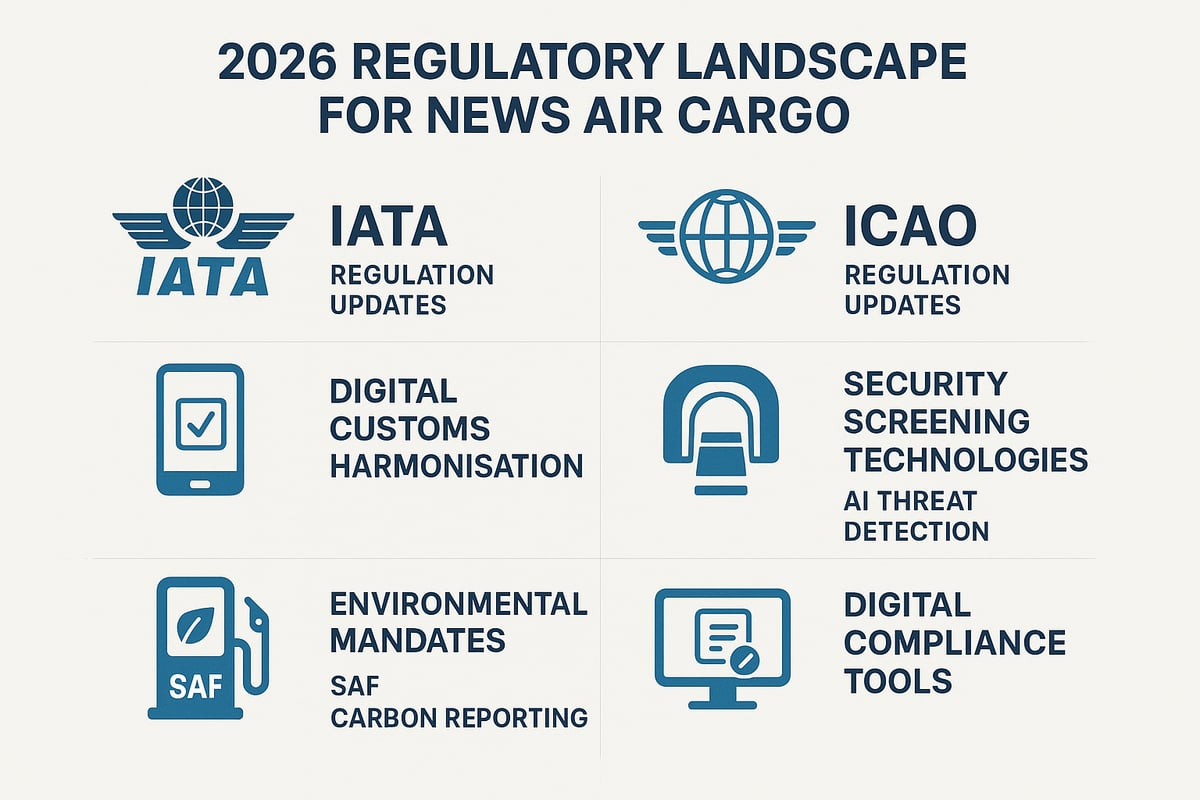
The regulatory foundation of news air cargo is undergoing significant change. In 2026, new IATA and ICAO rules will require the widespread adoption of digital processes and harmonised customs procedures. This includes the mandatory use of electronic airway bills (e-AWB) for almost all international shipments.
These updates are designed to streamline operations, reduce paperwork, and minimise delays at borders. For shippers, instant access to digital documentation and pre-clearance data will become the norm. The shift will also improve traceability and transparency for sensitive cargo.
To stay ahead, stakeholders should monitor ongoing air cargo regulatory updates and invest in systems that support end-to-end digital compliance. This approach ensures better alignment with global trading partners and regulatory authorities.
Security remains a top priority in news air cargo as threats evolve and volumes increase. In 2026, enhanced screening protocols will target high-risk and time-critical shipments, especially those moving through major hubs. The deployment of advanced CT scanners and AI-driven threat detection is expected to become standard.
Operators must also comply with stricter chain-of-custody rules and maintain detailed records for all consignments. The rise in specialised cargo, such as pharmaceuticals and electronics, adds layers of complexity to security management.
Proactive investment in automation and robust security systems will help mitigate risks and build trust with clients. News air cargo providers who prioritise safety will maintain a strong reputation in an increasingly competitive market.
Sustainability is now a core focus for news air cargo operators, with regulatory bodies imposing tougher environmental standards. The EU’s Fit for 55 package and similar initiatives worldwide set ambitious emissions reduction targets for 2026 and beyond.
Operators are required to report emissions transparently and accelerate the adoption of sustainable aviation fuel (SAF). Many airports and carriers are also investing in green infrastructure and electrified ground support equipment.
Compliance with these mandates is not just about legal obligations, but also about meeting customer expectations. Clients increasingly favour providers who demonstrate real progress towards net zero goals and offer eco-friendly shipping options in the news air cargo sector.
Navigating the global compliance landscape presents ongoing challenges for the news air cargo industry. Multi-jurisdictional shipments require careful coordination across different legal frameworks and documentation standards. Manual processes can lead to costly errors and delays.
Digital compliance tools are emerging as a solution, automating customs checks and reducing paperwork. Centralised platforms allow operators to manage bookings, documentation, and regulatory requirements in one place. This integrated approach minimises risk and ensures timely, accurate shipments.
To remain resilient, news air cargo professionals should invest in workforce training and adopt flexible systems that can adapt to changing regulations. By leveraging technology and fostering a culture of compliance, the industry will be well positioned for future growth and innovation.
Sustainability is now at the heart of the news air cargo sector. As the industry faces mounting pressure to reduce emissions and address environmental impacts, operators are adopting innovative logistics practices. Green initiatives are rapidly shaping the future, making efficiency and eco-responsibility central to every decision.
Airlines and logistics providers are making bold pledges to achieve net zero emissions by 2050. These commitments are not just statements, they are driving real investment in fleet upgrades, operational efficiency, and alternative fuels. Industry leaders are working together to set measurable targets and share best practices across the news air cargo landscape.
For example, several major carriers have already begun transitioning to more fuel-efficient aircraft and are actively supporting sustainable air cargo initiatives that set new standards for environmental responsibility.
SAF is emerging as a game-changer for news air cargo, offering a sustainable alternative to conventional jet fuel. Production and adoption rates are on the rise, supported by partnerships between airlines and fuel producers. SAF can reduce lifecycle carbon emissions by up to 80 percent, making it one of the most effective tools for decarbonising air freight.
Operators are investing in pilot programmes and integrating SAF into regular operations. As availability increases, the cost gap with traditional fuels is expected to narrow, further accelerating adoption across the sector.
To complement direct emissions reductions, news air cargo operators are expanding carbon offsetting and reduction schemes. Voluntary and mandatory programmes enable companies to invest in environmental projects that balance out their carbon footprint.
Some freight forwarders now offer carbon-neutral shipping options, allowing customers to align their supply chains with sustainability goals. These initiatives not only meet regulatory requirements but also appeal to eco-conscious clients seeking greener logistics solutions.
Sustainable packaging is gaining traction in news air cargo, with a focus on reducing waste and improving efficiency. Companies are moving towards reusable, recyclable, and lightweight materials, which lower emissions and cut costs.
Examples include:
These innovations help protect both valuable cargo and the environment while supporting brand reputation.
Airports are central to the green transformation of news air cargo. Investments in energy-efficient cargo terminals, solar power, and electrification of ground support equipment are becoming standard practice.
Key developments include:
These upgrades reduce operational emissions, improve working conditions, and support the broader sustainability agenda of the industry.
Building resilience and competitive advantage in news air cargo means more than just keeping pace with change. It requires forward-thinking strategies, digital innovation, and a strong focus on customer needs. The following approaches, rooted in industry best practice, will help your operations thrive in a rapidly evolving market.
Agility is the cornerstone of modern news air cargo operations. By diversifying supply sources and transport modes, companies can reduce risk exposure and maintain steady service levels, even during disruptions. Scenario planning enables teams to anticipate market shifts and prepare for demand spikes or bottlenecks.
Multi-modal solutions, such as integrating air, road, and sea options, offer flexibility during peak periods. Using data-driven risk assessments, logistics leaders ensure continuity and adapt quickly to changing circumstances. In a world where uncertainty is the only constant, agile supply chains are essential.
Digital transformation is revolutionising news air cargo by streamlining operations and enhancing visibility. Digital platforms allow for seamless booking, real-time tracking, and unified documentation, giving teams end-to-end control over shipments.
Industry leaders are investing in advanced dashboards and automation tools to make better, faster decisions. According to IATA's 2025 vision for the future of air cargo facilities, technology-driven facilities will redefine efficiency and reliability, helping businesses stay ahead in this competitive sector.
Forging strong partnerships is key to success in news air cargo. Collaborating with carriers, airports, and technology providers unlocks new opportunities for capacity sharing, network optimisation, and innovation.
Joint ventures enable companies to pool resources and respond faster to market changes. Open communication and transparent data sharing underpin these relationships, building trust and improving service delivery. Strategic alliances will continue to shape the future of air cargo, enabling firms to offer more comprehensive solutions.
With technology reshaping the industry, investing in people remains crucial for news air cargo companies. Labour shortages can be mitigated by upskilling staff in digital literacy and automation processes.
Training programmes focused on emerging technologies prepare the workforce for evolving job roles. By embracing automation and fostering continuous learning, organisations boost productivity and maintain a competitive edge. The future workforce will blend human expertise with digital capability.
Meeting the evolving needs of shippers is vital in news air cargo. Personalised solutions, such as time-critical and temperature-controlled services, are increasingly in demand. Predictive analytics help anticipate client requirements and offer proactive support.
Pharmaceutical and high-value cargo sectors, for example, benefit from advanced temperature-controlled freight solutions. For more on this, see Temperature-controlled freight solutions. Providing real-time monitoring and tailored handling sets leading forwarders apart in a crowded market.
Robust risk management is non-negotiable for news air cargo operators. Contingency plans safeguard operations against disruptions caused by geopolitical events, weather, or supply chain bottlenecks.
Scenario-based planning, rapid response protocols, and continuous process reviews ensure business continuity. Leveraging digital tools for monitoring and alerts further enhances resilience. As risks evolve, proactive planning keeps operations running smoothly and customers satisfied.
Digital platforms are transforming the landscape of news air cargo by providing instant access to global aircraft and intelligent matching for specialised shipments. CharterSync’s AI-powered platform streamlines bookings, reduces manual errors, and delivers transparent, real-time tracking.
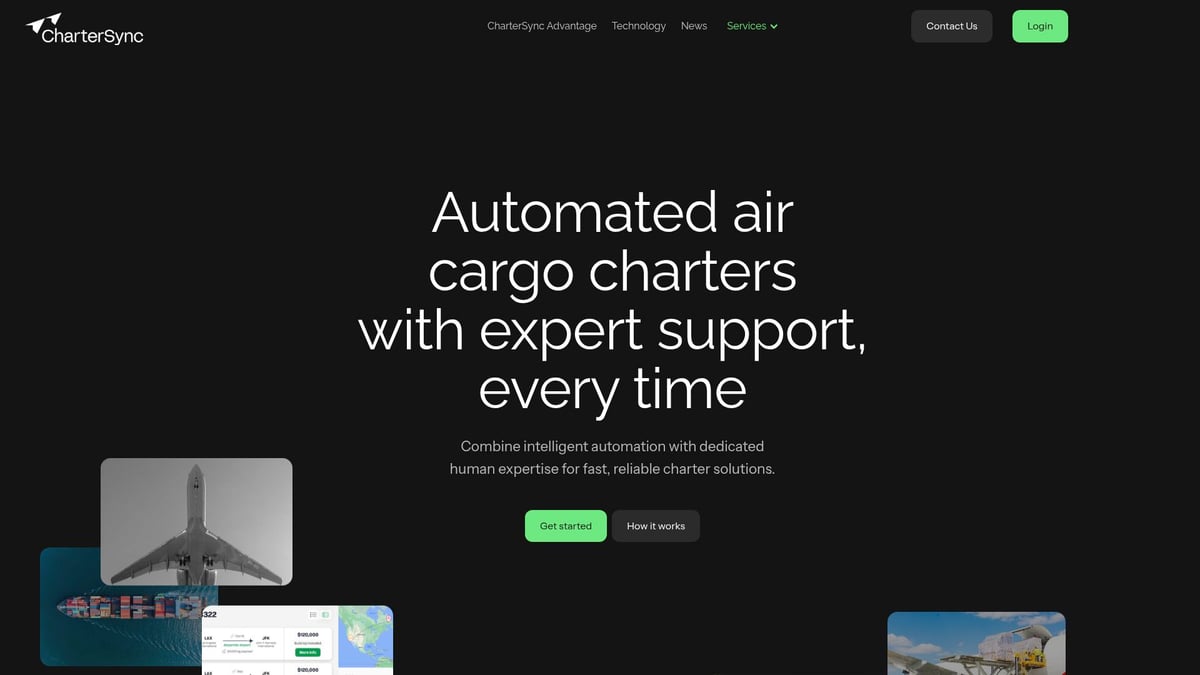
Freight forwarders using CharterSync optimise urgent and complex consignments, achieving higher productivity and accuracy. This approach aligns with the industry’s shift towards automation and digitalisation, directly enhancing customer satisfaction and operational reliability.
The future of news air cargo is defined by rapid change and innovation. As we look to 2026, evolving trends are reshaping the industry, creating new opportunities for growth and operational excellence. Staying ahead of these shifts is essential for anyone invested in the news air cargo landscape.
Global e-commerce continues to surge, transforming news air cargo operations. Online retail is not only increasing overall shipment volumes but also driving demand for faster, more reliable deliveries. Cross-border e-commerce is forecast to exceed $1 trillion globally by 2026, prompting carriers to enhance express and small parcel services.
The news air cargo sector is seeing growth in high-value and time-sensitive markets. Pharmaceutical, high-tech, and automotive industries require temperature control and strict handling, leading to innovation in cold chain logistics and secure transport. This trend is expanding opportunities for operators offering specialised solutions.
Artificial intelligence and predictive analytics are revolutionising news air cargo. Carriers are leveraging AI for capacity planning, route optimisation, and dynamic pricing. The rise of automation is also fuelling the growth of autonomous cargo aircraft, with the autonomous cargo aircraft market set to reach $4.15 billion by 2030. These advancements are improving efficiency and profitability.
Flexibility is driving new business models in news air cargo. On-demand, pay-per-use, and subscription-based services are gaining popularity, especially among SMEs seeking cost-effective solutions. Part-charter and flexible charter services are also expanding, allowing shippers to adapt quickly to changing market needs.
Shippers expect more from news air cargo providers. Transparency, real-time tracking, and sustainable practices are now standard requirements. Those who invest in digital capabilities and green credentials are positioned to win customer loyalty in this competitive market.

.png)