.png)
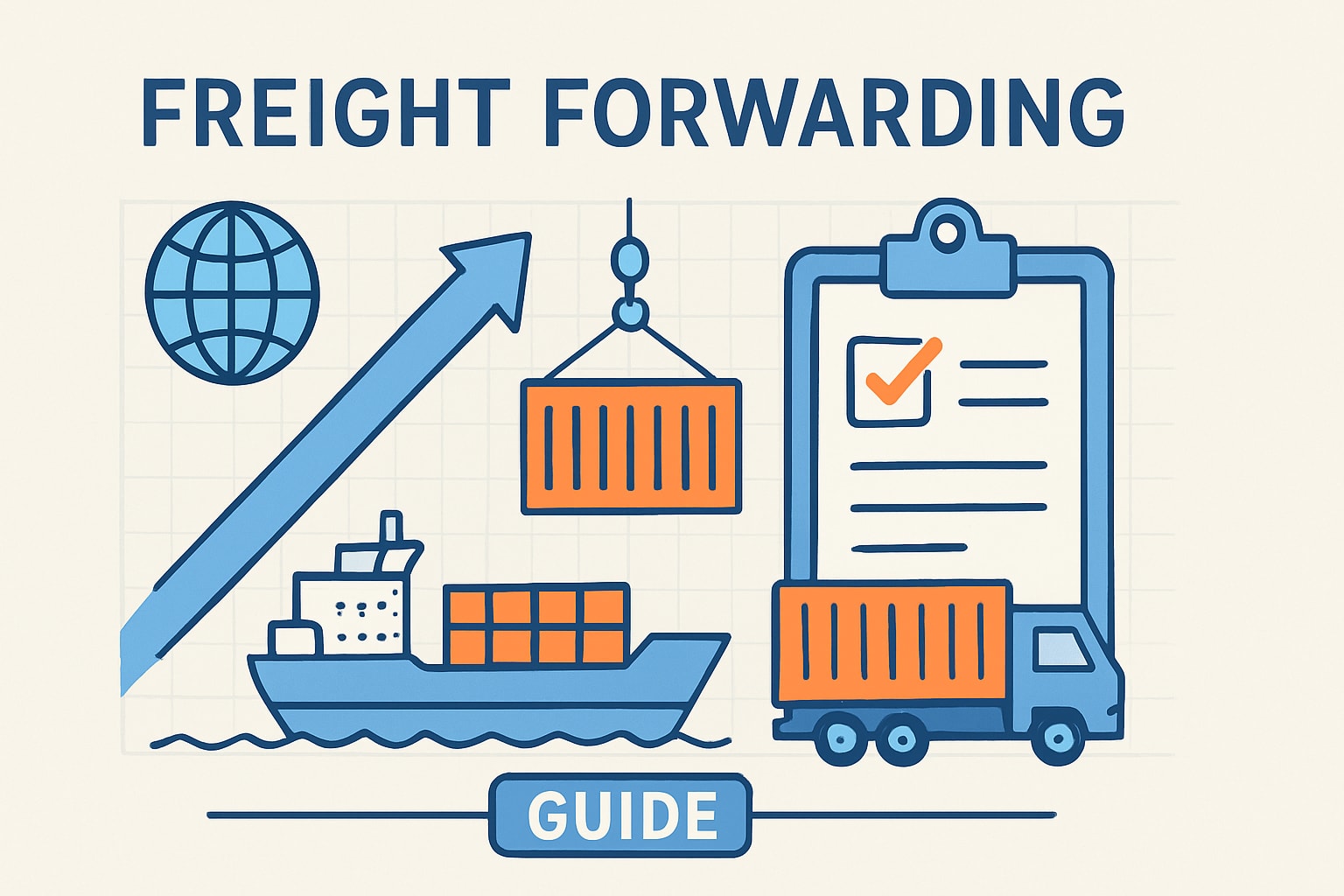
In 2026, global trade is entering a period of unprecedented change. Businesses around the world are re-evaluating their supply chains, and freight forwarding now plays a pivotal role in keeping goods moving efficiently across borders.
This guide is designed to equip you with the latest knowledge and strategies for freight forwarding. You will discover essential insights into industry fundamentals, step-by-step processes, digital transformation, regulatory shifts, sustainability practices, and future trends.
As the industry evolves rapidly, staying informed is not just beneficial, it is necessary. If you want to master freight forwarding in the coming years, this guide is your starting point.
Freight forwarding is at the heart of global trade in 2026, connecting businesses to international markets with precision and reliability. In a world where supply chains are more dynamic than ever, understanding how freight forwarding works is essential for any business aiming to succeed in cross-border commerce.
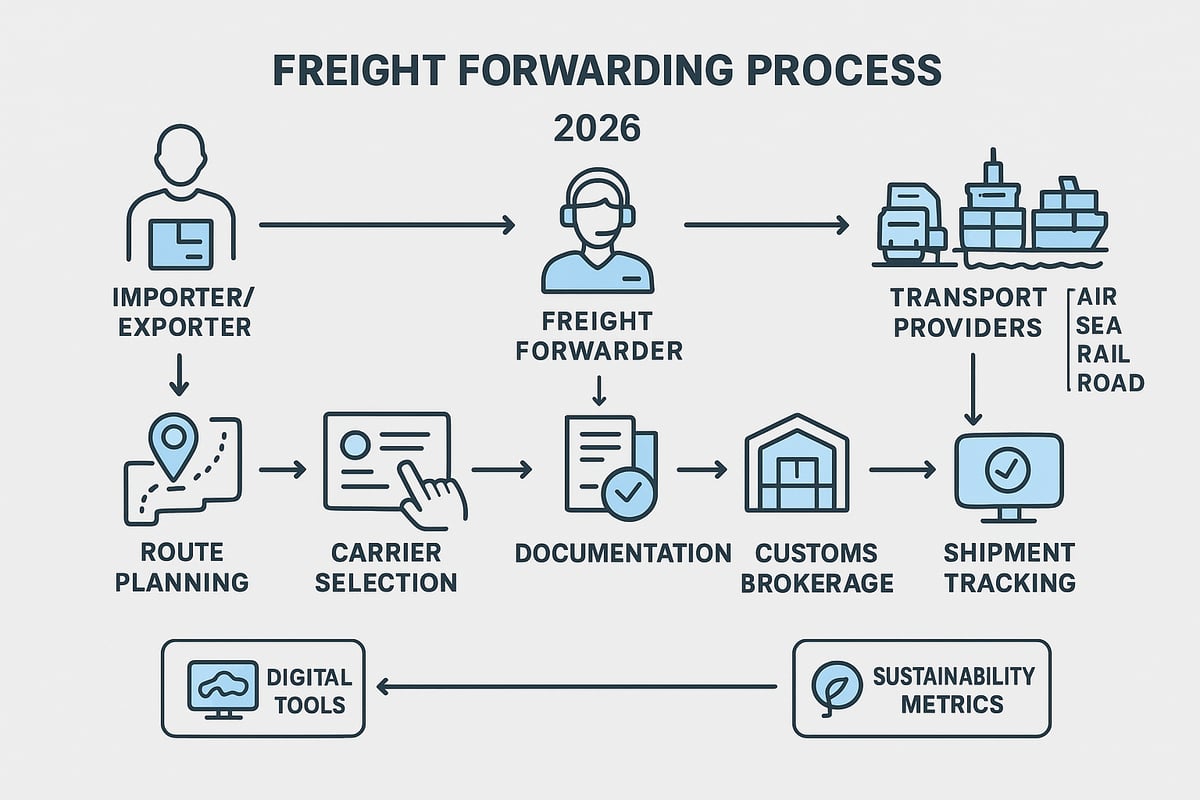
Freight forwarding is the strategic coordination and management of international cargo movement using air, sea, rail, and road transport. At its core, freight forwarding acts as a bridge between importers or exporters and the diverse network of transport providers required to move goods globally.
The main responsibilities of a freight forwarding provider include:
For instance, a company shipping electronics from the UK to Asia might rely on a freight forwarding partner to arrange seamless transfers between trucks, ships, and planes. According to industry estimates, over 80% of global trade now depends on freight forwarding services for smooth logistics and compliance.
Freight forwarding ensures that each leg of the journey is optimised for time and cost, reducing risks and delays through expert oversight. This central role is only set to grow as supply chains become more interconnected.
The role of freight forwarders is evolving rapidly. No longer just logistics coordinators, they are now integrated supply chain partners trusted for their expertise and advanced technology solutions.
Modern freight forwarding leverages real-time communication tools and digital platforms to provide transparency at every stage. Many forwarders have expanded into value-added services, such as sustainability reporting, risk management, and customs consultancy. For example, some now offer clients detailed carbon footprint KPIs alongside shipment updates.
In this new landscape, freight forwarding companies are expected to deliver proactive insights and adapt to changing regulations and customer needs with agility.
Choosing a professional freight forwarding partner brings measurable advantages to shippers of all sizes. Among the most significant benefits are:
A practical example is the use of Authorised Economic Operators (AEOs), who can offer deferred import duty payment for faster customs clearance. For a comprehensive look at the roles and services provided by cargo forwarders, see the Cargo Freight Forwarders Guide.
By partnering with experienced freight forwarding providers, businesses can focus on core operations while experts handle the complexities of international logistics.
Freight forwarding services come in various forms to meet the diverse needs of global trade. There are full-service forwarders who handle all aspects of the logistics chain, as well as niche specialists focused on sectors such as perishables, pharmaceuticals, or oversized cargo.
Key modes of transport include air, ocean, rail, road, and intermodal solutions that combine several methods for maximum efficiency. Customised freight forwarding solutions are available for industries like automotive, retail, technology, and healthcare, each with unique compliance and handling requirements.
This variety ensures that freight forwarding remains adaptable, providing tailored support for every sector of the global economy.
Navigating international trade in 2026 demands a clear understanding of the freight forwarding process. Each stage is crucial for efficient, compliant cargo movement. By mastering these steps, businesses can unlock smoother operations and avoid costly disruptions.

The freight forwarding journey begins with export haulage, where goods are collected from the shipper and transported to the forwarder’s warehouse. This stage involves careful planning, as the mode of transport—such as truck or rail—must match the cargo’s requirements and distance.
For instance, temperature-controlled vehicles are essential when moving perishable goods, ensuring product integrity from the outset. Choosing the right provider at this point can prevent delays and safeguard sensitive shipments.
Freight forwarding professionals coordinate schedules and documentation, ensuring goods reach the warehouse promptly and in optimal condition.
Before goods leave their origin country, export customs clearance is required. This process involves preparing and submitting all necessary export documents and declarations. Freight forwarding specialists work closely with customs brokers to ensure compliance with local regulations.
Statistics show that 60% of shipment delays are linked to incomplete or incorrect paperwork. Meticulous attention to documentation is vital for avoiding costly hold-ups. By leveraging digital systems, forwarders can streamline this stage and reduce risk.
Once goods arrive at the warehouse, origin handling takes place. This includes unloading, inspecting for damage or compliance, and verifying proper packaging. Special attention is given to restricted or high-value items, such as pharmaceuticals, which may require additional checks and documentation.
Origin handling is a critical checkpoint in freight forwarding, as errors here can cascade through the supply chain. Thorough inspections and digital tracking support transparency and accountability at this stage.
The main carriage is the core leg of international transport. Freight forwarding experts book and manage shipments via air, sea, rail, or a combination, depending on speed, cost, and cargo type. Carrier selection is strategic, factoring in reliability and transit times.
Advanced Transportation Management Systems (TMS) enable real-time tracking, providing visibility throughout the journey. For a deeper dive into these activities, see Shipping and Freight Processes, which outlines best practices for this critical phase.
Upon arrival in the destination country, import customs clearance is required. Forwarders prepare and submit import documents, manage duty and tax payments, and coordinate with local customs agents to facilitate smooth entry.
A notable advantage for freight forwarding clients is the use of Authorised Economic Operators (AEOs), who can access fast-track clearance and deferred duty payment. This accelerates the process, helping cargo reach its destination faster.
Destination handling involves unloading goods, inspecting for any damage, and storing them at the local warehouse. Freight forwarding teams coordinate last-mile delivery requirements and address claims for any damaged or missing items.
Effective communication and digital tools help manage expectations and resolve issues quickly. Proper handling at this stage ensures cargo remains secure and ready for final delivery.
The final step is import haulage, moving goods from the warehouse to the consignee’s premises. Freight forwarding professionals coordinate delivery schedules, obtain proof of delivery, and gather feedback to improve future shipments.
Digital platforms now provide real-time delivery updates, enhancing transparency for all parties. This customer-centric approach builds trust and streamlines the end-to-end process.
Despite advances, bottlenecks persist in freight forwarding. The most common challenges include port congestion, customs delays, and documentation errors. These issues can disrupt timelines and increase costs.
| Bottleneck | Impact | Solution |
|---|---|---|
| Port Congestion | Delayed shipments | Predictive analytics, flexible routing |
| Customs Delays | Extended clearance time | Digital documentation, pre-clearance |
| Documentation Errors | Fines, hold-ups | Automated checks, staff training |
Proactive communication and technology-driven solutions are key to overcoming these hurdles. Forwarders who invest in digital innovation can mitigate risks and deliver consistent results.
Digital transformation is reshaping freight forwarding, introducing smarter processes, real-time data, and new ways of working. As logistics grows more complex, technology is essential for speed, transparency, and resilience.

Automation is at the heart of modern freight forwarding. Tasks like booking shipments, generating documentation, and tracking are now handled by AI-powered platforms. These systems streamline operations, reduce manual errors, and allow teams to focus on value-added activities.
AI-driven route optimisation tools analyse traffic patterns and weather data, helping freight forwarding firms choose the most efficient paths for cargo. Predictive analytics are used for demand planning, ensuring capacity is available when and where it is needed.
For example, Transportation Management Systems (TMS) automate scheduling, carrier selection, and real-time updates. To learn more about how technology is transforming the industry, see Air Cargo Charter Technology.
Customers expect full transparency in freight forwarding. IoT devices, such as smart sensors and GPS trackers, provide updates at every stage of the journey. This technology enables proactive management of cargo, reducing the risk of delays and losses.
Customer portals now offer live notifications, shipment status, and estimated arrival times. According to industry surveys, 75% of shippers list real-time tracking as their top priority. With these advances, freight forwarding achieves higher accuracy and customer satisfaction.
Digital freight forwarding platforms are transforming how companies find and book transport. These online marketplaces provide instant quotes, side-by-side carrier comparisons, and transparent pricing. This reduces the time spent negotiating and allows businesses to make data-driven decisions.
For example, some platforms display real-time carrier availability and performance ratings. This empowers shippers to select partners that best meet their needs. Digital freight forwarding is becoming the norm for global trade operations.
| Platform Feature | Benefit | Outcome |
|---|---|---|
| Instant Quoting | Faster decision-making | Reduced lead times |
| Carrier Comparison | Transparent pricing | Cost savings |
| Digital Documentation | Less paperwork | Fewer errors |
Data integrity is critical for freight forwarding. Blockchain technology is now used to secure shipping documents, create tamper-proof transaction records, and ensure compliance with international standards.
By digitising bills of lading and customs forms, freight forwarding companies reduce fraud and streamline audits. Enhanced data privacy measures also protect sensitive business information, building trust with partners and regulators.
Despite the rise of automation, human expertise remains essential in freight forwarding. Skilled professionals handle exceptions, resolve disruptions, and provide tailored advice when situations become complex.
For instance, during a supply chain crisis, expert intervention can reroute shipments, manage regulatory challenges, and maintain customer relationships. The best freight forwarding solutions blend cutting-edge technology with dedicated human support, ensuring both efficiency and flexibility.
The regulatory landscape for freight forwarding is undergoing rapid transformation. Businesses must keep pace with shifting trade policies, digitisation, sustainability mandates, and evolving security protocols to ensure seamless, compliant operations.

International freight forwarding is directly affected by new trade agreements and changing tariff structures. Recent years have seen the introduction of complex rules of origin and documentation requirements, as seen with post-Brexit regulations and the USMCA.
Forwarders must adapt quickly to new customs protocols, tariff schedules, and shifting supply chains. Proactive monitoring of regulatory updates is essential for freight forwarding firms to minimise disruptions and maintain cost efficiency.
Customs authorities worldwide are embracing digitisation, introducing single-window systems and electronic data exchange for faster clearance. Digital customs clearance can reduce processing times by up to 40 percent, according to recent WCO data.
For a comprehensive background on these evolving processes, see the Freight and Forwarding Overview. Forwarders that invest in digital tools and electronic documentation are better positioned to navigate regulatory changes, streamline compliance, and enhance transparency in freight forwarding operations.
Environmental compliance is now a central pillar of freight forwarding. Stricter emissions standards, such as IMO 2023/2026 and the EU Green Deal, require forwarders and carriers to track and report carbon output for each shipment.
Mandatory carbon reporting, especially in the EU, compels freight forwarding companies to integrate sustainability metrics into their operations. Meeting these standards protects market access and supports environmentally conscious business practices.
Security regulations for freight forwarding are tightening, with enhanced screening for high-risk and dual-use goods. Programmes like C-TPAT and AEO set global benchmarks for secure, trusted supply chain partners.
Forwarders must implement robust risk management strategies and maintain up-to-date certifications. These measures help prevent delays at borders and ensure that freight forwarding remains resilient in the face of evolving global threats.
The shift towards electronic documents—including eAWB, eBL, and advanced EDI standards—demands rigorous data management. Non-compliance can result in costly penalties or shipment delays.
Best practices include staying informed of regulatory updates, investing in automated compliance tools, and conducting regular staff training. Forwarders who lead in digital compliance will be best positioned for success as the regulatory environment evolves.
Sustainability is now a defining element in freight forwarding. As companies and consumers demand greener supply chains, forwarders are under pressure to reduce emissions, adopt innovative technologies, and provide transparent reporting. This shift is transforming how freight forwarding operates globally.
Reducing the carbon footprint is a top priority for freight forwarding in 2026. Companies are adopting a mix of approaches to achieve greener operations.
For example, freight forwarding providers often combine goods from multiple clients to ensure vehicles run at full capacity. This reduces trips, cuts fuel use, and lowers overall emissions. Such strategies are key for any organisation seeking to make their freight forwarding operations more sustainable.
Certifications play a crucial role in verifying green practices within freight forwarding. Many forwarders now pursue internationally recognised standards to prove their commitment.
| Certification | Focus Area |
|---|---|
| ISO 14001 | Environmental management systems |
| EcoTransIT | Carbon footprint calculation |
Clients increasingly demand carbon footprint KPIs and transparent sustainability metrics. In fact, 65% of shippers now require this data from logistics partners. The freight forwarding market outlook highlights how sustainability and certification are shaping industry competitiveness and growth.
Freight forwarding is embracing new technologies to lower environmental impact. Notable innovations include:
These advancements enable freight forwarding firms to offer greener transport options while maintaining reliability and speed.
Circular supply chains are gaining traction in freight forwarding. Forwarders increasingly support reverse logistics, enabling the return, recycling, and reuse of products.
For instance, in the electronics sector, freight forwarding companies manage e-waste returns for proper recycling. This not only helps reduce landfill but also supports customers in meeting sustainability goals. Such services are becoming a standard part of modern freight forwarding offerings.
Customer expectations and new regulations are driving rapid change in freight forwarding. There is growing demand for transparency on environmental impact, forcing forwarders to publish detailed sustainability reports.
Compliance with ESG (Environmental, Social, Governance) mandates is also rising. Companies must now demonstrate responsible practices across their logistics chains. This dual pressure from consumers and authorities ensures sustainability remains central in the future of freight forwarding.
Selecting the right partner for freight forwarding in 2026 is a strategic decision that can make or break your supply chain performance. With global logistics evolving rapidly, businesses must look beyond price and consider a forwarder's expertise, digital tools, and commitment to compliance and sustainability. Understanding what sets a modern forwarder apart will help you navigate the complexities of international trade with greater confidence.
When evaluating freight forwarding partners, prioritise those with deep expertise in your industry and preferred transport modes. Look for forwarders who demonstrate a proven track record on your trade lanes and understand the specific regulatory, security, and sustainability requirements relevant to your business.
Key criteria include:
A forwarder who meets these standards will help streamline your operations and reduce risks.
Not all freight forwarding providers offer the same breadth of services. Assess whether a forwarder provides comprehensive solutions such as customs brokerage, warehousing, cargo insurance, and supply chain consultancy. Value-added offerings like sustainability reporting, risk assessments, and tailored logistics solutions can add measurable value to your operations.
For time-critical or complex shipments, ensure the forwarder has the capability to design bespoke solutions. This flexibility is essential for industries like automotive, pharmaceuticals, and technology. Compare service levels through case studies, client testimonials, or performance metrics to make an informed choice.
Digital transformation is reshaping freight forwarding in 2026. Evaluate whether a forwarder integrates with your supply chain systems, such as ERP or WMS platforms, and uses digital documentation, automated quoting, and customer portals. These features enable real-time tracking, efficient communication, and reduced administrative workload.
Modern providers leverage digital platforms and automation to enhance transparency and efficiency. For deeper insights into how technology is transforming the sector, see digital transformation in logistics. Choosing a tech-savvy partner ensures your shipments move smoothly in a data-driven world.
A robust global network is a cornerstone of effective freight forwarding. Leading forwarders maintain strong partnerships with carriers, agents, and warehouses in key trade hubs. This network allows for more flexible routing, faster issue resolution, and better access to local expertise.
When comparing providers, ask about their presence in strategic regions and ability to handle shipments across multiple continents. A global reach supports resilience in the face of disruptions and provides more options for shipping routes and last-mile delivery.
Consider a pharmaceutical company shipping temperature-sensitive vaccines internationally. The right freight forwarding partner offers temperature-controlled transport, real-time monitoring, and secure handling throughout the journey. They also ensure full compliance with regulatory requirements and provide insurance for high-value goods.
Lessons learned from successful partnerships highlight the importance of clear communication, advanced digital tools, and a proactive approach to risk management. By choosing a forwarder with these strengths, businesses can protect their cargo and reputation, even in the most demanding scenarios.
The landscape of freight forwarding is entering a period of rapid change. As we approach 2026, new technologies, consumer demands, and global events are reshaping the industry. Understanding future trends is vital for anyone aiming to stay competitive and resilient.
E-commerce is driving a surge in small parcel and direct-to-consumer shipments. Retailers and brands increasingly rely on freight forwarding partners to manage global fulfilment and reach new markets. Agile solutions are required to cope with fluctuating demand and rapid delivery expectations.
This growth is pushing forwarders to expand their digital capabilities. Integrated systems and flexible routing allow for the seamless movement of goods across borders. As more consumers expect fast and transparent delivery, the importance of freight forwarding in supporting e-commerce will only increase.
Digital-first forwarders are transforming the marketplace. These companies use cloud-based platforms, automation, and data analytics to offer instant quotes, real-time tracking, and streamlined communication. By 2026, it is projected that over 40 percent of freight forwarding transactions will be digital.
This shift is making the industry more transparent and accessible. Customers benefit from greater visibility and control, while forwarders can optimise operations and reduce manual workloads. The rise of digital-first providers is setting new standards for service and efficiency in freight forwarding.
Disruptions such as geopolitical events, pandemics, and climate incidents have highlighted the need for resilient supply chains. Freight forwarding partners are now expected to offer contingency planning, risk assessment, and rapid re-routing options.
Agility is essential. Forwarders are investing in predictive tools and scenario planning to help clients navigate uncertainties. As resilience becomes a core requirement, freight forwarding providers play a critical role in maintaining supply chain continuity.
Big data and artificial intelligence are powering a new era in freight forwarding. Forwarders leverage advanced analytics for demand forecasting, risk management, and performance optimisation. AI-driven insights enable proactive decision-making and more efficient transport planning.
Innovative tools, such as DHL's Smart ETA, are setting the pace for real-time predictions and improved reliability. For a deeper look at how AI is shaping the industry, see these AI trends in freight forwarding. Predictive analytics is quickly moving from a competitive advantage to an industry standard.
While technology is advancing, human expertise remains indispensable. The future of freight forwarding will depend on professionals who can manage exceptions, interpret data, and build strong relationships.
There is a growing need for digital skills and supply chain knowledge. Companies are investing in upskilling their workforce to bridge the gap between automation and hands-on service. The combination of technology and talent will define success in 2026.
The freight forwarding ecosystem is becoming more interconnected. Forwarders, carriers, technology providers, and regulators are forming partnerships to enhance data sharing and operational efficiency.
Industry-wide initiatives are driving interoperability and standardisation. This collaborative approach supports end-to-end visibility, faster transactions, and improved compliance. Freight forwarding companies that embrace integration will be better positioned to meet evolving customer needs.
New technologies are poised to revolutionise freight forwarding. From autonomous vehicles and drone deliveries to the development of the Physical Internet, innovation is accelerating. The Physical Internet, for example, offers scalable and adaptive routing strategies that could reshape global logistics. For more on this concept, explore the Physical Internet in freight routing.
Smart contracts, blockchain, and green transport solutions will also play a significant role. The outlook for freight forwarding is one of continuous evolution, with a focus on speed, sustainability, and transparency.
As we look ahead to 2026, it’s clear that digital innovation and expert support are redefining freight forwarding. If you’re ready to stay ahead of the curve, streamline your air cargo operations, and see how intelligent automation can make a real impact for your business, why not explore the possibilities firsthand We invite you to request a demo with CharterSync’s platform. Discover how you can access global aircraft instantly, book shipments with confidence, and rely on dedicated expertise to navigate the challenges and opportunities of tomorrow’s logistics landscape.

.png)