.png)
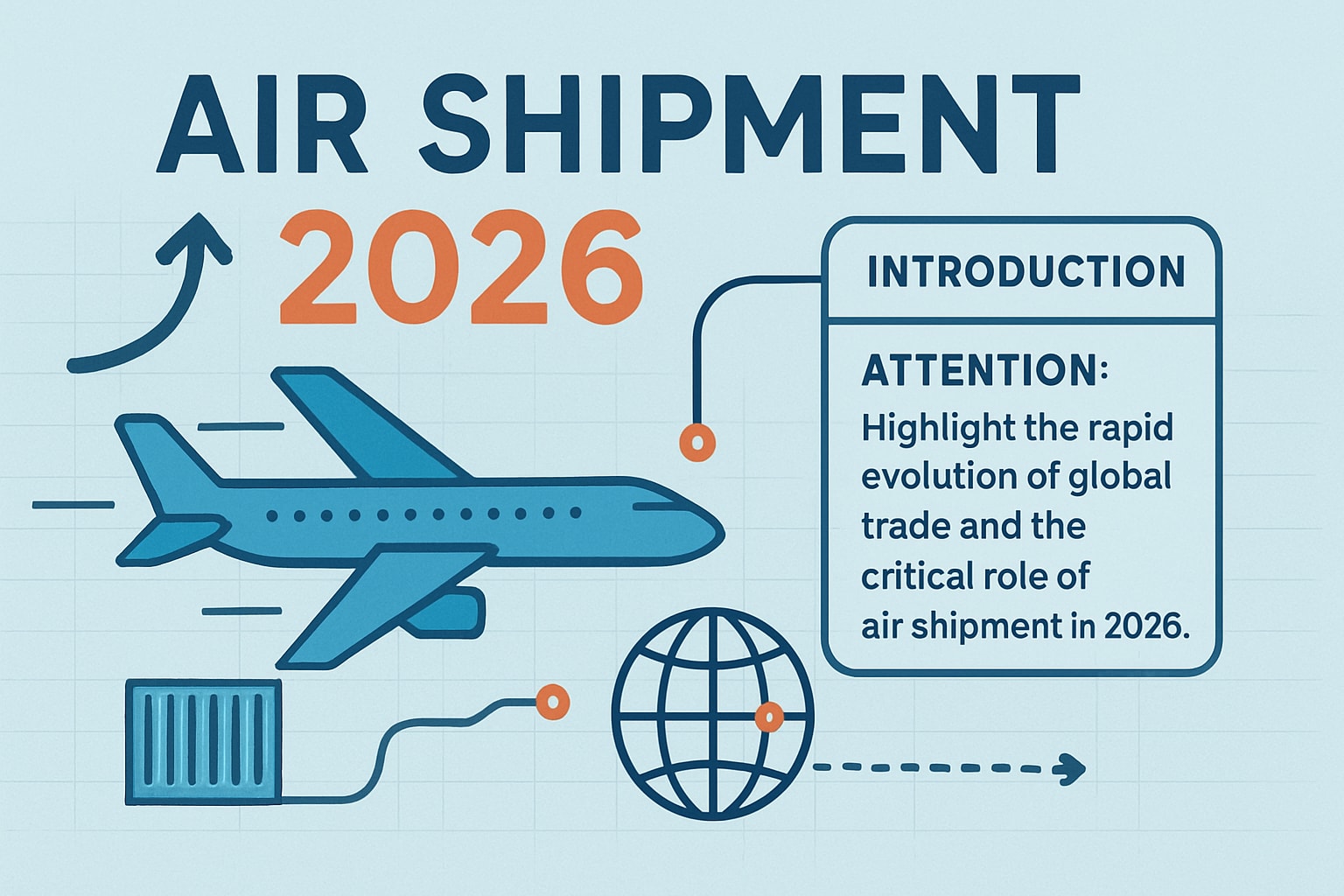
Global trade is evolving faster than ever, and air shipment stands at the heart of this transformation in 2026. Businesses and logistics professionals face rising demands for speed, reliability, and the ability to manage complex supply chains.
Getting a handle on air shipment processes is no longer optional. Those who master these steps can unlock real cost savings, boost operational efficiency, and gain a crucial edge in the global marketplace.
This essential handbook delivers a step-by-step guide to air shipment in 2026. You will discover the latest industry trends, preparation strategies, booking and documentation tips, customs insights, tracking solutions, and future innovations.
The air shipment industry is experiencing rapid transformation as we approach 2026. Driven by global shifts in trade, digital innovation, and evolving customer demands, businesses are rethinking strategies to remain competitive. Understanding these trends is crucial for anyone involved in air shipment, whether shipping high-value goods or managing complex supply chains.

Recent data from the International Air Transport Association (IATA) and WorldACD points to steady expansion in air shipment. In November 2025, IATA reported a 5.5% year-on-year growth in global air cargo demand, reflecting strong momentum as we enter 2026. This growth is largely fuelled by robust e-commerce, which now accounts for 20% of all global air freight.
Sectors such as pharmaceuticals, automotive, and high-tech continue to drive air shipment volumes. A notable example is the ongoing movement of vaccines and medical supplies, a legacy of the COVID-19 pandemic that has permanently raised expectations for speed and reliability in medical logistics. As businesses plan for the year ahead, recognising these sectoral drivers is key to leveraging opportunities in air shipment.
For a detailed breakdown of recent air cargo volume trends, see the IATA's November 2025 Air Cargo Report.
Technology is at the heart of the air shipment revolution in 2026. Artificial intelligence now powers route optimisation, allowing airlines and freight forwarders to predict demand and minimise transit times. Digital booking and cargo management platforms are becoming the industry norm, automating processes that once required manual intervention.
Blockchain initiatives are also gaining ground, offering greater transparency and security throughout the supply chain. Airlines such as Lufthansa Cargo have invested heavily in digitalisation, enabling real-time status updates and seamless document exchange. These advancements are making air shipment faster, more reliable, and easier to manage for businesses of all sizes.
Sustainability is now a central concern for the air shipment sector. CORSIA, the Carbon Offsetting and Reduction Scheme for International Aviation, and the EU Emissions Trading System are imposing stricter emissions standards on airlines. As a result, sustainable aviation fuel (SAF) usage is rising, with many carriers launching carbon offsetting programmes and seeking green logistics certifications.
Shippers increasingly prioritise sustainability when choosing air shipment partners. The industry’s collective push towards lower emissions is reshaping procurement decisions and encouraging innovation in fuel and aircraft technology.
Geopolitics continues to shape air shipment flows worldwide. Post-Brexit regulations have altered UK and EU air cargo dynamics, while ongoing US-China trade tensions are prompting supply chain diversification. Emerging hubs like Istanbul, Dubai, and Singapore are gaining prominence, offering new gateways for intercontinental air shipment.
Businesses must stay agile, monitoring regulatory updates and shifting trade patterns to avoid disruption. Strategic planning is essential to mitigate risks and capitalise on new opportunities as air shipment routes evolve.
Capacity remains a significant challenge in air shipment. Aircraft shortages and fluctuating fuel prices create unpredictability in available space and freight rates. Seasonal peaks, such as Chinese New Year, Black Friday, and Christmas, often lead to surcharges and tight capacity.
For example, in the 2025 peak season, surcharges impacted costs and required shippers to book space well in advance. Understanding these cycles and building flexibility into logistics planning can help businesses navigate volatility in the air shipment market.
Customer expectations for air shipment are changing rapidly. There is growing demand for real-time tracking, flexible delivery options, and transparent pricing. Express and time-critical shipments are on the rise, particularly in sectors like automotive, where just-in-time delivery is crucial.
A case study from the automotive industry illustrates how reliance on air shipment ensures production lines keep moving, even when supply chains are disrupted. Meeting these heightened expectations will be essential for success in the competitive air shipment landscape of 2026.
Preparing for an air shipment in 2026 means more than just moving goods from point A to point B. It involves a series of well-defined steps, each critical to ensuring your cargo arrives safely, punctually, and in full compliance with regulations. Success in air shipment starts with understanding when to use this transport mode, followed by careful planning and coordination at every stage.

The first step in any air shipment process is to evaluate whether air is the right mode for your goods. Air shipment is ideal for urgent, high-value, or perishable cargo that cannot afford delays. For example, electronics, pharmaceuticals, and fashion samples often benefit from the speed and security of air transport.
Consider the weight and volume restrictions. Most airlines set a maximum of 1000 kg per pallet, and dimensional limits may apply. If your cargo is bulky but low in value, sea or road might be more economical. For high-value electronics, air shipment reduces transit time and risk.
Refer to the Air Cargo and Freight Overview for a detailed comparison of different freight modes. Analysing urgency, value, and perishability will help you make a data-driven decision.
Choosing the correct service is vital for a successful air shipment. Options include general cargo, express, and specialised solutions such as temperature-controlled or hazardous goods transport.
General cargo suits most non-urgent shipments. Express services are designed for time-critical deliveries, often providing same-day uplift. Specialised services cater for sensitive items, like pharmaceuticals needing strict temperature control.
Decide between full charter, part charter, or consolidated shipments. Pharmaceuticals, for example, may require dedicated aircraft with temperature monitoring, while automotive parts might move in consolidated loads. The service you select should align with your cargo’s specific needs.
Proper packaging and labelling are fundamental in air shipment. Cargo must meet IATA Dangerous Goods Regulations if hazardous materials are involved. Fragile or perishable items need robust, standardised packaging to withstand handling and environmental changes.
For digital tracking, barcodes and RFID tags are recommended. Oversized or irregularly shaped consignments require special crates or pallets. Always ensure labels are clear, durable, and compliant with airline requirements.
A checklist for packaging and labelling:
Meeting these standards reduces the risk of damage, delays, or rejections during transit.
Accurate and complete documentation is crucial in air shipment. The essentials include a commercial invoice, air waybill (AWB), packing list, and any necessary export or import licences. By 2026, over 75 percent of shipments use digital documentation, such as eAWB, to streamline the process.
Common errors—like mismatched data or missing signatures—can cause delays or fines. Double-check all entries and use templates provided by airlines or freight forwarders for consistency.
Digital workflows enable faster processing and reduce manual mistakes. Preparing your paperwork meticulously ensures smooth customs clearance and uninterrupted transit.
Protecting your cargo during air shipment is non-negotiable. There are two main types of cargo insurance: all-risk, which covers most scenarios except listed exclusions, and named perils, which covers only specified risks. Evaluate your cargo’s value and vulnerability to select the right policy.
If a major loss occurs, prompt reporting and accurate documentation are vital for claims. Lessons from past incidents highlight the importance of reading policy details and knowing claim procedures.
Insurance is your safety net, ensuring financial recovery if something goes wrong with your air shipment.
Effective scheduling and coordination underpin a successful air shipment. Standard bookings require three to five days’ notice, while express services may allow same-day arrangements. Communicate closely with freight forwarders, airlines, and ground handlers to align schedules and avoid bottlenecks.
Contingency planning is essential. Delays can arise from weather, customs, or capacity shortages. Having backup routes or alternative carriers ready will keep your supply chain resilient.
By managing timelines and stakeholders proactively, you ensure your air shipment moves smoothly from origin to destination.
Efficient booking and accurate documentation are the backbone of any successful air shipment. In 2026, digital innovation and customer expectations are reshaping how businesses manage these critical steps. Understanding the latest trends and best practices will ensure your air shipment moves smoothly from origin to destination.

Selecting the best partner for your air shipment is essential. A strong freight forwarder or digital platform can determine the speed, reliability, and cost-effectiveness of your cargo movements.
Here is a comparison of key factors:
| Feature | Traditional Forwarder | Digital Platform |
|---|---|---|
| Booking Speed | Hours to days | Instant |
| Document Handling | Manual | Automated |
| Tracking | Limited | Real-time |
| Pricing Transparency | Variable | High |
Choosing the right solution for your air shipment will give you greater control and confidence in the process.
Pricing for air shipment can fluctuate due to weight, volume, route, fuel surcharges, and seasonal demand. The rise of digital quoting tools now allows shippers to access instant, transparent rates.
For a detailed walkthrough of procedures and tips, see Booking and Quoting Air Freight.
Having clear, upfront pricing for your air shipment minimises surprises and streamlines financial planning.
The shift to electronic documentation is transforming air shipment operations. By 2026, over 75% of shipments use eAWB, reducing paperwork and errors.
Adopting digital documentation for air shipment not only saves time but also strengthens compliance and reduces delays.
Modern air shipment platforms offer real-time booking, live aircraft availability, and instant confirmation. This replaces the traditional back-and-forth with immediate, reliable updates.
Case studies show that automated platforms can reduce lead times and improve reliability, helping your air shipment reach its destination without unnecessary delays.
Ensuring smooth customs clearance, regulatory compliance, and robust security is essential for any successful air shipment in 2026. With evolving global trade, businesses must stay updated on new procedures and technologies to avoid costly setbacks.

Moving goods across borders via air shipment involves several critical steps. Export, transit, and import processes each require precise documentation and coordination. Shippers must prepare customs declarations, import and export permits, and certificates of origin before goods depart.
Even minor errors can cause delays. Below is a summary of common issues:
| Cause of Delay | Example | Prevention Tip |
|---|---|---|
| Incomplete paperwork | Missing invoices | Double-check documents |
| Inaccurate values | Incorrect item pricing | Verify details |
| Incorrect HS codes | Misclassification | Use updated codes |
Careful preparation and attention to detail ensure a faster air shipment journey through customs.
Regulatory compliance is increasingly complex for air shipment in 2026. IATA, ICAO, and local authorities frequently update rules affecting documentation, labelling, and cargo handling. Businesses operating between the UK and EU must adapt to post-Brexit customs changes and new digital border controls.
Trade tensions, such as those between the US and China, can lead to sudden changes in tariffs and paperwork. Staying informed and collaborating with experienced freight forwarders reduces compliance risks for air shipment and streamlines border crossings.
Security remains a top priority for every air shipment. All cargo is screened using methods like X-ray, explosive trace detection (ETD), canine inspection, and physical checks. Programmes such as Known Consignor and Regulated Agent allow trusted companies to benefit from streamlined screening, but high-risk routes may still require enhanced checks.
Recent years have seen stricter security for certain regions and cargo types. Staying compliant with security protocols and proper documentation protects both the shipment and the reputation of all parties involved.
Shipping restricted or dangerous goods by air shipment demands strict adherence to IATA regulations. Items such as lithium batteries, chemicals, and medical supplies must be classified, packaged, and labelled according to the latest standards.
Permits are often required, and the consequences of non-compliance are severe. For example, incidents involving misdeclared batteries have led to tighter controls and higher penalties. Understanding the rules and working with specialists helps prevent costly mistakes and ensures safe delivery.
Digitalisation is transforming air shipment customs processes in 2026. E-customs platforms and blockchain-based clearance systems are becoming standard, allowing real-time risk assessment and automated compliance checks. The UK’s rollout of the Customs Declaration Service (CDS) is a prime example of this shift.
For shippers seeking enhanced visibility, How to Track Air Shipments offers insight into real-time tracking, which is now integrated across many digital customs solutions. Automated data sharing between carriers, authorities, and clients means fewer errors and faster processing for every air shipment.
Fines and penalties remain a significant risk for air shipment in 2026. Common mistakes include incomplete records, misclassified goods, and missed document deadlines. Authorities have increased audit frequencies, and high-profile fines have highlighted the importance of compliance.
Best practices to avoid penalties:
Diligent preparation and ongoing education keep your air shipment operations compliant and penalty-free.
Managing air shipment in 2026 requires more than just moving goods from A to B. The journey continues after take-off, with sophisticated tracking, delivery, and post-shipment processes ensuring reliability and customer satisfaction. Each step, from real-time monitoring to aftercare, plays a vital role in the overall air shipment experience.
Advancements in tracking have revolutionised air shipment visibility. Modern solutions use GPS, RFID, and IoT sensors to provide end-to-end monitoring. Customers can access live status updates through dedicated portals, receiving alerts the moment their cargo reaches key milestones.
Pharmaceutical air shipment, for example, relies on temperature-sensitive tracking to maintain product integrity. For a deeper dive into best practices for temperature-controlled cargo, see Temperature-Controlled Freight Solutions. These innovations support compliance and customer trust.
Despite technological progress, disruptions remain a reality for air shipment. Weather events, strikes, capacity shortages, and customs holds can all cause delays. Proactive communication is essential—automated notifications alert customers when issues arise, allowing for timely contingency plans.
The 2025 volcanic ash disruptions in Europe highlighted the importance of flexible routing and transparent updates. By preparing for the unexpected, shippers can minimise negative impacts on their air shipment operations and maintain delivery commitments.
Proof of delivery (POD) is a critical milestone in every air shipment. Digital POD systems have replaced traditional paperwork, offering instant confirmation via electronic signatures and automated notifications. These systems improve efficiency, reduce errors, and provide clear audit trails.
For high-value or sensitive cargo, chain of custody protocols are enforced throughout the delivery process. Secure handovers and digital documentation ensure that every air shipment reaches its recipient safely and verifiably, meeting stringent industry standards.
Not every air shipment arrives in perfect condition. When cargo is lost or damaged, a streamlined claims process is vital. Shippers should document the incident thoroughly, using digital platforms for faster resolution. Reverse logistics, especially for e-commerce returns, is now an integral part of global air shipment strategies.
Aftercare does not end with delivery. Ongoing support for repairs, replacements, and customer queries ensures long-term satisfaction. Efficient aftercare processes protect reputations and build loyalty in a competitive market.
Exceptional customer service underpins successful air shipment management. Dedicated support teams provide 24/7 assistance, resolving issues quickly and professionally. Service level agreements (SLAs) set clear performance expectations, while customer satisfaction metrics drive continuous improvement.
Rapid escalation protocols and expert guidance help shippers navigate complex challenges. In an era where expectations are higher than ever, responsive support distinguishes leading air shipment providers from the rest.
The future of air shipment is rapidly taking shape as cutting-edge technologies and shifting global priorities redefine the industry. Logistics professionals must stay ahead by understanding the innovations that are transforming how cargo moves across continents. In this section, we highlight seven key trends set to dominate air shipment in the coming years.
Autonomous and electric aircraft are poised to revolutionise air shipment, particularly for short-haul and remote routes. Cargo drones and pilotless freighters are already undergoing trials, offering a glimpse into a future where human intervention is minimised. These aircraft promise lower operating costs, reduced emissions, and the flexibility to reach destinations that were previously inaccessible.
Europe and Asia are leading the way with pilot programmes for electric cargo planes, which are expected to play a crucial role in last-mile delivery. As battery technology and automation improve, air shipment will become faster, more reliable, and environmentally friendly.
Digital transformation is reshaping the air shipment sector. AI-powered platforms now enable predictive analytics for demand forecasting and intelligent route planning. These systems analyse vast data sets to optimise schedules, reduce delays, and allocate resources more efficiently.
AI-driven customer service tools are also streamlining communication between shippers, carriers, and end customers. By reducing manual workload and automating routine tasks, advanced platforms make air shipment more responsive to dynamic market conditions. As digital adoption accelerates, the industry is experiencing improved transparency and reduced error rates.
Sustainability is at the heart of future air shipment strategies. Airlines are rapidly expanding their use of Sustainable Aviation Fuel (SAF) and investing in carbon-neutral initiatives. Many leading carriers have launched offsetting schemes and are working towards net-zero emissions targets.
Collaborative projects between airlines and fuel providers are driving the development of SAF, which significantly reduces the carbon footprint of air shipment. By prioritising green logistics, the industry is aligning with stricter environmental regulations and meeting growing customer demand for eco-friendly solutions.
Automation is transforming every stage of the air shipment process, with smart warehousing at the forefront. Robotics and automated storage systems are streamlining cargo handling, increasing throughput, and minimising human error. At major European airports, advanced robotics solutions are now integrated with cargo hubs for rapid loading and unloading.
These innovations not only enhance speed but also improve safety and accuracy. The result is a more efficient supply chain, where air shipment benefits from reduced turnaround times and optimised space utilisation.
The integration of hyperloop technology with air shipment networks is on the horizon. Hyperloop systems, capable of moving cargo at incredibly high speeds, are being trialled as a link between airports and urban centres. This multimodal approach promises to cut delivery times for express and intercontinental shipments.
Pilot projects are exploring how hyperloop corridors can complement traditional air shipment, enabling seamless transitions between transport modes. The future may see air shipment hubs connected directly to hyperloop terminals, reshaping the landscape of time-critical logistics.
End-to-end digital visibility is becoming the standard for air shipment operations. Real-time data sharing between shippers, carriers, and authorities enhances coordination, reduces bottlenecks, and enables proactive decision-making. Blockchain pilots are being used for secure document exchange and transparent tracking of cargo movements.
Industry data highlights the impact of these trends, with IATA's 2024 Air Cargo Performance reporting strong growth as digitalisation accelerates. Data-driven optimisation is key to unlocking greater efficiency and resilience in air shipment.
Regulatory and security frameworks are evolving to keep pace with technological advances in air shipment. New standards are being introduced to address autonomous aircraft, digital customs, and cybersecurity concerns. The EU Single Window for Customs is streamlining border processes, while digital compliance tools are making it easier to meet complex requirements.
Recent data, such as IATA's July 2025 Air Cargo Report, shows that regulatory changes are contributing to increased capacity and smoother cross-border flows. As the industry adapts, air shipment will become safer, more secure, and easier to manage for global shippers.
After exploring the latest trends, practical steps, and future innovations in air shipment, you now have the foundation to make smarter, faster logistics decisions in 2026. If you’re ready to streamline your air cargo operations with the support of intelligent automation and real human expertise, why not see how CharterSync can help? You can access instant global aircraft availability, transparent quoting, and seamless booking—all tailored for time critical and specialised shipments. Let’s move your business forward together—request a demo and discover what’s possible for your next air shipment.

.png)