.png)
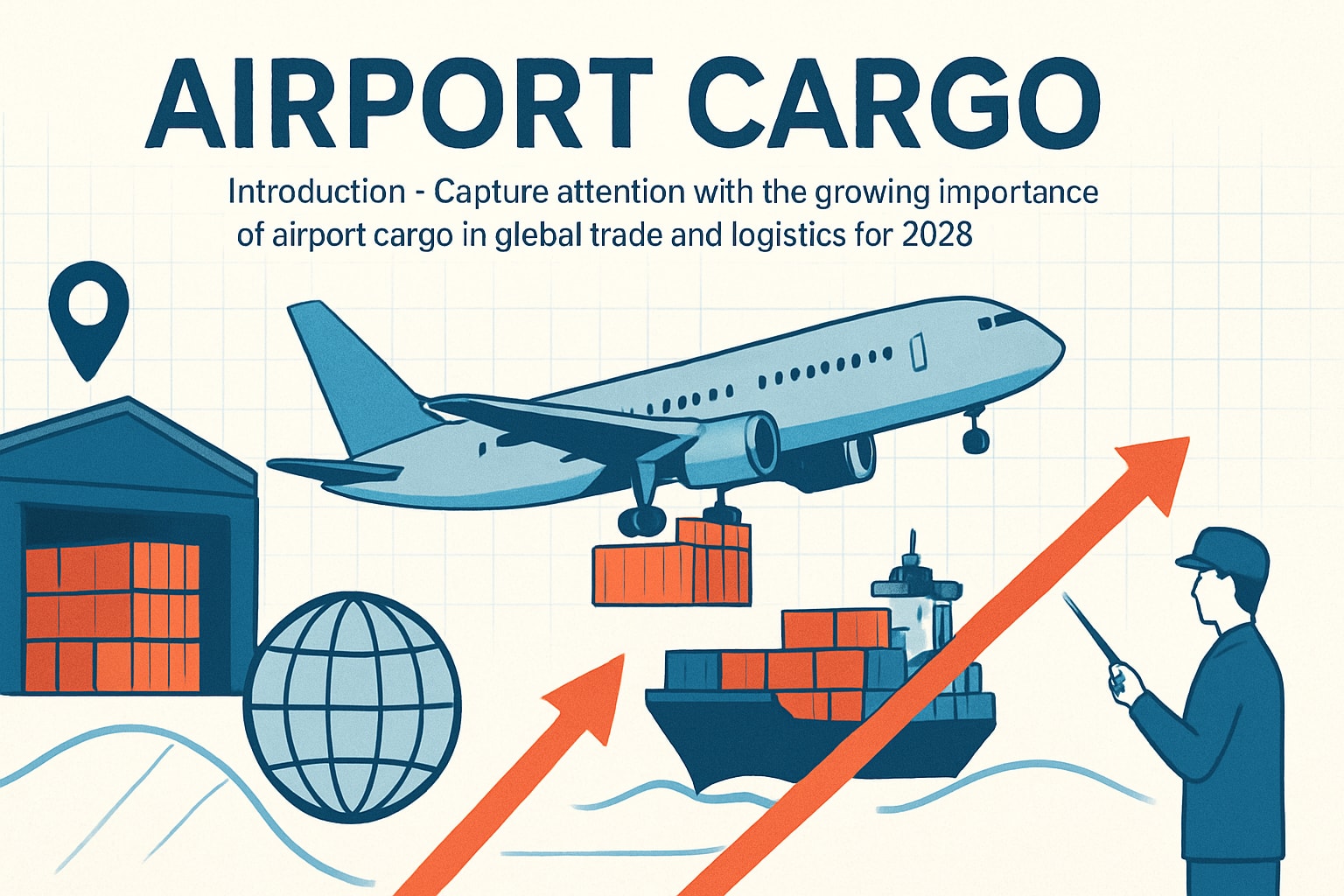
Airport cargo is set to play an even bigger role in global trade and logistics by 2026, reshaping how goods move across continents. As the industry evolves, businesses, freight forwarders, and logistics professionals face new challenges and opportunities.
This essential guide delivers practical steps, expert insights, and future-focused trends for optimising airport cargo operations. Discover how to navigate shifting regulations, digital innovations, and sustainability demands.
We cover everything from cargo types and handling processes to risk management and the future outlook. Stay ahead by mastering the strategies that will define success in the dynamic world of airport cargo.
As we approach 2026, the airport cargo sector is undergoing rapid transformation. Businesses and logistics professionals must adapt to changing trends and new challenges. The drive for efficiency and resilience is reshaping how airport cargo operations are managed worldwide.

Airport cargo is being reshaped by a surge in global e-commerce. Online retail continues to expand, fuelling demand for rapid, reliable deliveries. Consumers expect shorter delivery windows, prompting businesses to leverage air transport for time-sensitive goods.
Geopolitical shifts and new trade agreements are also influencing airport cargo flows. The realignment of trade routes, especially in response to ongoing Brexit implications and evolving international relations, is creating new opportunities and challenges for freight forwarders.
Emerging markets are becoming significant contributors to airport cargo volumes. Growth in Asia, Africa, and Latin America is leading to increased exports and imports, requiring airports to scale up their cargo handling capacity.
Advances in aircraft technology are enhancing payload capacity and fuel efficiency. Modern freighters can carry heavier loads over longer distances, reducing costs and supporting sustainable growth. Airports are responding by investing in larger, more flexible cargo terminals.
Supply chain disruptions, such as pandemics and natural disasters, have underlined the need for agility in airport cargo operations. These events have prompted many logistics providers to diversify sourcing and routing strategies.
Recent data shows that global air cargo volumes are projected to reach 75 million tonnes by 2026, with steady annual growth rates. According to the Air Cargo Market Forecast 2026–2035, this growth is supported by ongoing investments in airport infrastructure. Major hubs like Heathrow and Frankfurt are expanding their facilities to accommodate increased throughput and specialised handling.
Airport cargo encompasses a wide range of goods, each with unique demands. General cargo includes everyday items such as textiles, electronics, and machinery. These shipments follow standard handling and storage protocols.
Perishable cargo, like fresh produce and seafood, requires strict temperature control. Pharmaceuticals need even tighter conditions, with precise temperature monitoring and rapid transit to maintain product integrity. For more information on handling these sensitive shipments, see our dedicated temperature-controlled freight guidance.
High-value goods, such as luxury items and electronics, demand enhanced security measures throughout the airport cargo process. Dangerous goods, including chemicals and batteries, are subject to rigorous regulatory oversight.
The rise of temperature-sensitive and time-critical shipments is notable. As of 2024, specialised cargo categories account for nearly 30 percent of total airport cargo volume, a figure expected to grow by 2026.
A quick comparison:
| Cargo Type | Key Requirements | Regulatory Needs |
|---|---|---|
| General | Standard handling, storage | Basic documentation |
| Perishables | Cold chain, fast turnaround | Health and safety checks |
| Pharmaceuticals | Precise temperature, secure transit | Good Distribution Practice |
| High-value | Secure storage, tracking | Enhanced security forms |
| Dangerous goods | Special packaging, labelling | Dangerous Goods Regulations |
Businesses must align their processes with the specific needs of each airport cargo type. This approach ensures compliance, minimises risks, and supports efficient, reliable delivery for all stakeholders.
Efficient airport cargo handling is the backbone of global trade, ensuring goods move seamlessly from origin to destination. In 2026, as supply chains grow more complex, understanding these processes is crucial for businesses seeking reliability and speed. This guide walks through each stage, highlighting best practices and innovations that shape modern airport cargo operations.

The airport cargo journey begins at acceptance. Here, ground staff verify all documentation, including the Air Waybill (AWB), customs forms, and security declarations. Accuracy at this stage is critical, as incomplete or incorrect paperwork can delay shipments and disrupt schedules.
Digitalisation is transforming this process. Electronic documentation speeds up verification, reducing errors and manual handling. Cargo is inspected for compliance with safety and regulatory standards. For time-sensitive or high-value shipments, pre-clearance and digital pre-alerts offer added efficiency.
For a comprehensive overview of these initial steps and how modern solutions improve efficiency, see the Airport freight operations overview.
A typical checklist for cargo acceptance includes:
| Document Type | Purpose | Required For |
|---|---|---|
| Air Waybill (AWB) | Shipment contract & receipt | All cargo |
| Customs Declaration | Regulatory compliance | International shipments |
| Security Declarations | Safety checks | All cargo |
Once accepted, airport cargo undergoes mandatory security screening. Methods include X-ray scanning, Explosive Trace Detection (ETD), and canine inspections. These checks ensure that all shipments comply with both international and local regulations.
Security standards are governed by bodies such as the International Civil Aviation Organization (ICAO), the European Union, and the UK Civil Aviation Authority. Each shipment is assessed for risk, and high-risk cargo may be subject to additional screening or manual inspection.
Best practices in secure handling involve clear communication, staff training, and regular audits. Automation, such as automated screening lines, is increasingly adopted to boost throughput and accuracy. Compliance is not just a legal requirement but a vital part of maintaining trust in airport cargo services.
After screening, airport cargo is prepared for loading by building up shipments onto Unit Load Devices (ULDs) or pallets. ULDs come in various shapes and sizes, designed to maximise aircraft space while protecting goods.
Load planning is critical. Staff must balance weight, ensure even distribution, and follow specific guidelines for hazardous or temperature-sensitive shipments. Automation is making a significant impact, with robotic systems streamlining palletisation and reducing manual errors.
A well-organised build-up process minimises delays and ensures cargo integrity. The choice of ULD, careful documentation, and attention to special handling requirements all contribute to a smooth airport cargo operation.
Once built up, airport cargo moves to secure storage areas within the warehouse. Advanced warehouse management systems track each shipment in real-time, using barcodes, RFID tags, or IoT sensors. This technology ensures visibility and reduces the risk of loss or misplacement.
Perishable and pharmaceutical shipments often require cold chain storage, with temperature monitoring to maintain product integrity. When it is time to load, cargo is transferred from the warehouse to the aircraft apron, usually via electric or automated vehicles. Real-time tracking allows stakeholders to monitor progress and respond quickly to any issues.
Efficient movement from storage to aircraft is essential for maintaining tight schedules and minimising ground time. Transparent tracking data also enhances customer confidence in airport cargo services.
On arrival, airport cargo is offloaded from the aircraft and transferred to customs for inspection and clearance. Customs officers review documentation, verify shipment contents, and ensure compliance with import regulations.
Once cleared, ground handlers take over, preparing cargo for collection by freight forwarders or logistics providers. Last-mile delivery presents unique challenges, including traffic delays, security risks, and the need for rapid handover to meet customer commitments.
Successful last-mile solutions rely on clear communication, robust tracking, and collaboration between airport cargo teams and external partners. Addressing these challenges ensures cargo reaches its final destination efficiently and securely.
The landscape of airport cargo regulation is evolving rapidly, driven by global trade dynamics and technological innovation. Businesses must navigate a complex web of rules to ensure compliance and operational efficiency. In 2026, keeping pace with these changes is crucial for maintaining competitive advantage and ensuring smooth airport cargo movement.

The airport cargo sector faces a rigorous regulatory environment shaped by international and local bodies. Key organisations such as IATA, ICAO, the EU, and the UK CAA regularly update standards to address evolving security threats, environmental concerns, and operational best practices. In 2026, the introduction of new safety protocols and harmonised customs procedures is reshaping daily operations for airport cargo handlers.
Brexit continues to influence UK regulations, requiring businesses to adapt to new customs checks and trade agreements. This has resulted in revised documentation requirements and updated safety mandates for airport cargo entering or leaving the UK. For example, the latest IATA and ICAO guidelines focus on risk-based screening and cargo traceability, helping operators remain compliant in an increasingly complex market.
The adoption of global standards means that airport cargo providers must stay informed of frequent legislative changes. To support compliance, many companies refer to resources such as the IATA's 2026 Cargo and Ground Operations Manuals for authoritative updates on handling, security, and documentation.
A summary table of key regulatory bodies and their focus areas:
| Regulatory Body | Focus Area | 2026 Update Examples |
|---|---|---|
| IATA | Safety, documentation | Enhanced e-AWB, stricter screening |
| ICAO | Security, global standards | Risk-based cargo assessment |
| EU | Customs, sustainability | Green logistics mandates |
| UK CAA | Local compliance | Post-Brexit customs, security checks |
Staying current with these frameworks is vital for risk mitigation and uninterrupted airport cargo flow.
Digital transformation is at the forefront of airport cargo compliance in 2026. The shift toward electronic Air Waybills (e-AWB) and digital customs declarations has revolutionised the documentation process. With e-AWB now the industry standard, paperwork errors and processing delays have significantly decreased for airport cargo shipments.
Digital documentation offers several advantages:
Forward-thinking airports and carriers are investing in integrated digital platforms. These systems enable real-time updates, instant validation of documents, and seamless sharing with customs authorities. For instance, some major hubs have implemented blockchain-based recordkeeping to enhance transparency and security for sensitive airport cargo.
Digital adoption rates are climbing, with over 80% of global air waybills expected to be electronic by 2026. The move to digital is not only a compliance requirement but also a competitive differentiator, enabling faster turnaround times for airport cargo and improving customer satisfaction.
Security remains a top priority for airport cargo operations. In 2026, enhanced screening protocols are mandatory, including advanced X-ray technology, Explosive Trace Detection (ETD), and canine units. These measures protect airport cargo from threats while ensuring compliance with international and local regulations.
Risk management strategies are increasingly sophisticated. Regular security audits, staff training, and the use of tamper-evident seals are standard practice. Technology also plays a central role, with AI-powered surveillance and real-time tracking systems monitoring airport cargo throughout its journey.
Cargo theft and security incidents, although still a concern, have decreased thanks to these proactive measures. Industry data notes a reduction in reported cargo crime at major airports, reflecting the effectiveness of layered security protocols.
Collaboration is also essential. Partnerships with organisations like TAPA and law enforcement agencies help set standards and share intelligence, further strengthening airport cargo security. By integrating robust risk management and compliance strategies, operators can safeguard valuable shipments and maintain a resilient supply chain.
Digital transformation is reshaping airport cargo operations in 2026. From robotics to artificial intelligence, new technologies are driving efficiency, reliability, and transparency throughout the supply chain. Businesses aiming to stay competitive must understand and embrace these advancements to optimise their airport cargo processes.

Automation is at the heart of the next-generation airport cargo terminal. Robotics handle repetitive tasks such as palletising and sorting, ensuring speed and consistency. Automated guided vehicles (AGVs) transport goods seamlessly between storage, build-up areas, and aircraft stands, reducing manual handling risks.
Smart sorting systems scan, weigh, and direct shipments with precision. These technologies not only increase throughput but also minimise errors and lower operational costs.
Key benefits of automation in airport cargo:
Airports such as Heathrow and Frankfurt have invested in fully automated cargo terminals, setting benchmarks for efficiency. As demand grows, automation becomes a vital differentiator in the airport cargo landscape.
IoT devices are revolutionising airport cargo by providing real-time visibility into shipment location and status. Sensors monitor temperature, humidity, and shock, which is essential for sensitive goods like pharmaceuticals and perishables.
Live data feeds enable shippers and forwarders to track airport cargo at every stage. This transparency reduces the risk of loss or spoilage and supports compliance with strict regulatory standards.
Main features of IoT-enabled airport cargo tracking:
Case studies have shown that IoT adoption leads to higher customer satisfaction and fewer supply chain disruptions. The ability to react quickly to real-world conditions gives a significant edge in the competitive airport cargo sector.
Artificial intelligence is transforming airport cargo operations by enabling smarter decision-making. AI-powered tools analyse shipment data to forecast demand, optimise routes, and detect anomalies before they cause costly delays.
Predictive analytics platforms help operators allocate resources efficiently, reducing ground time and avoiding bottlenecks. For example, AI can identify patterns in cargo flows and suggest optimal loading sequences.
According to air cargo charter technology trends, AI adoption is accelerating across airport cargo, with forwarders and airlines reporting measurable improvements in turnaround times and reliability.
Notable applications of AI in airport cargo:
With AI projected to become standard in cargo operations by 2026, airport cargo providers who invest early will gain a clear advantage.
Digitalisation is streamlining the way airport cargo is booked, managed, and tracked. Online booking platforms allow freight forwarders and shippers to compare options, receive instant quotes, and confirm shipments with minimal manual intervention.
Seamless integration with airline and ground handler systems ensures data accuracy and reduces paperwork. Self-service portals empower customers to manage their airport cargo, track deliveries, and access compliance documents easily.
Advantages of digital platforms in airport cargo:
As digital adoption increases, airport cargo stakeholders benefit from greater efficiency, visibility, and customer satisfaction. The shift to digital is not just a trend but a necessity for success in 2026.
Sustainability is rapidly becoming a defining factor for airport cargo operations. As environmental expectations tighten and stakeholders demand greener solutions, logistics providers must adapt. The drive towards green logistics is reshaping how airport cargo is managed, handled and delivered.
The regulatory landscape for airport cargo is evolving to address urgent climate goals. In 2026, new emissions standards will require stricter monitoring of greenhouse gases across airport cargo facilities. Authorities are implementing carbon reporting frameworks, pushing operators to account for and reduce their environmental impact.
Offsetting schemes are now mandatory for many carriers, with verified credits needed to balance emissions from airport cargo flights. Compliance is not only about meeting legal requirements but also about maintaining trust with eco-conscious customers. Forward-thinking businesses are investing in cleaner technologies and transparent reporting to stay ahead.
Sustainable handling is at the heart of green airport cargo operations. Electric ground support equipment, such as tugs and loaders, is replacing older diesel models. This shift cuts local air pollution and lowers operational costs.
Many airport cargo terminals are adopting renewable energy sources, including solar and wind, to power warehouses and refrigeration units. Waste reduction is a growing priority, with recycling programmes targeting plastic wrap, pallets and packaging. Staff training ensures that green initiatives are embedded in daily routines and decision-making.
Packaging and transport present major opportunities for reducing the footprint of airport cargo. The industry is moving towards lightweight, recyclable materials that minimise waste. Reusable unit load devices (ULDs) are gaining popularity, cutting both costs and environmental impact.
Innovative packaging solutions now protect sensitive shipments while using less material. Multimodal logistics, which combine air with rail or electric road transport, further reduce emissions. These advances help airport cargo operators meet sustainability targets without compromising efficiency or reliability.
Leaders in airport cargo are setting ambitious carbon reduction targets and achieving measurable results. Several major airports have invested in fully electric fleets and energy-efficient infrastructure, reporting significant drops in emissions. Logistics providers are collaborating on best practices and sharing data to accelerate progress.
For a closer look at industry leadership, see how CharterSync is driving sustainable air cargo practices through innovative solutions and partnerships. As regulations tighten, these examples highlight what is possible for the future of airport cargo sustainability.
Managing risk in airport cargo operations is increasingly complex as global trade intensifies. Effective strategies are vital to protect assets, comply with regulations, and ensure timely delivery. This section explores key aspects of risk management, insurance, and security for airport cargo in 2026.
Airport cargo faces a range of risks that can disrupt supply chains and impact business continuity. Common threats include theft, physical damage, loss in transit, and unexpected delays. Each risk requires proactive identification and ongoing monitoring.
To mitigate these challenges, companies invest in comprehensive risk assessments before cargo arrival. Regular security audits help pinpoint vulnerabilities in airport cargo facilities and processes. By mapping risk hotspots, businesses can implement targeted controls and minimise exposure.
Key risk mitigation strategies include:
Early risk detection and swift response can greatly reduce losses in airport cargo operations.
Insurance is a critical tool in managing financial exposure for airport cargo stakeholders. Various policies cover risks such as damage, theft, and loss during handling or transit.
Types of insurance for airport cargo include:
In 2026, insurance providers are responding to evolving threats by offering tailored solutions for temperature-sensitive, high-value, and time-critical shipments. Premiums and coverage terms are influenced by security protocols, claims history, and the nature of the airport cargo being moved.
Staying informed on market trends helps businesses select the right insurance to protect their airport cargo investments.
Security is at the heart of airport cargo risk management. Airports deploy advanced surveillance, access controls, and digital monitoring to safeguard shipments and facilities. Best practices include physical barriers, CCTV, biometric access, and cyber-defence systems.
The regulatory environment is evolving, with new rules and international standards shaping airport cargo security. For example, the US Tightens Airfreight Security Rules for 2026 to address emerging threats and ensure compliance worldwide.
Adopting layered security protocols and leveraging the latest technologies can significantly reduce the risk of crime and operational disruption in airport cargo environments.
Collaboration across the industry is essential for setting and maintaining high security standards in airport cargo. Organisations such as TAPA and NaVCIS play a pivotal role in establishing best practices, sharing intelligence, and coordinating crime prevention efforts.
Successful initiatives at major airports demonstrate the value of collective action. Joint security training, data-sharing platforms, and incident reporting systems have all contributed to reduced cargo crime rates.
By embracing industry standards and fostering partnerships, airport cargo operators can create a unified front against emerging risks and drive continuous improvement in security.
As we look ahead to 2030, airport cargo is set for significant transformation. Global and UK air freight volumes are projected to rise steadily, driven by expanding international trade and consumer expectations for rapid delivery. Recent studies suggest that worldwide air cargo demand will grow by 4–5 percent annually, with the UK market following a similar trajectory. Key sectors fuelling this growth include pharmaceuticals, e-commerce, high-tech, and automotive. These industries require sophisticated handling and rapid response, making airport cargo operations even more critical. For deeper insights into future volume trends and innovation, see The Future of Air Cargo Networks.
The airport cargo industry is poised for robust expansion, with global volumes expected to reach new highs by 2030. E-commerce is a primary driver, as consumers increasingly demand same-day and next-day deliveries. Pharmaceutical shipments, which require precise temperature control, are growing rapidly due to advances in healthcare and global distribution needs. High-tech and automotive sectors are also contributing, as they rely on just-in-time supply chains. Airports are investing in dedicated cargo facilities and digital infrastructure to meet these demands. Forward-thinking businesses are positioning themselves to capture emerging market opportunities, ensuring airport cargo remains a vital link in the global supply chain.
Innovation is reshaping airport cargo, introducing unprecedented efficiency and transparency. Drones are being trialled for time-critical deliveries, especially in remote locations. Autonomous vehicles streamline ground handling, reducing turnaround times and human error. Blockchain technology is improving traceability and security, enabling real-time tracking and tamper-proof documentation. Early pilot projects demonstrate the potential for these technologies to revolutionise airport cargo operations. The rapid adoption of artificial intelligence and automation is also optimising route planning and resource allocation, setting new standards across the industry.
Airports are evolving from simple transit points to integrated logistics hubs. The modern airport cargo terminal now supports multimodal connections, linking air, road, rail, and sea transport. Logistics providers are collaborating closely with airports to offer seamless, end-to-end solutions. This integration enhances visibility, reduces bottlenecks, and improves customer service. As digital systems become the norm, data sharing and interoperability between stakeholders are increasingly important. The goal is a flexible, resilient supply chain that can adapt quickly to fluctuations in demand and unforeseen disruptions, keeping airport cargo at the heart of global commerce.
To succeed in the future, airport cargo operators must focus on agility and resilience. Investment in advanced technologies, such as AI-powered forecasting and automated handling, will be essential. Continuous training ensures staff can manage new systems and respond to changing regulations. Sustainability is also a key priority, with green logistics practices and carbon reduction targets gaining traction. By fostering a culture of innovation and collaboration, the airport cargo sector can overcome challenges and seize new opportunities, securing its critical role in the global logistics landscape.
As you look ahead to the evolving world of airport cargo in 2026, it’s clear that staying ahead means embracing smarter, faster, and more reliable solutions. With the landscape shifting rapidly—from digital innovations and automation to stricter regulations and the growing demand for time-critical shipments—you need trusted partners who truly understand your needs. That’s where CharterSync comes in. If you’re ready to streamline your air cargo charter operations and see how intelligent automation combined with expert support can give you an edge, I invite you to request a demo.

.png)