.png)
Mastering us air cargo shipping in 2026 is essential for anyone seeking efficiency and reliability in a rapidly changing logistics landscape. The sector faces fast-paced developments, rising complexities, and heightened expectations from shippers and customers alike.
New technologies, evolving regulations, and shifting global trade patterns are reshaping how us air cargo operates. Staying ahead means understanding these trends and adopting the right strategies.
This guide delivers practical steps and expert insights to help you achieve streamlined, cost-effective, and dependable air cargo solutions. Explore the latest market updates, compliance requirements, shipping processes, technology innovations, and cost optimisation strategies to elevate your operations this year.
The us air cargo industry in 2026 stands at a pivotal moment, shaped by rapid market evolution and technological progress. Shippers and logistics professionals are witnessing a surge in demand, with total market value and tonnage reaching new records. According to IATA's 2026 Air Cargo Forecast, air cargo volumes in the United States are set to increase significantly compared to 2023, driven by e-commerce growth, changing global supply chains, and urgent freight requirements.
Major hubs such as Memphis, Louisville, Miami, Los Angeles, and Chicago anchor the network, supporting integrators like FedEx, UPS, and DHL alongside commercial airlines and dedicated freighter operators. International trade agreements and shifting geopolitical landscapes are influencing cargo flows, especially for high-value sectors. For example, post-pandemic, the demand for pharmaceutical and high-tech shipments has soared, further cementing the strategic role of us air cargo in global logistics.
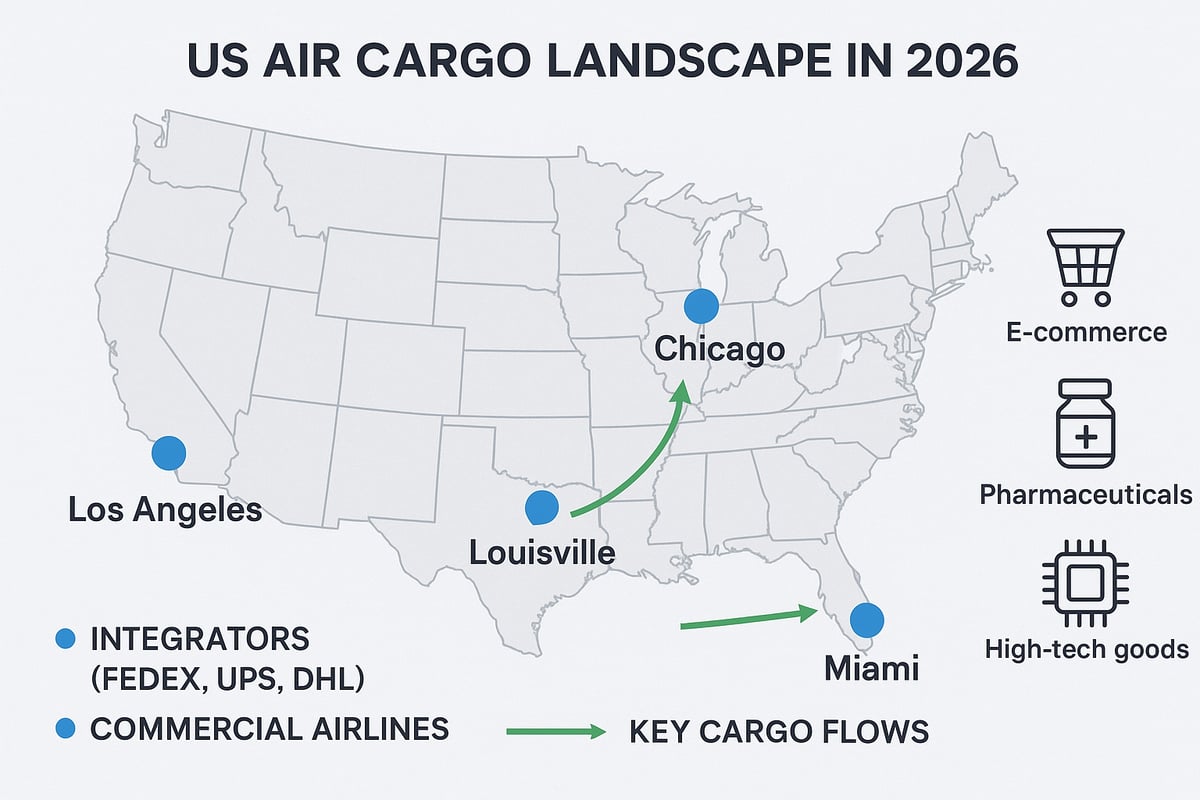
The us air cargo sector is projected to reach unprecedented heights by 2026. Market value is expected to climb sharply, with annual tonnage reflecting a robust growth rate. This expansion is largely attributed to three main drivers:
The busiest hubs—Memphis, Louisville, Miami, Los Angeles, and Chicago—play a central role in connecting domestic and international routes. Integrators provide end-to-end solutions, while commercial airlines and freighter operators offer flexibility for varying shipment needs. Trade agreements and geopolitical factors continue to shape the direction and volume of us air cargo flows, with notable surges in time-sensitive and high-value shipments post-pandemic.
In 2026, regulatory frameworks for us air cargo have evolved to address new security and environmental challenges. The TSA and FAA have introduced advanced screening procedures, requiring digital documentation and stricter verification for all shipments. This includes mandatory compliance with enhanced lithium battery shipping protocols, helping to mitigate safety risks associated with hazardous materials.
Environmental regulations now play a central role, with emissions targets and sustainable aviation fuel (SAF) requirements influencing operational decisions. Non-compliance can result in substantial penalties, so industry best practices recommend continuous monitoring of regulatory updates and investment in digital compliance tools. Staying informed is essential for navigating the complex landscape of us air cargo regulations.
Us air cargo services cater to a diverse array of goods, each with unique handling requirements. Common cargo types include general freight, perishables, pharmaceuticals, high-value electronics, and automotive parts. Specialised handling is vital for temperature-sensitive, hazardous, or oversized shipments to ensure product integrity and safety.
Temperature-controlled logistics have seen notable growth, driven by rising demand for pharmaceutical and perishable shipments. For example, temperature-sensitive vaccines and biologics now represent a significant share of the us air cargo market. Shippers must collaborate with partners who understand the complexities of these industry-specific needs, ensuring reliable and compliant service from origin to final delivery.
Navigating the us air cargo shipping process in 2026 requires precision, compliance, and the right partners. This step-by-step guide breaks down every stage, ensuring your cargo arrives safely, on time, and in line with all industry standards.
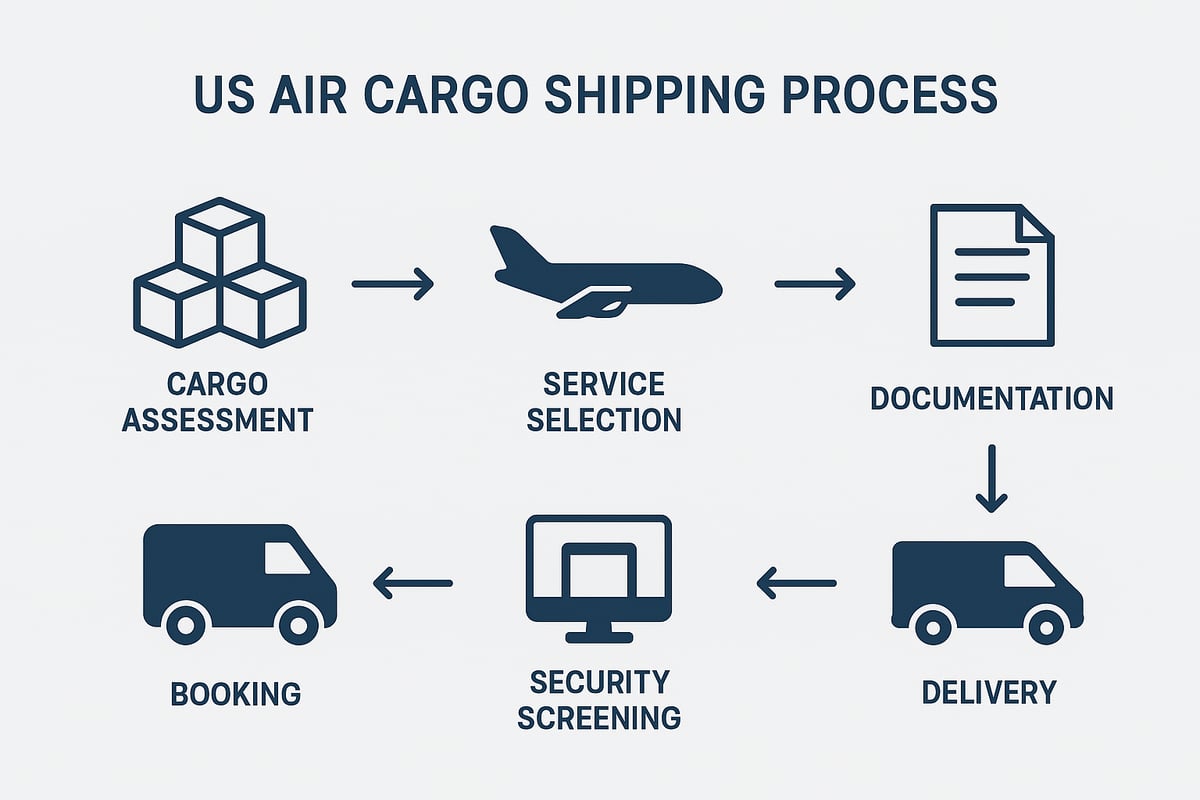
The first step in any us air cargo shipment is understanding your cargo's specific requirements. Identify the type of goods, dimensions, weight, and any special handling needs. Some items, such as pharmaceuticals or perishables, may demand temperature control, while fragile electronics require extra cushioning.
Packaging and labelling should follow IATA and FAA guidelines. For example, electronics must be packed with anti-static materials, while perishables need insulated containers. Accurate labelling ensures smooth processing at every stage.
Careful assessment at this stage reduces delays and prevents damage, setting the foundation for a successful us air cargo shipment.
Selecting the most suitable us air cargo service depends on your shipment's urgency, size, and value. Express services offer the fastest transit times, ideal for urgent deliveries, while standard options balance speed and cost for routine shipments. Charter services provide flexibility for oversized or specialised cargo.
Consider whether direct flights or consolidated services fit your needs. Direct shipments minimise handling, reducing risk, whereas consolidation may lower costs for less time-sensitive cargo.
Evaluate carriers based on reliability, global coverage, transit times, and pricing. A thorough comparison ensures your us air cargo moves efficiently and cost-effectively.
Accurate documentation is vital for all us air cargo movements. Required documents include an air waybill (AWB), commercial invoice, export licences, and certificates of origin. Compliance with US Customs and Border Protection (CBP) and the Automated Export System (AES) is mandatory.
Digital documentation is now the norm, with e-AWB adoption streamlining paperwork and reducing errors. Staying current with regulatory changes is crucial, especially for hazardous goods. For instance, the 2026 IATA Dangerous Goods Regulations Updates introduce stricter protocols for lithium battery shipments.
Meticulous compliance at this stage prevents costly delays and penalties in us air cargo operations.
Efficient booking is essential in us air cargo logistics. Start by considering lead times and seasonal demand spikes, such as holidays or major product launches. Early booking helps secure space and preferred transit windows.
Modern online platforms and digital freight forwarders offer instant quotes, bookings, and real-time updates. These tools enhance visibility and allow you to track your cargo's journey from origin to destination.
Using digital marketplaces also enables quick comparison of rates and services, optimising your us air cargo booking process.
Security is a core part of the us air cargo process. Shippers must comply with TSA's Known Shipper programme and pass advanced screening, including CT scanning and canine inspections. Since 100% screening is now mandatory, planning for additional time in your logistics schedule is wise.
Sensitive or high-risk items, such as electronics or pharmaceuticals, may face extra checks. Proper documentation and clear labelling speed up screening.
By proactively addressing security requirements, you protect your us air cargo from delays and potential compliance issues.
After arrival at the destination airport, efficient ground handling is critical for us air cargo shipments. This includes unloading, customs clearance, and coordination with last-mile delivery providers.
Options like dedicated vans, temperature-controlled vehicles, or integrated ground transport can be tailored to your cargo's needs. Monitoring performance metrics, such as on-time delivery rates and damage claims, ensures continuous improvement.
Effective post-shipment management enhances customer satisfaction and strengthens your overall us air cargo operation.
The landscape of us air cargo is being reshaped by rapid technological advances and a commitment to sustainability. As logistics professionals adapt to new tools and trends, efficiency and transparency are reaching unprecedented levels. In 2026, staying competitive means leveraging smart automation, advanced tracking, and sustainable practices across every stage of the air cargo journey.
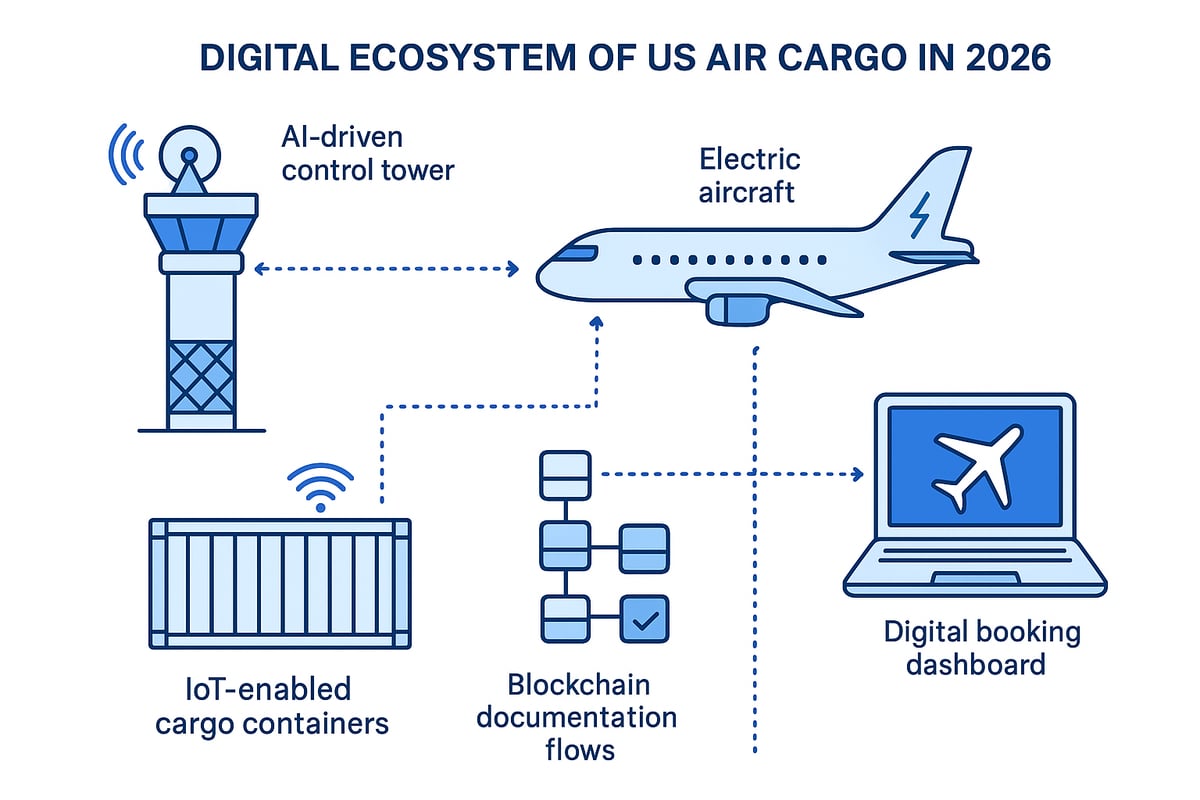
The digital transformation of us air cargo is driving a new era of automation and intelligence. Airlines, freight forwarders, and shippers are embracing AI and machine learning to forecast demand, optimise routes, and manage exceptions before they disrupt schedules.
Automated booking platforms allow users to compare rates, check availability, and confirm shipments in minutes. Predictive analytics tools process real-time and historical data to anticipate delays, streamline routing, and reduce operational costs.
Digital twins, virtual replicas of cargo journeys, are now used to simulate and optimise shipping scenarios. These models help identify bottlenecks, test contingency plans, and improve decision-making. As automation increases, human expertise remains crucial for resolving complex or sensitive shipments, ensuring that technology enhances rather than replaces professional judgement.
Visibility is a top priority in us air cargo, with real-time tracking solutions offering unprecedented transparency. Internet of Things (IoT) sensors are widely deployed across containers and pallets, providing live updates on temperature, humidity, shock, and precise location.
Blockchain technology is becoming standard for secure documentation and chain-of-custody verification. This ensures that sensitive or high-value shipments remain tamper-proof and compliant with regulatory requirements. Shippers benefit from automated alerts and exception notifications, making it easier to respond to disruptions.
According to recent industry data, an increasing percentage of us air cargo shipments now offer end-to-end tracking, allowing customers to monitor their consignments from origin to final delivery. This level of insight not only improves customer satisfaction but also reduces the risk of loss or damage.
Sustainability is at the forefront of innovation in us air cargo. Airlines and operators are investing in sustainable aviation fuels (SAF), which significantly reduce carbon emissions compared to traditional jet fuel. Regulatory frameworks in the US are encouraging the adoption of SAF, with incentives for early movers.
Electric and hybrid aircraft are beginning to serve short-haul cargo routes, offering quieter, zero-emission alternatives. Many operators are also participating in carbon offset programmes, investing in renewable energy or reforestation projects to balance their environmental impact.
Corporate sustainability commitments are influencing carrier selection, with shippers increasingly demanding greener solutions. The integration of eco-friendly practices not only meets regulatory requirements but also appeals to environmentally conscious customers and partners.
Air cargo charter platforms play a vital role in the evolving us air cargo market. These digital solutions offer unmatched flexibility and speed for urgent, oversized, or highly specialised shipments. Unlike scheduled services, charter platforms can rapidly match cargo with available aircraft, ensuring immediate response to time-sensitive needs.
Charter services are especially valuable for sectors like automotive and high-tech, where downtime can result in significant losses. Platforms now provide real-time tracking, transparent quoting, and full compliance support, streamlining every step from booking to delivery.
For a deeper look at how innovation is shaping the future of charter services, explore The future of air cargo charters, which covers trends and technologies transforming the sector. As digitalisation accelerates, charter platforms are set to become an even more integral part of the us air cargo ecosystem.
Achieving cost efficiency and managing risks are central to successful us air cargo operations in 2026. With increased demand, shifting regulations, and evolving technology, shippers must adopt strategic approaches to protect margins and cargo integrity.
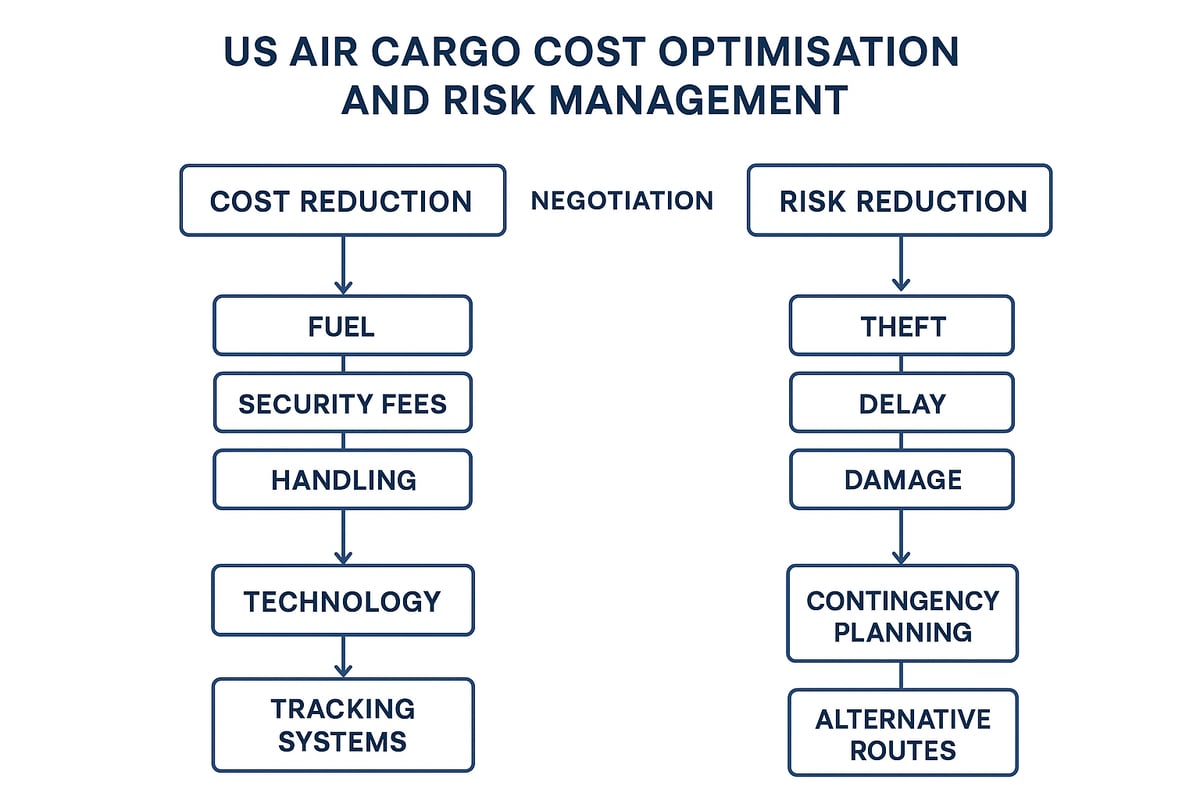
The us air cargo sector features a complex pricing landscape shaped by multiple cost elements. Core components include fuel surcharges, security fees, terminal handling charges, and customs clearance costs. Rates also vary based on shipment weight, volume, origin-destination pair, urgency, and special handling requirements.
| Cost Component | Typical Range | Influencing Factors |
|---|---|---|
| Fuel Surcharge | 10%–30% of base rate | Oil prices, distance |
| Security Fees | Fixed or per kg | Airport, regulatory changes |
| Terminal Handling | $0.10–$0.30 per kg | Carrier, airport, cargo type |
| Customs Clearance | $50–$200+ per shipment | Value, complexity, broker |
Technological advancements and increased market competition are also affecting pricing dynamics. According to the US Air Freight Market Forecast 2026-2034, digitalisation is helping shippers access more transparent and competitive rates. Understanding these variables is crucial for effective us air cargo budgeting and planning.
Effective negotiation is vital for reducing us air cargo expenses without compromising service quality. Begin by analysing your shipment volumes and patterns. Carriers often offer better rates for higher, consistent volumes or long-term partnerships.
Key negotiation strategies include:
Remember, the us air cargo market rewards shippers who are informed and proactive. Building trust and clear communication with forwarders can unlock additional value and streamline operations.
Risk management is indispensable in us air cargo, given the high value and time sensitivity of shipments. Common risks include theft, damage, regulatory non-compliance, and delays. Comprehensive insurance is a must, with options like all-risk or named perils policies tailored to your cargo type.
Best practices for risk mitigation:
Cargo theft trends at major US airports highlight the need for vigilance. By focusing on robust security protocols, shippers can ensure their us air cargo remains safe from origin to delivery.
Technology is transforming us air cargo cost structures. Modern digital platforms enable route optimisation, automated quoting, and real-time tracking. These innovations help shippers consolidate loads, reduce empty miles, and select the most efficient carriers.
Many companies now use predictive analytics to forecast demand and adjust shipping plans accordingly. Automated booking tools and digital documentation further minimise manual errors and processing time. Case studies show that digital booking platforms can generate significant savings for frequent us air cargo users by streamlining workflows and enhancing transparency.
Disruptions in us air cargo, whether from weather, labour strikes, or capacity shortages, can have severe financial and operational impacts. Proactive contingency planning is essential for resilience.
Key steps include:
Lessons from the 2025 West Coast port disruptions underscore the value of adaptability in us air cargo logistics. By preparing for the unexpected, shippers can protect their supply chains and maintain service reliability.
Selecting the right partners is crucial for achieving efficiency and reliability in us air cargo shipping. With the industry evolving rapidly in 2026, shippers must consider a range of criteria and leverage both traditional expertise and digital innovation to optimise their supply chains.
When evaluating us air cargo carriers and integrators, focus on their reliability, service network, on-time performance, and customer support. Major integrators like FedEx, UPS, and DHL offer comprehensive coverage, streamlined processes, and advanced tracking. Traditional airlines may provide flexible schedules or capacity for specific routes.
A comparative approach helps clarify your options:
| Criteria | Integrators (FedEx, UPS, DHL) | Traditional Airlines |
|---|---|---|
| Reliability | High | Varies by carrier |
| Network Coverage | Global, extensive | Regional, route-dependent |
| On-Time Delivery | Consistently strong | May fluctuate |
| Customer Support | Dedicated, 24/7 | Varies |
Consulting industry forecasts such as the FAA Aerospace Forecast 2025-2045 can provide valuable insights into capacity trends and market shifts within us air cargo.
Freight forwarders play a pivotal role in us air cargo, especially for international, multimodal, or complex shipments. They manage documentation, compliance, and coordination, reducing administrative burdens for shippers. As digital platforms rise, transparent pricing, instant booking, and real-time tracking become standard.
Many shippers benefit from platforms that combine automation with expert support. For instance, technology continues to transform air cargo charter bookings and partnerships, as outlined in Air cargo charter technology in 2025. Embracing these digital solutions enhances efficiency and decision-making throughout the us air cargo process.
Navigating the regulatory landscape of us air cargo requires skilled customs brokers and compliance experts. These professionals ensure shipments adhere to complex US customs regulations, avoiding costly delays and penalties. They manage critical documentation, monitor regulatory changes, and provide guidance on duties, taxes, and restricted items.
For shippers dealing with time-sensitive or high-value goods, having reliable customs expertise is a must. This support not only streamlines operations but also safeguards your us air cargo shipments against compliance risks and unexpected disruptions.
Industry certifications signal trust and operational excellence in us air cargo. Look for partners with IATA, CTPAT, and TSA certifications, as these demonstrate adherence to safety, security, and regulatory standards. Certified partners typically offer faster clearance, improved security protocols, and greater transparency.
For example, collaboration with certified partners can lead to measurable efficiency gains, reducing the risk of delays or compliance issues. Prioritising certified relationships ensures your us air cargo logistics are both secure and optimised.
Long-term partnerships drive success in us air cargo by fostering collaboration and continuous improvement. Strategic alliances enable joint initiatives in sustainability, innovation, and service enhancement. These relationships often result in shared data, coordinated planning, and faster response to disruptions.
Case studies show that close shipper-carrier collaboration can reduce transit times and improve reliability. By investing in lasting partnerships, you future-proof your us air cargo operations and create a foundation for ongoing growth and resilience.
As you look to enhance your US air cargo strategy for 2026, you deserve solutions that keep pace with an ever-evolving landscape. We’ve covered the essentials—emerging technologies, compliance updates, and cost-saving tactics—to help you ship smarter and more confidently. If you’re ready to see how intelligent automation and expert guidance can simplify your air cargo operations, why not explore a tailored approach? You can experience firsthand how CharterSync’s platform connects you with the right aircraft and streamlines every step of your shipping process. Simply request a demo to get started.

.png)