.png)
Cargo in shipping is transforming at an unprecedented pace as we approach 2026, shaping the backbone of global trade. Every year, millions of containers move across oceans, connecting businesses and consumers worldwide.
To stay competitive and compliant, it is crucial for companies, logistics professionals, and stakeholders to understand the vital facts shaping cargo in shipping. The landscape is shifting due to new technologies, emerging regulations, and rising sustainability demands.
This article explores eight essential facts about cargo in shipping for 2026, including trends in cargo types, digital innovation, environmental priorities, and more. Stay ahead by discovering what you need to know for the future of global logistics.
The world of cargo in shipping is undergoing a profound transformation as we approach 2026. With global commerce expanding and technology evolving rapidly, stakeholders face new challenges and opportunities. Understanding these changes is vital for anyone involved in trade, logistics, or maritime operations.
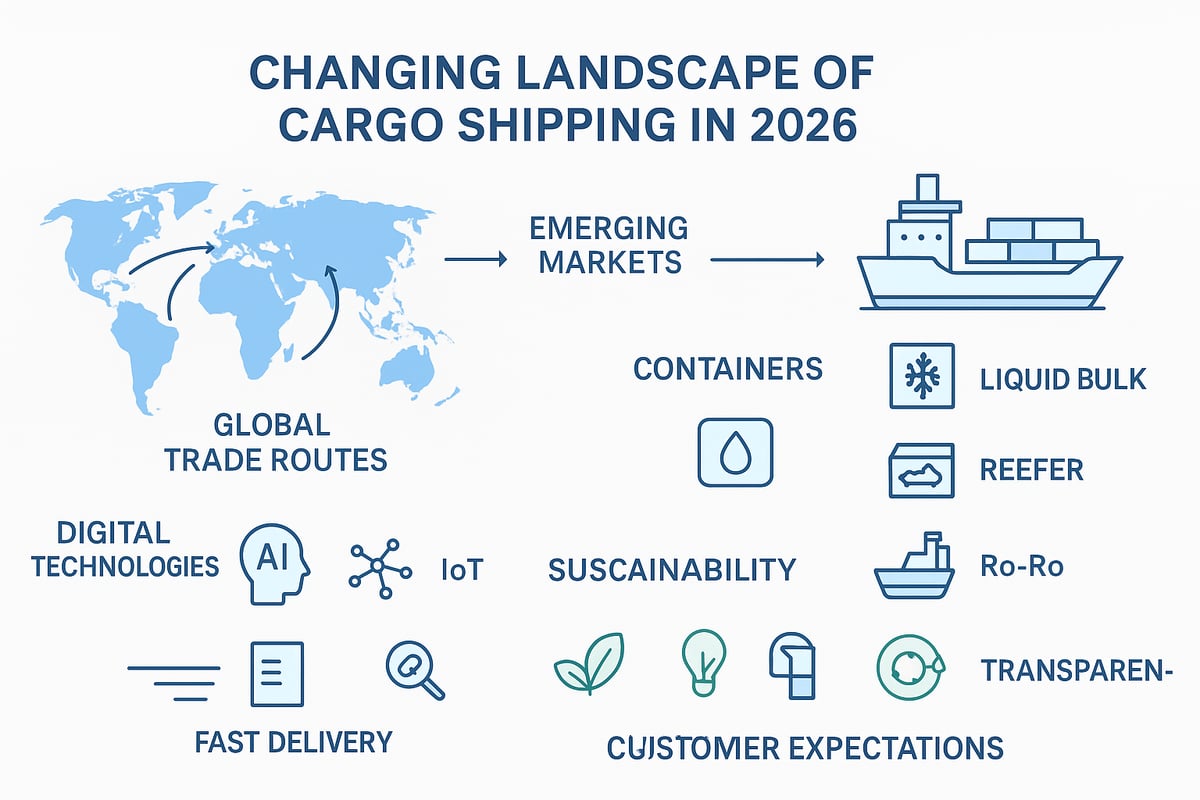
Global trade is forecasted to grow steadily, with annual increases of 3 to 4 percent expected through 2026. This surge is largely driven by expanding demand in emerging markets, particularly across Asia and Africa. As these regions industrialise and urbanise, their appetite for diverse cargo in shipping continues to rise.
According to the United Nations Conference on Trade and Development, shipping now handles over 80 percent of world trade by volume. The composition of cargo in shipping is also shifting, influenced by booming e-commerce and direct-to-consumer models. These trends introduce a wider mix of goods, from electronics to perishables, into the supply chain.
By 2026, the global shipping market is projected to reach 12.8 billion metric tons, with containerised cargo alone expected to surpass 900 million TEUs. For further detail on these projections, see global cargo shipping market projections.
Several powerful forces are reshaping cargo in shipping. Digital transformation sits at the forefront, with automation and data-driven tools enhancing efficiency at every stage. Robotics and smart sensors are revolutionising cargo handling, minimising manual intervention and reducing errors.
Geopolitical factors also play a significant role. Trade agreements, regional tensions, and disruptions such as the Suez Canal blockage have highlighted the importance of supply chain resilience. Companies are rethinking routes, investing in risk management, and diversifying their logistics strategies.
Another driver is the growing demand for transparency. Shippers and consignees now expect real-time updates and greater visibility throughout the journey. This shift is prompting carriers to invest in advanced tracking technologies and integrated digital platforms.
Customer expectations in cargo in shipping have shifted dramatically. Speed is now a top priority, with businesses and individuals seeking faster delivery times and more flexible shipping options. The growth of e-commerce has placed unprecedented pressure on shipping lines to deliver smaller, yet more frequent, consignments.
Transparency is equally important. Clients want end-to-end visibility, from the moment cargo is loaded until it reaches its destination. Status updates, estimated time of arrival predictions, and exception alerts are now standard requirements.
Specialised industries such as pharmaceuticals, automotive, and technology demand tailored cargo solutions. This has led to an increase in temperature-controlled shipments, just-in-time delivery models, and custom logistics services designed for sensitive or high-value goods.
Technological innovation is revolutionising cargo in shipping. Artificial intelligence and the Internet of Things are enabling real-time monitoring of cargo conditions, predictive maintenance of vessels, and dynamic route optimisation. Blockchain is streamlining documentation, reducing the risk of errors and fraud.
A leading example is Maersk’s adoption of blockchain technology, which has significantly reduced documentation mistakes and improved the reliability of cargo in shipping. Ports like Rotterdam are leveraging digital twins to model operations and fine-tune cargo flows, leading to greater efficiency.
Data highlights the changing cargo mix: while container cargo, liquid bulk, and dry bulk remain dominant, there is rapid growth in breakbulk, Ro-Ro, and reefer shipments. By 2026, over 900 million TEUs of containerised cargo in shipping are expected worldwide, reflecting both the scale and diversity of the market.
As we approach 2026, cargo in shipping is undergoing a remarkable transformation. Businesses and logistics professionals must stay ahead by understanding the eight essential facts shaping the industry. From diverse cargo types to advanced technology, these insights will help you navigate the changing dynamics and maintain a competitive edge.
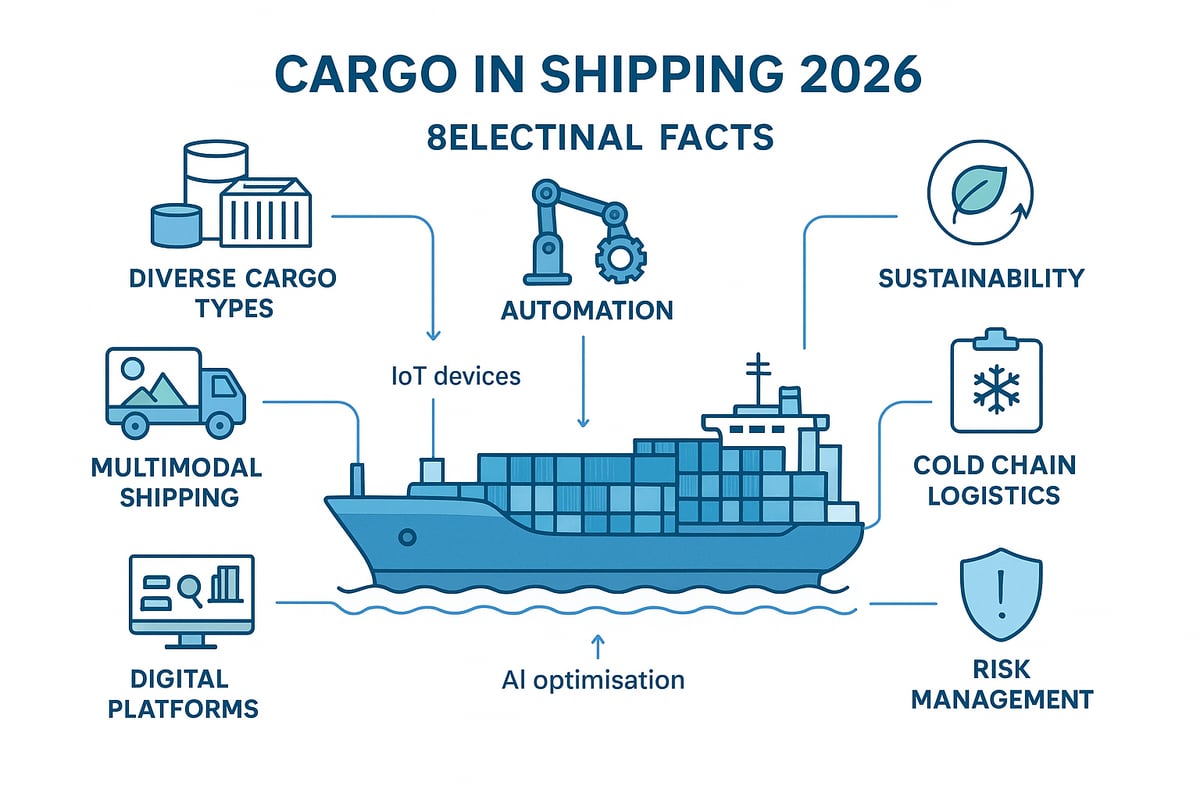
Cargo in shipping now encompasses a broader range of goods than ever before. The main categories include containerised cargo, liquid bulk, dry bulk, breakbulk, Ro-Ro (roll-on/roll-off), reefer (refrigerated), livestock, and project cargo. This diversity reflects the evolving demands of global trade and the need for tailored solutions.
Perishable and temperature-sensitive shipments are on the rise. Pharmaceuticals and fresh food require precise handling and temperature control throughout the supply chain. The increase in out-of-gauge and oversized cargo is driven by infrastructure and energy projects that need specialised equipment and logistics expertise.
A growing demand for reefer containers supports global food supply chains, ensuring products arrive fresh and safe. Container cargo covers a wide spectrum, including electronics, clothing, and consumer goods. Liquid bulk, on the other hand, often transports fuels and chemicals, while dry bulk consists of grains, coal, and minerals.
| Cargo Type | Typical Goods | Special Requirements |
|---|---|---|
| Containerised | Electronics, clothing | Standard containers |
| Liquid Bulk | Fuels, chemicals | Tankers, safety measures |
| Dry Bulk | Grains, coal | Bulk carriers |
| Breakbulk | Machinery, steel | Cranes, special handling |
| Ro-Ro | Vehicles, machinery | Drive-on/drive-off ramps |
| Reefer | Food, pharma | Temperature control |
| Livestock | Animals | Ventilation, welfare |
| Project Cargo | Oversized equipment | Custom logistics |
This growing complexity means cargo in shipping must be handled with increasing care and expertise. Choosing the right cargo type and packaging method is vital for safety and efficiency.
Technology is revolutionising cargo in shipping. Automation in ports, such as robotics and automated cranes, streamlines operations and reduces human error. Smart sensors and IoT devices enable real-time monitoring of cargo conditions, including temperature, humidity, and location.
AI-driven optimisation tools help plan stowage, schedule shipments, and predict maintenance needs. This leads to fewer delays, lower costs, and improved cargo security. Blockchain technology adds another layer of innovation, offering transparent and secure documentation for every shipment.
A prime example is the Port of Rotterdam’s digital twin platform. This advanced system creates a virtual replica of port operations. It enables managers to simulate cargo flows, identify bottlenecks, and make data-driven decisions for greater efficiency.
Automation also supports sustainability by reducing energy consumption and optimising routes. The integration of these technologies is becoming a standard expectation for cargo in shipping.
For more on how automation and digital tools are reshaping logistics, see Advancements in cargo handling.
Sustainability is now a central concern for cargo in shipping. The International Maritime Organization (IMO) has introduced regulations limiting sulphur emissions and setting decarbonisation targets for 2023 and 2026. Shipping companies are responding by investing in alternative fuels such as LNG, biofuels, hydrogen, and even electrification for short-sea vessels.
Energy-efficient vessel designs and eco-friendly packaging are also on the rise. Some shipping lines now offer carbon-neutral cargo options, allowing customers to offset emissions and meet corporate sustainability goals.
A recent survey by Drewry (2024) found that over 40 percent of shippers now consider sustainability a top criterion when selecting carriers. This shift is prompting rapid innovation throughout the industry.
Sustainability efforts extend to port operations as well, with electric cranes, shore power, and waste management solutions becoming more common. As regulations tighten, cargo in shipping must adapt to ensure compliance and maintain access to key markets.
The regulatory landscape for cargo in shipping is growing more intricate each year. International and regional rules now cover safety, emissions, customs procedures, and security for hazardous and high-value cargo. Staying compliant is more challenging, but also more important, than ever.
Digitalisation is helping to simplify some requirements. Electronic bills of lading (e-BL) and e-CMR documents reduce paperwork and speed up customs clearance. Enhanced security protocols, such as those for hazardous materials, are being enforced globally.
A key example is the SOLAS VGM (Verified Gross Mass) rule, which requires shippers to declare the accurate weight of containers before they are loaded. This has reduced accidents but requires precise documentation and communication.
Non-compliance can have serious consequences for cargo in shipping, including fines, shipment delays, and reputational damage. Proactive management and digital tools are essential for navigating this evolving environment.
Temperature-controlled logistics is experiencing unprecedented growth. The demand for reefer containers—used for food, pharmaceuticals, and vaccines—is soaring. This is especially true in the wake of the COVID-19 pandemic, which highlighted the importance of reliable cold chain infrastructure.
Shipping lines are expanding their reefer fleets and investing in advanced monitoring systems. Remote sensors enable real-time tracking of temperature and humidity, ensuring cargo in shipping stays within strict tolerances. Predictive analytics help prevent spoilage and reduce waste.
The global reefer container market is projected to reach 12 billion dollars by 2026. This growth is transforming how companies manage their supply chains and meet regulatory requirements.
For deeper insights on temperature-controlled freight and best practices in cold chain logistics, explore Temperature-controlled freight insights.
Cargo in shipping faces a wide array of risks. Piracy, theft, severe weather, geopolitical instability, and cyber threats all pose significant challenges. Comprehensive cargo insurance is crucial for protecting goods and minimising financial losses.
Risk mitigation strategies include secure packaging, route planning, and the use of GPS tracking and geofencing to reduce theft. Digital solutions are streamlining claims management and enabling faster response to incidents.
Annually, more than 30 billion dollars in cargo is lost due to theft and damage worldwide. This staggering figure highlights the need for robust insurance and proactive risk management for all cargo in shipping.
Shipping companies are also investing in training and technology to identify and address vulnerabilities. By staying vigilant, businesses can safeguard their cargo and maintain customer trust.
The digital revolution is changing expectations for cargo in shipping. Shippers now demand instant quotes, online booking, and real-time cargo tracking from origin to destination. Integrated digital freight platforms make this possible, offering greater transparency and control.
Transportation Management Systems (TMS) have become essential tools for managing shipments, predicting arrival times, and sending exception alerts. Real-time visibility is no longer a luxury—it is a standard requirement.
According to Gartner (2025), 70 percent of shippers expect real-time updates on their cargo. This shift is driving investment in connected systems and seamless data sharing across the supply chain.
Digital platforms also support better decision-making, allowing businesses to respond quickly to disruptions or changes in demand. For those involved in cargo in shipping, embracing these tools is key to remaining competitive.
Multimodal and intermodal shipping are becoming increasingly important for global logistics. By combining sea, rail, road, and air, companies can optimise costs, reduce transit times, and improve sustainability.
Sea-rail corridors in Eurasia, for example, enable faster and greener cargo transport. Smart containers equipped with tracking technology provide seamless data sharing across different transport modes, enhancing visibility and security.
Intermodal shipping reduces handling costs and minimises the risk of cargo damage or theft. This approach is particularly valuable for time-sensitive or high-value shipments.
The integration of multiple transport modes is redefining what is possible for cargo in shipping. As supply chains become more complex and customer demands rise, leveraging multimodal solutions will be essential for future success.
The future of cargo in shipping is being reshaped by several powerful trends. As we approach 2026, businesses must adapt to evolving demands, technological advances, and shifting global dynamics. Below, we explore the most significant trends set to define cargo in shipping in the coming years.
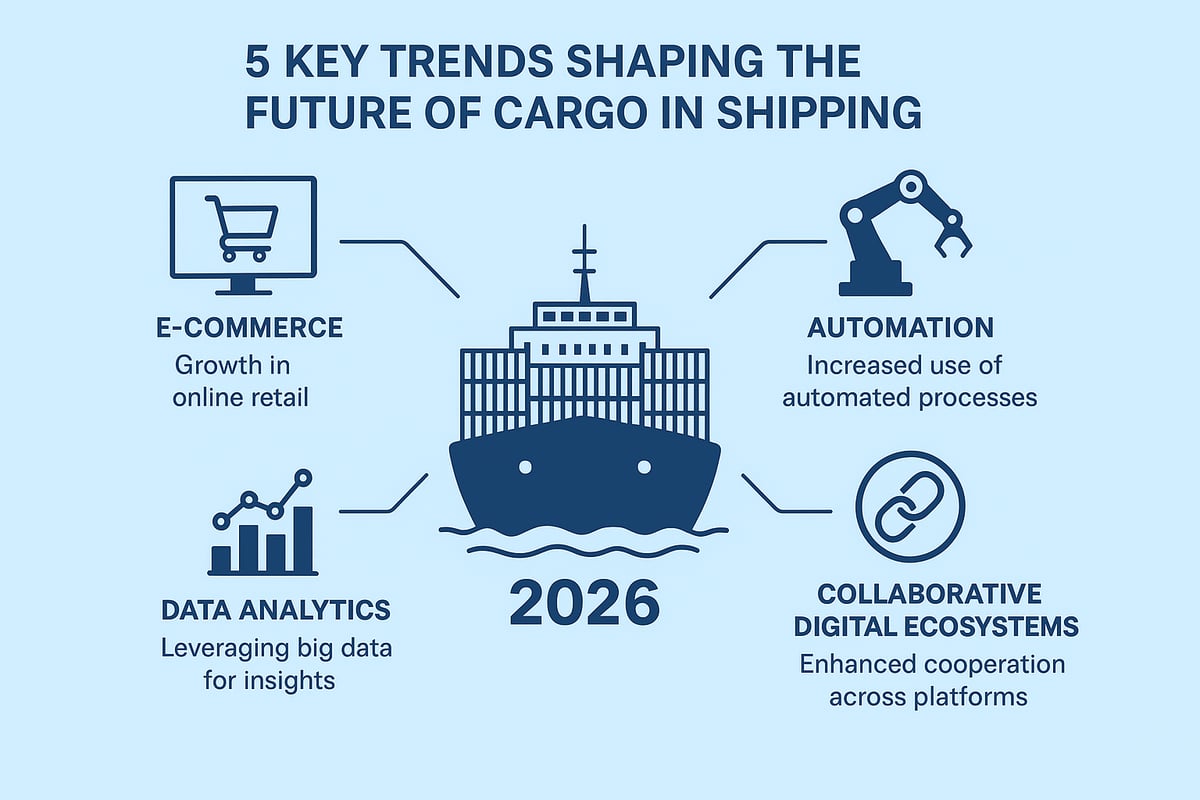
E-commerce is transforming cargo in shipping by driving a surge in smaller, more frequent shipments across the globe. Online marketplaces and direct-to-consumer models are accelerating the need for flexible supply chains and rapid delivery.
Major players are investing in dedicated shipping and logistics networks to meet new expectations. This shift requires new approaches to containerisation and last-mile delivery, creating opportunities and challenges for all involved in cargo in shipping.
Automation is revolutionising the way cargo in shipping is managed, both at sea and on land. Advanced robotics, remote-controlled cranes, and autonomous vessels are streamlining port operations and reducing manual intervention.
This technological shift is also changing workforce requirements. Maritime professionals are now expected to upskill or reskill to operate and maintain automated systems. The integration of smart automation not only boosts efficiency but also supports safety and reliability in cargo in shipping.
Big data and analytics are at the heart of the next wave of cargo in shipping innovation. Predictive analytics help companies manage port congestion, optimise routes, and anticipate demand fluctuations.
Digital tools provide real-time visibility and actionable intelligence, enabling proactive decisions. For a deeper dive into how technology is transforming transparency and efficiency, explore this resource on real-time air cargo intelligence.
Recent disruptions have highlighted the need for resilient and agile supply chains in cargo in shipping. Companies are diversifying routes, sourcing strategies, and transport modes to minimise risk and respond quickly to market changes.
Flexible logistics models allow for rapid adjustments, whether responding to a pandemic, natural disaster, or geopolitical shift. Building resilience is now a strategic priority for anyone involved in cargo in shipping.
The future of cargo in shipping will depend on collaboration across the industry. Carriers, freight forwarders, and technology providers are coming together to create digital ecosystems that enable seamless data sharing and integrated services.
Digital freight alliances and shared platforms are promoting transparency, efficiency, and innovation. This collaborative approach will be essential for navigating the complexities and opportunities of cargo in shipping in 2026.
Staying ahead in cargo in shipping means adapting your strategy as the industry evolves. By 2026, businesses must be agile, tech-savvy, and sustainability-focused to ensure resilience and efficiency. Here are five actionable ways to optimise your cargo shipping approach for the years ahead.
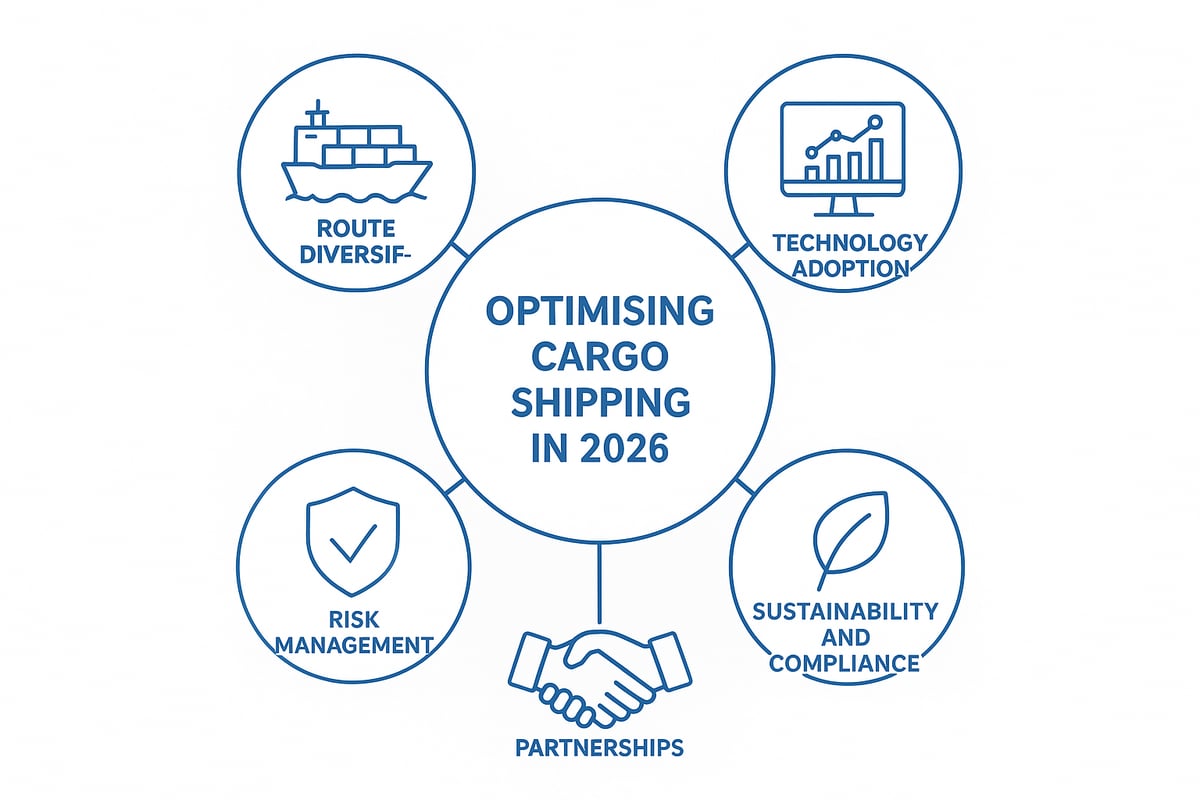
Understanding your cargo in shipping is the foundation of a robust strategy. Regularly review your cargo portfolio and explore alternative shipping routes to reduce exposure to disruptions.
For enhanced safety and efficiency, consider reviewing packing strategies for cargo to ensure every shipment is optimally prepared for its journey.
Digital innovation is revolutionising cargo in shipping. Harness the power of IoT, automation, and AI to streamline operations and boost visibility.
A tech-forward approach enables faster decision-making and greater transparency across your supply chain.
Sustainability is now a competitive advantage in cargo in shipping. Keeping up with regulatory changes and environmental standards is essential.
To understand the regulatory landscape, see the IMO's net-zero emissions framework and how it impacts shipping’s decarbonisation targets.
Risks to cargo in shipping are evolving, from cyber threats to extreme weather. Proactive risk management protects your business and reputation.
GPS tracking and geofencing can further reduce incidents of theft and loss.
Collaboration is key to optimising cargo in shipping. Build relationships with reliable carriers, forwarders, and technology providers.
Strong partnerships foster agility and ensure you are prepared for future industry shifts.
When discussing cargo in shipping, it is essential to understand the main categories. The primary types include containerised cargo, bulk (both dry and liquid), breakbulk, Ro-Ro (roll-on, roll-off), reefer (refrigerated), and livestock cargo.
Each type of cargo in shipping requires tailored handling and documentation.
Technology is reshaping cargo in shipping through automation, digitalisation, and real-time data. Ports now use smart cranes and robotics to improve efficiency. Internet of Things (IoT) devices help monitor cargo conditions, from temperature to location.
The adoption of digital platforms has enabled instant booking and tracking. For a deeper look at how innovation is shaping the industry, see these emerging trends in container shipping. Autonomous vessels are also being trialled, with systems that use AI for navigation and safety. These advancements are setting new standards for reliability and transparency in cargo in shipping.
Risks to cargo in shipping are wide-ranging. Theft and damage remain significant concerns, especially in high-traffic ports or piracy-prone regions. Weather events, such as storms and rough seas, can delay shipments or cause losses.
Cyber threats have increased as digital systems become more common, putting sensitive documentation and cargo tracking at risk. Regulatory non-compliance is another critical issue, with authorities imposing fines or detaining shipments if rules are not met. Comprehensive insurance and robust risk management strategies are vital for safeguarding cargo in shipping.
To keep cargo in shipping compliant, shippers must stay informed about international and local regulations. This includes customs documentation, safety protocols, and environmental standards.
Digital documentation, such as electronic bills of lading and e-CMR, speeds up processing and reduces errors. Working with reputable carriers who prioritise compliance minimises the risk of penalties or delays. Regular training and updates on regulatory changes help maintain best practices for cargo in shipping.
The outlook for cargo in shipping remains positive, with global trade volumes set to rise. Technology adoption, like autonomous shipping and advanced analytics, will further streamline operations. Sustainability will become even more central, with stricter emissions rules and green fuels gaining momentum.
Shippers can expect greater demand for cold chain and intermodal solutions, as supply chains adapt to new consumer expectations and regulatory landscapes. The sector will continue evolving, offering new opportunities for those ready to innovate and adapt.
As we’ve explored, the world of cargo shipping is evolving fast, with technology, sustainability, and compliance shaping the future. If you want to keep your business ahead in 2026, having the right tools and expertise is essential. That’s where CharterSync comes in—we combine intelligent automation with dedicated human support to simplify air cargo chartering, giving you instant access to global aircraft and real time solutions tailored to your needs. If you’d like to see how this could transform your shipping strategy, I invite you to request a demo and experience the difference for yourself.

.png)