.png)
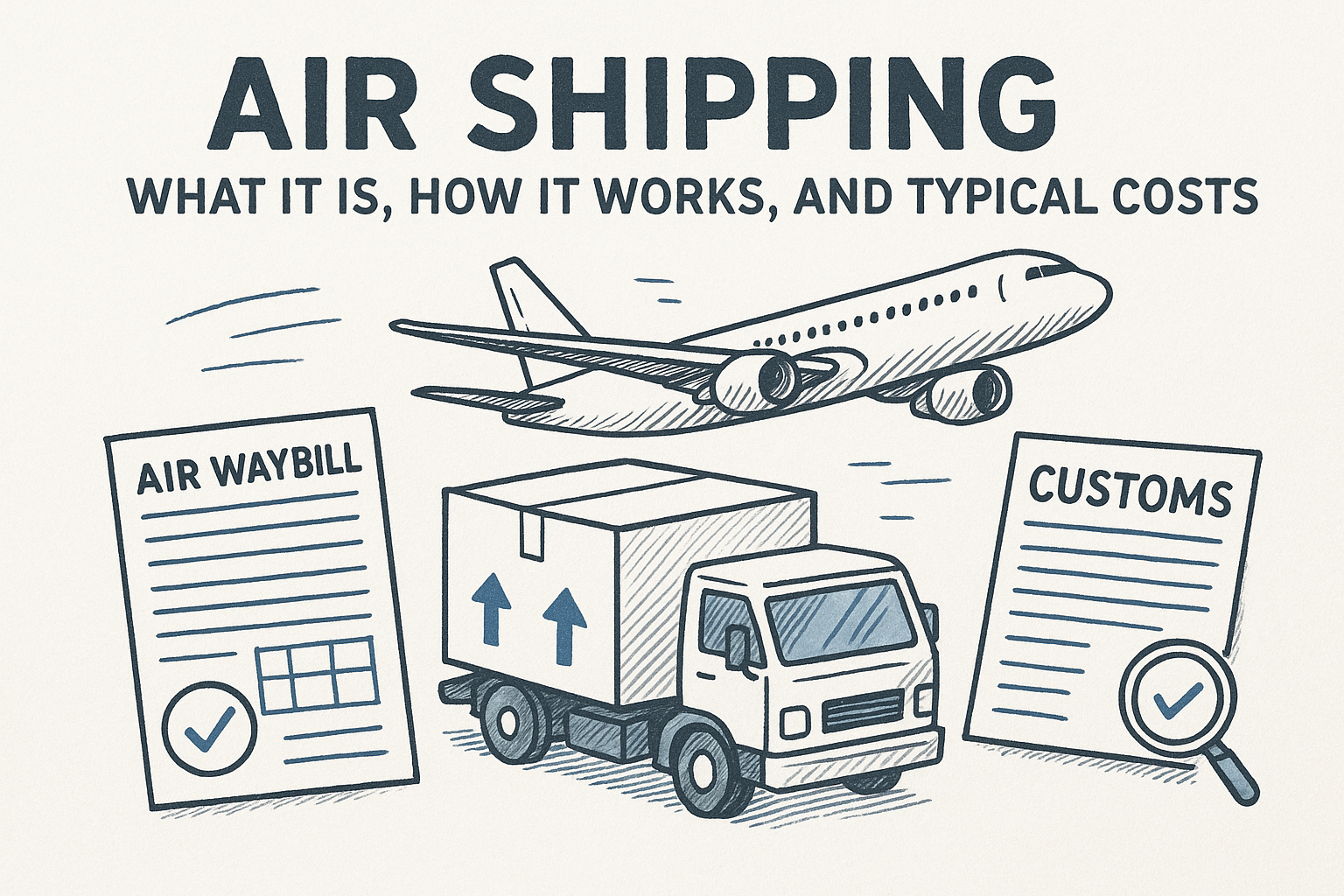
Whether you're moving automotive parts across Europe or emergency medical supplies to a disaster zone, air shipping remains the fastest way to get cargo from A to B. It's also one of the most misunderstood, especially when it comes to how pricing actually works and what determines whether your goods fly on a scheduled freighter or a dedicated charter.
This guide breaks down the fundamentals: what air shipping involves, the different service types available, how carriers calculate costs, and where the real variables sit. We've built CharterSync around giving freight forwarders and logistics teams instant access to confirmed aircraft availability and transparent quotes, so we know firsthand how much confusion still surrounds the process. That hands-on experience shapes everything you'll read here, from typical cost ranges to the operational steps most shippers overlook.
By the end, you'll have a clear picture of when air shipping makes sense, what to budget for, and how to avoid the most common pitfalls that lead to delays or unexpected charges. Let's get into it.
Global trade moves faster than it did a decade ago, and supply chain disruptions have made speed and reliability more critical than ever. When a production line goes down because a component is stuck at a sea port, or when a retailer faces empty shelves ahead of peak season, air shipping becomes less of a premium option and more of an operational necessity.
The gap between air and sea transit times often comes down to days versus weeks, and for time-sensitive cargo, that difference can determine whether a contract is met or lost.
Air freight's biggest commercial advantage is transit time. Same-day or next-day connections between major trade hubs give your business a level of flexibility that ocean freight simply cannot match. That speed also means you can hold lower buffer stock, reducing warehousing costs and freeing up working capital that would otherwise sit tied up in a facility waiting for a slow vessel to dock.
Many businesses use air freight strategically to bridge gaps during supply shortages or to support just-in-time manufacturing models. You're not just paying for speed; you're paying for predictability, and that distinction matters more the higher your cargo's value or urgency.
Scheduled airlines and dedicated freighters operate to fixed timetables, which makes air shipping one of the most consistent transport modes available. Compared to road or sea, on-time performance rates for air cargo are consistently strong, particularly on routes connecting Europe, North America, and Asia.
That reliability matters most when you're moving high-value goods, perishables, or time-critical components. For freight forwarders managing multiple client commitments simultaneously, a dependable transit window is often worth more than the lowest possible rate, especially when a late delivery triggers penalty clauses or production stoppages.
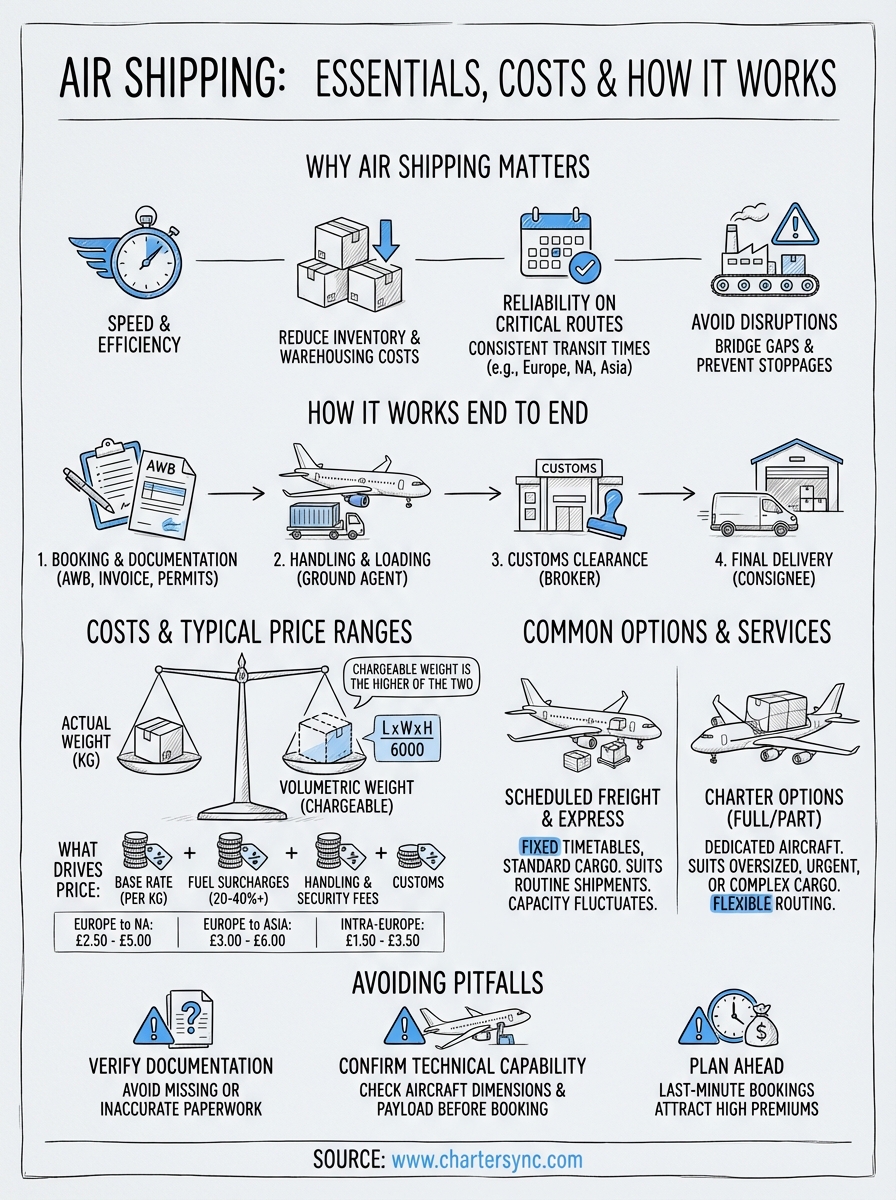
Air shipping follows a defined sequence of steps, from the moment you raise a booking enquiry to the point your cargo clears customs at the destination. Understanding that sequence helps you anticipate where delays occur and what documentation you need to prepare before your shipment moves.

Once you confirm a shipment, the process starts with an Air Waybill (AWB), which acts as both the contract of carriage and the primary tracking document. You'll also need supporting paperwork to clear your cargo at both ends:
Missing or inaccurate documentation is one of the most common reasons air cargo gets held at the border, even when the flight itself ran on time.
Your cargo moves through a ground handling agent at the origin airport, who manages acceptance, build-up, and loading onto the aircraft. At the destination, a customs broker typically handles clearance before final delivery to the consignee. Each handoff is a potential delay point, so knowing who owns each step keeps your operation running without unnecessary hold-ups.
Air shipping rates are quoted per kilogram, but carriers charge against whichever figure is higher: the actual weight or the volumetric (chargeable) weight. Volumetric weight divides your shipment's cubic centimetres by 6,000. If your cargo is bulky but light, you will pay the volumetric figure, not the physical one.

Always calculate both weights before requesting a quote, because the difference can significantly change your total cost.
Several variables push costs beyond the base rate. Fuel surcharges typically add 20-40% on top of published tariffs, and they shift frequently with oil prices. Handling fees, security charges, and customs clearance stack on top of that, so always ask for an all-in quote rather than a base rate alone.
| Route | General cargo (per kg) |
|---|---|
| Europe to North America | £2.50 - £5.00 |
| Europe to Asia-Pacific | £3.00 - £6.00 |
| Intra-Europe | £1.50 - £3.50 |
Urgent shipments or out-of-gauge cargo requiring a dedicated charter sit well above these ranges. Last-minute bookings also attract significant premiums, so planning your timeline ahead of a critical shipment reduces cost where your schedule allows.
Not all air shipping services work the same way. The option you choose directly affects transit time, total cost, and how much control you have over your cargo's handling throughout the journey.
Scheduled services run on fixed airline timetables, making them the most cost-effective route for standard cargo moving between major hubs. Integrators like FedEx and DHL also offer express door-to-door services for smaller consignments where speed takes priority over volume. These suit routine shipments well, but space availability fluctuates during peak periods, so booking ahead protects you when capacity tightens.
If your cargo moves regularly on the same lanes, securing capacity in advance locks in rates before the market shifts.
Charter flights give you full or partial aircraft capacity on demand, which is essential when your cargo is oversized, time-critical, or technically complex. You choose the routing, the aircraft type, and the handling arrangements.
Platforms like CharterSync match your cargo specifications to confirmed aircraft availability instantly, removing the hours of back-and-forth that traditional chartering typically involves.
Selecting the right air shipping provider comes down to confirmed availability and transparent pricing. Many providers offer indicative quotes that look competitive until hidden fees appear on the final invoice. Always request an all-in rate that includes fuel surcharges, handling, and security fees before you commit.
A provider that cannot confirm technical loadability before booking is giving you a provisional estimate, not a guaranteed solution.
Before you sign off any booking, confirm that your provider has checked aircraft door dimensions and payload capacity against your cargo specifications. This step is standard on charter operations but often skipped on general bookings, which leads to last-minute rejections at the acceptance desk.
Late bookings consistently attract the highest premiums in air freight. Building lead time into your procurement process gives you more carrier options, better rates, and space on preferred aircraft.
When urgency is unavoidable, a platform that matches cargo to confirmed aircraft in minutes reduces the window where costs escalate significantly.
Air shipping covers a wide range of services, costs, and logistics decisions, and getting any one of them wrong can turn a routine shipment into an expensive delay. The fundamentals, though, remain consistent: know your cargo specifications, request all-in pricing, and confirm technical loadability before you commit to any booking.
From here, the most practical step is to stop working with providers who offer estimates instead of confirmed availability. If you're managing time-sensitive or out-of-gauge freight, you need certainty before the aircraft departs, not after a problem surfaces at the acceptance desk.
CharterSync gives freight forwarders and logistics teams instant access to confirmed aircraft capacity, side-by-side comparisons, and transparent pricing, all without the hours of back-and-forth that traditional chartering demands. If your next shipment needs a faster, more reliable process, request an air cargo charter quote with CharterSync and see confirmed options in minutes.

.png)