.png)
Air cargo air freight is the driving force behind global trade, ensuring that time-sensitive goods reach markets across continents quickly and reliably. As supply chains become more complex and businesses demand faster delivery, the role of air cargo air freight has never been more critical.
This essential guide will demystify the air cargo air freight landscape for 2026. You will gain insights into the latest industry trends, understand key operational processes, and discover how technology is transforming logistics.
We will also explore new regulations and share practical tips to help you optimise your shipping strategies. If you are looking to enhance your knowledge and stay ahead in the fast-evolving world of air cargo air freight, this is the resource you need.
Air cargo air freight plays a pivotal role in the modern supply chain, connecting continents and industries with speed and reliability. As we look to 2026, understanding the nuances of these services is essential for businesses aiming to stay ahead in a rapidly evolving market.
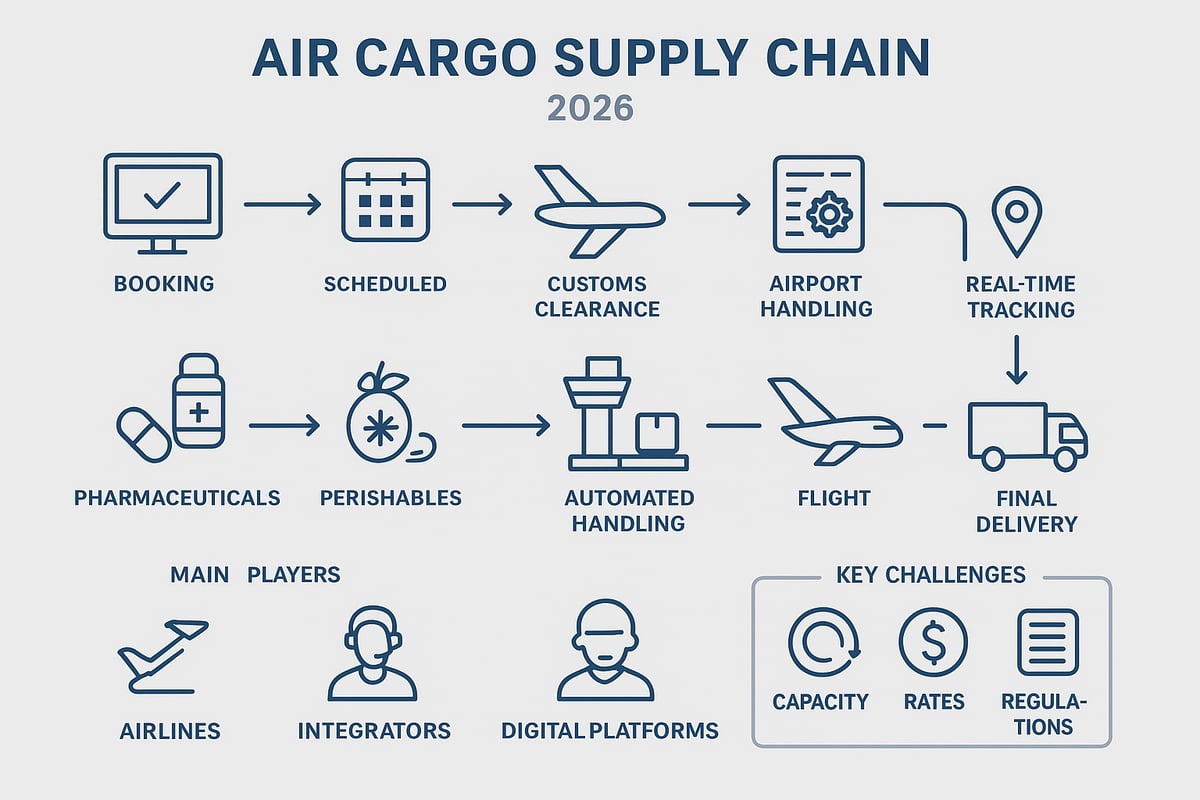
Air cargo air freight refers to the movement of goods by air, but these terms are often used interchangeably despite subtle differences. Air cargo typically describes all goods transported by aircraft, including both freight and mail, while air freight specifically points to commercial shipments.
Commonly transported items include perishables like fresh produce, time-critical pharmaceuticals, and high-value electronics. For example, pharmaceuticals made up 17% of global air freight value in 2023. The strategic importance of air cargo air freight lies in its ability to deliver urgent, high-value shipments across international borders, making it a cornerstone for industries that demand reliability and speed.
The air cargo air freight sector is set for robust growth in 2026, propelled by rising global trade and the surging demand for rapid delivery. IATA forecasts indicate steady increases in tonnage, particularly as e-commerce expands and just-in-time manufacturing becomes standard practice. Notably, e-commerce air freight volumes are projected to grow by 8% CAGR through 2026.
Additionally, industries are increasingly seeking temperature-controlled and high-security shipments, especially for pharmaceuticals and electronics. For a deeper analysis of projected demand, regional variations, and industry resilience, refer to IATA's Global Outlook for Air Transport – December 2025. These trends underline the adaptability and continued relevance of air cargo air freight in the global marketplace.
Air cargo air freight services come in several formats tailored to diverse business needs. Scheduled air freight operates on fixed routes and timetables, offering predictability for regular shipments. Charter services, on the other hand, provide flexibility for urgent or oversized consignments.
Within these categories, express services cater to time-sensitive deliveries, consolidated shipments combine multiple loads for cost efficiency, and specialised options like onboard courier (OBC) and dangerous goods transport address unique requirements. Automotive, high-tech, and perishable goods industries each benefit from specific service types. While express and charter services offer speed, consolidated options are more economical, illustrating the trade-offs businesses must consider when choosing an air cargo air freight solution.
The air cargo air freight ecosystem features a mix of established airlines, global integrators such as DHL and FedEx, and a growing number of digital-first freight forwarders. Traditional airlines maintain extensive cargo networks, while integrators offer end-to-end logistics and value-added services.
Recently, digital platforms have emerged, using advanced technology to streamline bookings and provide real-time visibility. The expansion of global cargo hubs and strategic routes, especially in regions like Asia-Pacific and the Middle East, further strengthens the reach of air cargo air freight. Together, these players and networks ensure that goods move efficiently across the world's busiest trade lanes.
Air cargo air freight faces several complex challenges as it enters 2026. Capacity constraints continue to drive fluctuating rates, especially during periods of high demand or disruption. Geopolitical tensions, volatile fuel prices, and increasing environmental regulations add layers of uncertainty for operators.
For example, during the 2021 to 2022 period, air cargo rates surged by 40% following global supply chain disruptions. Security concerns and evolving regulatory compliance requirements also demand constant vigilance. Addressing these challenges will require ongoing investment in technology, agile planning, and a focus on sustainable operations, ensuring air cargo air freight remains resilient and responsive to global needs.
Efficient movement of goods by air is a complex, multi-stage journey. Understanding each phase of the air cargo air freight process is vital for businesses aiming to achieve on-time, secure, and cost-effective shipments. Let us explore each step, from initial planning to final delivery.
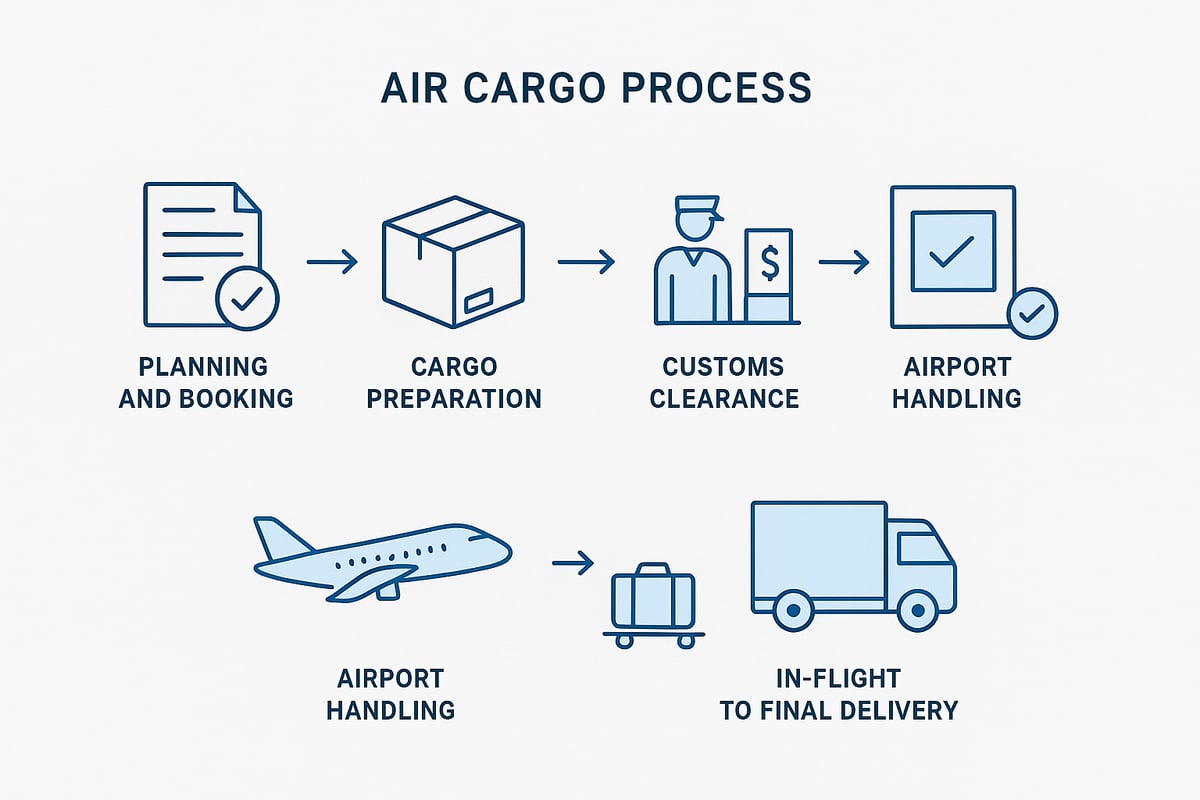
The first step in any air cargo air freight journey is careful planning and accurate booking. Businesses must assess the shipment’s nature, urgency, size, and value. Choosing between scheduled services and charter flights depends on these factors.
For example, automotive parts needed for just-in-time manufacturing often require rapid charter solutions to avoid costly production delays. Early planning allows for better carrier selection, improved rate negotiation, and ensures all documentation is ready.
It is essential to communicate special requirements, such as temperature control or dangerous goods handling, right from the start. Accurate information at this stage sets the foundation for a smooth air cargo air freight experience.
Proper cargo preparation is crucial for safe and compliant air cargo air freight operations. Packaging must meet IATA and ICAO standards to withstand handling and turbulence during flight. Labelling and handling instructions need to be clear, especially for fragile or hazardous materials.
For temperature-sensitive shipments like pharmaceuticals or fresh produce, specialised containers and monitoring devices are used. Compliance with dangerous goods regulations is mandatory. For further guidance, see these packing standards for air cargo.
Using the correct packaging minimises damage risk and ensures that air cargo air freight shipments move efficiently through the supply chain.
Navigating customs and security is a core part of the air cargo air freight process. Required documents include the Air Waybill (AWB), commercial invoice, and relevant export or import permits. Security screening, such as X-ray or canine inspection, is mandatory for all shipments.
Pre-clearance and digital customs solutions help speed up processing, reducing delays. In 2026, updated regulations may introduce new digital platforms and advanced security protocols. Staying current with these requirements is essential for compliant air cargo air freight operations.
Timely and accurate documentation prevents costly hold-ups and ensures goods cross borders seamlessly.
On arrival at the airport, air cargo air freight shipments undergo acceptance checks, storage, and build-up onto Unit Load Devices (ULDs). Proper load planning is vital to optimise aircraft space and ensure safe transport.
Ground handling agents use technology to enhance efficiency. Automated handling systems, for instance, can cut turnaround times by up to 20 percent. Each step, from storage to loading, must be tightly coordinated to maintain flight schedules.
Attention to detail during airport handling reduces the risk of damage and ensures air cargo air freight remains on track for timely delivery.
Once airborne, air cargo air freight is continually monitored using real-time tracking and IoT solutions. These tools provide visibility for shippers and help manage exceptions if issues arise en route.
Transhipment at major hubs may be required before the cargo reaches its final destination. Last-mile delivery involves coordination between carriers, ground handlers, and local logistics providers.
Consistent communication at every stage is key to successful air cargo air freight delivery. Rapid response to disruptions and clear updates to stakeholders ensure reliability and customer satisfaction.
The landscape of air cargo air freight is undergoing a rapid transformation driven by innovation. Businesses and freight forwarders are embracing new tools to streamline operations, improve transparency, and meet rising customer expectations.
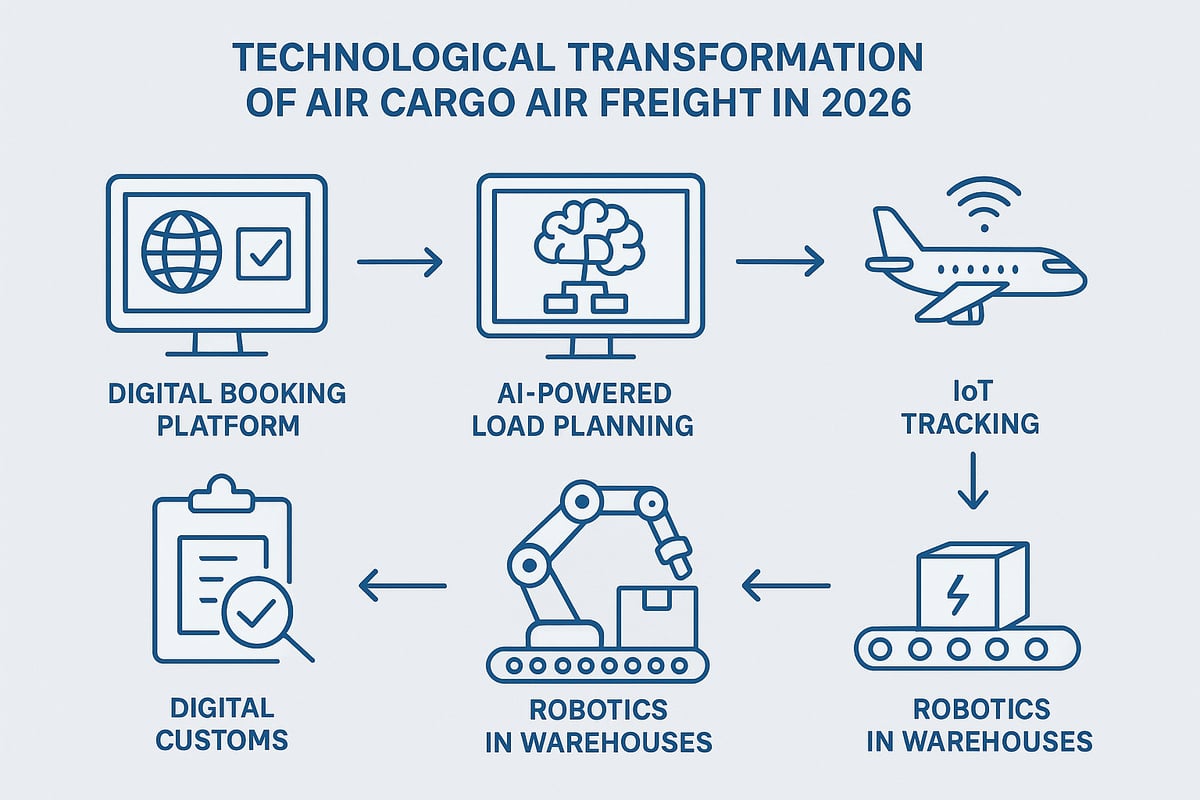
Digital platforms are revolutionising how air cargo air freight bookings are managed. Online systems now allow instant quotes and rapid comparisons, replacing manual calls and emails. AI-driven tools match shipments with available aircraft and optimise load planning for cost and efficiency.
Key benefits include:
For a deeper dive into these trends, see Air cargo charter technology trends. These advancements are helping businesses stay competitive in a fast-moving market.
Shippers now demand full transparency throughout the air cargo air freight journey. IoT sensors and GPS devices monitor shipments from warehouse to final delivery, providing real-time location and condition updates.
Cloud-based dashboards display key metrics and trigger alerts for any delays or exceptions. This visibility enables:
According to recent surveys, over 80 percent of shippers consider real-time tracking essential for their supply chain.
Sustainability is a top priority for air cargo air freight providers in 2026. Airlines are investing in Sustainable Aviation Fuel (SAF) to reduce carbon emissions. Many carriers are also trialling electric and hybrid aircraft for regional routes.
Regulations are pushing for greener operations, with carbon offsetting and stricter reporting requirements becoming standard. Operators use digital tools to track emissions and prove compliance, meeting both customer and regulatory expectations.
Automation is transforming air cargo air freight handling in warehouses and airports. Robotic loaders, automated guided vehicles, and smart ULDs streamline cargo movement, reducing manual labour and human error.
Key impacts include:
Robotics are now central to the efficiency and reliability of modern air freight hubs.
Security and compliance are critical in the evolving air cargo air freight environment. Digital customs clearance, electronic air waybills (e-AWB), and blockchain technology ensure document integrity and regulatory compliance.
Enhanced screening systems allow faster processing of dangerous goods while maintaining high safety standards. With new rules for 2026, these technologies help operators meet the latest global requirements and protect valuable shipments.
Selecting the optimal air cargo air freight partner is a critical decision for supply chain success in 2026. The right provider will not only ensure reliable transit but also support your business with advanced technology and deep industry expertise.
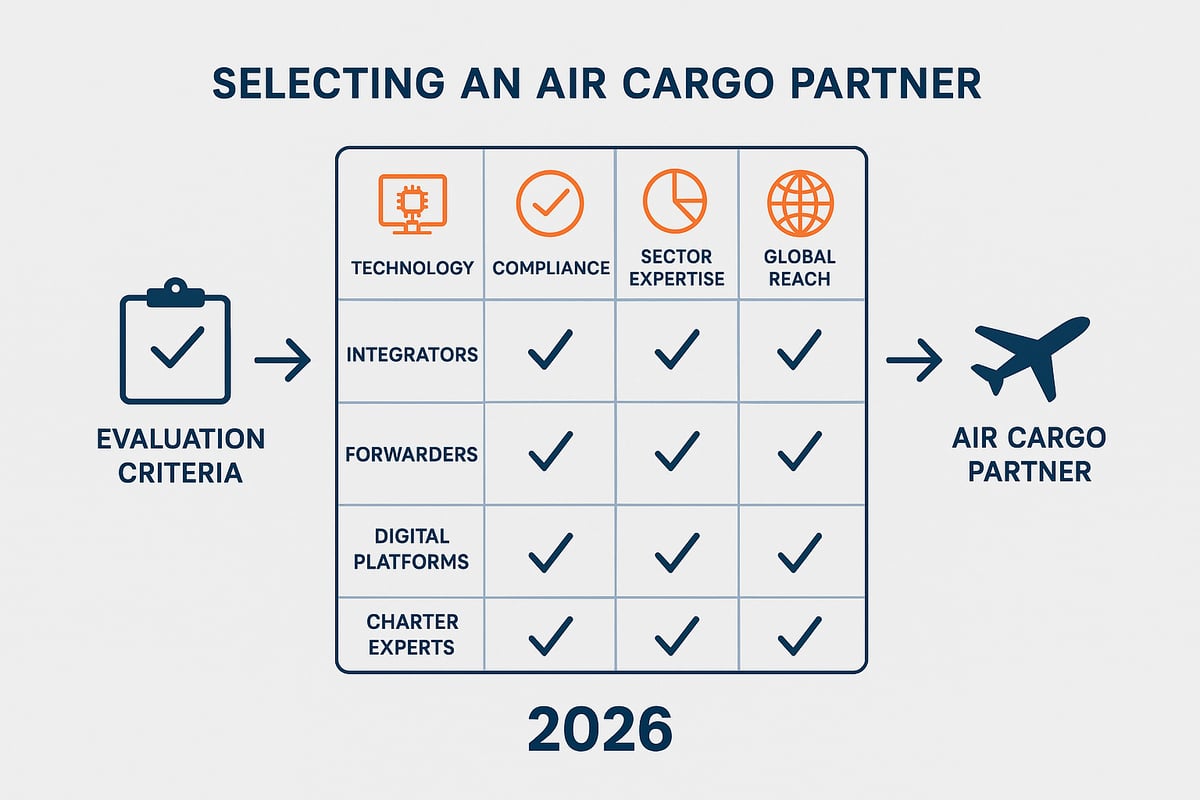
When comparing air cargo air freight partners, focus on core criteria such as global network reach, reliability, and operational flexibility. Assess whether the provider specialises in your sector and offers transparent, competitive pricing.
A useful approach is to compare integrators, independent freight forwarders, and private cargo airlines. Integrators like DHL and FedEx offer end-to-end solutions, but independent forwarders may provide more tailored options. Private carriers can deliver bespoke capacity for specialised needs. For a deeper understanding, see the Role of private cargo airlines.
Ultimately, aligning your priorities with a provider's strengths is vital for successful air cargo air freight operations.
| Provider Type | Strengths | Limitations |
|---|---|---|
| Integrators | End-to-end, global reach | Less flexibility |
| Forwarders | Custom solutions | Variable network |
| Private Airlines | Bespoke capacity | Limited schedules |
Digital transformation is reshaping air cargo air freight. Providers who offer online booking, instant quoting, and real-time tracking can dramatically streamline your logistics. Integrated dashboards simplify documentation and allow for proactive management of shipments.
Prioritise partners who are early adopters of technologies like e-AWB, IoT tracking, and automated communication. These features not only enhance efficiency but also empower your team with actionable insights and visibility throughout the shipping process.
Choosing a tech-savvy air cargo air freight partner ensures you stay competitive, reduce administrative workload, and quickly respond to disruptions.
Industry-specific knowledge is essential for air cargo air freight, especially when handling sensitive, regulated, or high-value goods. Providers with experience in pharmaceuticals understand GDP compliance and temperature control, while those in automotive or high-tech sectors are adept at managing urgent, time-critical movements.
Ask potential partners about their history with your industry, relevant certifications, and case studies. The right expertise means your cargo will be handled in full compliance with current and future regulations, minimising risk and ensuring on-time delivery.
Trust in a specialist air cargo air freight provider to protect your most valuable and complex shipments.
CharterSync offers a next-generation approach to air cargo air freight, combining AI-driven automation with expert human support. The platform provides instant access to a global fleet, accurate on-demand quoting, and seamless booking for freight forwarders and industries managing urgent shipments.
Features such as smart aircraft matching, transparent pricing, and real-time tracking set CharterSync apart. The platform is trusted by the automotive, pharmaceutical, and high-tech sectors for secure, compliant, and tailored operations.
For businesses seeking rapid, reliable, and flexible air cargo air freight solutions, CharterSync delivers unmatched efficiency and peace of mind.
Regulation is at the heart of air cargo air freight, shaping every aspect of global operations. As 2026 approaches, evolving standards and compliance requirements are redefining the landscape for shippers, freight forwarders, and carriers. Staying ahead of regulatory change is vital for cost-effective and risk-free movement of goods.
The global regulatory framework for air cargo air freight is led by bodies such as IATA and ICAO, with regional authorities shaping specific requirements. In 2026, critical updates include mandatory e-AWB adoption, advanced cargo security measures, and stricter environmental standards. The EU's Fit for 55 package, for example, sets ambitious emissions targets for the sector.
A quick summary table:
| Regulatory Body | Main Focus Areas (2026) |
|---|---|
| IATA | Digitalisation, safety, security |
| ICAO | Emissions, global safety, e-AWB |
| EU | Emission trading, Fit for 55 |
| National | Trade facilitation, local rules |
For more on anticipated regulatory shifts and their impact on market growth, see the Air Cargo Trends and Opportunities – IATA Presentation. Understanding these frameworks is essential for any air cargo air freight stakeholder.
Security and safety remain non-negotiable in air cargo air freight. New 2026 rules tighten handling of dangerous goods, especially lithium batteries, and reinforce the need for a secure supply chain. Enhanced screening protocols are now mandatory for certain trade lanes, with 100% cargo screening required in high-risk corridors.
Operators must comply with updated training standards, secure packaging, and real-time documentation. These measures protect against tampering and ensure rapid response to incidents. Compliance is not just a legal requirement, but a competitive advantage in air cargo air freight.
Air cargo air freight customs processes are entering a new era of digitalisation. In 2026, digital customs clearance, single window systems, and pre-arrival processing are standard across many regions. These changes streamline cross-border shipments, reduce paperwork, and speed up transit times.
Trade agreements and the boom in cross-border e-commerce are pushing authorities to harmonise procedures. The WCO SAFE Framework now underpins global best practice, ensuring that air cargo air freight shipments move securely and efficiently through customs.
Sustainability is now a core compliance pillar for air cargo air freight. Airlines and logistics providers face strict carbon reporting, mandatory emissions reduction, and offsetting rules. ICAO's 2026 standards require a 15% cut in CO2 emissions, while sustainable aviation fuel (SAF) mandates and green corridors are becoming the norm.
Innovation and technology are central to meeting these targets. For insights into how digitalisation and automation drive compliance, review IATA's 2025 Vision for the Future of Air Cargo Facilities. Adapting to these regulations is essential for long-term success in air cargo air freight.
Cost-effectiveness and efficiency are essential for any business navigating the air cargo air freight landscape in 2026. With rising demand and fluctuating market conditions, optimising every step of the process can yield significant savings and performance gains.
Effective shipment planning is the foundation of cost-effective air cargo air freight. Start by consolidating shipments whenever possible to maximise space and reduce per-unit costs. Careful route selection and flexible timing, such as booking during off-peak periods, can lower rates by up to 18%.
Balancing speed, cost, and reliability is crucial. For example, high-value perishables may require direct flights or temperature-controlled solutions, as detailed in temperature-controlled air freight essentials.
Stay informed about market trends, such as the ongoing growth of e-commerce and trade realignments highlighted in the FedEx Analysis on Air Freight Trends in APAC for 2026, to seize cost-saving opportunities. Advance planning and accurate forecasting set the stage for optimal outcomes in air cargo air freight.
Harnessing technology is key to unlocking savings in air cargo air freight operations. Automated quoting tools enable instant rate comparisons, reducing administrative time and ensuring competitive pricing. Smart load planning software helps maximise aircraft utilisation, cutting unnecessary costs.
Digital documentation, including e-AWB and integrated dashboards, streamlines the booking process and minimises errors. Real-time analytics empower businesses to evaluate carrier performance and optimise routes promptly.
AI-driven platforms can reduce administrative costs by 25% and improve shipment accuracy. As digitalisation advances, investing in these technologies is essential for staying competitive in air cargo air freight.
Proactive risk management safeguards both your cargo and your budget in air cargo air freight. Build contingency plans for potential delays, strikes, or regulatory changes, ensuring operations remain resilient.
Secure comprehensive insurance for high-value shipments. Employ IoT-enabled tracking devices to monitor goods in real time, which can reduce loss incidents by up to 40%. For temperature-sensitive cargo, using validated containers and monitoring systems is vital, as discussed in temperature-controlled air freight essentials.
By anticipating disruptions and leveraging technology, you can maintain reliability and control costs in air cargo air freight.
Strong collaboration underpins successful air cargo air freight operations. Work closely with freight forwarders, carriers, and digital platforms to align on requirements and share key data.
Proactive communication, such as regular status updates and shared dashboards, enables swift responses to exceptions. Collaborative platforms have been shown to improve on-time delivery rates by 15%.
Building transparent relationships ensures that all parties are prepared to adapt to changing circumstances, driving both efficiency and cost savings in air cargo air freight.
As we look ahead to 2026, it’s clear that staying ahead in air cargo and freight means embracing smart technology, streamlined processes, and expert support. If you’re ready to see how automation and real time insights can transform your shipping strategy—whether you manage automotive parts, pharmaceuticals, or high tech goods—now’s the time to take the next step. Discover how you can access instant global aircraft availability, accurate quoting, and seamless booking, all backed by dedicated expertise. If you’d like to experience these advantages firsthand, request a demo.

.png)