.png)
In the fast-paced world of 2026, air shipping services are more vital than ever. Global businesses depend on speed and reliability to stay competitive, making the right logistics choices critical.
This guide demystifies air shipping services, providing shippers, businesses, and logistics professionals with everything they need to succeed. Our aim is to equip you with up-to-date knowledge, actionable insights, and practical steps for choosing and optimising air shipping solutions.
You will discover the types of air shipping, detailed process steps, cost factors, regulatory changes, technology trends, sustainability considerations, and expert tips for success.
The urgency and complexity of modern logistics require informed, strategic decisions. Use this comprehensive guide to streamline your operations, reduce costs, and make smarter shipping choices.
In 2026, air shipping services have become a cornerstone of global logistics, supporting industries that demand speed, reliability, and worldwide reach. As supply chains adapt to new challenges and technology advances, understanding these services is essential for businesses aiming to stay ahead.
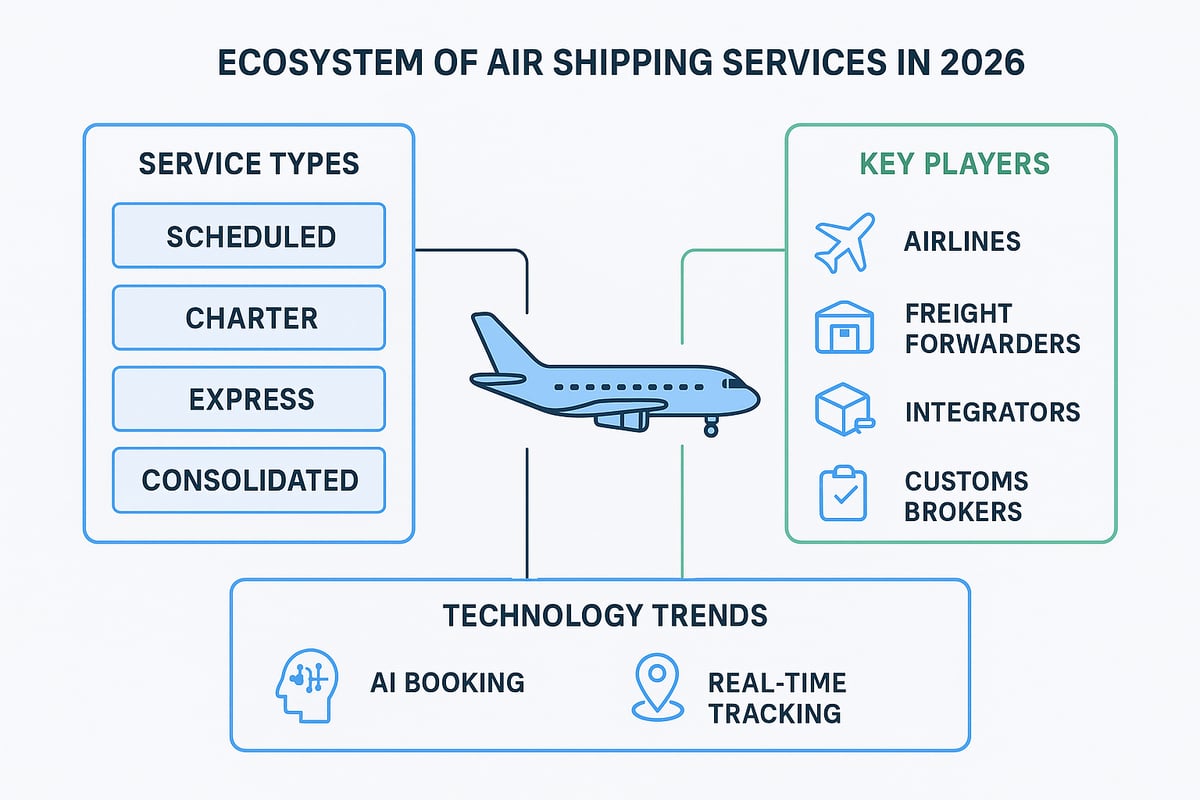
Air shipping services refer to the transportation of goods by aircraft, enabling rapid delivery across continents. These services include air freight, air cargo, and express options, each designed for different levels of urgency and shipment type.
The main advantages are speed, reliability, and a truly global network. For example, air shipping services are vital for time-sensitive deliveries such as e-commerce orders and pharmaceuticals, where delays can be costly. In 2026, rising demand for quick fulfilment and resilient supply chains has made air shipping services even more critical.
There are several types of air shipping services available to meet diverse needs:
A common scenario is automotive parts delivery via chartered aircraft, ensuring production lines never pause due to supply delays. Selecting the right air shipping services type depends on your cargo’s urgency, value, and handling requirements.
The air shipping services landscape is shaped by several vital players:
Collaboration between freight forwarders and airlines is key to delivering seamless air shipping services, especially for complex or high-value shipments.
The air shipping services sector is experiencing strong growth, with global air cargo volumes continuing to rise into 2026. Digital booking and tracking platforms are now standard, enabling shippers to monitor every stage of the journey.
Recent data shows the industry moved over 31 million kgs, reflecting the surge in e-commerce and international trade. Sustainability initiatives, such as greener aircraft and carbon tracking, are also gaining momentum. For a detailed analysis of industry growth and future projections, see the Global Air Freight Market Statistics, Outlook and Regional Analysis 2026-2034.
Sustainability, digitalisation, and market expansion are shaping the future of air shipping services, making them more efficient and environmentally responsible than ever before.
Navigating air shipping services in 2026 requires a clear understanding of each stage, from initial booking to post-shipment analysis. This step-by-step guide breaks down the process, helping shippers and logistics professionals optimise efficiency, reduce delays, and ensure compliance. Let us explore what happens at each critical stage of air shipping services.
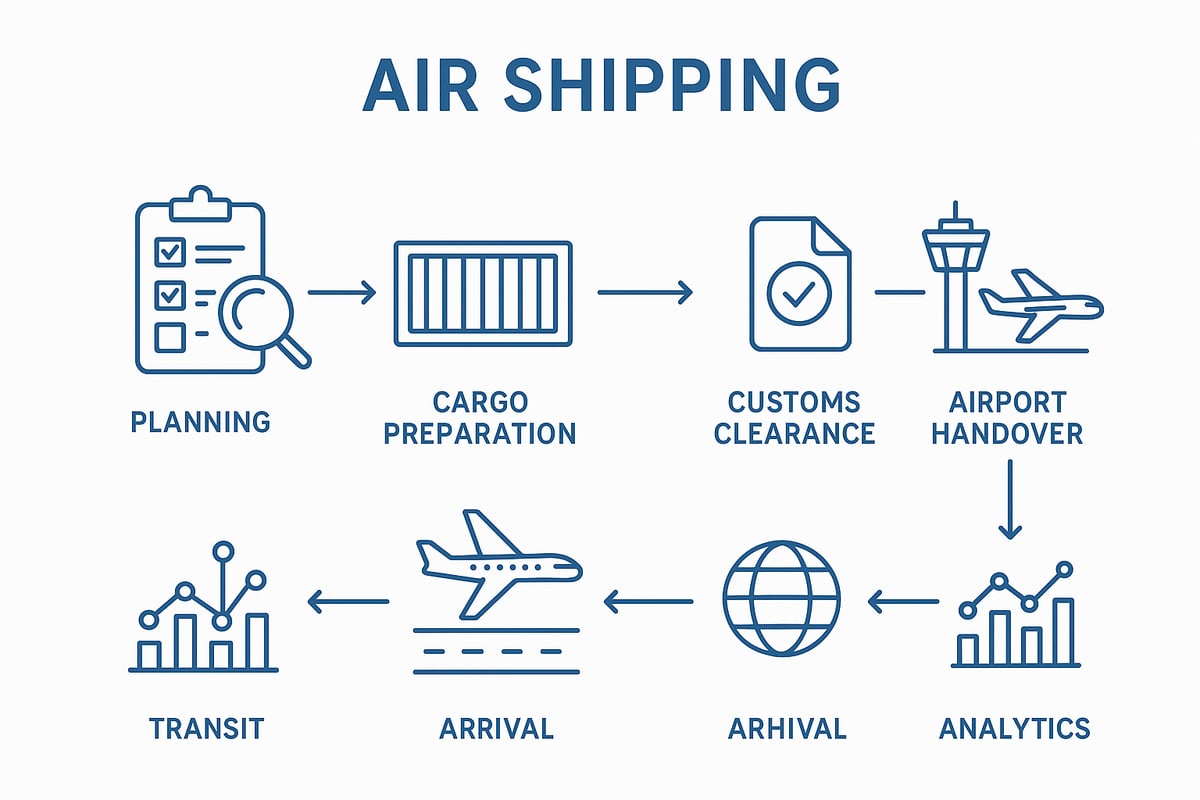
The first phase in air shipping services is planning and booking. Start by defining your shipment’s weight, dimensions, and urgency. Next, select the right service type, such as express, standard, or charter, based on delivery speed and cargo requirements. Digital platforms and freight forwarders offer instant booking and AI-powered quote tools, streamlining this step. Accurate data entry is vital, as mistakes can cause costly delays. For example, using automated systems ensures you receive the best routing and pricing options immediately. Careful planning at this stage sets the foundation for smooth air shipping services throughout the supply chain.
Proper cargo preparation is essential for air shipping services. Packaging must comply with IATA regulations to ensure safety and prevent damage during transit. Labelling, documentation, and security checks are mandatory, especially for hazardous, perishable, or valuable goods. Specialised services, such as white-glove handling or dangerous goods support, are available for sensitive shipments. Ensuring your cargo meets all requirements minimises customs issues. For expert guidance on best practices, visit Packing and preparing air cargo. Thorough preparation is key to avoiding costly interruptions in air shipping services.
Customs clearance is a crucial part of air shipping services. Key documents include the Air Waybill (AWB), commercial invoice, and packing list. Each destination has unique import and export procedures, so understanding the specific requirements is vital. Duties and taxes are calculated based on cargo value and type. For instance, UK customs clearance involves precise declarations and accurate paperwork. Common pitfalls include missing documents or incorrect declarations, which can lead to delays or fines. Staying organised with documentation ensures your air shipping services remain compliant and efficient, reducing the risk of costly errors.
Once cargo is ready, it must be delivered to the origin airport for acceptance. Air shipping services involve strict security screening, including x-ray and handling protocols to ensure safety. Real-time tracking platforms provide live updates, giving shippers visibility throughout transit. For high-value goods, maintaining the chain of custody is essential from handover to final delivery. Digital systems enhance transparency, allowing quick identification and resolution of any issues. By leveraging these technologies, air shipping services offer reliability and peace of mind for time-critical shipments across global routes.
Upon arrival at the destination airport, shipments undergo local customs clearance before being released for final delivery. Air shipping services must manage exceptions such as delays or damaged goods promptly. Delivery options include door-to-door or airport-to-airport, depending on the service chosen. For instance, retail launches often require time-critical delivery to meet market deadlines. Local logistics partners play a vital role in last-mile services, ensuring prompt and secure handover to the consignee. Effective coordination at this stage helps air shipping services maintain high standards of reliability and customer satisfaction.
After delivery, post-shipment support is an integral part of air shipping services. Shippers can access analytics and performance data to review shipment success and identify trends. Managing documentation, exception reports, and claims is streamlined through digital tools. Customer support teams handle issues, process feedback, and help optimise future shipments. For example, analysing delivery times and exceptions can reveal opportunities for improvement. Continuous feedback loops ensure air shipping services evolve to meet changing demands, enhancing efficiency and reliability for every shipment.
Navigating the cost landscape of air shipping services in 2026 requires a clear understanding of the elements that shape rates and pricing models. With evolving technology, global events, and new service types, shippers need to make informed decisions to optimise logistics spend and ensure value for money.
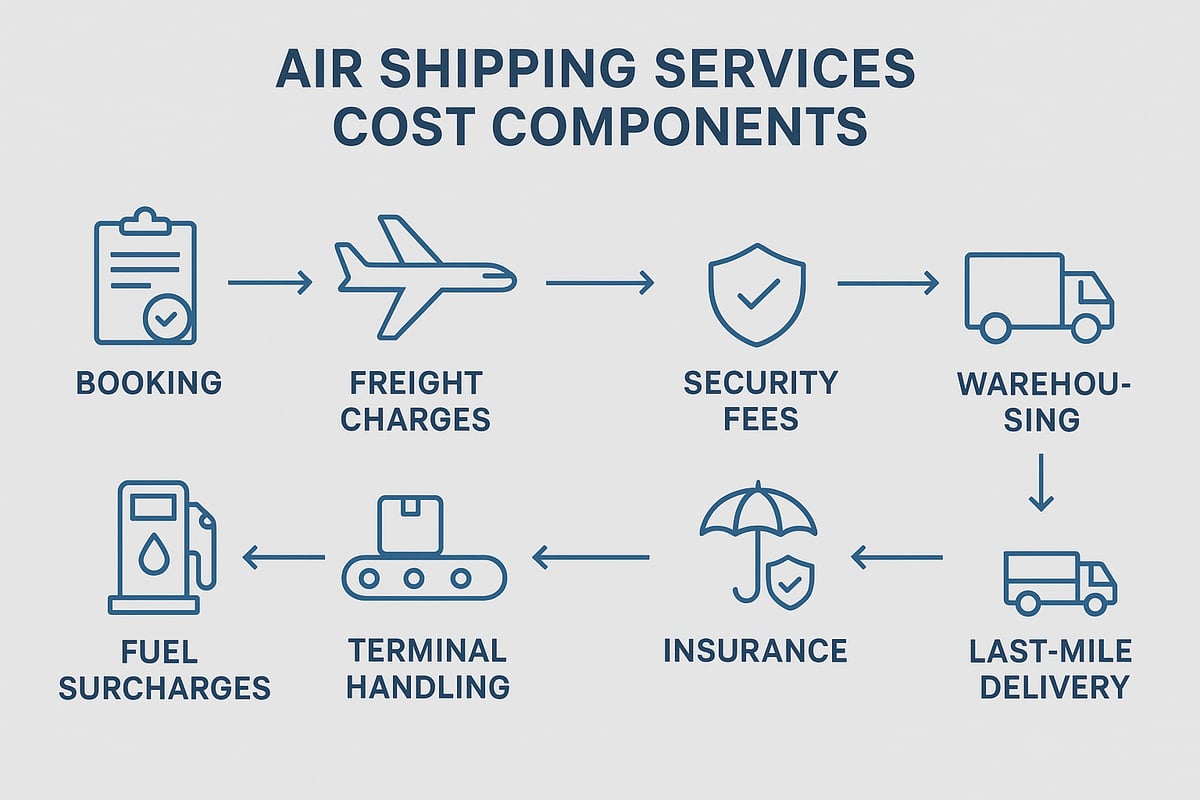
When evaluating air shipping services, it is vital to understand the various charges involved. Typical invoices include freight charges, fuel surcharges, security fees, and terminal handling, forming the core costs. Additional expenses such as customs duties, insurance, warehousing, and last-mile delivery may apply based on shipment specifics.
| Cost Component | Description |
|---|---|
| Freight Charges | Base rate for air transport |
| Fuel Surcharges | Adjusted for fuel price changes |
| Security Fees | Screening and compliance costs |
| Terminal Handling | Airport cargo processing |
| Customs Duties | Import/export taxes |
| Insurance | Protection against loss or damage |
| Warehousing | Temporary storage fees |
| Last-Mile Delivery | Transport from airport to final destination |
Pricing structures vary by service type. For example, full charter air freight services offer dedicated aircraft for urgent or oversized cargo, which can differ significantly from consolidated or express shipments.
Several factors directly impact the rates charged for air shipping services. The most significant is the chargeable weight, which considers both the actual and volumetric weight of the cargo. Routes, transit times, and capacity availability also play a major role, with direct flights often costing more than indirect options.
Seasonal demand, such as the surge during Q4, can trigger peak season surcharges. Global events, including geopolitical instability or pandemics, may further affect pricing and capacity. Understanding these variables helps shippers anticipate fluctuations in air shipping services costs and plan budgets accordingly.
To obtain precise quotes for air shipping services, it is essential to provide accurate details regarding shipment weight, dimensions, and delivery requirements. Comparing offers from multiple providers enables better cost transparency and ensures competitive rates.
Digital platforms now allow users to compare side-by-side pricing and access instant quotes. Consider these steps for cost-saving:
Adopting these strategies can significantly reduce overall spend on air shipping services.
The landscape of air shipping services is rapidly evolving, with digitalisation introducing dynamic and real-time pricing algorithms. AI-driven systems now optimise load factors and match capacity to demand, leading to greater efficiency and cost predictability for shippers.
Transparent, all-in-one digital invoicing simplifies the process and provides clear breakdowns of every charge. Platforms offering instant, confirmed availability empower businesses to act quickly and secure the best rates. These innovations ensure that air shipping services remain agile, cost-effective, and responsive to changing market needs.
In 2026, air shipping services are shaped by a dynamic landscape of regulations, security protocols, trade policies, and sustainability initiatives. Understanding these evolving requirements is crucial for maintaining compliance, reducing risks, and meeting customer expectations.
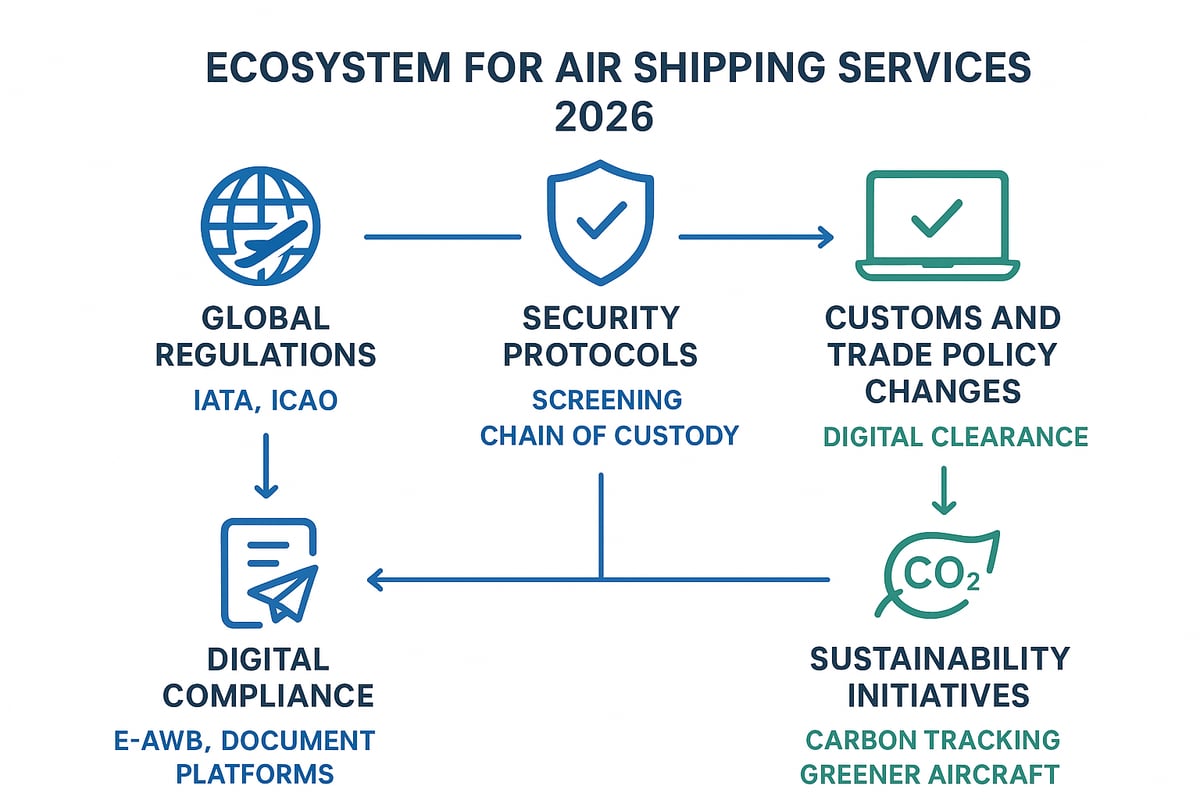
Compliance is the foundation of effective air shipping services. In 2026, regulations from IATA, ICAO, and local authorities have become more stringent, especially around dangerous goods, security, and customs documentation.
For UK-EU shipments, Brexit-related changes have introduced additional checks and documentation, making it essential to keep up to date with the latest requirements. Businesses must regularly review regulatory updates to ensure their air shipping services remain compliant, avoiding costly delays or penalties.
Staying informed and working with knowledgeable partners is the best way to navigate the evolving regulatory landscape in global air shipping services.
Security is paramount for air shipping services, protecting cargo against theft, tampering, and loss. In 2026, enhanced cargo screening, x-ray procedures, and secure handling facilities are standard across major airports.
Specialist services, such as white-glove handling for valuables and chain of custody protocols, offer additional layers of protection. Insurance options have evolved, providing tailored coverage for sensitive or high-value shipments.
By adopting robust risk management practices, shippers can ensure their air shipping services deliver reliability, peace of mind, and compliance with international security standards.
Customs procedures have seen significant digital transformation in air shipping services. Automated systems now handle declarations, calculate duties, and process clearances more efficiently.
Global trade agreements and shifting tariffs require businesses to adapt quickly. For example, automated NES customs entry and CFSP messaging streamline UK processes, reducing manual intervention.
To future-proof operations, shippers should leverage digital customs tools, monitor policy changes, and maintain close communication with experienced customs brokers in the air shipping services ecosystem.
Sustainability is a top priority for air shipping services, given the sector’s carbon footprint. Airlines and logistics providers in 2026 are investing in fuel-efficient aircraft, optimised flight paths, and carbon tracking technologies.
Regulatory incentives now reward greener operations, while carbon emission reporting is becoming standard practice. For further insight into sustainability initiatives and emerging green logistics trends in the Asia-Pacific region, see Air Freight Trends 2026: The Future Of Global Trade In APAC.
Shippers are encouraged to seek partners committed to green logistics, ensuring their air shipping services meet both business and environmental goals.
Digital transformation is revolutionising compliance in air shipping services. The widespread adoption of e-AWB, centralised document management platforms, and real-time compliance monitoring is reducing errors and speeding up clearance.
Exception management tools allow for immediate response to regulatory issues, while digital records improve transparency and auditability. These advancements empower shippers to manage air shipping services with greater efficiency and confidence.
Embracing digital compliance solutions is essential for staying competitive and ensuring seamless global operations in the years ahead.
The digital revolution is reshaping air shipping services at every level, bringing unprecedented speed, transparency, and control. Businesses now expect seamless integration, real-time updates, and data-driven solutions that adapt to their evolving logistics needs. Let us explore the cutting-edge technologies transforming the sector in 2026.
Digital platforms have become the backbone of air shipping services, streamlining every step from booking to delivery. Freight forwarders and shippers can now access instant quotes, compare options, and secure capacity in minutes. AI-driven request submission and smart aircraft matching ensure that every shipment finds the optimal route and equipment.
A key trend is the use of automation to reduce manual processes, saving time and minimising errors. According to recent air cargo charter technology trends, platforms are now offering integrated solutions that combine digital booking, document management, and live support. This results in faster, more reliable air shipping services for all stakeholders.
Visibility is essential for dependable air shipping services. IoT sensors and GPS-enabled devices now provide minute-by-minute updates on shipment location, temperature, and security status. Centralised dashboards aggregate this information, allowing logistics teams to monitor every stage of a consignment’s journey.
Immediate alerts help manage exceptions, such as delays or route changes, before they impact the supply chain. Businesses benefit from reduced manual intervention and increased confidence in their air shipping services. Enhanced transparency is now the industry standard, not a luxury.
The power of big data is unlocking new efficiencies in air shipping services. Advanced analytics platforms process vast amounts of shipment data, highlighting trends, inefficiencies, and areas for improvement. Predictive analytics support route optimisation and demand forecasting, allowing companies to anticipate capacity needs.
These insights help shippers make more informed choices, from selecting the best carriers to optimising packaging. By using data as a strategic asset, businesses gain a competitive edge and elevate their air shipping services to new levels of performance and reliability.
Seamless integration with existing enterprise resource planning (ERP) and transport management systems (TMS) is crucial for modern air shipping services. Automated workflows connect air freight with warehousing, inventory, and order management, reducing manual data entry and the risk of errors.
This integration ensures that information flows smoothly across the entire logistics chain. Real-time updates, automated documentation, and workflow synchronisation make air shipping services more efficient and responsive. Businesses enjoy streamlined operations and improved service quality.
Emerging technologies are set to further revolutionise air shipping services in the coming years. Drones and electric vertical take-off and landing (eVTOL) aircraft are already being trialled for time-critical deliveries, such as medical supplies and high-value goods. These innovations promise to expand urban air mobility and offer new solutions for last-mile logistics.
Pilot projects demonstrate the potential of autonomous aircraft to complement traditional air shipping services. As these technologies mature, they will play a significant role in shaping the industry’s future, with mainstream adoption expected by 2030.
CharterSync is at the forefront of technology-led air shipping services, combining AI-powered automation with dedicated human expertise. The platform enables freight forwarders to instantly access global aircraft, obtain accurate quotes, and book charters within minutes.
Smart aircraft matching ensures optimal solutions for time-critical, specialised, or high-value cargo. Real-time tracking, digital documentation, and expert support create a seamless experience. CharterSync’s trusted solutions are relied upon by industries such as automotive, pharmaceutical, and high-tech, setting a new standard for air shipping services.
Selecting the right partner for air shipping services is critical in today's global logistics landscape. The right choice can mean the difference between seamless, on-time deliveries and costly disruptions. With so many providers and technology-driven solutions, knowing what to look for is essential for shippers aiming to optimise their air shipping services in 2026.
When evaluating air shipping services, focus on a provider's reliability, global network, and sector expertise. A strong track record in your industry ensures they understand unique requirements, whether handling pharmaceuticals, automotive parts, or high-tech goods.
Key criteria to consider include:
Providers who invest in technology offer greater visibility and control, helping you stay ahead in a competitive market. According to the Global Outlook for Air Transport – Trade, AI, and the Energy Transition, resilient air shipping services are crucial amid evolving trade and regulatory challenges.
Before committing to air shipping services, ask targeted questions to assess suitability. Enquire about their experience with your cargo type and their approach to urgent, sensitive, or hazardous shipments.
Key questions include:
The answers will reveal their capability to handle complex scenarios and their willingness to customise solutions. This due diligence ensures your air shipping services partner aligns with your business goals.
Exceptional customer support is a hallmark of leading air shipping services. Look for providers offering dedicated account management, 24/7 assistance, and proactive communication during every shipment stage.
Effective partners excel at:
Prompt, knowledgeable support reduces stress and builds trust. Evaluate case studies or testimonials to gauge responsiveness and how providers resolve issues under pressure.
Examining real-world applications of air shipping services offers valuable insights. Successful partners can demonstrate expertise through case studies, highlighting how they resolved time-critical or challenging shipments.
For example, a provider who managed over 5,000 jobs for 500+ customers likely has robust systems and contingency plans. Analyse lessons learned from these experiences, such as handling customs delays or urgent pharmaceutical deliveries. These stories reveal how air shipping services can adapt and innovate to overcome obstacles and deliver measurable results.
Long-term success with air shipping services depends on building collaborative relationships. Set clear expectations, define KPIs, and schedule regular performance reviews.
Tips for partnership success:
Strong partnerships enhance supply chain resilience and unlock new efficiencies. By prioritising communication and shared objectives, air shipping services become a strategic asset rather than just a vendor.
As you look to navigate the evolving world of air shipping in 2026, understanding the right solutions and partners is more important than ever. We've explored how technology, automation, and expert support are transforming the industry, and how platforms like CharterSync can help you streamline your operations and stay ahead of the curve. If you want to see first hand how intelligent automation and dedicated expertise can simplify air cargo charter for your business, I encourage you to request a demo. It’s a great way to explore your options and make informed decisions for your future shipments.

.png)