.png)
The world of air freight cargo shipping is transforming at an unprecedented pace, with IATA predicting a 4.1% annual growth rate through 2026. Are you prepared for the challenges and opportunities ahead?
This essential handbook is designed to help you master air freight cargo shipping in 2026. You'll discover the latest industry trends, step-by-step processes, cost factors, and regulatory changes shaping the future.
Whether you face rising costs, complex regulations, or demand for faster deliveries, this guide delivers practical strategies and actionable insights. Unlock efficient solutions for your shipping operations and stay ahead in a fast-evolving market.
The landscape of air freight cargo shipping is transforming at a record pace. Businesses around the world are re-evaluating their logistics to meet new demands and capitalise on emerging opportunities. Understanding the shifts in this sector is essential for anyone aiming to stay ahead in 2026.
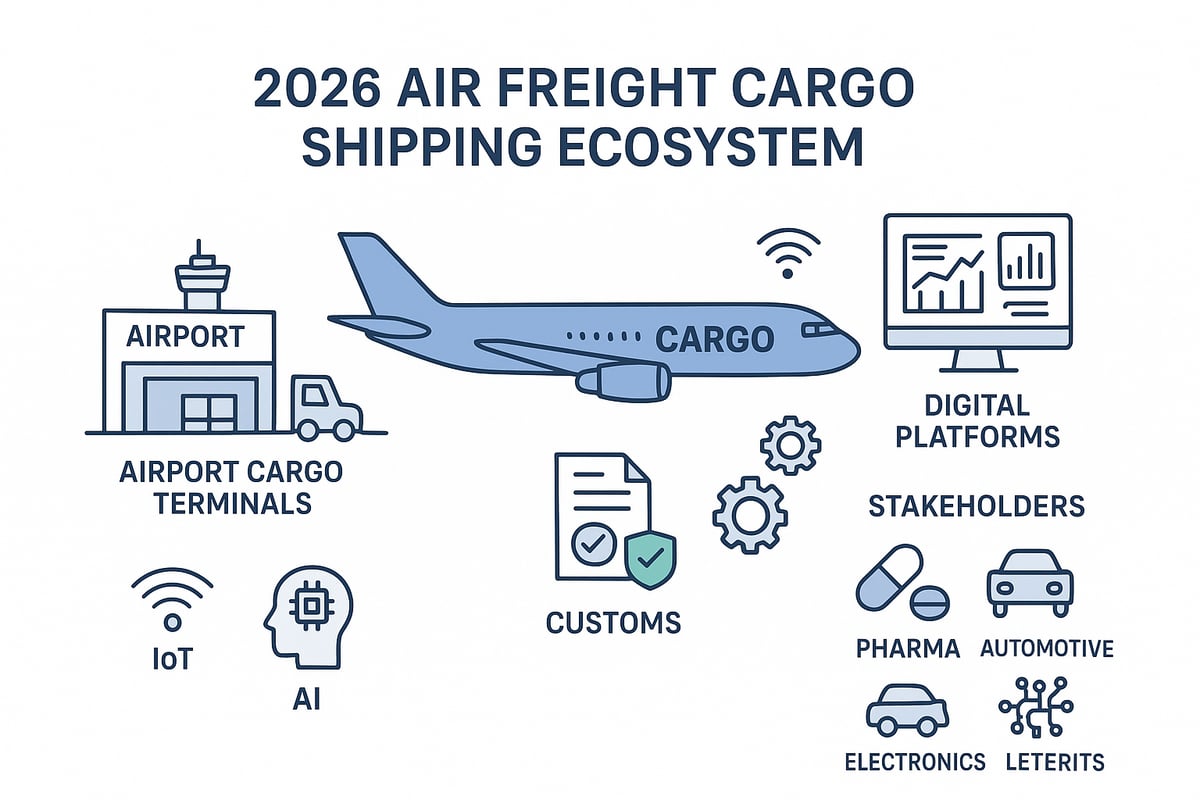
Global air freight cargo shipping is experiencing robust growth, driven by surging e-commerce and evolving supply chains. According to the IATA's 2026 Air Cargo Forecast, the market is projected to grow at a 4.1% CAGR through 2026. This expansion is fuelled by the need for rapid, reliable delivery in sectors like pharmaceuticals and high-value electronics.
Technological advancements, including AI, automation, and digital booking platforms, are reshaping how air freight cargo shipping operates. The industry is shifting toward seamless integration, efficiency, and enhanced transparency for both shippers and end customers.
A successful air freight cargo shipping operation relies on a network of interconnected stakeholders. These include airlines, freight forwarders, integrators, customs authorities, and shippers. Collaboration between these groups is crucial for smooth logistics.
Digital integration is becoming the norm, with major airlines forming partnerships with technology providers to improve booking, tracking, and customs processes. This collaborative approach enables faster response times and better visibility throughout the shipping journey.
There are several primary service types within air freight cargo shipping, each tailored to different needs. The main categories include express, standard, consolidated, and charter services. Below is a comparison:
| Service Type | Speed | Cost | Ideal For |
|---|---|---|---|
| Express | Fastest | Highest | Urgent, high-value |
| Standard | Moderate | Medium | Routine shipments |
| Consolidated | Slower | Lower | Cost-sensitive cargo |
| Charter | Customisable | Variable | Oversized, time-critical |
For example, the automotive sector often depends on time-critical charters to keep production lines moving, while e-commerce brands may prioritise express options for last-mile speed.
Air freight cargo shipping handles a wide range of goods, from general cargo to specialised items. Specialised shipments include perishables, dangerous goods, and temperature-sensitive products. Each category demands specific regulations and packaging solutions to ensure safety and compliance.
Pharmaceuticals are a prime example, often requiring cold chain logistics and strict temperature controls. This ensures that sensitive medicines remain effective from origin to destination, highlighting the need for meticulous planning in air freight cargo shipping.
Several trends are shaping air freight cargo shipping in 2026:
These innovations are helping shippers achieve greater efficiency, transparency, and sustainability.
Despite its progress, air freight cargo shipping faces notable challenges:
For instance, the rollout of new digital customs systems can create temporary delays, underscoring the need for adaptability in air freight cargo shipping.
Navigating air freight cargo shipping in 2026 requires a precise, methodical approach. Each step in the process is vital to ensure your goods reach their destination securely, on time, and in compliance with evolving global standards. This guide walks you through each phase, highlighting best practices, industry insights, and practical examples to streamline your next shipment.
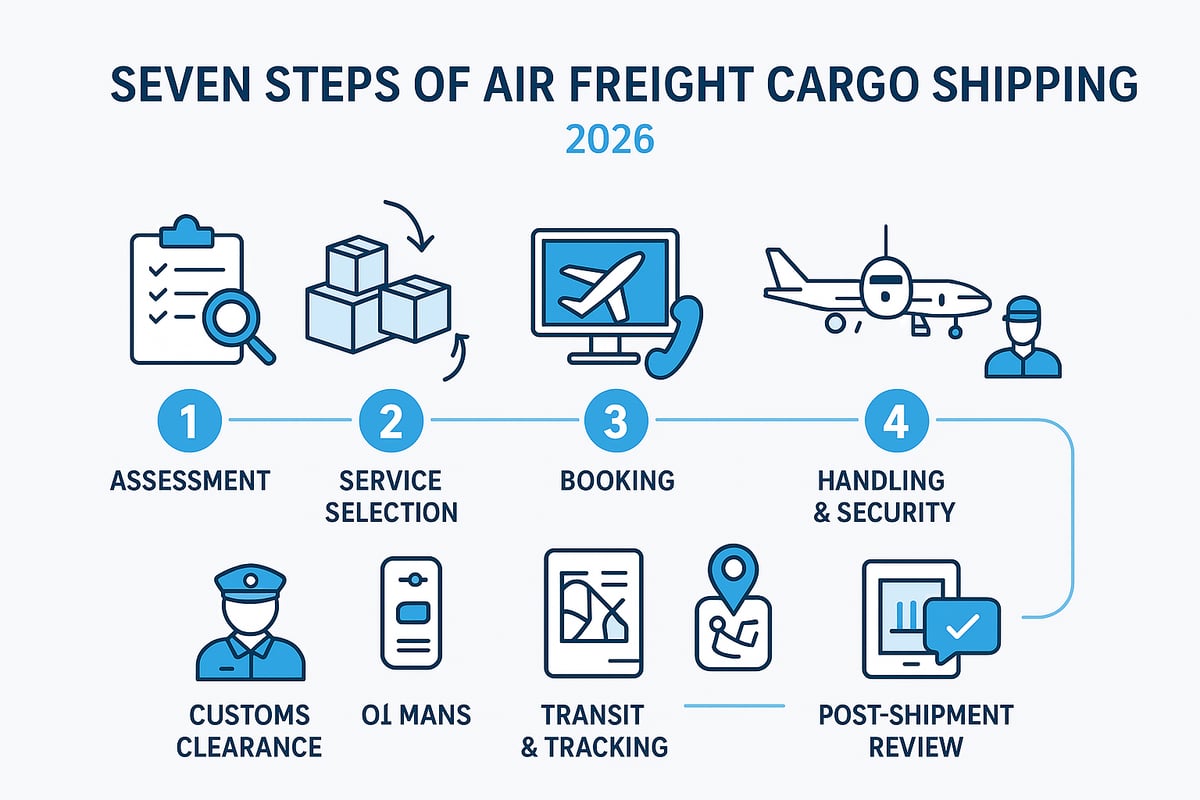
The first step in air freight cargo shipping is to thoroughly assess the nature of your cargo. Determine the type, dimensions, weight, and any special handling requirements. Accurate information at this stage minimises downstream issues.
Prepare all necessary documents, including:
For sensitive or regulated goods, such as lithium batteries, completing a Dangerous Goods (DG) declaration is essential. Proper labelling and packaging are also critical. Taking the time to assess your cargo sets the foundation for a successful air freight cargo shipping journey.
Choosing the best service option is crucial in air freight cargo shipping. Evaluate whether express, standard, consolidated, or charter services match your needs.
Consider the following:
For example, high-value goods often require express services, with 35 percent of shippers prioritising speed and security. The automotive industry, for instance, relies on time-critical charters to avoid costly production delays. Your service selection should align with your air freight cargo shipping priorities.
Once your service is chosen, book space through your preferred channel, whether a freight forwarder, airline, or digital platform. Early booking is especially important during peak seasons to secure capacity.
Key booking considerations:
During high-demand periods, air freight cargo shipping capacity can become limited, so proactive planning is vital. Real-time digital systems help you track booking status and manage last-minute changes efficiently.
Proper handling and security screening are non-negotiable in air freight cargo shipping. Adhere to IATA and ICAO packaging standards, ensuring all items are labelled and marked correctly.
Security screening involves:
According to IATA, 98 percent of international shipments undergo rigorous screening. For a deeper dive into best practices, see handling and security in air cargo. Robust procedures reduce risk, prevent delays, and keep your air freight cargo shipping operation compliant.
Clearing customs is a critical step in air freight cargo shipping. Gather all required documentation:
Customs brokers can assist with complex or high-value shipments. Many countries now use digital clearance systems, streamlining processes and reducing errors. For instance, the UK’s Customs Declaration Service (CDS) has replaced older systems, offering more efficient submissions. Staying updated on customs requirements is essential for smooth air freight cargo shipping.
During transit, real-time tracking tools provide full visibility over your air freight cargo shipping. IoT devices and digital platforms offer milestone updates, allowing you to monitor progress and respond to any disruptions.
If delays occur, such as weather disruptions or rerouting needs, immediate alerts help you adapt quickly. IoT trackers have reduced lost shipment incidents by 30 percent, giving shippers added confidence. Clear communication with logistics partners ensures your air freight cargo shipping remains on schedule.
After delivery, confirm receipt through proof of delivery and review the shipment's performance. If issues arise, such as damage or delays, initiate the claims process promptly.
Best practices include:
A thorough post-shipment review closes the air freight cargo shipping loop, providing valuable insights for continuous improvement and risk mitigation.
Understanding the cost structure of air freight cargo shipping is crucial for budgeting, negotiation, and profitability. As the industry evolves, shippers must navigate a complex landscape of charges, pricing models, and strategic opportunities. This section breaks down the key cost elements, explains how rates are determined, and offers guidance for optimising spend in 2026.
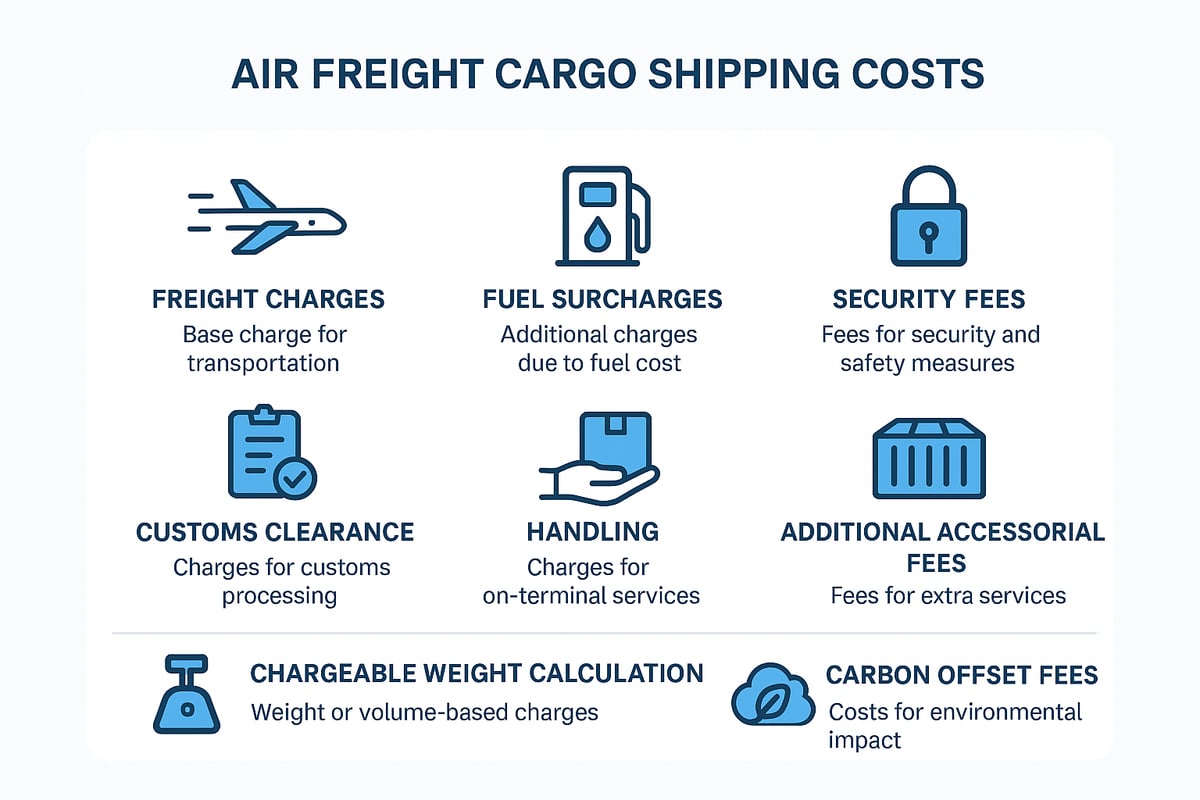
Air freight cargo shipping costs are made up of several primary elements. The main charge is based on the weight or volume of the shipment, whichever is higher. Fuel surcharges are a significant variable, sometimes accounting for up to 30 percent of the total bill. Security fees, handling charges, documentation, and customs clearance can also add up quickly.
For example, handling and documentation fees may vary by destination and service provider. Shippers must also account for insurance costs, which protect against loss or damage. Understanding each component of air freight cargo shipping enables better forecasting and more accurate quotes.
Rates in air freight cargo shipping are determined by comparing the actual and volumetric weight of the cargo. The higher value becomes the chargeable weight. Airlines use this figure, along with route, distance, and service level, to set the base rate.
Pricing models can fluctuate with market demand, seasonality, and available capacity. According to the Air Cargo Market Analysis March 2025, the average global air freight rate stands at $2.50 per kilogram. Understanding these calculations helps shippers anticipate the true cost of air freight cargo shipping.
Several factors will shape the pricing landscape for air freight cargo shipping in 2026. Market demand, available capacity, and geopolitical events can all cause rates to rise or fall. Sustainability initiatives are also having an impact, with carbon-neutral options attracting a five to ten percent premium.
Seasonal peaks, such as the fourth quarter e-commerce surge, lead to higher prices due to limited space. Additionally, new environmental regulations may introduce further costs. Staying informed about these influences is essential for effective air freight cargo shipping budgeting.
There are many ways to reduce costs in air freight cargo shipping without compromising service. Consolidating shipments with similar routes or timelines can yield substantial savings. Flexible scheduling allows shippers to avoid peak-season surcharges.
Leveraging digital platforms for instant, transparent quotes helps identify the most cost-effective options. For instance, a shipper consolidating pharmaceutical cargo might save up to 15 percent. Proactive planning and negotiation are key to unlocking value in air freight cargo shipping.
Hidden charges can quickly erode the value proposition of air freight cargo shipping. Common accessorial fees include storage, demurrage, and customs inspection costs. These are not always included in initial quotes and may appear later in the billing process.
To prevent surprises, review all service agreements and clarify which charges are included. Maintaining open communication with logistics partners ensures greater transparency. This approach helps shippers keep air freight cargo shipping expenses under control.
Building long-term relationships with providers is one of the most effective strategies for managing air freight cargo shipping costs. Shippers with consistent volumes or strong shipment histories can often negotiate better rates or priority access during peak periods.
Using shipment data and performance metrics strengthens your position in negotiations. When providers see reliable business, they are more likely to offer favourable terms. Effective negotiation is an essential skill for anyone involved in air freight cargo shipping.
Navigating the regulatory landscape is vital for any business involved in air freight cargo shipping. With 2026 bringing new rules, digital tools, and stricter standards, staying compliant is essential to avoid costly delays and ensure smooth global operations.
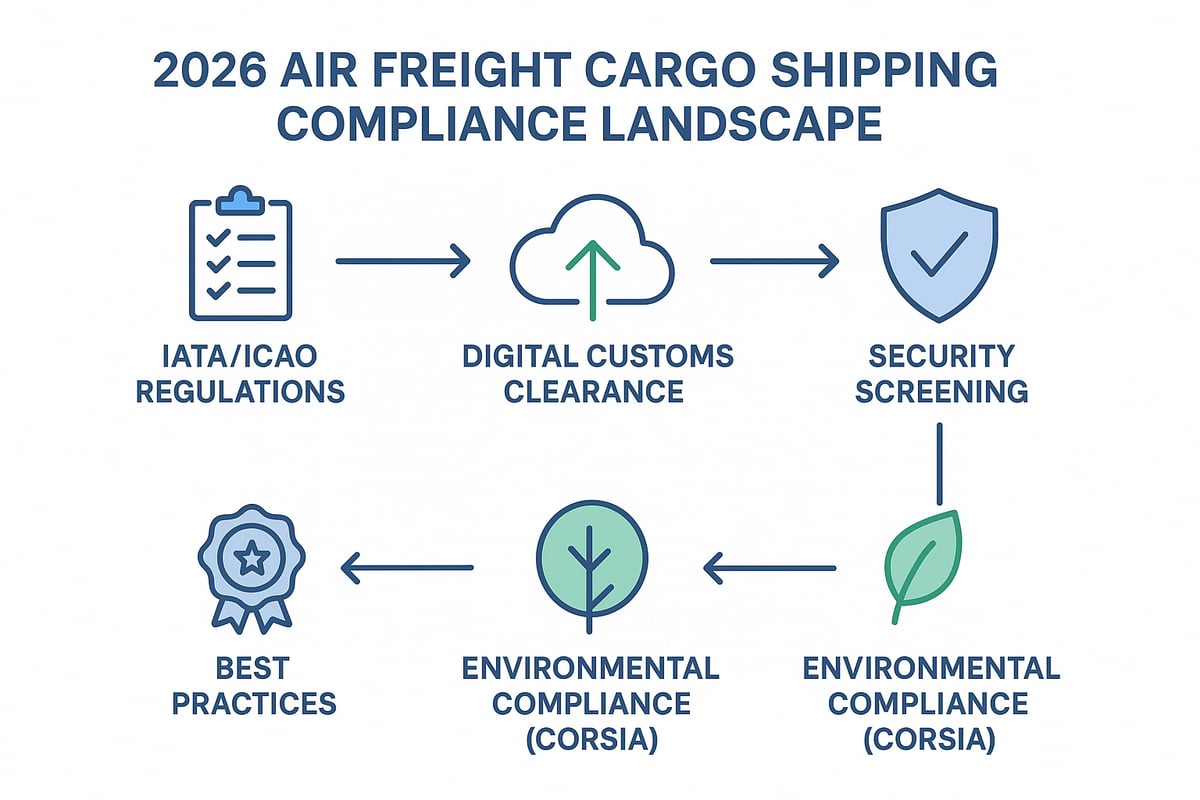
2026 brings several updates to the regulatory framework governing air freight cargo shipping. International bodies such as IATA and ICAO set the baseline, with local authorities adding their own requirements.
Notably, new ICAO emission standards come into effect, tightening environmental controls. Dangerous goods regulations are updated annually, so shippers must stay informed about restricted items and packaging protocols. Security rules continue to evolve, requiring regular staff training and system updates.
Digital transformation is reshaping customs procedures for air freight cargo shipping. Paperless documentation is now standard, reducing errors and expediting clearance. The EU’s ICS2 system, for example, mandates pre-loading cargo data for enhanced security and efficiency.
To keep pace, businesses are adopting advanced platforms that integrate seamlessly with customs systems. For insights on how technology is transforming freight forwarding, see How technology is transforming freight forwarding.
Security remains a top priority in air freight cargo shipping. Enhanced screening methods, such as X-ray and explosive trace detection, are now mandatory across most routes. Maintaining a secure chain of custody is essential, with strict reporting obligations for all regulated agents.
A 99% compliance rate is now expected, making it crucial for companies to invest in up-to-date screening technology and to document every handover in the supply chain.
Sustainability is increasingly influencing air freight cargo shipping. Airlines must report emissions in line with CORSIA, and carbon offset requirements are becoming widespread. Green certifications are now a competitive advantage for shippers, as clients demand lower-impact logistics solutions.
Shippers should review their carriers’ environmental credentials and consider carbon-neutral options to meet both regulatory and customer expectations.
Meeting compliance requirements in air freight cargo shipping involves more than ticking boxes. Regular staff training, robust audit trails, and proactive compliance reviews are vital for minimising risk.
Partnering with experienced freight forwarders ensures access to up-to-date regulatory guidance and digital tools. Embracing technology, staying alert to regulatory changes, and fostering a culture of compliance are key steps to future-proofing your shipping operations.
Navigating air freight cargo shipping in 2026 requires a blend of preparation, risk management, clear communication, and the smart use of technology. Implementing the right strategies can make the difference between seamless deliveries and costly disruptions.
Proper preparation is the foundation of efficient air freight cargo shipping. Carefully select packaging that protects goods from impact and environmental factors. Label every parcel clearly with accurate destination and handling information.
Ensure all documents, such as commercial invoices and export licences, are complete and error-free. For temperature-sensitive items, such as pharmaceuticals or perishables, use temperature loggers and insulated packaging. For more guidance, see Temperature-controlled air freight essentials. Double-check all items before dispatch to avoid costly delays.
Anticipate potential disruptions in air freight cargo shipping by creating contingency plans for weather events, strikes, or customs holds. Secure appropriate insurance for your cargo type, balancing coverage with cost.
Keep all documentation organised, as incomplete paperwork accounts for 25% of delays. Establish clear protocols for responding to incidents, ensuring your team can act quickly if issues arise.
End-to-end visibility is crucial for air freight cargo shipping. Use real-time tracking tools to monitor shipment progress and receive instant updates on any delays or route changes.
Set transparent expectations with logistics partners by agreeing on communication protocols. Proactively share status updates with all stakeholders, which helps prevent misunderstandings and builds trust.
Choose logistics partners with a proven record in air freight cargo shipping. Evaluate their reliability, compliance standards, and access to digital tools.
Formalise service level agreements to define responsibilities and response times. Maintain open communication channels, and regularly review performance to ensure ongoing alignment with your business needs.
Harness technology to optimise air freight cargo shipping operations. Analyse shipment data to identify trends, inefficiencies, or recurrent issues.
Stay updated on industry innovations, such as automated booking systems or IoT trackers, which can improve speed, accuracy, and overall shipment security.
Opt for eco-friendly packaging and consider carbon-neutral options when planning air freight cargo shipping. Many airlines now offer Sustainable Aviation Fuel (SAF) programmes and green certifications.
Adopting sustainable practices not only reduces your environmental footprint but can also enhance your brand’s reputation among partners and customers.
With the air freight landscape evolving so quickly, it’s never been more important to stay ahead with the right tools and insights. You’ve explored the essential strategies, cost factors, and innovations shaping cargo shipping in 2026, and now it’s time to put that knowledge into action. If you want to experience how intelligent automation and expert support can transform your air cargo charter process—streamlining everything from booking to real time tracking—why not see it firsthand? You can discover the benefits for yourself when you request a demo and take the next step towards more efficient, reliable air freight operations.

.png)