.png)
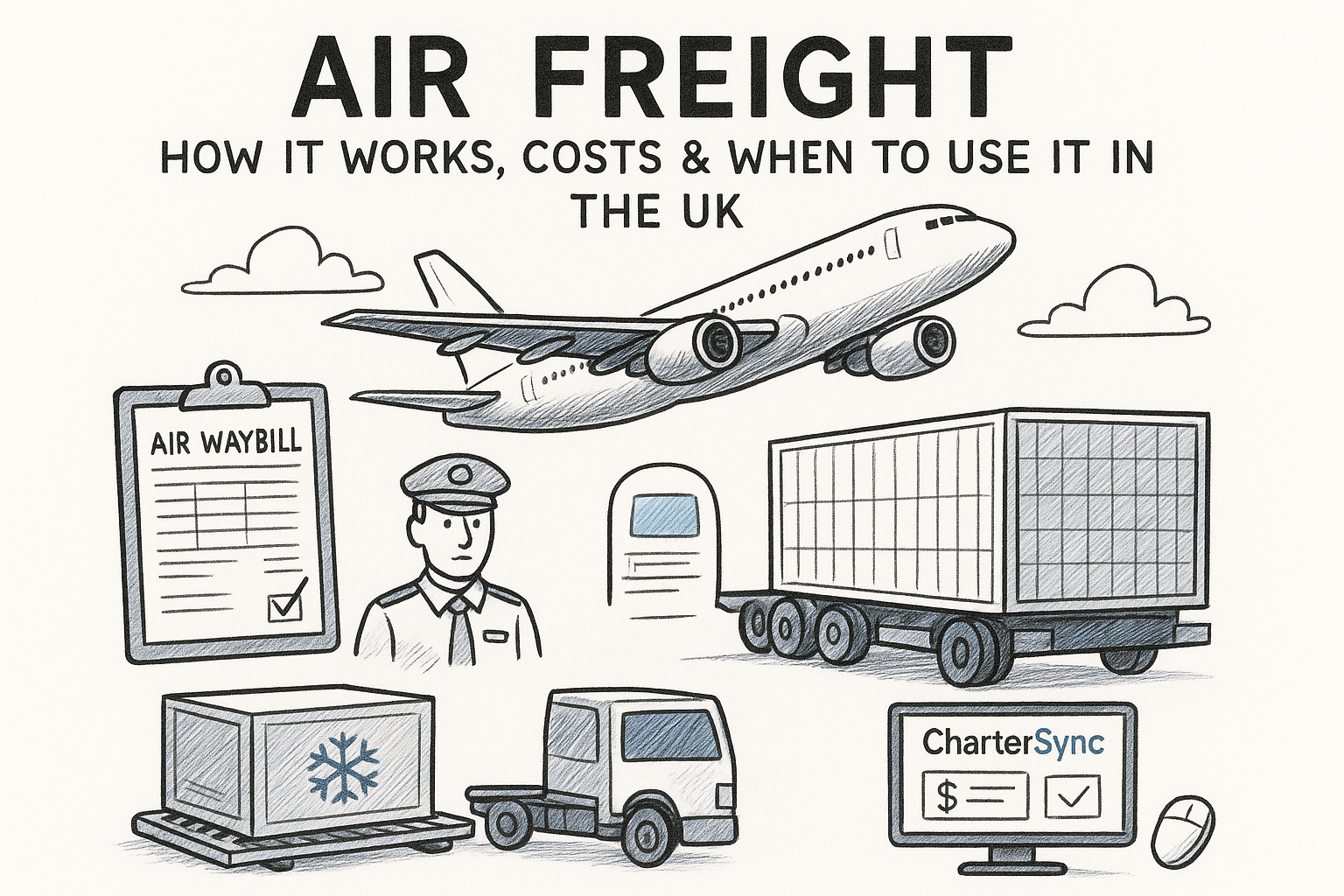
When cargo needs to move quickly across borders or continents, air freight remains the fastest option available. Whether you're shipping time-sensitive medical equipment, perishable goods, or high-value electronics, understanding how air cargo works can mean the difference between a successful delivery and a costly delay.
For freight forwarders and logistics professionals in the UK, arranging air shipments involves more than booking space on a plane. You need to consider aircraft types, weight and volume restrictions, customs procedures, and, crucially, cost. Getting accurate quotes and confirmed availability quickly is often the biggest challenge, especially when traditional brokers rely on back-and-forth emails that eat into your timeline.
This guide breaks down everything you need to know about air freight: how the process works from pickup to delivery, what drives pricing, and when chartering a dedicated aircraft makes more sense than standard scheduled cargo. At CharterSync, we've built a platform specifically to give logistics professionals instant access to charter options with transparent pricing and technical loadability confirmed upfront, so you'll see how modern tools are reshaping what's possible.
The UK's position as a global trading hub means your cargo often needs to reach distant markets within days, not weeks. Air freight gives you speed that no other transport mode can match, which directly impacts your ability to fulfil contracts, maintain inventory levels, and respond to customer demands. When you're shipping from Manchester to Mumbai or London to Los Angeles, the difference between air and sea can be the difference between securing a deal and losing it to a competitor who moved faster.
You face real pressure when clients expect rapid delivery or when production lines depend on just-in-time components. Air freight cuts transit times from weeks to days, which means you can offer tighter delivery windows and reduce the risk of stockouts. For perishable goods like pharmaceuticals or fresh produce, this speed isn't just convenient, it's essential to maintaining product integrity and meeting regulatory requirements.
Air cargo typically delivers in 1-5 days globally, compared to 20-45 days for ocean freight.
Your clients notice when you consistently meet deadlines. Faster turnaround times allow you to reduce warehousing costs and free up working capital that would otherwise sit in slow-moving inventory.
The UK benefits from extensive air connectivity through major hubs like Heathrow, Gatwick, and East Midlands Airport. You can reach virtually any international destination through direct flights or single-stop connections, giving you flexibility in routing options that land and sea transport can't replicate. Scheduled cargo services operate multiple times daily on high-demand routes, while charter options let you bypass capacity constraints during peak seasons or handle oversized shipments that don't fit standard aircraft configurations.
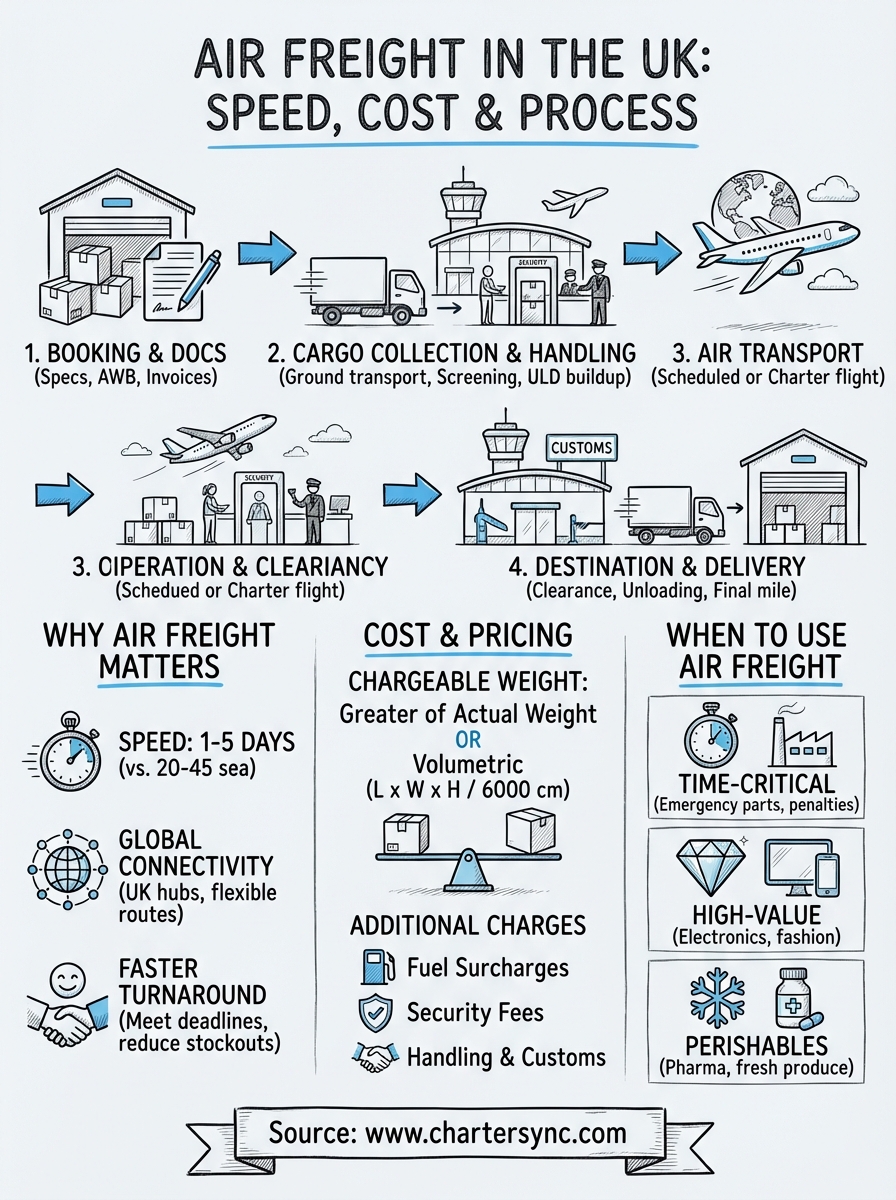
The air freight process follows a defined sequence that takes your cargo from warehouse to destination, with multiple checkpoints along the way. Understanding each stage helps you prepare the right documentation, anticipate delays, and choose the most efficient routing for your shipment. Most UK shipments move through either scheduled cargo services on passenger or freighter aircraft, or through dedicated charter flights when you need guaranteed space and flexibility.

You start by providing cargo specifications to your freight forwarder or airline: dimensions, weight, commodity type, and destination. The forwarder then secures space on a flight and prepares an air waybill (AWB), which acts as the contract of carriage and tracking number for your shipment. You also need commercial invoices, packing lists, and any required permits or certificates depending on what you're shipping. Dangerous goods require additional declarations and must comply with IATA regulations before any airline will accept them.
Accurate documentation prevents customs delays that can add days to your delivery timeline.
Your forwarder arranges ground transport to the departure airport, where the cargo goes through security screening and customs clearance. Staff then build pallets or load containers onto unit load devices (ULDs) designed to fit specific aircraft types. The airline schedules your cargo on the next available flight with capacity, loads it into the aircraft hold, and updates tracking systems. Upon arrival, the cargo clears destination customs, gets unloaded, and moves to either your warehouse or a consolidation facility for final delivery.
Air freight pricing varies significantly based on weight, volume, distance, and the specific service level you need. Airlines charge by either actual weight or volumetric weight, whichever is greater, which means bulky but light cargo often costs more than you might expect. Your final invoice will typically include the base rate plus mandatory surcharges that can add 30-50% to the quoted price, so you need to request comprehensive quotes that break down every component.
Airlines use a chargeable weight formula that compares your cargo's actual weight against its volumetric weight (length × width × height ÷ 6000 for centimetres). You pay for whichever figure is higher, which protects carriers from losing revenue on low-density shipments that consume valuable aircraft space. Rates decrease as shipment size increases, with break points typically at 45kg, 100kg, 300kg, and 1000kg, so consolidating multiple small shipments into one larger booking usually reduces your per-kilogram cost.
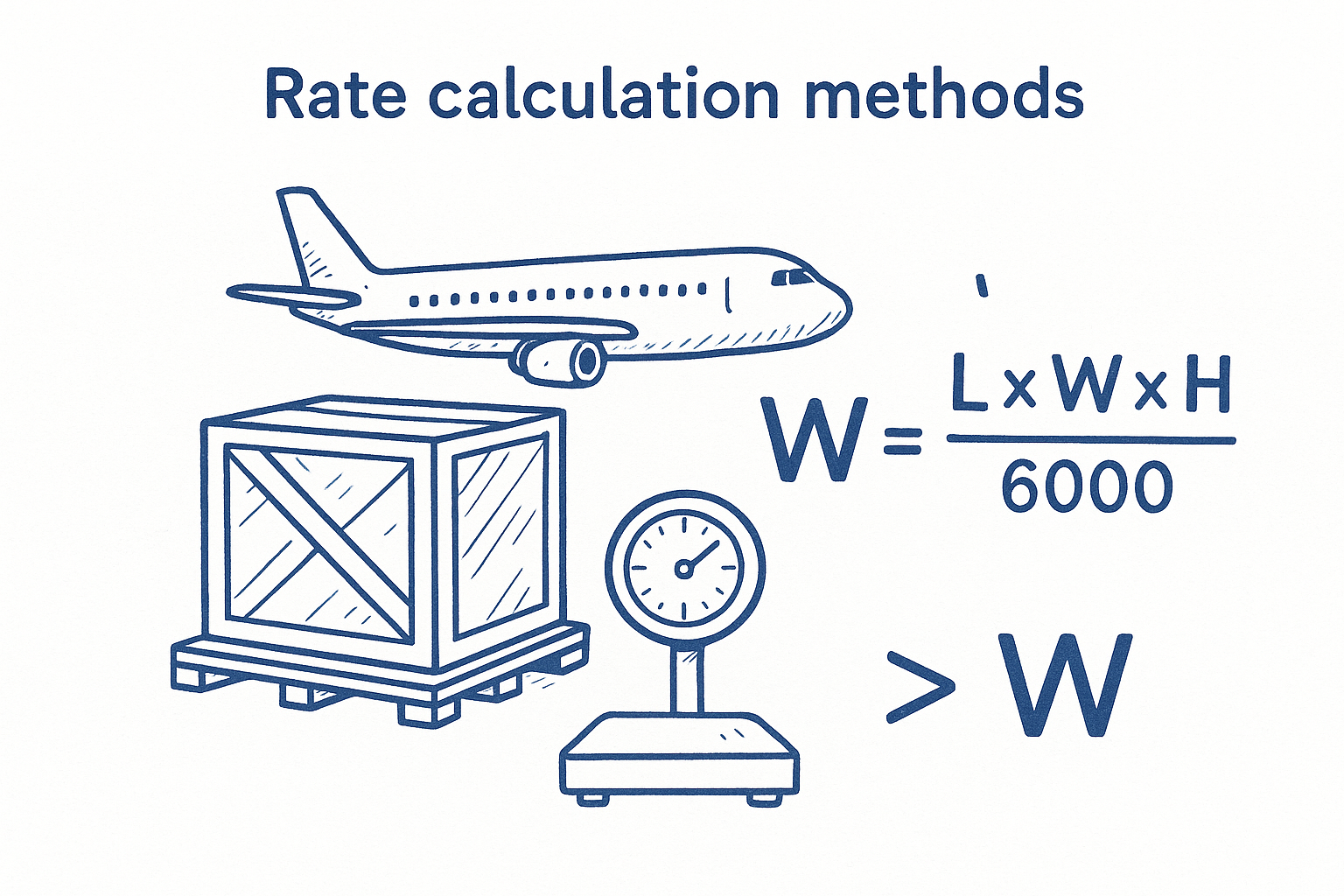
UK air freight rates typically range from £1.50 to £6.50 per kilogram depending on route, urgency, and volume.
Beyond the base rate, you'll encounter fuel surcharges, security fees, and handling charges at both origin and destination. Customs clearance, documentation preparation, and special handling for temperature-controlled or hazardous goods add further costs. Peak season surcharges apply during high-demand periods like Christmas, whilst remote area deliveries incur supplementary fees that can double your transport cost.
You need to weigh cost against urgency when choosing your transport mode, because air freight can cost five to ten times more than ocean shipping. The decision comes down to whether the premium price justifies the speed advantage for your specific cargo and business situation. Several factors should guide your choice, from delivery deadlines to the nature of the goods you're moving.
Your production line stops when critical components don't arrive, which makes air freight the clear choice for emergency restocking or replacement parts. When you face contractual penalties for late delivery or when seasonal demand windows close quickly, paying extra to move cargo by air protects larger revenue streams. Trade shows, product launches, and medical emergencies all represent situations where a few days make the difference between success and failure.
Air freight becomes cost-effective when the value of time exceeds the transport premium.
You should consider air freight for electronics, pharmaceuticals, and fashion items where product value justifies higher shipping costs. Fresh flowers, seafood, and temperature-sensitive vaccines require the shortest possible transit time to maintain quality and meet regulatory standards. Lower inventory carrying costs and reduced insurance premiums often offset the higher transport fees when you're shipping valuable merchandise.
Your choice of provider directly affects service reliability, pricing transparency, and how quickly you resolve issues when they arise. You need a partner who understands UK export regulations, maintains strong airline relationships, and provides accurate quotes that include all charges upfront. The best providers offer real-time tracking systems and dedicated support teams who respond within hours, not days.
Look for providers with proven experience in your specific commodity type, whether that's pharmaceuticals, electronics, or industrial equipment. Check their network coverage to ensure they serve your key trade lanes with regular frequency. Providers who handle customs brokerage in-house typically speed up clearance and reduce the risk of documentation errors that cause delays.
Select providers who demonstrate technical expertise in aircraft loadability and routing options.
Request detailed breakdowns that separate base rates from surcharges so you understand exactly what you're paying for. Compare multiple providers on identical shipment specifications to identify genuine price differences versus hidden fees. Platforms like CharterSync eliminate the traditional back-and-forth by providing instant charter quotes with confirmed aircraft availability and technical feasibility, letting you make decisions in minutes rather than waiting hours for broker responses.
You now understand how air freight works, what drives costs, and when speed justifies the premium price over slower transport modes. Your next move depends on your specific shipping requirements: if you're handling regular scheduled cargo, start comparing quotes from multiple forwarders to identify the best rates and service levels for your key trade lanes. Review your documentation processes to ensure you're submitting accurate paperwork that won't trigger customs delays.
For time-sensitive shipments or oversized cargo that exceeds standard aircraft configurations, consider charter options that give you guaranteed capacity and flexible departure times. Traditional brokers often take hours to confirm availability and pricing, which creates uncertainty when you need decisions fast. CharterSync provides instant access to charter aircraft with transparent quotes, confirmed loadability analysis, and real-time tracking, so you can secure the right aircraft in minutes rather than waiting for multiple email exchanges. Test the platform with your next urgent shipment to see how digital tools streamline what used to be a manual process.

.png)