.png)
Air cargo is transforming global trade faster than ever, with 2026 poised to set new records in speed, reach, and efficiency. Businesses and logistics professionals must stay ahead of these changes to remain competitive.
This guide is your essential resource for mastering freight air cargo in a rapidly evolving marketplace. It offers clear, actionable insights tailored for those navigating the complexities of modern air freight.
Inside, you will find a thorough overview of air cargo fundamentals, the latest industry trends, regulatory shifts, booking processes, cost-saving strategies, and technology breakthroughs. Each section is designed to give you practical tools for success.
Ready to elevate your expertise? Dive in for the most up-to-date guidance, and ensure your air cargo operations excel in 2026 and beyond.
Freight air cargo is the backbone of modern global logistics, providing unmatched speed and reliability for shipping goods across continents. Unlike other transport modes, it is uniquely suited to time-sensitive, high-value, or perishable shipments. For those new to the industry, understanding the distinction between air cargo and air freight is crucial. If you want to clarify these differences, read Air cargo vs air freight explained for a detailed breakdown.
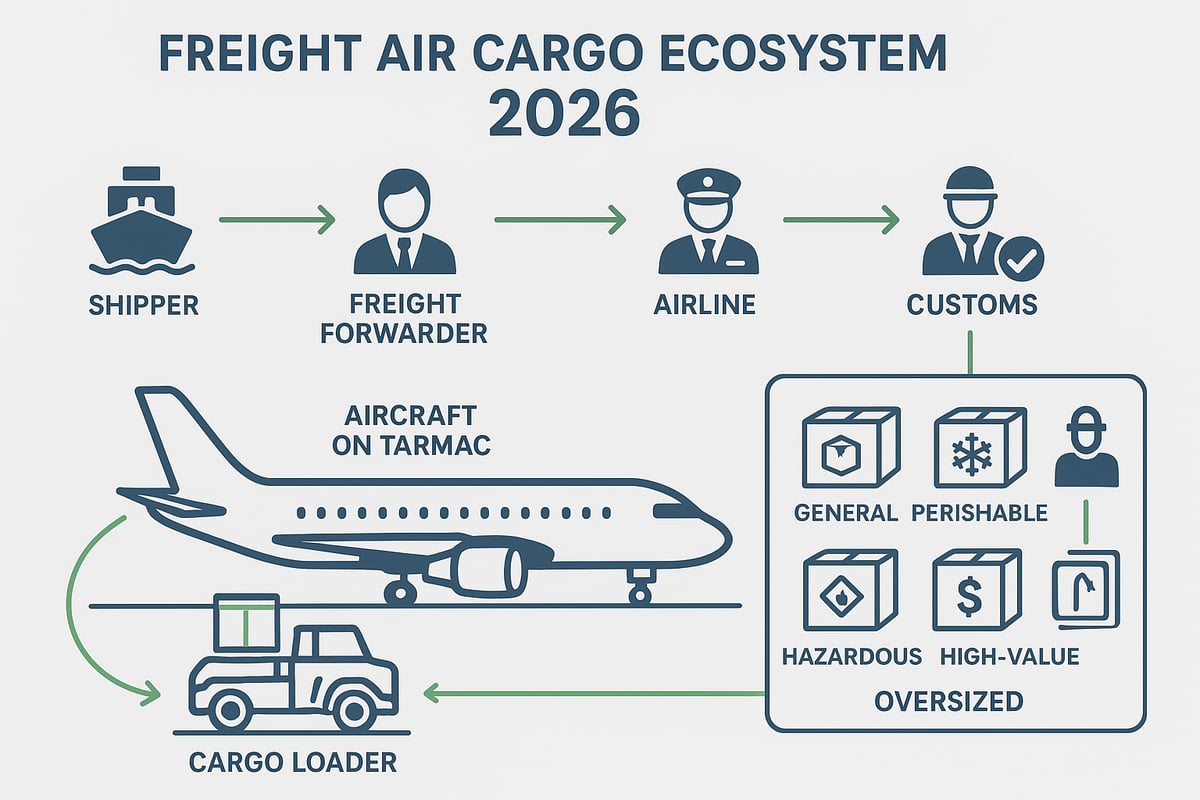
Air cargo comes in several distinct categories, each with its own handling and regulatory requirements. General cargo includes everyday consumer goods, while perishable cargo covers food, flowers, and pharmaceuticals that require temperature control. Hazardous cargo, such as chemicals or batteries, demands strict compliance with safety protocols. High-value items, including electronics or jewellery, need enhanced security measures. Oversized cargo consists of large machinery or vehicles that challenge standard aircraft holds.
| Type of Air Cargo | Example Items | Special Handling? |
|---|---|---|
| General | Clothing, books, tools | Standard |
| Perishable | Fresh produce, vaccines | Temperature control |
| Hazardous | Lithium batteries, chemicals | Dangerous goods protocols |
| High-value | Laptops, watches, art | Extra security |
| Oversized | Industrial equipment | Special loading/unloading |
The world of freight air cargo involves a network of essential stakeholders. Shippers are the businesses or individuals sending goods. Freight forwarders act as intermediaries, managing logistics and paperwork. Airlines provide the aircraft and flight operations, while ground handlers ensure efficient loading and unloading at airports. Customs authorities verify compliance with import and export laws. Regulatory bodies like IATA and ICAO oversee global safety and security standards.
Certain airports have established themselves as global air cargo hubs due to strategic locations and advanced infrastructure. Heathrow in London, Frankfurt in Germany, Hong Kong International, and Dubai International are prime examples. These hubs anchor vital trade lanes connecting Europe, Asia, the Middle East, and the Americas, supporting the constant flow of freight air cargo worldwide.
The typical workflow starts with booking cargo space, followed by preparing documentation and labelling. After customs clearance, goods are loaded, flown to the destination, and finally delivered to the consignee. This streamlined process is designed to minimise transit times and enhance reliability. The main advantages of freight air cargo include rapid delivery, consistent schedules, worldwide reach, and robust security.
However, there are limitations. Air transport is often more expensive than sea or road alternatives, especially for bulky or low-value goods. Capacity constraints can arise during peak seasons, causing delays or higher rates. Environmental concerns are also significant, as the industry faces pressure to reduce emissions and adopt greener practices.
A major driver of change in the past few years has been the explosive growth of e-commerce. Since 2024, online shopping trends have pushed demand for fast, reliable freight air cargo services to new heights, particularly for cross-border shipments. This trend is poised to shape industry priorities well into 2026, making it essential for businesses to stay informed and agile.
Navigating the freight air cargo booking process in 2026 requires up-to-date knowledge and agile decision-making. The following step-by-step guide breaks down each stage, helping businesses and logistics professionals optimise their air cargo shipments for speed, compliance, and cost efficiency. Whether moving urgent parts or temperature-sensitive goods, understanding each step is essential for smooth freight air cargo operations.
Every successful freight air cargo journey begins with a thorough assessment of your shipment. First, evaluate the nature of your cargo: is it general, perishable, hazardous, or high-value? Measure its weight and dimensions, then check for any special handling needs, such as temperature control or dangerous goods protocols.
Proper packaging and labelling are vital for air transport. Adhering to IATA guidelines minimises risk and ensures cargo is accepted by airlines. For detailed guidance, consult Air cargo packing best practices to meet the latest 2026 standards.
Key documents include:
For example, shipping lithium batteries now demands strict compliance with updated safety protocols, including reinforced packaging and clear hazard labelling. These steps not only ensure regulatory approval but also safeguard your freight air cargo from delays or damage.
Choosing the appropriate service is crucial for meeting deadlines and controlling costs. Freight air cargo providers offer several options, including general cargo, express, charter, consolidated, and temperature-controlled services.
Comparison Table: Air Cargo Service Options
| Service Type | Transit Speed | Best For |
|---|---|---|
| General Cargo | Standard | Most commodities |
| Express | Fastest | Urgent parcels, e-commerce |
| Charter | Flexible | Oversized, urgent, special cargo |
| Consolidated | Economy | Small shipments, cost savings |
| Temperature-Control | Specialised | Pharmaceuticals, perishables |
Consider service level agreements (SLAs), transit times, and reliability. Full or part charter services suit unique needs, such as urgent automotive parts. In such cases, rapid, tailored solutions are essential for uninterrupted supply chains. Assess all options to match your freight air cargo requirements precisely.
Once your service type is chosen, the next step is booking and securing space. Request quotes from airlines or freight forwarders, comparing offers based on price, transit time, and available capacity. Many freight air cargo operators now use digital booking platforms and instant quoting tools, streamlining the process.
Space allocation depends on several factors, including market demand, seasonality, and cargo type. During peak seasons, high demand can lead to surcharges and limited availability. For example, electronics shipments in Q4 may face capacity constraints, requiring early booking to guarantee space for your freight air cargo.
Prompt action and flexible scheduling can help you secure the best rates and avoid delays.
Efficient customs clearance is integral to the freight air cargo process. In 2026, most customs authorities require digital documentation, with widespread adoption of e-AWB and paperless declarations. Prepare all necessary paperwork, such as commercial invoices and certificates, to ensure swift processing.
Recent updates include new security regulations, digital customs platforms, and increased data sharing requirements. Import and export controls remain strict, especially for restricted goods like chemicals or dual-use items. For instance, post-Brexit UK-EU freight air cargo must comply with revised customs procedures and documentation standards.
Staying current with regulatory changes is vital to prevent costly delays or penalties.
Advanced tracking technologies have transformed freight air cargo visibility in 2026. Real-time updates via IoT sensors and mobile apps allow shippers to monitor location, temperature, and handling conditions throughout transit.
Upon arrival at destination airports, ground handlers facilitate unloading and last-mile delivery. Exception management is key: if delays or damages occur, swift claims processing and customer support are essential. For example, temperature-sensitive pharmaceuticals benefit from IoT-enabled alerts, ensuring their integrity during the freight air cargo journey.
Comprehensive tracking and proactive support minimise risk and build trust with clients.
CharterSync stands at the forefront of automated freight air cargo charter solutions. Their AI-powered platform streamlines booking, quoting, and aircraft matching, delivering rapid response and transparent pricing.

Users benefit from real-time tracking and dedicated human support, making CharterSync ideal for time-critical, specialised, or high-value shipments such as automotive, pharmaceutical, or high-tech goods. Freight forwarders increasingly rely on CharterSync to secure urgent charters, ensuring global supply chains remain agile and resilient in the face of evolving demands for freight air cargo.
The landscape of freight air cargo is evolving rapidly, shaped by digital innovation, sustainability goals, and changing global trade patterns. As we move into 2026, staying ahead of these trends is essential for maintaining operational efficiency, regulatory compliance, and competitive advantage.
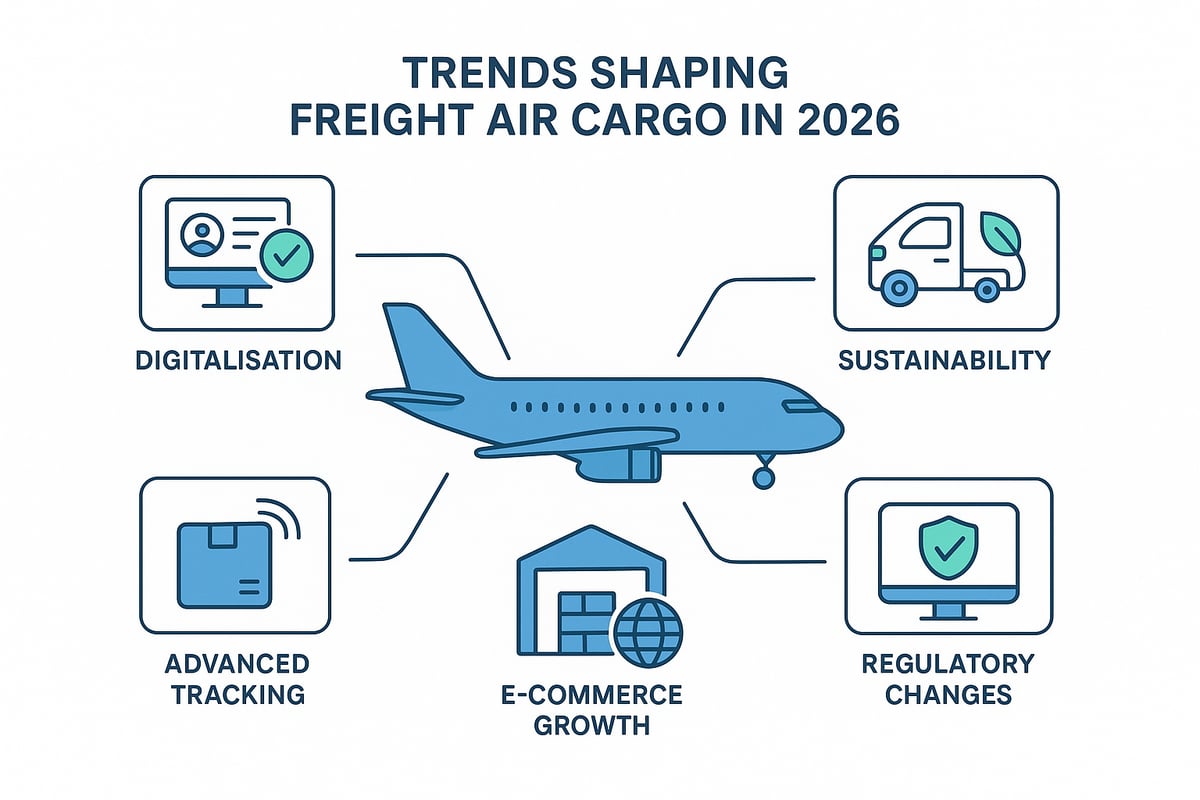
Digital transformation is at the core of the freight air cargo revolution in 2026. Leading airlines, forwarders, and logistics providers are investing heavily in digital booking platforms, e-AWB (electronic air waybill) solutions, and paperless documentation.
AI-driven route optimisation and predictive analytics are now standard, empowering businesses to forecast demand, reduce operational bottlenecks, and improve decision-making. Automation is also transforming cargo handling and warehouse operations, with robotic systems managing loading, sorting, and inventory control.
These advancements mean fewer manual errors, quicker turnaround times, and enhanced visibility for every freight air cargo shipment. For businesses, embracing these technologies is no longer optional but a necessity for staying competitive.
Environmental responsibility is a driving force in freight air cargo, with the industry under growing pressure from regulators and customers alike. Airlines are increasingly adopting Sustainable Aviation Fuel (SAF) to cut emissions and are investing in carbon offset initiatives to mitigate their environmental footprint.
Ground operations are shifting towards electric and hybrid vehicles, while airports are upgrading infrastructure to meet green standards. Regulatory bodies are tightening requirements for eco-friendly practices, making sustainability integral to business strategy.
Many freight air cargo providers now offer carbon-neutral shipping options, responding to customer demand for more responsible logistics. These actions not only benefit the planet but also enhance brand reputation and future-proof supply chains.
Visibility and control over shipments are critical in the freight air cargo sector. The adoption of IoT sensors, RFID tagging, and blockchain technology is revolutionising how cargo is tracked and managed.
IoT devices provide real-time data on location, temperature, humidity, and potential shocks, ensuring that sensitive goods like pharmaceuticals remain safe and compliant throughout transit. Blockchain adds a further layer of security and transparency, reducing the risk of tampering or loss.
These technologies empower shippers and consignees to monitor every stage of their freight air cargo journey, respond quickly to exceptions, and build greater trust with partners and clients.
The continued expansion of e-commerce is reshaping freight air cargo, driving demand for rapid, reliable, and flexible air transport. Cross-border online shopping has surged, prompting logistics providers to develop specialised express services and invest in last-mile delivery innovations.
Dedicated e-commerce air hubs are emerging in key regions such as Europe and Asia, optimising network design to handle high parcel volumes. This growth is pushing freight air cargo operators to refine capacity planning and offer tailored solutions for time-sensitive goods.
As consumer expectations for speed and transparency rise, the ability to deliver seamless express services is becoming a key differentiator in the market.
Regulatory compliance and security are more complex and critical than ever for freight air cargo in 2026. Global bodies like ICAO and IATA are rolling out updated security standards, while digital customs clearance and mandatory data sharing are streamlining border processes.
Geopolitical shifts, such as new trade agreements and customs frameworks, are impacting route planning and documentation requirements. Operators must stay informed and agile to avoid costly delays or penalties.
For a comprehensive overview of the latest regulatory changes and standards effective from 2026, consult IATA's 2026 Air Cargo Regulations Update. Staying compliant safeguards operations and builds customer confidence in the ever-changing freight air cargo landscape.
In the dynamic world of freight air cargo, mastering cost management is essential for businesses aiming to stay competitive in 2026. With changing global conditions, evolving technology, and fluctuating demand, understanding and optimising your air cargo spend can directly impact your bottom line.
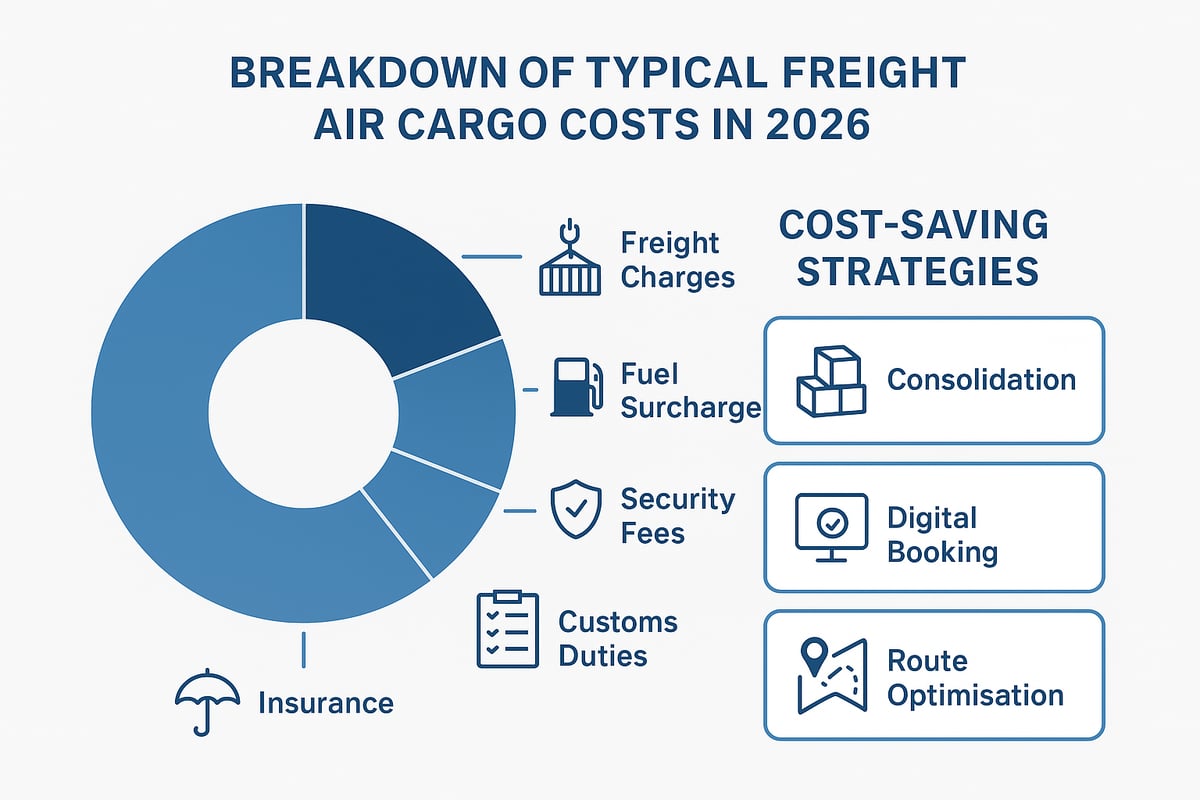
Freight air cargo pricing is composed of several key elements. These include base freight charges, fuel surcharges, security fees, handling costs, customs duties, and insurance premiums. Each component can vary depending on the nature of the shipment, destination, and service level chosen.
| Cost Component | Description | Typical Range (2026) |
|---|---|---|
| Freight Charges | Base cost for cargo transport | £1.80–£3.20 per kg |
| Fuel Surcharges | Adjusts for fuel price fluctuations | £0.35–£0.75 per kg |
| Security Fees | Covers mandatory screening and compliance | £15–£30 per shipment |
| Handling Costs | Airport and ground handling | £0.10–£0.30 per kg |
| Customs Duties | Import/export taxes and levies | Varies by country/regulation |
| Insurance | Protects high-value or sensitive goods | 0.1–0.5% of shipment value |
Understanding these elements allows shippers to anticipate charges and plan budgets more effectively. The freight air cargo market remains sensitive to global events, so it is critical to monitor these variables regularly.
To optimise costs, businesses should compare rates from multiple carriers and freight forwarders. Requesting detailed quotes that break down each cost component is vital. Use digital booking platforms to access instant quotes and benchmark market rates.
Negotiation is also important. Volume commitments, flexible scheduling, and loyalty can provide leverage for better terms. Consider seasonal demand, as rates typically peak during high-demand periods, and explore off-peak options for savings.
Several proven strategies can help reduce freight air cargo expenses without compromising reliability or speed. Consolidation of shipments can lower per-unit costs, especially for smaller loads. Advanced booking often secures lower rates and guarantees space during peak seasons.
Digital platforms offer real-time pricing and space availability, making it easier to compare options and select the most cost-effective route. For shipments with urgent or specialised requirements, air cargo charters can offer flexibility and competitive pricing, as highlighted in Why choose air cargo charter.
Other tactics include optimising packaging to reduce volumetric weight, using predictive analytics for route planning, and partnering with forwarders who offer value-added services.
Risk management is a vital aspect of cost control in freight air cargo. High-value, sensitive, or time-critical shipments require robust insurance coverage. Assess the specific risks associated with your cargo type, destination, and route.
Work closely with insurance providers to tailor coverage, and ensure all documentation is accurate and complete to streamline claims in case of loss or damage.
From 2024 to 2026, air freight rates have experienced moderate volatility, primarily due to fuel price changes and global disruptions. On average, rates in Europe and Asia have ranged between £2.00 and £3.50 per kg, while North America has seen slightly higher figures due to capacity constraints.
Digital transformation has empowered shippers to access transparent, competitive quotes instantly, reducing administrative costs and improving decision-making. By leveraging these tools, businesses can respond quickly to market changes and capture savings in real time.
Staying informed about market trends and continuously reviewing your freight air cargo strategy will position your business for long-term success.
Compliance, documentation, and risk management are the backbone of successful freight air cargo operations in 2026. As the industry evolves, businesses must stay ahead of regulatory shifts, digital requirements, and complex security landscapes. Navigating these areas is essential for minimising delays, avoiding costly penalties, and ensuring cargo safety.
Freight air cargo shipments require a suite of documents to move seamlessly across borders. The core paperwork includes:
Accuracy is critical. Incomplete or incorrect paperwork can halt freight air cargo at customs, causing delays and fines. Digital platforms now streamline document submission and verification, reducing manual errors and expediting clearance.
The regulatory landscape for freight air cargo is shifting rapidly in 2026. Authorities worldwide have made e-AWB mandatory, pushing the industry towards full digitalisation. Customs clearance is now largely automated, with digital platforms allowing pre-clearance and real-time data sharing between stakeholders.
Data privacy laws are also tightening. Companies must ensure that personal and shipment data are protected in line with global standards. For a deeper look at how technology is transforming operations, see IATA's 2025 Vision for Air Cargo Facilities.
These advances not only improve efficiency but also support compliance by reducing paperwork errors and providing audit trails for every freight air cargo movement.
Certain types of freight air cargo demand extra compliance checks. Dangerous goods, perishables, pharmaceuticals, and live animals each have unique handling and documentation requirements. For example, lithium batteries must comply with IATA's Dangerous Goods Regulations and need special labels and declarations.
Customs procedures have evolved, with bonded warehousing and pre-clearance becoming common. Post-Brexit changes mean UK-EU shipments now require additional checks and digital declarations. Staying updated on each country’s requirements is crucial for smooth freight air cargo transit.
A practical approach is to maintain a compliance checklist tailored to each cargo type and destination.
| Cargo Type | Key Compliance Points | Special Documents |
|---|---|---|
| Dangerous Goods | IATA DGR, special labelling | Shipper's Declaration |
| Perishables | Temperature control, shelf-life evidence | Health Certificates |
| Pharmaceuticals | Temperature monitoring, security protocols | GDP Certificate |
| Live Animals | Welfare standards, species permits | CITES, Vet Docs |
Security is a top concern in freight air cargo. Screening protocols are stricter than ever, with advanced scanning and tracking at every stage. Liability for loss or damage often rests with the carrier, but shippers must secure adequate insurance to cover high-value or sensitive goods.
If issues arise—such as delays, loss, or damage—prompt claims supported by accurate documentation are essential. Many forwarders use digital claims platforms for rapid resolution. For a real-world example, consider a high-tech electronics shipment: a compliance checklist would include e-AWB, export license, product certifications, and real-time tracking setup.
Innovation in charter operations also supports robust risk management. Learn more about recent advances in Air cargo charter innovation.
In 2026, over 95% of global freight air cargo shipments are processed using e-AWB, reflecting the industry's commitment to digital transformation and compliance efficiency.
The landscape of freight air cargo is set to undergo significant transformation beyond 2026. Accelerated by digital innovation, sustainability imperatives, and shifting global markets, the industry is preparing for a future where adaptability and expertise will define success. Anticipating these changes is crucial for businesses aiming to remain competitive and resilient in the years ahead.
Freight air cargo volumes are forecast to rise steadily, with Asia Pacific, Africa, and the Middle East driving much of the expansion. According to IATA's 2026 Air Cargo Forecast, global air cargo demand is expected to grow at an average annual rate of 4.1% through 2026. Emerging markets in Southeast Asia and sub-Saharan Africa are poised to capture a larger share of international trade, fuelled by growing e-commerce and industrialisation.
A comparative table summarises regional growth rates:
| Region | Projected Growth Rate (2024-2026) | Key Drivers |
|---|---|---|
| Asia Pacific | 5.2% | E-commerce, manufacturing |
| Middle East | 4.8% | Transhipment, oil & gas |
| Africa | 4.6% | Agricultural exports |
| Europe | 3.2% | Pharmaceuticals, tech |
This surge in freight air cargo will reshape global trade lanes and foster new logistics hubs.
The next decade will see freight air cargo propelled by autonomous aircraft, drone deliveries, and AI-powered supply chains. Companies are investing in unmanned aerial vehicles for short-haul, high-value shipments, while AI algorithms optimise route planning and cargo allocation. Blockchain technology is improving transparency and security across international supply chains.
Innovation is not limited to the skies. Ground handling operations are also being automated, reducing turnaround times and minimising human error. These advancements position freight air cargo as the backbone of time-critical, high-tech industries.
Despite progress, freight air cargo providers face persistent challenges. Capacity constraints, driven by aircraft shortages and airport congestion, continue to threaten reliability. Global disruptions, such as geopolitical tensions and extreme weather, require agile contingency planning.
Regulatory harmonisation remains elusive. Varying customs procedures and security standards complicate cross-border operations. Environmental concerns, especially around emissions, are prompting stricter regulations and customer scrutiny. Addressing these issues is essential for the sustainable growth of freight air cargo.
Opportunities abound for shippers willing to embrace digital transformation and sustainability. Digital booking platforms and real-time tracking empower businesses to optimise routes and reduce costs. Flexible logistics models, such as on-demand charters and hybrid air-road solutions, offer resilience against market fluctuations.
Sustainability is also a competitive differentiator. Shippers can partner with providers offering carbon-neutral freight air cargo services, particularly in Asia Pacific, where FedEx on Air Freight Trends in Asia Pacific highlights a surge in eco-conscious solutions. Adapting to these trends will help businesses maintain a strong position in the evolving market.
The future of freight air cargo will demand a workforce skilled in digital technologies, data analytics, and international compliance. Logistics professionals must adapt to rapid technological change, mastering tools for automation, blockchain, and AI-driven decision-making.
Soft skills, such as cross-cultural communication and problem-solving, will remain vital. As companies expand into emerging markets, local expertise and global perspective become indispensable. Training and talent development are key to sustaining growth and innovation in freight air cargo.
A leading European electronics distributor provides a compelling case. By investing in digital supply chain tools and upskilling staff, the company navigated supply disruptions and expanded into Southeast Asia, leveraging freight air cargo to meet rising demand. Their success illustrates the value of agility and forward-thinking in a changing landscape.
Freight air cargo is entering an era defined by growth, innovation, and complexity. By staying informed and adapting strategies, businesses can harness these opportunities and thrive beyond 2026.
As we look ahead to 2026, navigating the complexities of air cargo requires both up to date knowledge and smart, reliable tools. If you’re ready to transform your freight operations and experience the benefits of intelligent automation paired with dedicated expertise, I invite you to see how CharterSync can streamline your booking processes, provide instant access to global aircraft, and deliver tailored support for your most critical shipments. Discover first hand how these advancements can give your business a real edge—request a demo to explore CharterSync’s platform in action.

.png)