.png)

As 2026 draws near, global economic shifts are making airport freight more crucial than ever in connecting markets and driving international trade. The landscape is rapidly evolving, with rising cargo volumes and new technologies transforming how goods move across continents.
Businesses and logistics professionals now face greater complexity and demand for efficient, secure, and tech-driven airport freight solutions. Staying ahead means understanding the latest processes, regulations, and innovations.
This handbook is designed to equip freight forwarders, logistics managers, and companies with the essential knowledge to navigate airport freight in 2026. You will find practical guidance on emerging trends, cost optimisation, new regulations, and technology.
Ready for a streamlined, expert-backed guide to future-proof your operations? Read on and discover how to maximise value, compliance, and efficiency in the world of airport freight.
The landscape of airport freight is transforming rapidly as we approach 2026. Global trade patterns continue to shift, and businesses are under pressure to deliver goods faster, more securely, and with greater transparency. This evolution is not just about higher volumes; it involves a fundamental change in the way airport freight is managed, regulated, and optimised for the future. Let us explore the key forces shaping this dynamic sector.

Several powerful trends are driving the ongoing transformation of airport freight operations. The explosive growth of global e-commerce is fuelling unprecedented demand for rapid, reliable deliveries. As supply chains become increasingly interconnected, businesses expect faster turnaround times and greater flexibility.
Time-sensitive shipments, such as pharmaceuticals, perishables, and electronics, require specialised handling and swift movement through airport freight hubs. In response, airports are expanding infrastructure, investing in advanced cargo handling systems, and focusing on sustainability. The push for greener operations, including reduced carbon emissions and energy-efficient equipment, is now central to the airport freight agenda.
Regulatory requirements are evolving to keep pace with the complexities of modern airport freight. Global customs authorities are tightening documentation standards, necessitating more precise and timely data submission from all parties involved.
Post-pandemic, security protocols have intensified. Biometric screening, digital cargo tracking, and the adoption of international standards from IATA and ICAO are becoming standard practice. These measures are designed to safeguard the integrity of airport freight flows and ensure compliance with international laws.
The future of airport freight is shaped by significant growth projections and shifting regional patterns. According to global air freight volume projections for 2026, total volumes are expected to rise steadily, driven by persistent e-commerce expansion and robust supply chain activity.
Asia-Pacific is set to lead this surge, followed closely by Europe and North America. Emerging markets and secondary airports are also gaining traction, providing new gateways for airport freight. These trends highlight the sector’s resilience and its ability to adapt to changing global demands.
| Region | Projected Growth (2026) |
|---|---|
| Asia-Pacific | Highest |
| Europe | High |
| North America | Steady |
| Emerging Mkts | Accelerating |
Despite strong growth, airport freight faces several challenges. Capacity constraints are common, especially during peak periods or in airports with limited expansion options. Labour shortages present another hurdle, with skilled personnel in high demand to manage complex cargo operations.
Supply chain disruptions, from extreme weather to geopolitical tensions, continue to test the resilience of airport freight networks. Effective risk management strategies and contingency planning are now essential for maintaining smooth, reliable operations.
For freight forwarders and businesses, the evolving airport freight landscape offers significant opportunities. Embracing digital transformation can unlock new levels of operational efficiency, from automated booking to real-time cargo tracking.
Expanding into new markets via airport freight networks enables companies to diversify and capture emerging demand. Partnering with technology-focused logistics providers gives businesses a competitive edge, allowing them to deliver on speed, security, and sustainability expectations in the years ahead.
Navigating the airport freight process in 2026 requires precision, compliance, and a strong understanding of new technologies. Each step, from initial cargo preparation to final delivery, plays a vital role in ensuring shipments arrive safely and on time. This guide breaks down the entire airport freight journey, equipping logistics professionals with actionable insights for every stage.
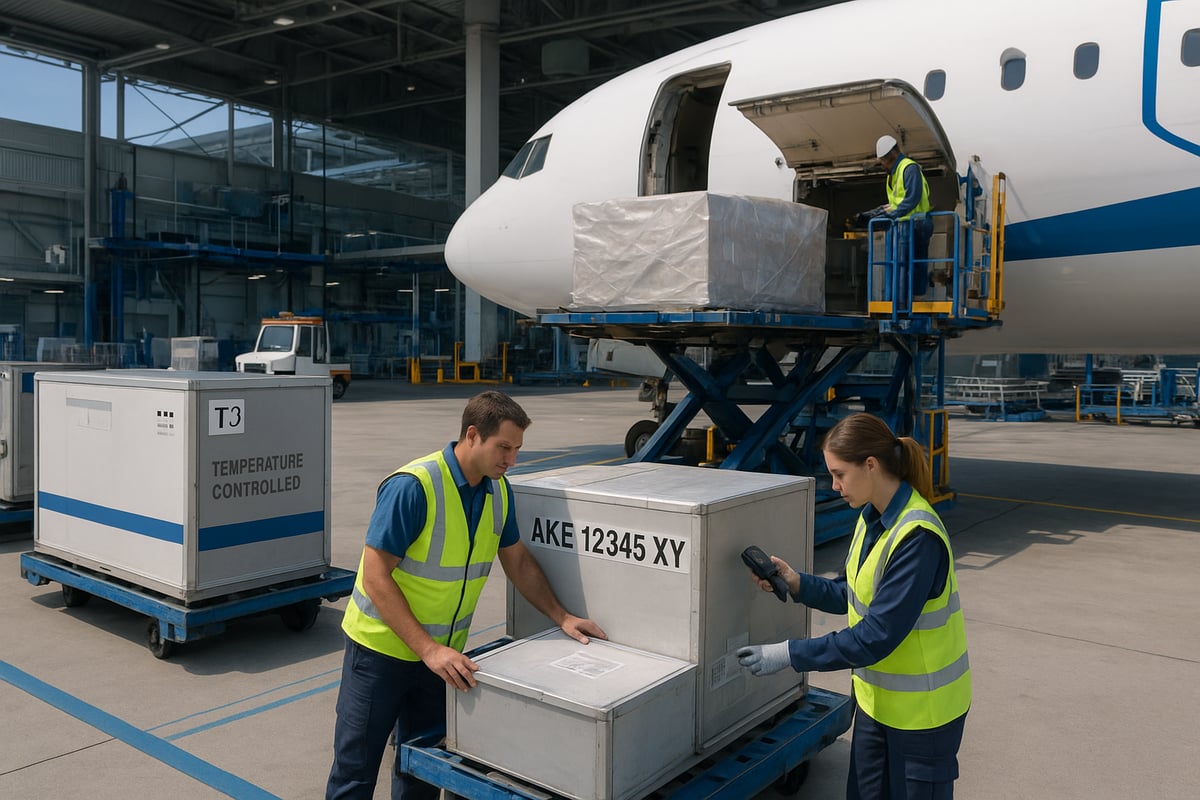
The foundation of efficient airport freight starts with proper cargo preparation. Understanding cargo classifications is essential, as each type—general, hazardous, perishable, or high-value—has unique handling requirements.
Packaging must meet international safety standards. For temperature-sensitive goods like pharmaceuticals, insulated containers and data loggers are mandatory. Proper labelling ensures that cargo is handled correctly and reaches the right destination.
Key tasks include:
Digital data submission is now standard, streamlining the process and reducing errors. For example, pharmaceutical cargo often requires temperature-controlled packaging, with continuous monitoring to maintain product integrity. By following these steps, airport freight professionals can minimise risk and ensure compliance from the outset.
Choosing the right airport freight option is a strategic decision. Options include general cargo, express, and charter services, each offering different balances of speed and cost.
Selecting optimal routes and schedules depends on shipment urgency, destination, and required service level. Digital booking systems have revolutionised this process, allowing instant comparison of rates, routes, and availability.
Best practices for booking:
The rise of digital transformation in air freight has made booking faster and more transparent. Platforms now provide instant quotes, route optimisation, and real-time updates, enabling forwarders to respond quickly to market demands. Leveraging these tools ensures that airport freight bookings are both cost-effective and reliable.
Security and compliance are at the core of airport freight operations. Every shipment undergoes rigorous pre-shipment security checks using advanced screening technologies, such as X-ray scanners and automated detection systems.
Customs documentation is critical. Ensure that airway bills, permits, and commercial invoices are accurate and submitted electronically where possible. International shipments may require additional permits, especially for controlled goods.
To navigate customs efficiently:
For example, electronic customs clearance accelerates processing and reduces delays for airport freight shipments. By following robust security protocols and staying compliant with global standards, logistics professionals can safeguard cargo and maintain smooth supply chain flows.
Once cargo arrives at the airport, it is subject to acceptance protocols and inspection. Trained personnel check for damage, verify documentation, and ensure cargo matches booking details.
Efficient handling relies on the use of Unit Load Devices (ULDs) and automated equipment. These tools improve load efficiency and protect goods during transit. Coordination with ground handling agents and airport authorities ensures compliance and timely departure.
Key handling steps include:
By prioritising automation and clear protocols, airport freight handlers reduce turnaround times and minimise the risk of delays. This step is crucial for maintaining the overall efficiency of the airport freight process.
Real-time tracking has become standard in airport freight, thanks to RFID, IoT, and GPS technologies. These systems provide up-to-the-minute updates on cargo location, temperature, and condition.
Exception management involves addressing disruptions such as weather delays or technical issues. Effective communication protocols ensure that all stakeholders receive timely updates and can respond quickly to incidents.
To enhance in-transit management:
Advanced tracking platforms, enabled by digital transformation in air freight, allow for proactive management of potential issues. This visibility is vital for industries with time-critical shipments, ensuring that airport freight remains reliable even in the face of unexpected challenges.
Upon arrival at the destination airport, cargo must clear customs before unloading. Automated systems and pre-submitted digital documents help expedite this process, reducing time spent waiting at the terminal.
Final delivery involves coordinating with last-mile carriers and ensuring the consignee receives the shipment promptly. For example, express delivery of automotive parts can prevent costly production delays for manufacturers.
Key considerations for final delivery:
By following these steps, airport freight professionals can ensure smooth transitions from air to ground, maintaining high service levels and customer satisfaction. The end-to-end process, when executed correctly, is the backbone of successful airport freight logistics.
Airport freight is undergoing a technological revolution, transforming how goods move through global supply chains. As we look to 2026, rapid innovation is redefining speed, security, and sustainability at every stage. From booking to delivery, technology now drives efficiency and resilience, positioning airport freight as a leader in logistics advancement.

Digitalisation is streamlining the entire airport freight process, from instant booking to automated cargo handling. AI powered platforms now match shipments to optimal routes, reducing manual errors and accelerating decision making. Robotics and automated conveyor systems are handling pallets, containers, and parcels with increased speed and precision.
Major airports are deploying autonomous vehicles for moving cargo between terminals, further improving efficiency. For a deeper look at these changes, technological advancements in air cargo operations highlight how IoT and automation are revolutionising capacity management and ground handling. As digital transformation continues, airport freight providers must embrace these tools to remain competitive.
The demand for real time data is shaping the future of airport freight. IoT sensors embedded in shipments monitor temperature, humidity, and location, offering complete transparency. Blockchain solutions are being adopted to create secure, tamper proof records for every shipment.
With these innovations, freight forwarders can proactively manage risks, track cargo status, and respond swiftly to any disruptions. Real time alerts help prevent costly delays, especially for sensitive goods like pharmaceuticals. Enhanced visibility ensures airport freight meets the high expectations of modern supply chains.
Sustainability is now at the core of airport freight innovation. Electric ground vehicles and renewable energy sources are reducing emissions at major cargo hubs. Carbon offsetting programmes and emission tracking tools enable businesses to measure and mitigate their environmental impact.
Some airports are moving towards carbon neutral cargo operations, setting new industry standards. The adoption of sustainable aviation fuels and green logistics practices supports both regulatory compliance and long term cost savings. These efforts are essential as airport freight faces growing pressure to deliver eco friendly solutions.
Predictive analytics is empowering airport freight professionals to make smarter, faster decisions. AI driven tools analyse vast datasets to forecast demand, optimise routes, and identify potential bottlenecks before they arise. This proactive approach helps reduce delays and improve asset utilisation.
Advanced data platforms support exception management, allowing teams to quickly adapt to changing conditions. By leveraging data, airport freight operators can enhance reliability, maximise efficiency, and maintain a competitive edge in a rapidly evolving market.
With the rise of digital platforms, cybersecurity has become a top priority for airport freight. Sensitive shipment data, customer details, and operational systems are increasingly targeted by cyber threats. Robust security protocols, including encryption and multi factor authentication, are now standard.
Regular staff training and strict access controls help safeguard against breaches. As airport freight adopts more connected technologies, ongoing investment in cybersecurity is vital to protect both data integrity and business continuity.
Airport freight is evolving rapidly, and navigating the complex landscape of regulations, compliance, and security is more critical than ever. As 2026 approaches, new rules and technologies are reshaping how cargo moves through airports worldwide. Staying ahead of these changes can make the difference between smooth operations and costly delays.

Multiple international bodies oversee airport freight, ensuring that safety, security, and efficiency standards are met across borders. The International Air Transport Association (IATA) and International Civil Aviation Organization (ICAO) set the foundation for global compliance, while regional authorities add their own layers of regulation.
| Regulatory Body | Focus Area | Key 2026 Updates |
|---|---|---|
| IATA | Safety, documentation, cargo handling | Lithium battery shipping rules, digital documentation |
| ICAO | Security, aviation safety | Expanded security protocols, harmonised standards |
| EU/US/Asia Regulators | Customs, border control, specific cargo types | Digital customs, data sharing, perishable goods rules |
For airport freight involving hazardous, perishable, or high-value goods, compliance requirements are becoming stricter. In 2026, new lithium battery shipping regulations will require enhanced packaging, labelling, and reporting to mitigate fire risks and ensure safe transit.
Digitalisation is transforming how customs and border controls operate in airport freight. Many countries are adopting single window systems, streamlining the submission of documents and speeding up clearance processes. Harmonisation of documentation standards across major markets reduces complexity for freight forwarders and exporters.
Cross-border e-commerce is also driving change. Small parcel shipments must now comply with updated customs rules to prevent delays and unexpected fees. Modern systems allow for electronic submission of airway bills, commercial invoices, and permits, making it easier to track compliance in real time.
To learn more about how digitalisation is reshaping air cargo operations, see Digital transformation in air freight.
Security remains at the forefront for airport freight in 2026. Advanced screening technologies, such as computed tomography (CT) scanners and AI-driven analysis, are now standard at major cargo hubs. These tools help detect threats quickly while minimising manual checks.
Threat detection protocols have been upgraded, requiring real-time risk assessment and incident response plans. The Known Consignor and Regulated Agent regimes are now widely implemented, ensuring that only trusted entities handle secure cargo. This layered approach helps prevent unauthorised access and maintains the integrity of the airport freight supply chain.
Staying compliant in the fast-changing world of airport freight demands vigilance and adaptability. Businesses should prioritise regular staff training to keep up with the latest rules and technologies. Leveraging compliance software and automated documentation tools can significantly reduce the risk of errors and non-compliance.
Collaboration with trusted logistics partners is also essential. By working closely with experienced freight forwarders and ground handlers, companies can minimise compliance risks and respond quickly to regulatory changes. Continuous monitoring and the adoption of best-in-class digital solutions will keep airport freight operations efficient and secure in 2026.
Cost optimisation is now a strategic priority for every business involved in airport freight. With an increasingly competitive landscape and rising operational costs, finding new ways to improve efficiency and manage spend is essential. Below, we explore proven strategies to help you keep airport freight operations lean, compliant, and future-ready.
A clear understanding of airport freight cost structures is the foundation for effective cost management. Typical components include fuel, security, ground handling, surcharges, and customs fees. Among these, fuel prices often have the greatest impact on overall costs.
Staying informed about freight forwarders and fuel price trends can help you anticipate fluctuations and plan accordingly. For example, during periods of high demand, fuel surcharges can quickly erode profit margins. Comparing the costs of general cargo versus express services is also vital, as each offers distinct advantages and pricing.
| Cost Component | General Cargo | Express Service |
|---|---|---|
| Fuel Surcharge | Moderate | Higher |
| Handling Fees | Standard | Premium |
| Delivery Speed | Standard | Faster |
| Total Cost | Lower | Higher |
By breaking down these elements, you can identify where to focus your optimisation efforts in airport freight.
Selecting the appropriate freight model for your shipment is critical to balancing cost and service requirements in airport freight. Scheduled services offer reliability and lower rates, while express options provide speed for urgent deliveries at a premium. Charter solutions, either part or full, are ideal for oversized, high-value, or time-critical cargo.
Consider a high-tech product launch with strict deadlines. Using a charter flight ensures timely arrival, avoiding production delays and reputational risk. However, this comes at a higher upfront cost. Weighing the benefits and trade-offs of each model, and aligning them with your business objectives, will help you make informed, cost-effective decisions in airport freight.
Digital transformation is reshaping the airport freight sector, driving down costs and increasing efficiency. Automated quoting and booking platforms reduce administrative overhead by streamlining repetitive tasks. Predictive analytics enable better demand planning and route optimisation, helping you avoid costly delays and capacity shortages.
Switching to digital documentation minimises errors, reduces paperwork, and speeds up customs clearance. These technologies not only save money but also improve transparency and control over your airport freight operations. Embracing smart logistics tools is key to staying competitive and agile in a rapidly changing environment.
Consolidation and collaboration are powerful tools for cost optimisation in airport freight. By grouping shipments with similar destinations, you can maximise load efficiency and reduce per-unit costs. This strategy is especially valuable for small and medium-sized enterprises (SMEs) that may not have enough volume to fill an entire container or pallet.
Groupage services allow multiple consignments from different shippers to be combined, sharing space and costs. Strategic partnerships with airlines, ground handlers, and technology providers also unlock access to better rates, improved service levels, and greater operational flexibility. In short, working together delivers measurable savings and increased value across your airport freight supply chain.
The drive towards sustainability is reshaping cost management in airport freight. Investing in green logistics, such as electric ground vehicles and renewable energy sources, can reduce long-term operating expenses. Carbon offsetting schemes are becoming increasingly popular, helping businesses meet regulatory requirements and improve their environmental credentials.
Innovations in sustainable aviation fuel offer the potential for significant cost and emission reductions over time. Monitoring and benchmarking your performance against industry standards ensures you remain competitive while supporting broader sustainability goals. By embedding these practices, you future-proof your airport freight operations and gain a valuable edge in the market.
Airport freight is entering a pivotal era, with transformative trends reshaping the industry as 2026 approaches. From the explosive growth of e-commerce to the integration of advanced technology, today’s logistics professionals must anticipate and adapt to a rapidly evolving landscape. Let’s explore the key trends and opportunities set to define airport freight in the coming years.
E-commerce continues to fuel unprecedented demand for airport freight. Online retailers and direct-to-consumer brands now rely heavily on fast, reliable air cargo to meet customers’ expectations for rapid delivery. In 2026, global e-commerce sales are projected to reach new heights, driving a surge in cross-border shipments. This growth puts pressure on airport freight networks to handle higher volumes, especially during peak seasons.
As a result, logistics providers are expanding their international reach and optimising processes for small parcel and high-value shipments. The shift to nimble, customer-focused fulfilment models means that airport freight will remain central to global trade efficiency.
The transformation towards smart and digital airports is accelerating, with automated cargo terminals and data-driven systems becoming the norm. Airports are investing in robotics, advanced conveyor systems, and digital control towers to enhance cargo handling speed and accuracy. The arrival of 5G, IoT, and edge computing allows for real-time tracking and seamless communication across airport freight operations.
According to IATA's vision for future air cargo facilities, innovation is reimagining logistics through smarter infrastructure and technology adoption. These advancements promise greater transparency and resilience for airport freight stakeholders.
Sustainability is no longer optional for airport freight. Stricter environmental regulations and rising consumer expectations are pushing the industry to adopt greener practices. Airports are investing in electric ground vehicles, renewable energy sources, and carbon-neutral operations. Sustainable aviation fuels and efforts to reduce single-use packaging are gaining traction.
Regulatory bodies are introducing new emissions standards and requiring transparent reporting. These changes offer both challenges and opportunities for airport freight businesses to differentiate through eco-friendly operations and long-term cost savings.
Data and artificial intelligence are transforming airport freight, enabling smarter decision-making at every stage. Predictive analytics support demand forecasting, route optimisation, and exception management. AI-powered platforms provide real-time insights, helping operators respond swiftly to disruptions or changing market conditions.
Freight forwarders are now leveraging air cargo charter intelligence to enhance operational efficiency, particularly when navigating complex or urgent shipments. This data-driven approach is set to become a competitive differentiator in the airport freight sector.
As airport freight operations become more digital and automated, the demand for a tech-savvy workforce is increasing. Logistics companies are investing in upskilling programmes focused on digital freight management, robotics, and data analysis. The next generation of airport freight professionals will need strong analytical, technical, and problem-solving abilities.
Training initiatives are being launched in partnership with industry bodies and educational institutions. These efforts ensure that the workforce remains agile and capable of harnessing new technologies for improved airport freight performance.
The future of airport freight is bright with new market opportunities. Growth in specialised cargo, such as pharmaceuticals, high-value electronics, and oversized goods, is opening doors for tailored solutions. Emerging markets and secondary airport hubs are gaining prominence as global trade patterns shift.
Businesses that strategically expand into these areas can tap into rising demand and diversify their service offerings. By staying agile and responsive, airport freight providers are well-positioned to capitalise on the next wave of industry growth.
As we look ahead to the complex world of airport freight in 2026, staying ahead means embracing both smart technology and expert support. If you want to streamline your air cargo operations, ensure compliance, and make the most of every shipment—no matter how urgent or specialised—CharterSync’s blend of AI automation and dedicated human expertise is here to help. Take the next step and see first hand how these solutions can transform your approach to air freight.
Why not request a demo and discover how CharterSync can simplify your airport freight journey?
Article written using RankPill.

.png)