.png)

An aircraft charter service provides on-demand access to aircraft without the rigid schedules and routing constraints of commercial airlines. Whether you need to move time-critical cargo across continents or transport a team to a remote location, chartering offers the flexibility that standard freight and passenger services simply cannot match. For logistics professionals handling urgent or oversized shipments, understanding how these services work is essential.
This guide breaks down what an aircraft charter service actually involves, how pricing works, and what the booking process looks like from enquiry to delivery. We'll cover the key factors that affect costs, the differences between cargo and passenger charters, and how to evaluate providers. At CharterSync, we've built a platform specifically to simplify cargo charter procurement, so we'll also share insights from thousands of charter operations to help you make informed decisions.
An aircraft charter service arranges dedicated aircraft for specific flights based on your requirements rather than published timetables. You negotiate directly with operators or brokers to secure an entire aircraft for a single journey, series of trips, or ongoing contract. This differs fundamentally from buying space on scheduled cargo flights or booking commercial passenger tickets where the route, timing, and capacity are predetermined.
When you charter an aircraft, you control departure times, routing, and loading procedures to match your operational needs. Scheduled freight services require you to adapt your cargo to their fixed timetables and available space, often with multiple handling points. Chartering eliminates intermediate stops unless you specifically request them, which means your shipment travels directly from origin to destination without the consolidation delays common in scheduled networks.
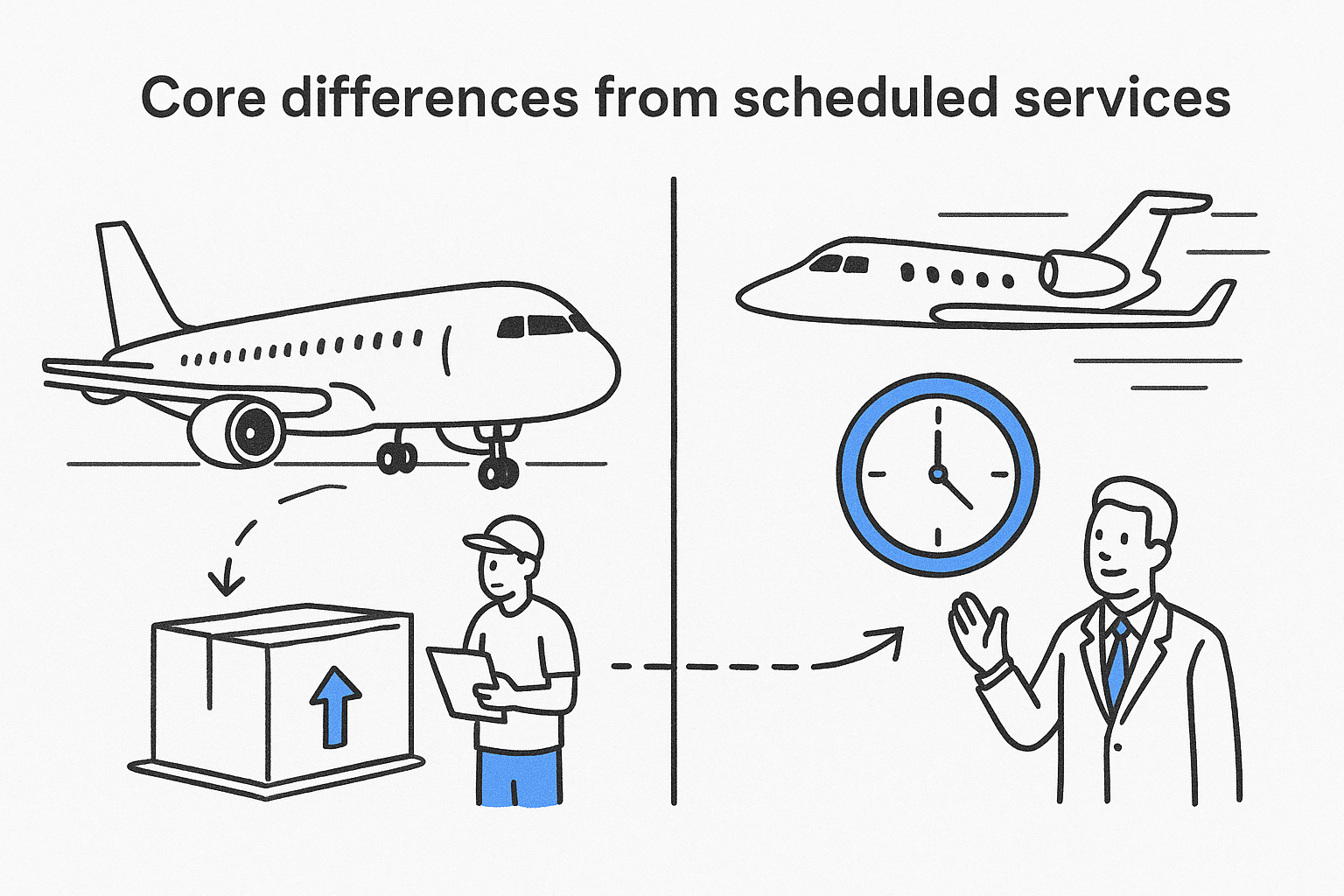
Chartered flights operate on your schedule, not an airline's published timetable.
The aircraft becomes your exclusive resource for the duration of the contract. You decide which airports to use, including those without regular cargo service, and you coordinate loading sequences for oversized or sensitive freight that wouldn't fit standard containers. For passenger charters, you select the cabin configuration and catering options rather than accepting what's available on commercial routes.
Charter operators fall into two categories: direct aircraft operators who own or lease their fleets, and charter brokers who connect you with suitable aircraft from their network. Operators handle everything from flight planning to crew assignment, whilst brokers source options and manage negotiations. Some platforms now combine both functions, using technology to match requirements against available aircraft whilst maintaining relationships with global operators.
Businesses charter aircraft when scheduled services cannot meet their operational requirements. The primary driver is time sensitivity, particularly for manufacturing components that halt production lines, medical equipment needed for urgent procedures, or perishable goods with narrow delivery windows. You avoid the delays built into scheduled networks where freight often waits hours or days for the next available departure.
Chartering gives you direct control over departure timing and routing rather than adapting to airline schedules. You select airports closest to your facilities, reducing ground transport time and handling touchpoints. For cargo that requires specialised loading procedures or temperature control, you coordinate directly with the operator to ensure proper equipment and handling protocols throughout the journey.
When production downtime costs exceed charter premiums, the decision becomes straightforward.
The charter premium makes financial sense when you calculate avoided costs from delays. A single day of halted production can exceed £100,000 in some industries, whilst an aircraft charter service might cost £30,000 for critical components. You compare the charter rate against lost revenue, contractual penalties, or customer relationship damage rather than treating it as a pure transport expense.
Aircraft charter services divide into cargo operations and passenger flights, each serving distinct business needs. Cargo charters focus on moving freight when scheduled services cannot accommodate your requirements, whilst passenger charters transport groups without relying on commercial airline schedules. Your choice depends on what you're moving and the operational constraints you face.
You use cargo charters for time-critical shipments, oversized equipment, or valuable goods requiring dedicated security. Manufacturing components that halt production lines represent a common case, particularly in automotive or aerospace sectors where a single missing part stops entire facilities. Pharmaceutical companies charter for temperature-sensitive medicines and clinical trial materials that cannot risk delays. Oil and gas operators move drilling equipment to remote locations without cargo service, whilst event organisers transport stage equipment between venues on tight schedules.
Cargo charters eliminate the handling touchpoints and consolidation delays that add risk to scheduled freight.
Businesses charter passenger aircraft for executive travel to multiple locations in a single day, team movements to sites without commercial connections, or urgent personnel deployment. Mining companies fly shift workers to remote operations, sports organisations transport teams with equipment, and film productions move crews between shooting locations. You gain flexibility to adjust departure times and avoid the security queues and connection risks inherent in commercial travel.
Aircraft charter service pricing depends on aircraft type, distance, and operational requirements rather than fixed rate cards. You'll pay between £5,000 per hour for small turboprops and £30,000+ per hour for widebody jets, with cargo charters typically calculated on total block hours from departure to landing plus positioning flights. The operator adds fuel surcharges, handling fees, crew expenses, and permits to reach the final quote.
Distance drives the baseline cost through flight time calculations that include ferry legs when aircraft must reposition from their current location. You pay for the entire journey, not just the loaded segment. Aircraft type affects hourly rates based on operating costs, payload capacity, and range capabilities. A Boeing 747 freighter costs substantially more per hour than an Antonov AN-26, but carries exponentially more cargo.
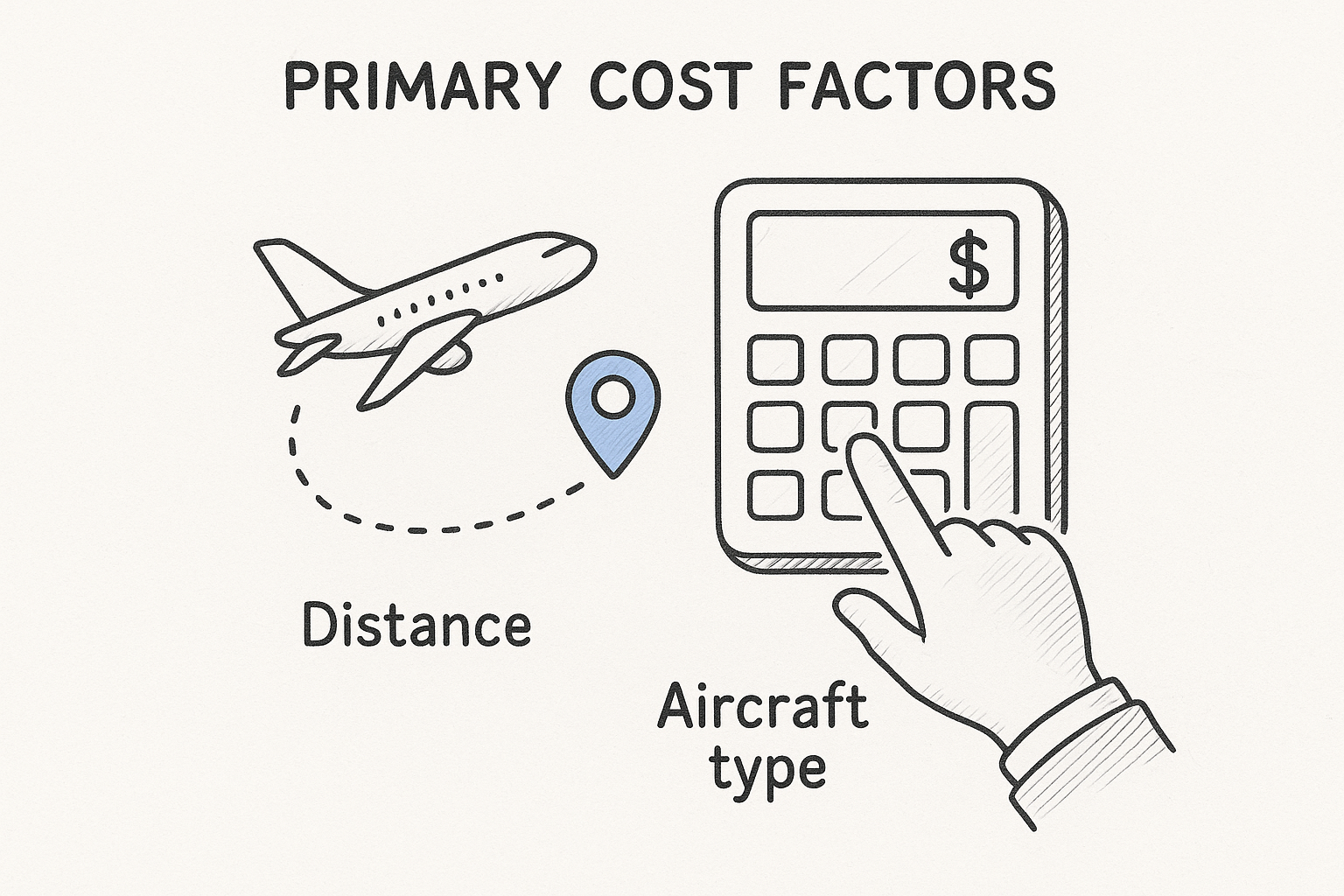
Charter rates reflect the full operational cost of dedicating an aircraft to your specific mission.
Short-haul cargo charters within Europe start around £15,000 for small freight aircraft on single sectors. Intercontinental movements using widebody freighters range from £200,000 to £500,000 depending on route and aircraft size. You'll find passenger charters priced similarly based on cabin configuration and passenger count rather than cargo weight.
The booking process for an aircraft charter service starts with a detailed enquiry that specifies your cargo dimensions, weight, routing, and timeline requirements. You submit these specifications to operators or brokers who then search their networks for suitable aircraft and availability. Traditional processes involve back-and-forth communication over email or phone, which can take hours or days depending on route complexity and aircraft positioning.
You provide complete cargo specifications including dimensions, weight, and special handling requirements so operators can assess technical feasibility. They calculate door clearances, payload capacity, and range limitations to confirm the aircraft can physically carry your freight. You receive quotes that detail flight costs, positioning charges, handling fees, and permit expenses. Modern platforms like CharterSync automate this matching process, delivering confirmed availability and technical loadability analysis within minutes rather than hours.
Digital platforms eliminate the manual back-and-forth that traditionally delays charter bookings.
Once you accept a quote, the operator secures permits, arranges ground handling, and coordinates loading procedures at origin. You receive documentation including flight plans, customs paperwork, and contact details for operational teams. Throughout the journey, tracking systems provide real-time updates on departure, routing changes, and estimated arrival times so you maintain visibility until final delivery.

Understanding how an aircraft charter service operates gives you the foundation to evaluate providers and make informed procurement decisions. You now know the cost factors that drive pricing, the operational differences between cargo and passenger charters, and the typical booking process from enquiry through to delivery. The key is matching your specific requirements to the right aircraft type and operator rather than accepting generic solutions.
Start by documenting your exact cargo specifications, routing needs, and timeline constraints before approaching providers. Traditional brokers require multiple email exchanges and phone calls to generate quotes, whilst digital platforms can confirm availability and technical feasibility within minutes. CharterSync eliminates the manual back-and-forth by matching your cargo specifications against global aircraft availability instantly, delivering confirmed quotes with loadability analysis and transparent pricing. You gain the certainty needed to make fast decisions without sacrificing operational oversight.
.png)