.png)
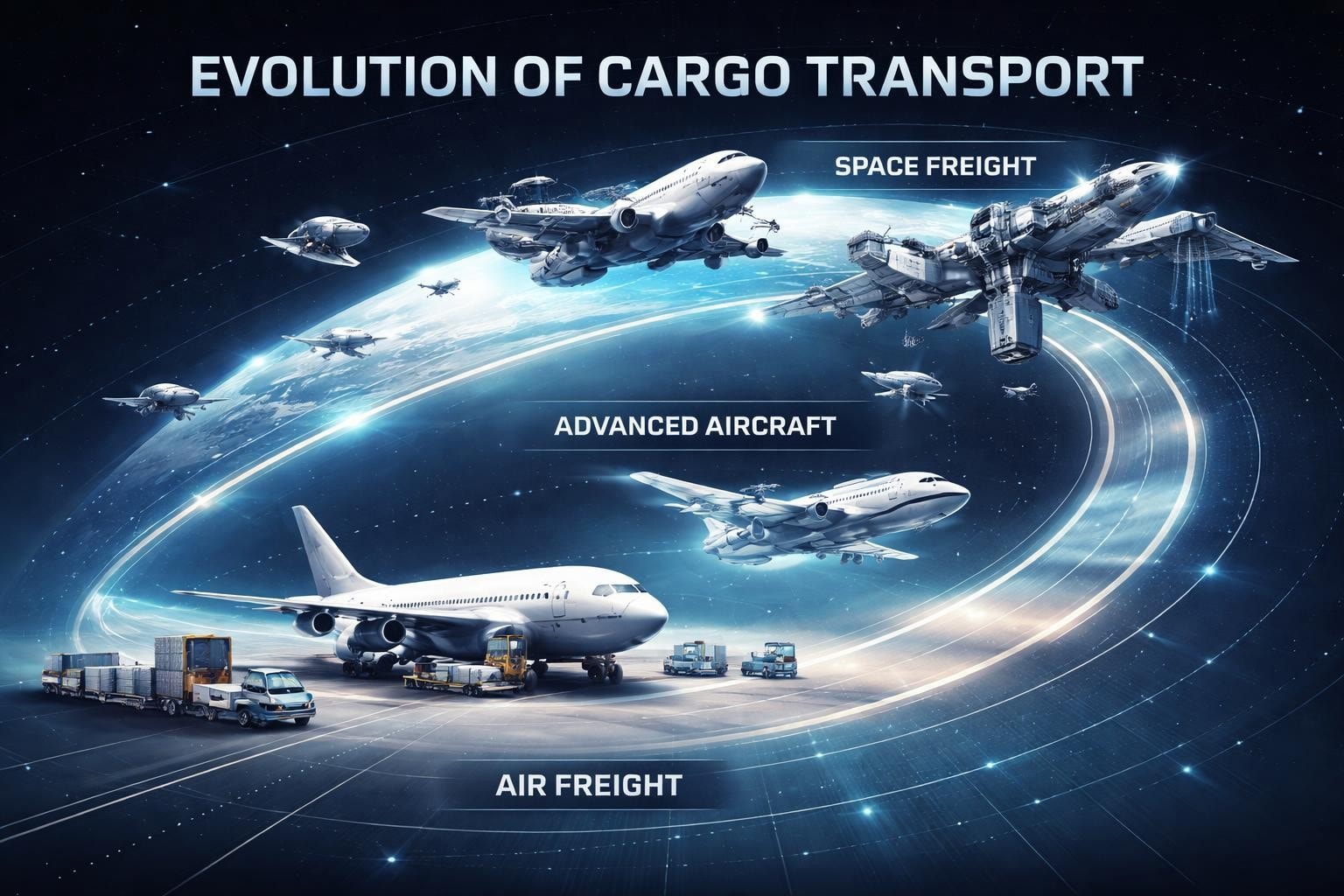
The concept of space freight has transitioned from science fiction to operational reality over the past two decades. As commercial spaceflight matures and orbital infrastructure expands, the logistics of transporting cargo beyond Earth's atmosphere presents fascinating parallels to the air cargo charter industry. Understanding space freight operations offers valuable insights into how logistics challenges scale across different operational environments, from the complexities of air cargo charter operations to the extreme demands of orbital delivery systems.
Space freight encompasses all cargo transport operations beyond Earth's atmosphere, primarily serving the International Space Station, private space stations, and satellite deployment missions. The infrastructure supporting these operations mirrors terrestrial cargo systems in several key aspects whilst introducing unique challenges that reshape traditional logistics thinking.
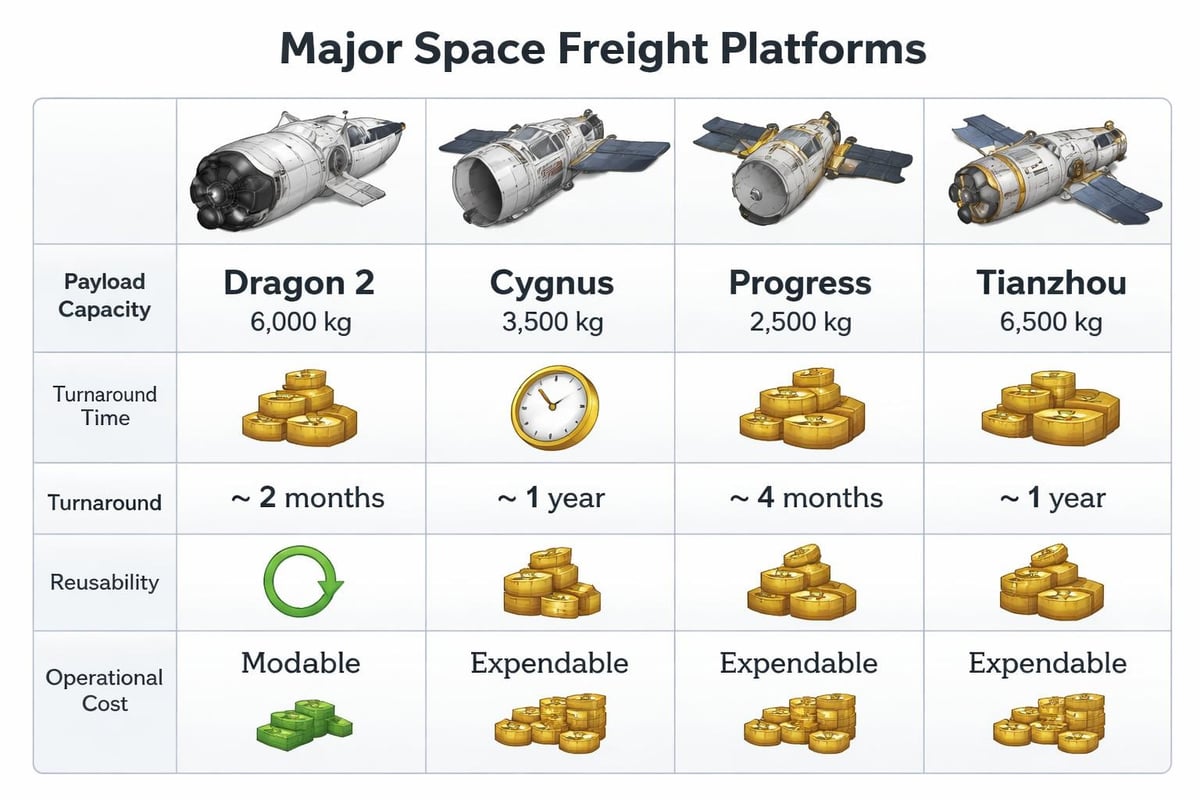
Modern space freight relies on several proven spacecraft systems. SpaceX Dragon 2 represents the most active cargo delivery platform, completing regular missions to the International Space Station with both pressurised and unpressurised cargo capabilities. Northrop Grumman's Cygnus spacecraft complements these operations, whilst international partners contribute through their respective programmes.
Key cargo spacecraft currently operational include:
The development of China's Qingzhou spacecraft demonstrates continued international investment in space freight capabilities, with enhanced automation and increased payload capacity compared to previous generation systems.
Operating space freight services requires navigating a complex regulatory environment that shares similarities with air cargo whilst introducing unique jurisdictional challenges. The Federal Aviation Administration oversees commercial space transportation in the United States, ensuring safety standards and licensing requirements are met before launch operations commence.
Space freight operators must secure multiple authorisations before conducting missions. Launch licences verify that vehicle systems meet safety criteria, payload reviews ensure cargo complies with international treaties, and range approvals confirm that ground infrastructure supports safe operations. This multi-layered approach resembles the certification processes in freight forwarding, though with considerably higher stakes given the extreme operational environment.
International coordination plays a critical role in space freight regulation. The Outer Space Treaty of 1967 establishes fundamental principles, whilst bilateral agreements between nations facilitate cooperation and liability frameworks. Export control regulations further complicate operations, as many space technologies face restrictions on international transfer.
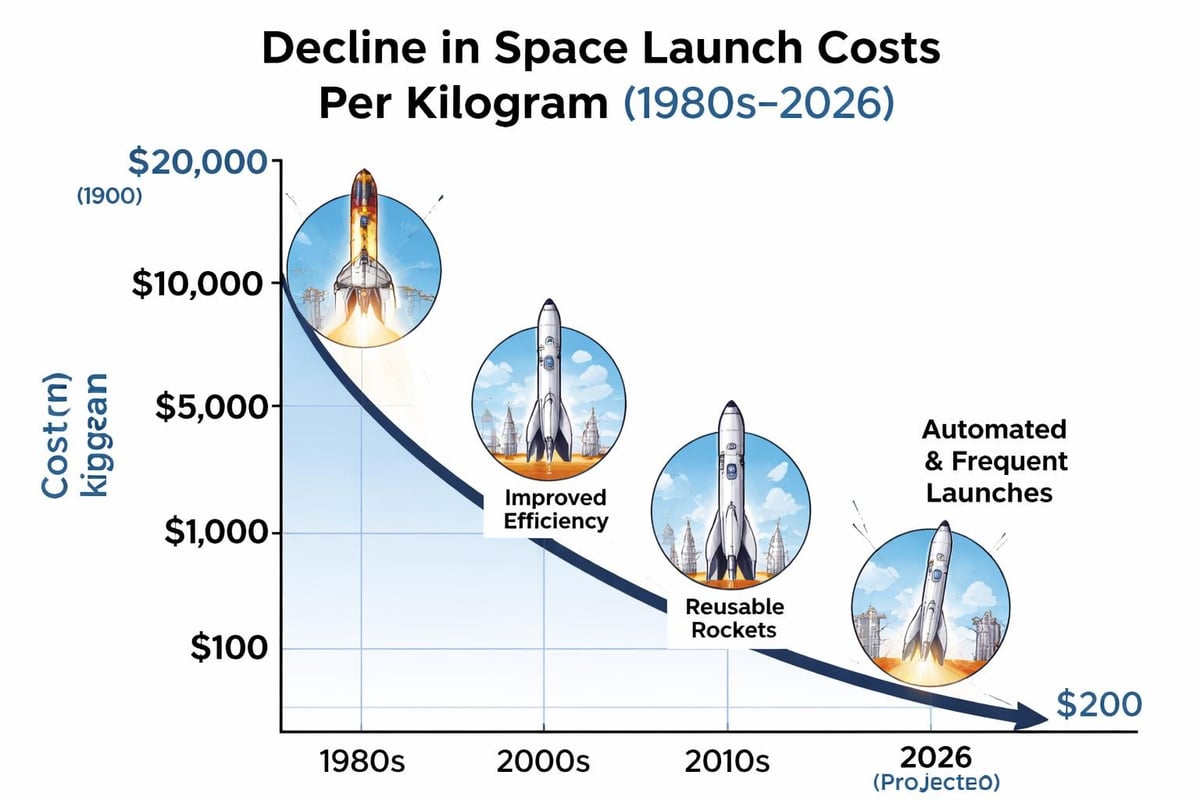
The economics of space freight differ fundamentally from terrestrial cargo operations, though both industries focus intensely on cost reduction and efficiency improvements. Launch costs historically dominated space freight expenses, with prices exceeding £15,000 per kilogram to low Earth orbit during the Space Shuttle era.
Recent technological advances have driven dramatic price reductions. Reusable launch vehicles, pioneered by SpaceX, have reduced costs to approximately £1,200 to £2,000 per kilogram depending on mission parameters and customer requirements. This 90% cost reduction parallels the efficiency gains that automated platforms like CharterSync have brought to air cargo charter operations through intelligent matching and streamlined booking processes.
| Era | Cost per kg (GBP) | Primary Technology | Reusability |
|---|---|---|---|
| Space Shuttle (1981-2011) | £15,000-£20,000 | Expendable tank, reusable orbiter | Partial |
| Early Commercial (2012-2018) | £3,500-£5,000 | Expendable rockets | None |
| Reusable Era (2019-2026) | £1,200-£2,000 | Reusable first stages | High |
Market demand for space freight continues expanding beyond government contracts. Commercial space stations, satellite constellations requiring maintenance logistics, and space-based manufacturing facilities create diverse customer requirements. Each market segment demands different service characteristics, from rapid emergency resupply missions to economical bulk cargo transport.
Space freight operations face extraordinary technical challenges that test the limits of current logistics capabilities. The extreme environment, communication delays, and inability to intervene manually once a mission commences require unprecedented reliability and planning precision.
Cargo preparation for space freight demands meticulous attention to detail that exceeds even the rigorous standards for temperature controlled freight in pharmaceutical air cargo operations. Every component must withstand launch vibrations, pressure changes, and temperature extremes whilst maintaining functionality in microgravity conditions.
Critical payload integration considerations include:
Mission planning extends months before launch, with cargo manifests refined continuously as priorities shift. High-value scientific experiments often receive priority allocation, whilst bulk supplies fill remaining capacity. This dynamic allocation process mirrors the aircraft matching challenges in traditional air cargo operations, though with considerably longer lead times and fewer opportunities to adjust once missions are finalised.
The reliance on uncrewed spacecraft for space freight delivery highlights the critical role of automation in extreme logistics environments. Modern cargo spacecraft feature sophisticated autonomous systems that manage rendezvous, docking, and cargo transfer operations with minimal ground intervention.
Dragon 2 spacecraft demonstrate advanced automation capabilities, executing complex proximity operations around the International Space Station using real-time sensor data and pre-programmed decision trees. These systems must account for orbital mechanics, communication blackout periods, and emergency abort scenarios without human input.
The automation strategies employed in space freight offer valuable lessons for terrestrial logistics. Predictive maintenance algorithms monitor spacecraft health, anticipating component failures before they occur. Resource optimisation routines maximise cargo capacity whilst maintaining safety margins. These approaches parallel the intelligent automation that platforms like CharterSync deploy to streamline cargo charter operations, demonstrating how artificial intelligence enhances logistics efficiency across operational contexts.
The space freight industry stands at an inflection point, with multiple technological developments poised to reshape operational capabilities over the coming decade. Reusable spacecraft, in-space refuelling infrastructure, and point-to-point Earth transport concepts promise to expand the scope and economics of orbital cargo operations.
NASA's Deep Space Transport concept envisions crewed missions beyond low Earth orbit, requiring extensive cargo support infrastructure for journeys to Mars and asteroid destinations. These ambitious plans necessitate cargo vehicles capable of operating in deep space environments, far from Earth's immediate support.
The LEO Cargo Return Service initiative from the European Space Agency addresses a critical gap in current capabilities by developing dedicated systems for returning cargo from orbit. Most existing space freight platforms lack robust return capacity, limiting scientific sample collection and equipment refurbishment opportunities. Enhanced return capabilities would transform space freight from predominantly one-way delivery to true bidirectional logistics.
Russia's proposed Argo spacecraft emphasises reusability to reduce long-term operational costs. Though development timelines remain uncertain, the concept reflects international recognition that sustainable space freight requires vehicles capable of multiple missions without extensive refurbishment.
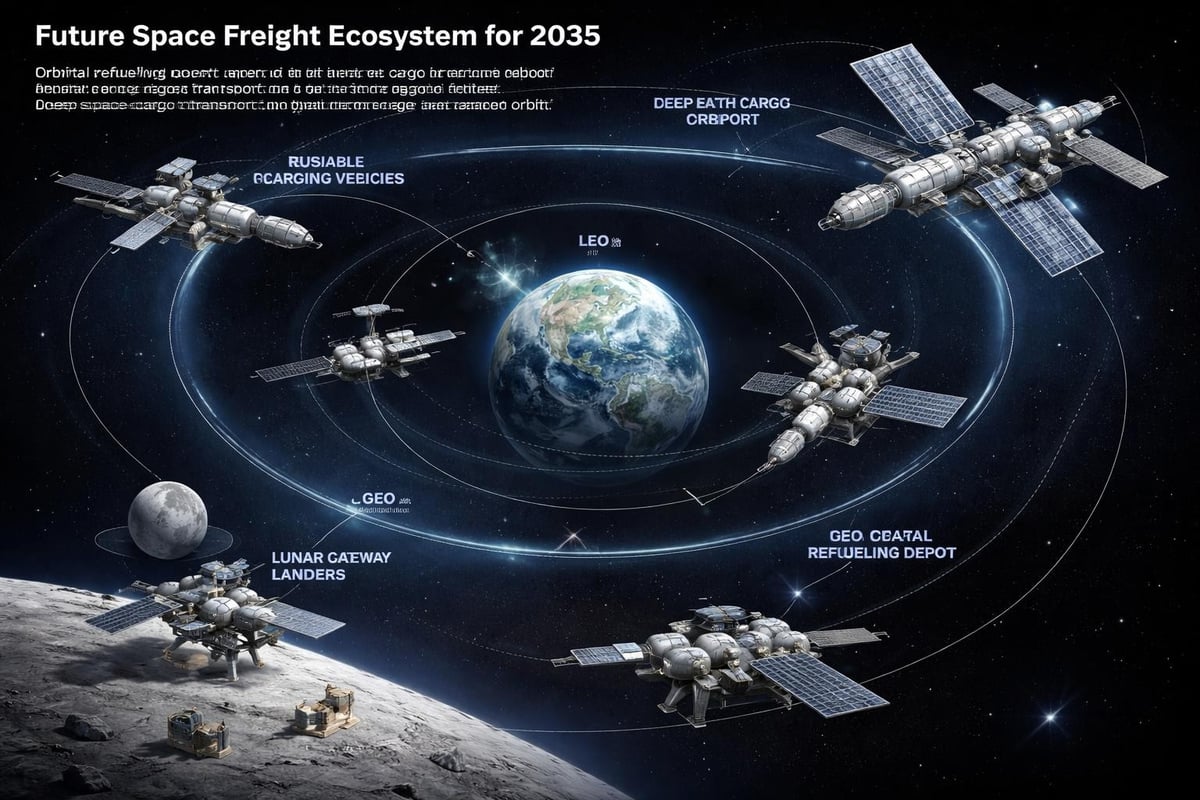
Beyond launch to orbit, the emerging field of in-space logistics addresses cargo movement between different orbital locations. Argo Space's in-space transportation solutions exemplify this evolving capability, developing refuellable vehicles that can transfer cargo between satellites, space stations, and other orbital infrastructure.
In-space logistics vehicles operate fundamentally differently from launch systems, optimised for efficiency in the vacuum of space rather than overcoming Earth's gravity. Electric propulsion systems provide excellent fuel efficiency for gradual orbit changes, whilst chemical propulsion enables rapid transfers when time constraints demand.
The economics of orbital transfer services create interesting parallels to air cargo charter operations. Just as freight forwarders must optimise aircraft selection based on cargo requirements, route, and timing, space freight operators must balance propulsion system efficiency, transfer time, and payload capacity when planning orbital movements.
Orbital transfer mission types include:
Whilst space freight operates in an extreme environment with unique constraints, the industry's solutions to complex logistics challenges offer insights applicable to terrestrial cargo operations. The emphasis on predictive planning, autonomous systems, and failure mitigation strategies translates across operational contexts.
Space freight's requirement for absolute reliability has driven innovations in cargo tracking, thermal management, and handling automation that benefit airport cargo operations. Real-time telemetry systems that monitor spacecraft health inspire similar approaches to aircraft monitoring in air cargo charter. The rigorous testing protocols and quality assurance processes developed for space applications enhance standards across logistics industries.
| Space Freight Innovation | Terrestrial Application | Benefit |
|---|---|---|
| Autonomous docking systems | Automated cargo handling | Reduced human error, faster processing |
| Predictive maintenance AI | Aircraft health monitoring | Lower downtime, improved safety |
| Advanced tracking telemetry | Real-time cargo visibility | Enhanced customer confidence |
| Thermal management systems | Pharmaceutical cold chain | Better temperature stability |
| Mass optimisation algorithms | Load planning software | Improved capacity utilisation |
The integration of human expertise with automated systems in space freight operations reflects the balanced approach that successful air cargo charter platforms employ. Whilst automation handles routine tasks and data processing, experienced professionals manage exceptions, customer relationships, and strategic decisions that require contextual judgment.
Investment in space freight infrastructure has accelerated dramatically since 2020, with both government agencies and private capital funding next-generation capabilities. The global space freight market, currently valued at approximately £3.5 billion annually, is projected to exceed £12 billion by 2035 as orbital infrastructure expands and launch costs continue declining.
Manufacturing in microgravity represents a potentially transformative market for space freight services. Certain pharmaceutical compounds, advanced materials, and precision optical components exhibit superior properties when produced in orbit. Establishing economical supply chains for these products requires regular, reliable cargo services comparable to terrestrial logistics networks.
Space tourism and commercial space stations create additional freight demand. Habitat modules, life support consumables, scientific equipment, and personal effects for orbital visitors all require transport services. The diversity of cargo types and customer requirements mirrors the varied needs that cargo freight forwarders address in terrestrial operations, from time-sensitive pharmaceuticals to oversized industrial equipment.
Competition among space freight providers intensifies as market opportunities expand. Established operators defend market share whilst new entrants offer innovative approaches and competitive pricing. This dynamic environment rewards companies that combine operational excellence with customer service, technological innovation with proven reliability.
Space freight demonstrates how fundamental logistics principles of reliability, efficiency, and customer service transcend operational environments, from conventional air cargo to orbital delivery systems. The industry's rapid evolution and technological sophistication offer valuable perspectives on handling complex transportation challenges through intelligent automation combined with expert human judgment. Whether you're managing terrestrial cargo operations or exploring emerging logistics frontiers, CharterSync provides the advanced platform and dedicated expertise to optimise your air cargo charter requirements with the same precision and reliability that defines successful space freight operations.
.png)