.png)
The world of cargo freight forwarders is changing quickly, bringing new challenges and exciting opportunities for those ready to adapt. As 2026 approaches, evolving technologies, shifting regulations, and demanding client expectations shape the logistics landscape.
This guide is designed to help cargo freight forwarders stay ahead. You will find practical insights, step-by-step guidance, and future-proof strategies to optimise your freight operations for the years ahead.
Discover the latest industry trends, essential responsibilities, and technology disruptors, along with proven solutions to strengthen your business in a fast-moving global market.
The landscape for cargo freight forwarders is shifting rapidly as 2026 approaches. Today, forwarders face a marketplace defined by evolving client needs, disruptive technology, and increased global complexity. To stay ahead, cargo freight forwarders must adapt quickly, develop new skills, and embrace opportunities in a changing world.
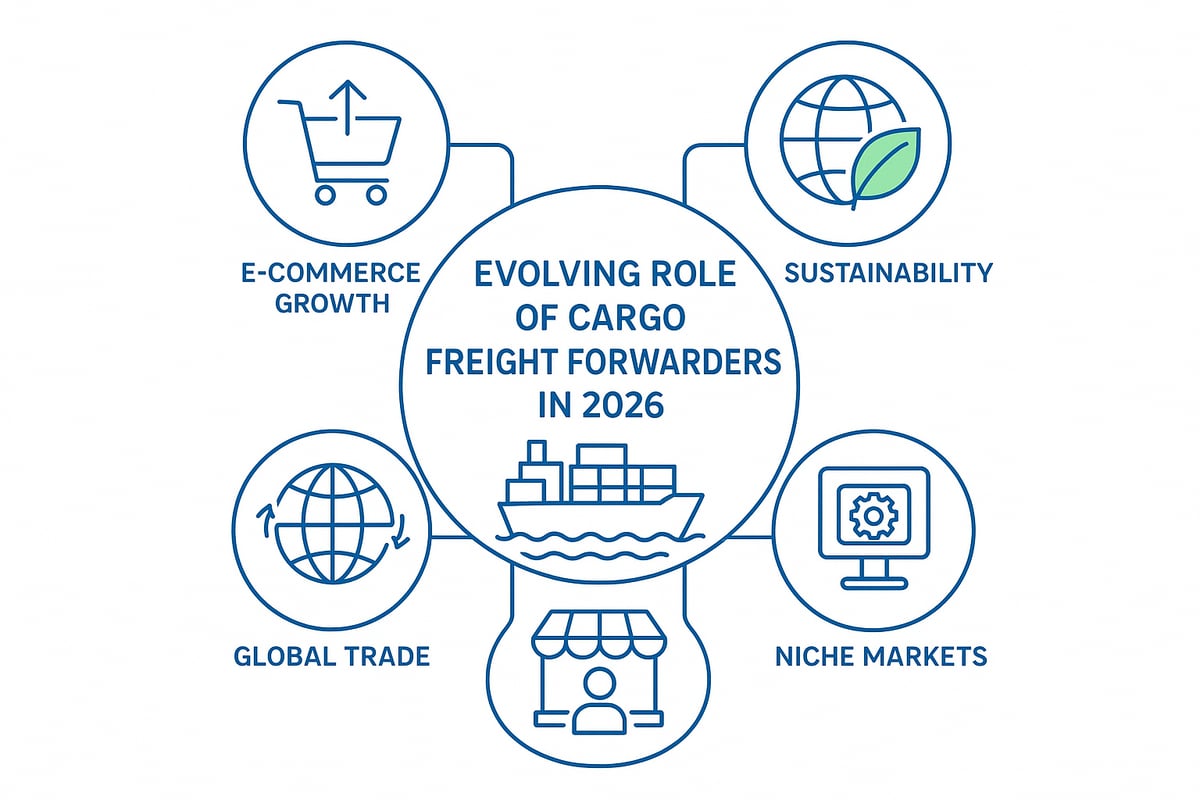
E-commerce continues to fuel a surge in global shipping volumes, driving new demands for faster and more flexible logistics solutions. As a result, cargo freight forwarders are handling more time-sensitive and specialised shipments than ever before. Sustainability is also gaining traction, with green logistics and eco-friendly practices now a major focus for clients and regulators alike.
Emerging markets are contributing to cross-border trade growth, expanding the reach and complexity of freight operations. According to recent forecasts, the global freight forwarding market is projected to reach $220.34 billion by 2026, underlining the enormous potential and scale of the sector.
Cargo freight forwarders now provide more than just shipping services. Clients expect full end-to-end supply chain management, which involves overseeing customs clearance, insurance, and warehousing. Real-time visibility and proactive communication are no longer perks but standard expectations.
For example, automotive manufacturers increasingly require integrated logistics solutions to synchronise their production lines worldwide. This shift means cargo freight forwarders must be agile, tech-savvy, and capable of delivering seamless solutions across the entire supply chain.
Managing capacity shortages and volatile freight rates has become a top concern for cargo freight forwarders. Global disruptions, such as geopolitical events or health crises, can upend established routes and schedules overnight. Digital-first logistics startups are also intensifying competition, pushing traditional forwarders to innovate and streamline their operations.
A recent survey by Freightos found that 35% of forwarders cite capacity management as their primary challenge. Navigating this environment requires forwarders to be both resilient and adaptable, ready to pivot as market conditions evolve.
Despite these challenges, 2026 offers exciting opportunities for cargo freight forwarders willing to specialise. Focusing on high-value sectors like pharmaceuticals, high-tech, or perishable goods can lead to higher margins and stronger client relationships.
Forwarders that offer tailored solutions for SMEs or regional exporters are also well positioned to capture new market share. For instance, those specialising in temperature-controlled logistics can serve industries with strict handling requirements, opening doors to lucrative contracts and long-term partnerships.
To thrive in this dynamic environment, cargo freight forwarders must prioritise digital literacy, analytical thinking, and superior customer service. The ability to adapt quickly to new tools and ever-changing regulations is essential. Ongoing training and upskilling initiatives will be key to maintaining a competitive edge and delivering value in 2026.
Teams that invest in continuous learning are better equipped to navigate complex logistics landscapes, leverage technology, and meet rising client expectations. The future belongs to forwarders who are both tech-enabled and people-focused.
Navigating the modern supply chain in 2026 demands a systematic, technology-driven approach. For cargo freight forwarders, every shipment presents unique challenges and opportunities. This step-by-step guide breaks down the essential stages of the process, highlighting best practices and the latest tools that define industry leadership.
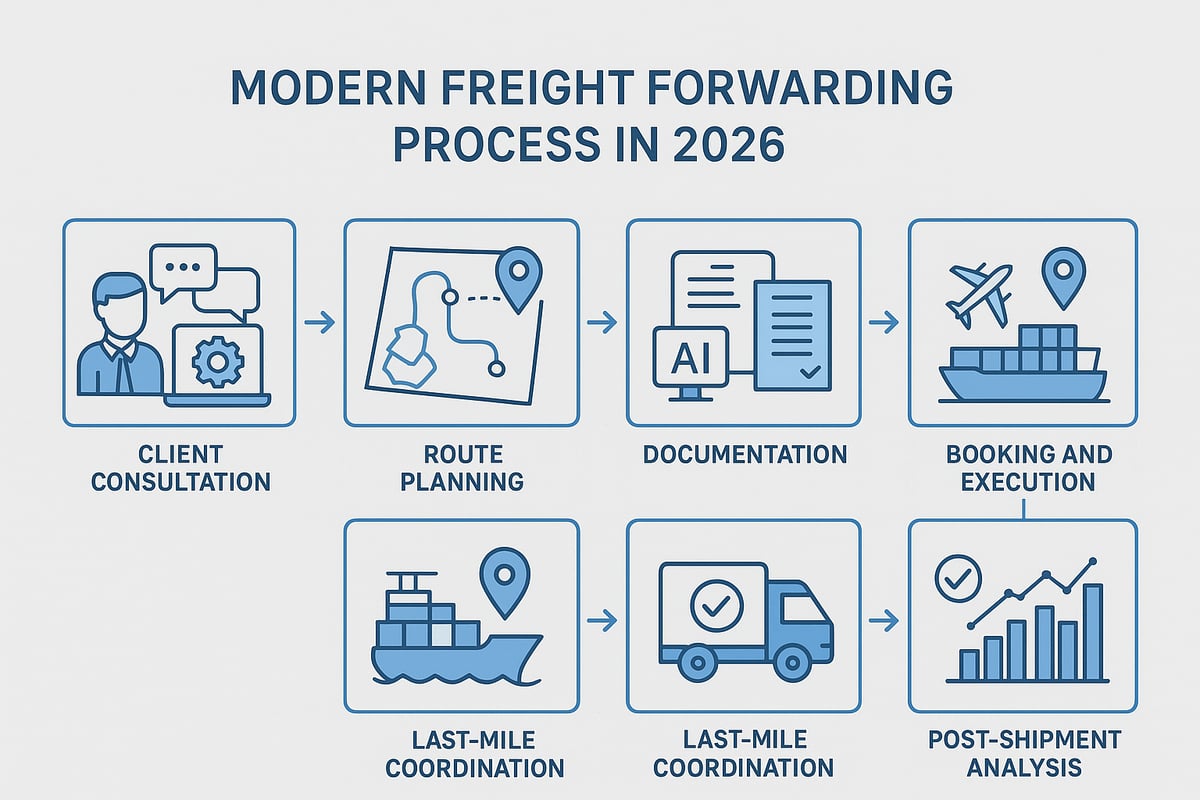
The journey begins with a detailed consultation. Cargo freight forwarders must understand each client’s specific requirements. This includes cargo type, dimensions, handling needs, and delivery timelines.
Digital tools now automate much of the data collection and validation, reducing manual errors. Transparent quoting builds trust, while feasibility checks ensure the proposed solution matches the cargo profile and market conditions.
Clients expect clarity on costs, schedules, and potential risks. Early, honest discussions position cargo freight forwarders as reliable partners who anticipate challenges rather than react to them.
Once requirements are clear, cargo freight forwarders turn to route planning. AI-powered platforms analyse cost, speed, reliability, and environmental impact to recommend optimal routes.
Carrier selection is no longer just about price. Forwarders must consider capacity, service history, and carbon footprint. Multimodal solutions are increasingly common, especially for complex or cross-continental shipments.
For example, combining rail, air, and road transport may reduce transit time or costs for certain cargo. These decisions require both technical expertise and up-to-date market intelligence.
Regulatory compliance is critical. Cargo freight forwarders leverage automation for documents such as eAWB, eCMR, and digital customs declarations. This speeds up processing and reduces the risk of costly errors.
Staying current with trade agreements and documentation standards is essential. Recent policy shifts, like those following Brexit, can alter paperwork requirements overnight.
Automated systems flag missing or incorrect information before submission, helping cargo freight forwarders avoid delays and penalties. This proactive approach sets a high standard for compliance.
With plans and paperwork in place, it’s time to book and execute the shipment. Most cargo freight forwarders now use integrated digital platforms for instant booking, confirmation, and real-time tracking.
These systems streamline communication with carriers and allow for proactive exception management. If a disruption occurs, alternative solutions can be arranged quickly.
For a deeper look at the logistics behind this crucial step, see The freight booking process explained. Digital booking not only improves speed but also enhances the customer experience, providing clients with visibility and confidence.
Last-mile delivery is often the most complex part of the process. Cargo freight forwarders must coordinate handoffs between carriers, manage local regulations, and confirm final delivery.
Specialised shipments, such as pharmaceuticals, require strict temperature monitoring and proof of receipt. Real-time updates reassure clients that their cargo is handled with care throughout the journey.
Effective last-mile management reduces delays, minimises risk, and strengthens client relationships. It is a key differentiator for forwarders aiming to deliver premium service.
The process does not end with delivery. Cargo freight forwarders analyse key performance metrics, such as on-time delivery rates, damage incidents, and overall client satisfaction.
Automated post-shipment surveys gather feedback to identify areas for improvement. This data-driven approach helps forwarders refine their processes and retain high-value clients.
Continuous improvement is essential in a competitive market. By closing the loop with analysis and feedback, cargo freight forwarders demonstrate commitment to excellence and long-term partnership.
Digital transformation is redefining the landscape for cargo freight forwarders. Embracing new technologies is no longer optional, but essential for staying competitive and meeting client expectations. From automation to cybersecurity, the right digital tools can streamline operations, reduce costs, and unlock new market opportunities.
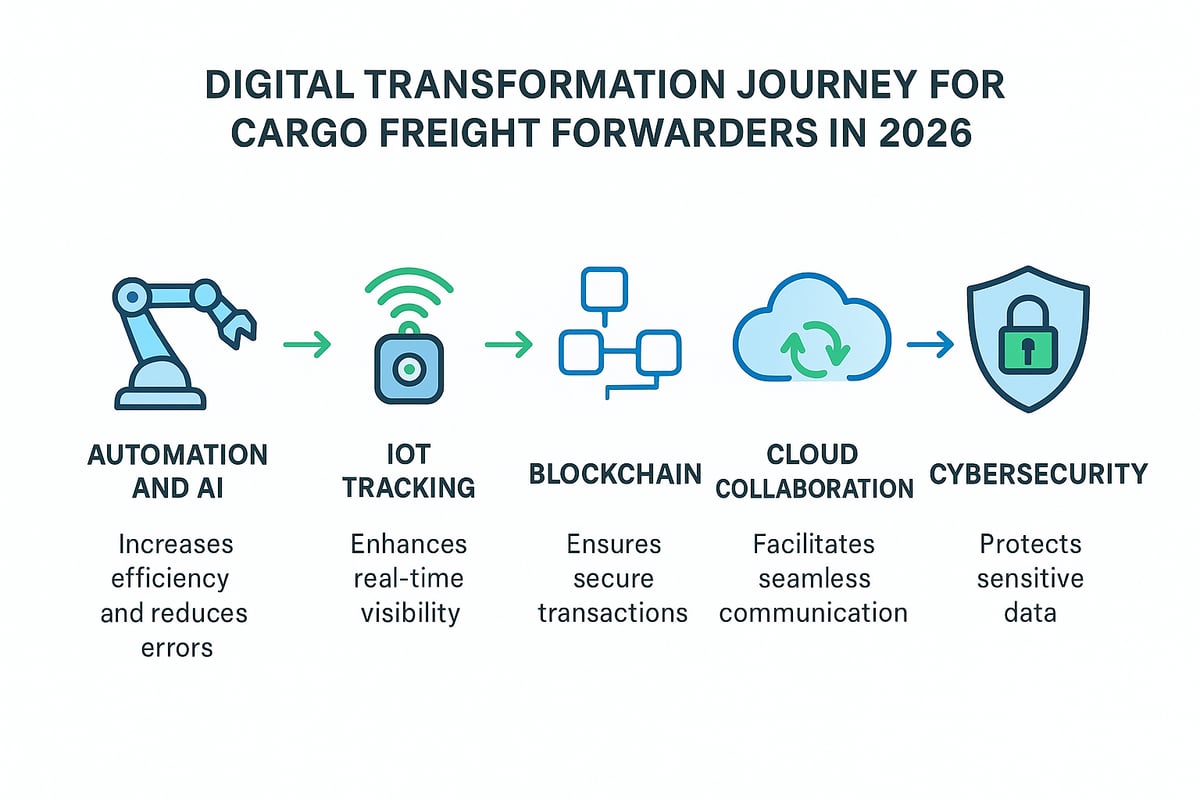
Automation and artificial intelligence are now central to how cargo freight forwarders operate. Sophisticated AI platforms can automate quoting, booking, and documentation, saving countless hours and reducing manual errors. For example, AI-powered systems match shipments to optimal carriers in real time, considering factors such as route, cost, and capacity.
Modern cargo freight forwarders also benefit from predictive analytics, which help anticipate demand shifts and optimise resource allocation. By integrating these technologies, forwarders can react faster to market changes and offer clients accurate, competitive pricing.
For a deeper dive into how automation is transforming the industry, see the Air cargo charter technology trends blog post, which highlights the impact of intelligent platforms on air cargo logistics.
Cargo freight forwarders who invest in AI tools gain a strategic edge, delivering faster, more reliable service across the supply chain.
Real-time tracking is now a baseline expectation for clients of cargo freight forwarders. IoT sensors embedded in shipments monitor location, temperature, humidity, and other critical parameters throughout the journey.
This live data allows cargo freight forwarders to identify issues instantly, such as temperature excursions or route deviations. As a result, they can proactively resolve problems, minimising risk and improving customer trust.
According to industry research, over 70 percent of shippers demand end-to-end visibility. By integrating IoT solutions, cargo freight forwarders deliver transparency, reduce losses, and support higher service levels.
Blockchain technology is gaining traction among cargo freight forwarders seeking to enhance security and trust. Digital ledgers provide a tamper-proof record of every transaction, from shipment booking to final delivery.
For cargo freight forwarders, this means reduced risk of fraud, faster contract execution, and easier audit trails. Blockchain also streamlines payments and customs clearance, supporting smoother cross-border operations.
The adoption of blockchain is expected to rise as forwarders look for reliable ways to digitise paperwork and improve transparency for all stakeholders.
Cloud technology has become the backbone of modern freight operations. By centralising communications and document sharing, cargo freight forwarders can collaborate seamlessly with clients, carriers, and agents worldwide.
Cloud-based platforms enable remote work, real-time updates, and instant access to shipment data. This agility is especially valuable when managing disruptions or coordinating complex, multimodal shipments.
Many cargo freight forwarders are adopting cloud-based TMS and client portals, allowing for streamlined workflows and greater scalability as their businesses grow.
As digital adoption increases, so does the risk of cyber threats. Cargo freight forwarders must prioritise cybersecurity to protect sensitive client data and maintain compliance with regulations such as GDPR.
Best practices include regular staff training, multi-factor authentication, and robust data encryption. Forwarders are also investing in specialised security software to detect and respond to breaches quickly.
By embedding cybersecurity into their digital transformation strategy, cargo freight forwarders safeguard their reputation and build trust with clients in an increasingly connected world.
Staying ahead of regulatory changes is a core challenge for cargo freight forwarders. The landscape is growing more complex, with new international agreements, digital customs systems, and stringent environmental mandates. To ensure seamless cargo movement and protect business interests, cargo freight forwarders must proactively adapt to these evolving requirements.
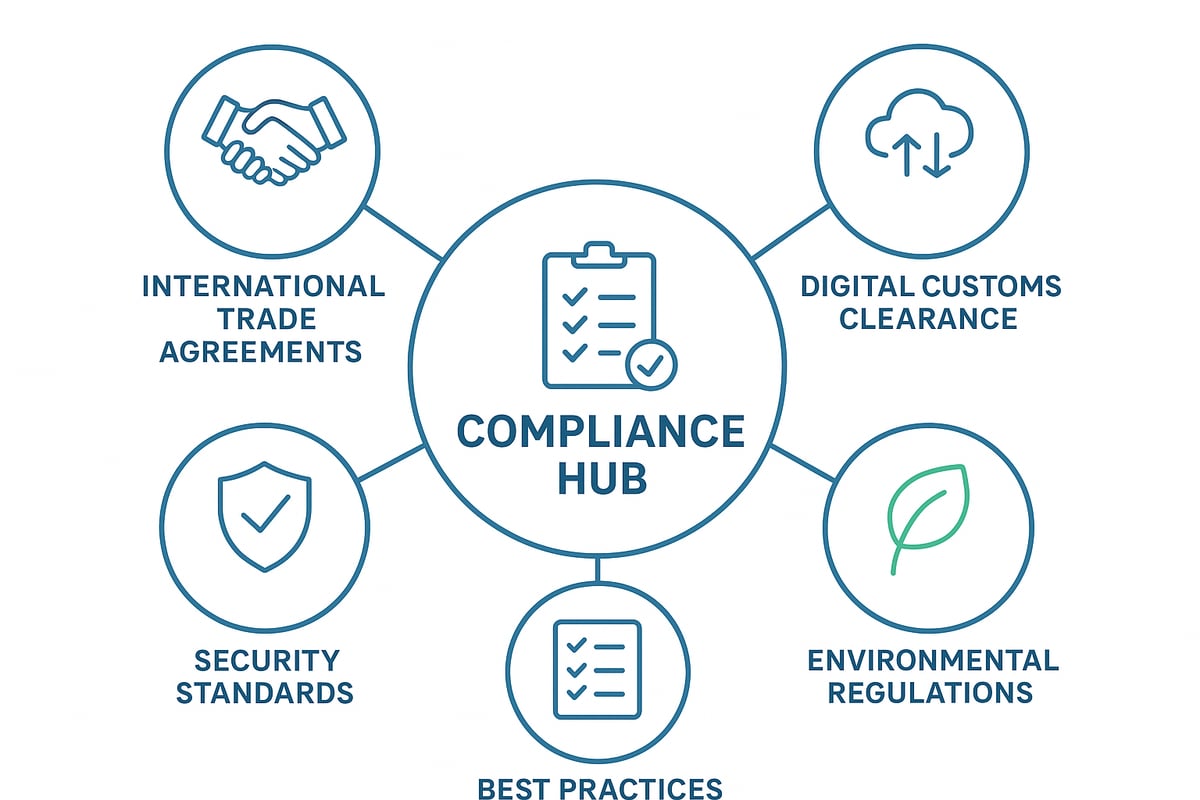
Recent years have seen a rapid shift in global trade agreements, impacting how cargo freight forwarders plan and execute shipments. New EU-Asia corridor agreements, alongside changing tariffs and sanctions, require forwarders to reassess their routing strategies and pricing models.
Cargo freight forwarders need to closely monitor these developments, as even minor changes in tariff structures can alter cargo flows significantly. For example, the introduction of new trade deals may open up faster or more cost-effective shipping lanes, while increased sanctions could restrict certain goods. Staying informed and agile is now a non-negotiable part of the role for cargo freight forwarders.
The drive towards digitalisation is transforming customs processes worldwide. In 2026, the majority of customs authorities have adopted e-customs systems and single-window clearance platforms. This shift streamlines documentation, reduces manual errors, and accelerates clearance times.
Cargo freight forwarders benefit from automation, which lowers operational costs and minimises delays. According to the WCO, 80% of customs authorities are now digitalised, making it essential for forwarders to integrate with these systems. Adapting to digital customs platforms is not just a competitive advantage, but a baseline expectation for cargo freight forwarders aiming to remain compliant and efficient.
Environmental compliance is at the forefront of logistics in 2026. Stricter emissions standards apply across air, sea, and land freight, with forwarders expected to track and report carbon output for each shipment. The IMO’s latest maritime emissions rules, along with similar standards for other modes, are forcing cargo freight forwarders to revisit their operating models.
Fast shipping options can increase carbon emissions by 10–12%, as highlighted in this report. As a result, cargo freight forwarders are investing in greener logistics solutions, such as carbon offsetting and eco-friendly carrier partnerships. Compliance is no longer just about avoiding penalties, but about meeting client expectations for sustainability and responsible business.
Security requirements for cargo freight forwarders are more robust than ever. Enhanced screening for high-risk and dual-use cargo is standard, with global programmes like C-TPAT and AEO setting the benchmark. For sensitive industries such as pharmaceuticals, maintaining a clear chain-of-custody and detailed documentation is critical.
Cargo freight forwarders must also adapt to changing global security standards, which can vary by region and commodity. Proactive risk assessment and strict adherence to protocols help protect shipments, reduce liability, and build trust with clients and regulators alike.
To stay ahead in this complex environment, cargo freight forwarders should:
| Regulatory Focus Area | Key Actions for Forwarders |
|---|---|
| Trade Agreements | Monitor updates, adapt routing and pricing |
| Digital Customs | Integrate with e-customs, automate documentation |
| Environmental Mandates | Track emissions, offer green logistics, offset carbon |
| Security Protocols | Enhance screening, maintain chain-of-custody |
| Compliance Best Practice | Train staff, audit regularly, use digital compliance tools |
By embedding compliance into their daily operations, cargo freight forwarders can mitigate risks, maintain operational continuity, and deliver outstanding value to clients.
Building resilience is mission-critical for cargo freight forwarders in 2026. In a world where disruptions can arise overnight, forwarders must adopt a proactive approach to risk management. From geopolitical tensions to cyber threats, the industry faces a broad spectrum of challenges. Robust crisis response strategies set the best forwarders apart, enabling them to protect client interests and maintain business continuity.
For cargo freight forwarders, understanding risk is the cornerstone of resilience. The supply chain landscape is fraught with uncertainties: political instability, extreme weather, cyberattacks, and operational mishaps. Forwarders must map out these vulnerabilities systematically.
A practical approach involves:
According to Gartner, 47% of logistics leaders now prioritise risk management, highlighting the need for a structured process among cargo freight forwarders. Regular risk assessments enable forwarders to stay one step ahead.
Diversification is a powerful defence for cargo freight forwarders. Relying on a single route, carrier, or supplier exposes operations to unnecessary hazards. Instead, forwarders should build contingency plans for critical shipments.
Key strategies include:
For example, during the Suez Canal blockage, agile forwarders rerouted shipments efficiently. Leveraging temperature-controlled freight solutions can be vital for perishable or pharmaceutical goods, ensuring quality even during disruptions. Forwarders who invest in contingency planning can safeguard client interests and maintain reputation.
Cargo freight forwarders must have robust insurance and liability frameworks in place. The right insurance policies protect both the business and clients against unforeseen losses or damages.
Consider the following types of coverage:
Clear contracts and service level agreements further limit liability. Efficient claims processes are essential for swift resolution when incidents occur. By prioritising insurance, cargo freight forwarders provide peace of mind and build long-term trust with clients.
Technology is transforming risk management for cargo freight forwarders. Real-time data and predictive analytics empower forwarders to anticipate and address disruptions before they escalate.
Innovative solutions include:
For deeper insights, explore air cargo intelligence for supply chains, which highlights how timely data can smooth transitions and reduce operational risks. Embracing technology allows cargo freight forwarders to operate with greater agility and precision.
Effective communication is the final pillar of resilience for cargo freight forwarders. Timely, transparent updates keep clients and partners informed during crises, building confidence and trust.
Best practices include:
Collaboration and information sharing ensure swift recovery and continuous improvement. For cargo freight forwarders, strong stakeholder coordination is essential for navigating uncertainty and emerging stronger after every challenge.
Staying ahead in the logistics industry means cargo freight forwarders must actively future-proof their operations. The rapid transformation of global trade, technology, and customer expectations requires a proactive approach. By investing in people, sustainability, partnerships, service expansion, agility, and robust performance tracking, forwarders can secure long-term resilience and growth.
For cargo freight forwarders, people are the foundation of success. As the industry evolves, upskilling teams in digital tools, regulatory compliance, and customer service is essential. Investing in ongoing training ensures staff can adapt to new technologies, such as AI-driven platforms and e-customs systems.
Forwarders are increasingly recruiting specialists in high-growth sectors like pharmaceuticals and high-tech. In-house training academies or partnerships with educational providers help bridge skills gaps quickly. According to Global freight forwarding market size and forecasts 2024–2028, market expansion will intensify competition, making talent development a strategic priority for cargo freight forwarders.
Regular training sessions, digital certification programmes, and mentorship initiatives create a culture of continuous improvement. This approach helps teams deliver consistent, high-quality service while keeping pace with regulatory and technological change.
Sustainability is no longer optional for cargo freight forwarders. Clients and regulators now expect demonstrable environmental responsibility. Implementing carbon-neutral shipping options, investing in green warehousing, and partnering with eco-friendly carriers are key steps.
Cargo freight forwarders can also harness digital tools to track emissions, optimise routes, and reduce waste. Collaborating on industry-wide sustainability projects amplifies impact and enhances reputation. Data-driven reporting on environmental metrics is increasingly requested by shippers.
By prioritising sustainability, cargo freight forwarders not only comply with regulations but also attract clients who value green logistics. This commitment differentiates forwarders in a crowded market and positions them for long-term relevance.
Strategic partnerships empower cargo freight forwarders to extend their reach, access new capabilities, and offer more competitive rates. Collaborating with technology providers, carriers, and industry associations creates a strong network for information and resource sharing.
Joining global freight networks enables forwarders to tap into established relationships, local expertise, and pooled buying power. These alliances are especially valuable for managing capacity, navigating disruptions, and entering emerging markets.
Cargo freight forwarders should regularly review and nurture their partnerships to ensure mutual benefit. Open communication and shared goals are vital for building trust and delivering seamless end-to-end solutions for clients.
To stay competitive, cargo freight forwarders must move beyond basic transport coordination. Expanding offerings to include customs brokerage, warehousing, last-mile delivery, and supply chain consulting adds value for clients.
For example, the surge in global e-commerce has heightened demand for flexible, integrated logistics support. Forwarders who specialise in tailored solutions, such as temperature-controlled storage or compliance advisory, can capture new market segments.
Value-added services not only drive revenue but also deepen customer relationships. By acting as a one-stop logistics partner, cargo freight forwarders become indispensable to their clients’ growth strategies.
Agility is crucial for cargo freight forwarders facing unpredictable market conditions. Flexible pricing models, modular service packages, and on-demand logistics allow rapid adaptation to client needs and economic shifts.
Launching digital customer portals for self-service bookings and real-time updates streamlines operations and enhances user experience. Cargo freight forwarders who embrace agile workflows can quickly pivot when disruptions arise, ensuring business continuity.
Adopting agile principles also encourages innovation within teams. Regular process reviews and client feedback sessions support continuous refinement and responsiveness.
Robust performance measurement helps cargo freight forwarders benchmark against industry standards and identify opportunities for improvement. Tracking KPIs such as on-time delivery rates, customer satisfaction scores, and profit margins provides actionable insights.
Implementing data analytics tools enables forwarders to visualise trends and respond proactively to underperformance. Regular reporting and transparent communication with clients build trust and demonstrate accountability.
Cargo freight forwarders can use industry data, such as forecasts from Global freight forwarding market size and forecasts 2024–2028, to set ambitious but realistic targets. Continuous monitoring ensures that improvement initiatives are effective and aligned with business goals.
As you look to future proof your freight forwarding operations and embrace the rapid changes coming in 2026, having the right technology and support can make all the difference. With smarter automation, instant global access, and expert guidance, you can stay ahead of industry shifts, regulatory updates, and client expectations. If you’re ready to see how intelligent tools can streamline your booking process, provide real time visibility, and help you deliver exceptional service across complex industries, I encourage you to request a demo and discover what CharterSync can do for you.

.png)