.png)
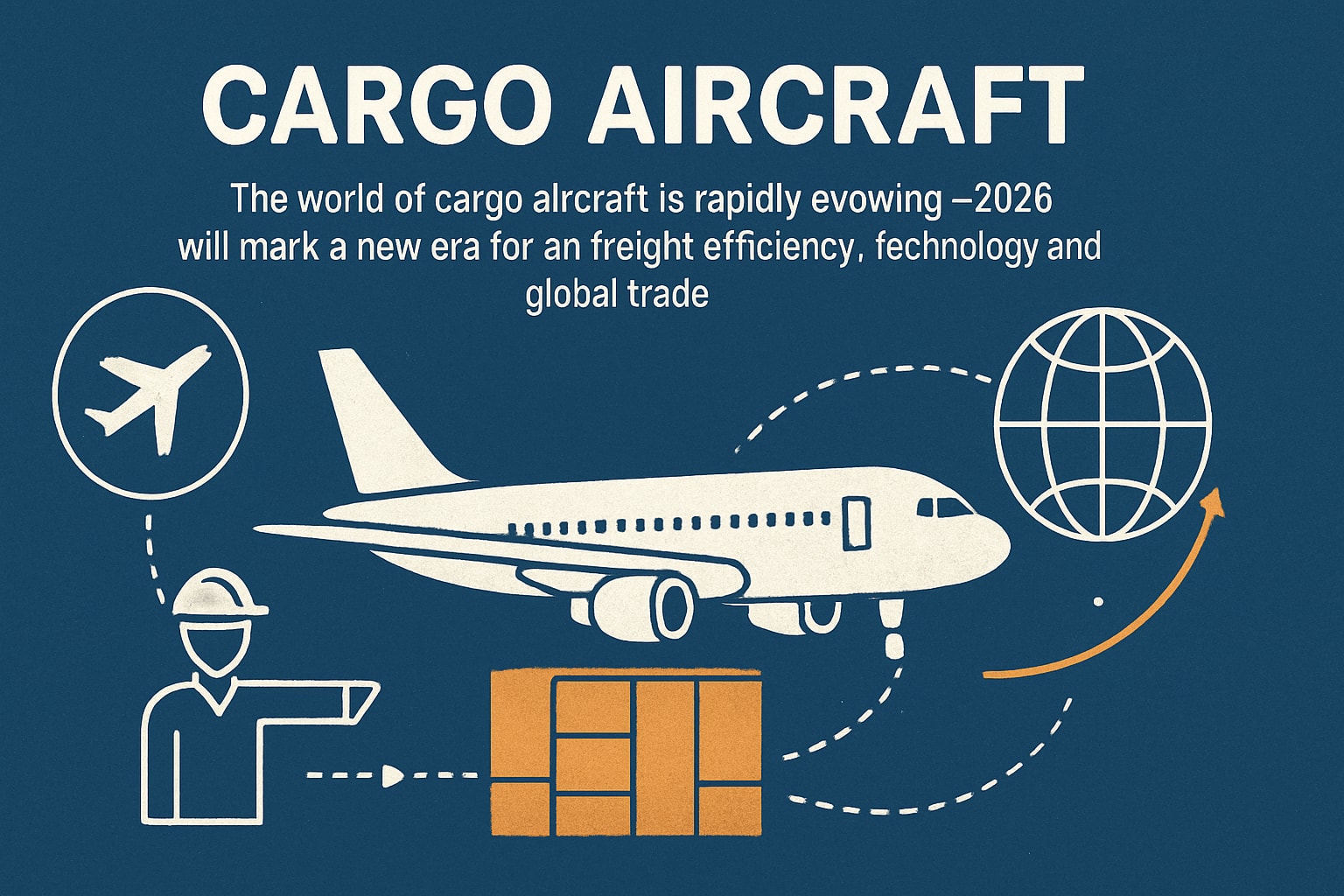
The world of cargo aircraft is transforming at an unprecedented pace, shaping the future of global commerce and supply chains. As 2026 approaches, logistics professionals, shippers, and industry leaders must stay ahead by understanding the latest advancements. With the global freighter fleet projected to surge, innovations in technology and operational strategies are redefining efficiency and connectivity. This guide delivers critical insights into the evolution, key types, technological breakthroughs, and market trends of cargo aircraft. Dive in to make informed decisions and remain competitive in this dynamic sector.
The journey of cargo aircraft is a story of relentless innovation, shaped by global events and shifting commercial needs. From humble beginnings as mail carriers, these aircraft have become the backbone of international logistics, enabling faster, safer, and more reliable freight movement. To understand their importance today, it is essential to trace their evolution through key milestones, technological shifts, and economic impacts.

Cargo aircraft have transformed dramatically since 1911, when the first planes carried air mail across short distances. By the 1920s, purpose-built freighters like the Vickers Vernon and Arado Ar 232 emerged, signalling a shift from improvised solutions to dedicated cargo roles. As the decades progressed, military aircraft such as the Lockheed C-130 Hercules and Antonov An-124 were adapted for civilian use, supporting post-war commercial expansion.
Design innovations, including wide fuselages, high wings, and large cargo doors, enabled the handling of outsized and heavy shipments. Global conflicts spurred rapid growth, while the rise of commercial aviation in the late 20th century expanded the worldwide cargo fleet. By 2015, dedicated freighters accounted for 43 percent of the world’s 700 billion available tonne-kilometres (ATK) capacity, highlighting the growing reliance on cargo aircraft.
The last decade has seen profound shifts in the cargo aircraft sector. The explosive growth of e-commerce has driven demand for rapid, reliable air freight, while the COVID-19 pandemic accelerated a move from passenger belly freight to dedicated cargo aircraft. Specialised and time-critical shipments, such as pharmaceuticals and electronics, now dominate many routes.
Infrastructure investment has expanded air cargo hubs globally, and regulatory changes have heightened safety and environmental requirements. Environmental pressures, including stricter emissions standards, have also influenced fleet choices. According to Boeing, belly freight is expected to rise to 63 percent by 2035, while Cargo Facts Consulting projects robust fleet expansion, demonstrating the cargo aircraft sector’s adaptability to changing market forces.
Modern cargo aircraft reflect significant advances in efficiency and digitalisation. New engines, lightweight composite materials, and advanced avionics have improved performance and reduced operating costs. The sector has embraced digital tracking, smart logistics platforms, and AI-driven load planning, enhancing safety and operational precision.
A notable trend is the emergence of autonomous and hybrid-electric cargo aircraft prototypes, which promise lower emissions and increased flexibility. Industry leaders are leveraging AI for route optimisation and predictive maintenance, as detailed in Innovations in air cargo technology. These developments are setting new standards for sustainability and reliability, ensuring that cargo aircraft remain at the forefront of global logistics.
Cargo aircraft are vital enablers of just-in-time manufacturing, international trade, and humanitarian relief. They support industries ranging from automotive and pharmaceuticals to high-tech sectors, where speed and reliability are critical. In 2015, over 57 percent of ATK capacity was carried in the holds of passenger aircraft, underscoring the integration of cargo operations across fleets.
Recent years have highlighted the role of cargo aircraft in critical supply chains, such as distributing COVID-19 vaccines and supplying automotive parts. Their influence extends to shaping international trade agreements and the development of logistics hubs, making them indispensable for freight forwarders and shippers worldwide. As global commerce evolves, cargo aircraft continue to drive efficiency and resilience across supply chains.
The landscape of cargo aircraft in 2026 is more diverse and advanced than ever before. Operators and shippers can choose from a wide range of aircraft types, each designed for specific missions and operational needs. Let us explore the current categories, technical specifications, selection criteria, design innovations, and leading models shaping the industry.

Cargo aircraft in 2026 fall into several main categories, each serving different roles in the logistics chain. Dedicated freighters, such as the Boeing 747-8F, are purpose-built for freight and offer high payload capacity and volume. Converted airliners, modified from passenger service, provide a flexible and cost-effective option for operators. Joint civil-military aircraft bridge commercial and defence needs, while unpiloted and autonomous cargo planes are increasingly used for remote or hazardous deliveries.
Oversize transporters, like the Antonov An-225, handle unique, large-scale shipments, and light cargo aircraft serve regional or short-haul routes. For a comprehensive look at these types and their operational uses, see the cargo transport aircraft overview.
Every cargo aircraft is defined by key technical specifications that align with its intended mission. Payload capacity, measured in tonnes, ranges from 1 tonne for light regional planes up to more than 250 tonnes for the largest freighters. Cargo bay volume and loading door dimensions determine what goods can be carried, while fuselage design affects loading efficiency.
Range and fuel efficiency are crucial for intercontinental operations. Advanced landing gear allows access to both prepared and unprepared runways, expanding operational flexibility. Crew comfort, modern avionics, and system integration support safe and efficient operations. For example, the Antonov An-124 features a cargo bay of 36.5 metres by 6.4 metres, capable of carrying massive loads.
Selecting the right cargo aircraft involves careful consideration of several factors. The type of cargo—be it general, hazardous, temperature-sensitive, or oversized—dictates aircraft suitability. Route distance and airport infrastructure influence model choice, particularly for remote or underdeveloped destinations. Time sensitivity, frequency of flights, and cost efficiency are also key.
Regulatory compliance, customs requirements, and total cost of ownership must be weighed by freight forwarders and operators. For instance, automotive parts might require frequent, reliable shipments on medium-haul freighters, while pharmaceuticals may demand temperature-controlled holds and rigorous handling protocols.
The drive for efficiency and sustainability has led to major innovations in cargo aircraft design. The use of advanced composite materials reduces weight and increases payload. Modular cargo holds and automated loading systems improve turnaround times and safety. Hybrid and electric propulsion systems are emerging to meet stricter environmental standards.
Noise reduction and emission control technologies are now standard in new designs. Enhanced avionics provide precision navigation, reducing delays and optimising routes. In 2026, wide-body freighters feature these advances, reflecting the growing importance of environmental responsibility in aircraft development.
A clear comparison of leading cargo aircraft models highlights their strengths and operational niches. The Boeing 777F and Airbus A350F dominate long-haul routes with high efficiency and capacity. For oversize loads, the Antonov An-124 and An-225 remain unmatched, while the Boeing Dreamlifter offers unique solutions for large components.
Regional needs are met by models like the ATR 72F and Cessna 208 Caravan. Operators often weigh the pros and cons of converted airliners versus purpose-built freighters, considering factors such as flexibility, cost, and lifecycle. The table below summarises key differences:
| Model | Payload (tonnes) | Range (km) | Specialisation |
|---|---|---|---|
| Boeing 777F | 102 | 9,070 | Long-haul, efficient |
| Antonov An-124 | 150 | 4,800 | Oversize, heavy loads |
| Airbus A350F | 109 | 8,700 | New gen, eco-friendly |
| ATR 72F | 8 | 1,500 | Regional, short-haul |
| Cessna 208 Caravan | 1.4 | 1,900 | Light, flexible |
These advances ensure the cargo aircraft sector will continue to adapt and thrive in a changing global market.
The rapid pace of technological innovation is redefining how cargo aircraft operate, making the industry more efficient, sustainable, and secure. In 2026, logistics leaders must understand how these advancements are shaping every aspect of air freight, from booking to delivery.

Automation is streamlining every stage of the cargo aircraft supply chain. From AI-powered load planning to automated booking platforms, digital tools are minimising manual intervention and improving accuracy. Real-time cargo monitoring using IoT sensors provides status updates throughout the journey.
Electronic documentation, including digital air waybills, is now standard, significantly reducing paperwork errors and delays. These advances lead to faster processing and more reliable deliveries. For an in-depth look at how artificial intelligence is transforming operations, see Advancements in AI and automation in air cargo operations.
The integration of AI into cargo aircraft operations is not only increasing efficiency but also setting new industry benchmarks.
Sustainability is a critical driver for the cargo aircraft sector in 2026. Operators are adopting fuel-efficient engines and alternative fuels, such as sustainable aviation fuel and hydrogen, to reduce emissions. Hybrid-electric and fully electric cargo aircraft are emerging, offering lower operational costs and a smaller carbon footprint.
Noise abatement technologies and improved aerodynamics also contribute to greener operations. Regulatory requirements are pushing airlines to meet ambitious CO2 reduction targets. Many cargo aircraft fleets are now equipped with advanced emission-tracking systems for transparency and compliance.
By embracing sustainable technologies, the cargo aircraft industry is future-proofing itself while supporting global climate goals.
The development of autonomous and unmanned cargo aircraft is revolutionising logistics, especially for remote and time-sensitive deliveries. Large cargo drones are being deployed for disaster relief and e-commerce fulfilment in hard-to-reach areas.
Regulatory bodies are establishing new frameworks to ensure the safety and reliability of unmanned cargo aircraft operations. Pilot projects across Europe and Asia are demonstrating both the effectiveness and scalability of these technologies.
As adoption accelerates, autonomous cargo aircraft will complement traditional fleets, increasing flexibility and access in the global supply chain.
Innovations in cargo handling are making aircraft operations safer and more efficient. Automated loading and unloading systems minimise human error and speed up turnaround times. Advanced screening technologies detect dangerous goods, improving compliance.
Blockchain is now being used to track cargo and enhance security, while smart containers offer tamper-evident seals. Integration with airport logistics systems ensures smooth transfers and reduced risk of loss or theft.
These smart handling solutions are essential for maintaining the integrity and reliability of cargo aircraft operations worldwide.
Connectivity is the backbone of modern cargo aircraft logistics. The integration of 5G and satellite communications allows for real-time tracking and instant updates between all supply chain partners. Predictive analytics support accurate demand forecasting and optimise capacity planning.
Collaborative data sharing platforms link cargo aircraft with shippers, freight forwarders, and ground handlers, improving transparency. Multi-modal logistics platforms further streamline operations by connecting air, road, and sea transport.
With these advancements, cargo aircraft are achieving higher on-time delivery rates and greater operational resilience.
Effective operation of cargo aircraft in 2026 demands a sophisticated blend of technology, regulation, and industry know-how. As air freight volumes rise and expectations for speed and reliability grow, operators must embrace best practices that maximise efficiency and safety. For practical insights and up-to-date strategies, consult air freight cargo shipping insights to complement your operational toolkit.
Flight planning for cargo aircraft in 2026 leverages AI and big data to create optimal flight paths. Operators analyse weather patterns, airspace restrictions, and real-time demand to dynamically adjust routes. This reduces fuel consumption, minimises delays, and supports environmental goals.
By adopting these practices, cargo aircraft operators report measurable cost and time savings, enhancing reliability for global supply chains.
Safe and efficient cargo loading is the backbone of successful cargo aircraft operations. Standardised protocols ensure proper weight and balance, while automated systems speed up the process and reduce human error. Temperature-sensitive and hazardous goods require strict adherence to IATA and ICAO guidelines.
Enhanced training and use of advanced handling equipment contribute to a safer, more reliable cargo aircraft operation.
Navigating international regulations is critical for cargo aircraft. Operators must remain current with IATA, ICAO, EASA, and FAA requirements. Digital documentation and e-customs systems accelerate border crossings and reduce paperwork errors.
By investing in compliance training and digital solutions, cargo aircraft fleets maintain global access and minimise costly delays.
Predictive maintenance is revolutionising cargo aircraft reliability. IoT sensors and AI-driven diagnostics enable proactive scheduling, reducing downtime and extending aircraft lifespans.
Operators see improved reliability statistics and greater operational resilience, keeping cargo aircraft available for critical missions.
Cargo aircraft operators must prepare for supply chain disruptions, security threats, and emergency scenarios. Robust contingency planning and insurance frameworks mitigate risks and ensure rapid response.
By prioritising resilience and learning from past incidents, cargo aircraft operations remain agile and dependable under pressure.
The landscape of cargo aircraft charter is being transformed by smart digital platforms, making the process faster and more efficient than ever before.

These platforms use intelligent automation to match cargo aircraft with shipment requirements in real time. This not only speeds up quoting but also improves accuracy and cost transparency for freight forwarders and shippers.
Key benefits include:
A leading example is CharterSync, whose platform combines AI-driven automation with expert human support. This approach allows freight forwarders to book complex, time-sensitive shipments in minutes rather than hours. Sectors such as automotive and pharmaceutical logistics benefit significantly from this agility.
According to recent aircraft freight specifications and trends, digital solutions are reducing operational lead times and streamlining the entire cargo aircraft charter process. As a result, smart platforms are rapidly shaping the future of air cargo charter, offering unprecedented speed and reliability.
The cargo aircraft market is experiencing dynamic shifts as we approach 2026. E-commerce, digitalisation, and sustainability are shaping the landscape. Industry leaders and stakeholders are preparing for new challenges and opportunities that will define the future of air freight.
Demand for cargo aircraft continues to rise, driven by the surge in e-commerce and the need for agile logistics. The global freighter fleet is projected to expand from 1,782 to 2,920 aircraft by 2039, reflecting robust market confidence.
Regional differences are significant. The Asia-Pacific region leads growth, while Europe and the Americas remain vital players. According to IATA's air cargo trends and growth projections, global cargo traffic is expected to stabilise at 2.6% growth in 2026, with belly freight and dedicated freighters both playing crucial roles.
Major airlines are expanding cargo operations to capture this demand, investing in modern fleets and infrastructure. These factors highlight the ongoing importance of cargo aircraft in global logistics.
Shippers today expect more from cargo aircraft than ever before. Speed, flexibility, and reliability are non-negotiable, especially for industries like pharmaceuticals and high-tech. The demand for temperature-controlled and specialised cargo solutions is on the rise, as is the focus on greener logistics.
Regulatory changes are influencing preferences, with stricter environmental standards shaping fleet choices. Shippers also seek digital transparency, real-time tracking, and seamless customs processes. These evolving requirements are prompting operators to invest in advanced technology and new aircraft types.
For logistics professionals, understanding these shifting needs is essential for staying competitive and responsive in a fast-paced market.
The cargo aircraft sector faces both hurdles and openings as it moves forward. Infrastructure constraints at major hubs can slow growth, while talent shortages require workforce upskilling. Geopolitical risks and supply chain vulnerabilities create uncertainty, but also drive innovation and resilience.
| Challenge | Opportunity |
|---|---|
| Capacity bottlenecks | Emerging markets expansion |
| Regulatory complexity | Digitalisation and automation |
| Skilled labour shortage | New training and tech adoption |
| Volatile fuel costs | Sustainable aviation investments |
Regions like Africa and Southeast Asia offer strong growth prospects. Investment in cargo infrastructure and technology is increasing, enabling operators to overcome challenges and seize new market opportunities.
Innovation is set to transform cargo aircraft in the coming years. Advances in design, autonomous technology, and sustainable propulsion are reshaping the sector. Companies are developing hybrid-electric models and exploring full digital integration with supply chains.
A notable development is Poseidon Aerospace's work on unmanned cargo aircraft, with the Egret and Heron models scheduled for flight testing in 2026. This signals a shift towards larger, more capable drones that can serve remote locations and provide rapid response in humanitarian crises.
As research and development accelerate, the next generation of cargo aircraft will underpin resilient, efficient, and sustainable global trade.
As you’ve seen throughout this guide, staying ahead in the evolving cargo aircraft landscape means embracing new technologies, smarter operations, and reliable partners. If you’re ready to experience how intelligent automation and expert support can transform your air cargo charter operations—whether you’re moving automotive parts, pharmaceuticals, or high-tech equipment—why not see it in action? Let’s take the next step together: request a demo and discover how CharterSync’s platform can help you streamline bookings, optimise aircraft matching, and keep your supply chain moving efficiently in 2026 and beyond.

.png)