.png)
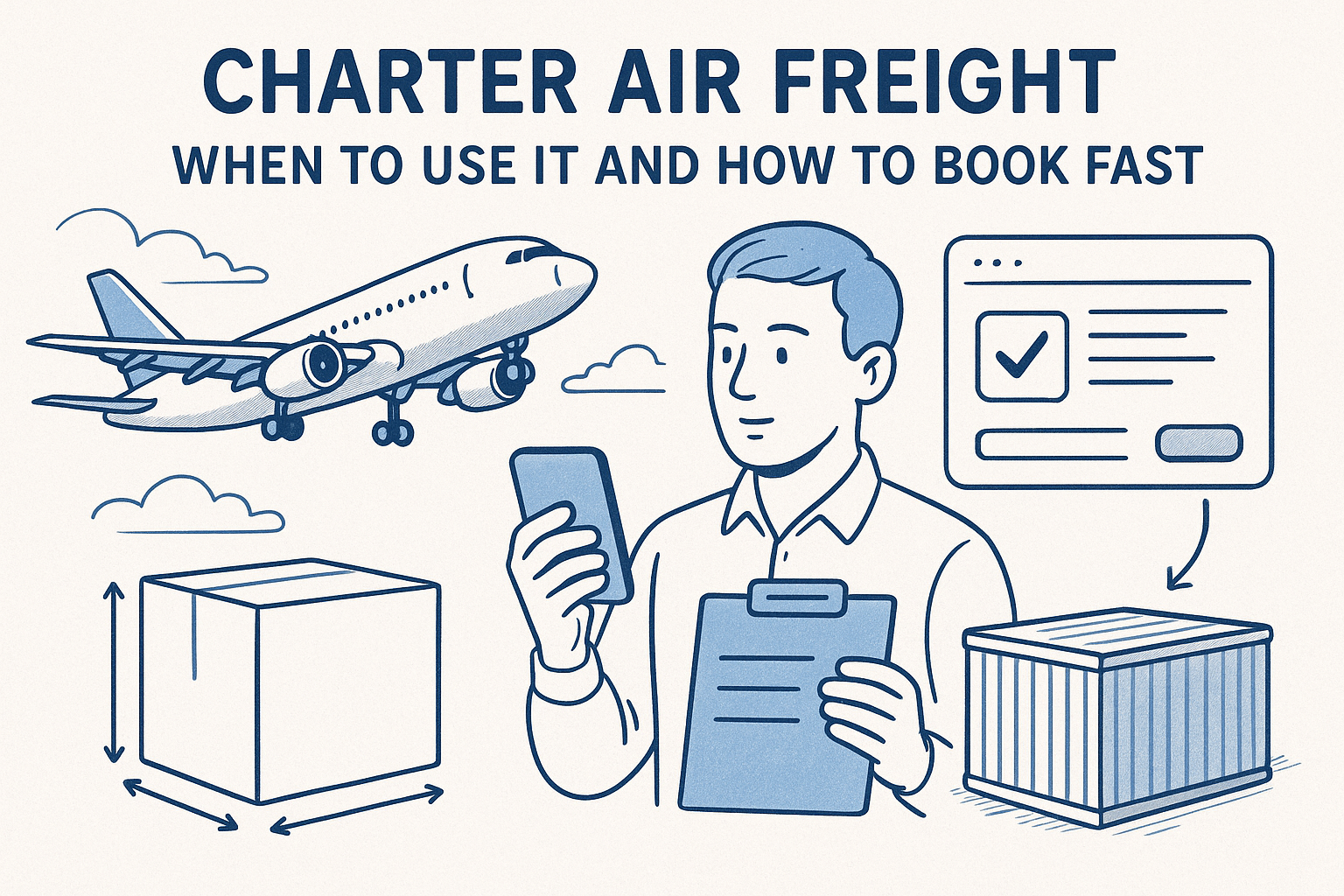
When a shipment is too heavy for scheduled airlines, too urgent to wait for the next available slot, or too oversized to fit standard cargo holds, charter air freight becomes the only realistic option. It gives you a dedicated aircraft for your cargo alone, no sharing capacity, no consolidation delays, and no routing compromises.
But for many freight forwarders and logistics managers, booking a charter still involves back-and-forth emails, uncertain availability, and quotes that arrive hours (or days) later than needed. That gap between urgency and execution is exactly where mistakes happen, wrong aircraft types, inaccurate load planning, or missed permit windows that push timelines further out.
This article breaks down what charter air freight actually involves, when it makes sense over scheduled or part-charter options, and how to move from inquiry to confirmed booking quickly. We built CharterSync to solve the speed and accuracy problems that have plagued cargo chartering for years, matching cargo to verified aircraft in minutes, with full technical loadability confirmed upfront. Whether you're new to chartering or looking for a faster way to operate, this guide covers the decisions that matter most.
The global freight market in 2026 is operating under sustained pressure from multiple directions: trade route disruptions, fluctuating capacity on scheduled airlines, and shipper expectations that have shifted permanently toward speed and certainty. For logistics professionals managing time-critical or oversized cargo, these pressures make charter air freight not just a contingency option, but a standard tool in their procurement mix.
Over the past several years, supply chains have absorbed repeated shocks, from port congestion and geopolitical conflicts to sudden surges in demand that outpace available scheduled capacity. Each disruption compresses the time you have to react. When a production line shuts down because a critical component is sitting in a warehouse on the wrong continent, waiting two or three days for a scheduled freighter slot is not a realistic option. Charter freight fills that gap directly, giving you confirmed aircraft capacity on your timeline, not the airline's.
The difference between a charter and a scheduled option is not just speed. It is certainty: you know which aircraft is flying, when it departs, and whether your cargo physically fits.
You also face tighter regulatory environments in 2026. Permit requirements, customs documentation, and airspace restrictions vary significantly by route, and errors in this area cause delays that compound quickly. Getting the right aircraft matched to the right route from the start reduces the administrative exposure that leads to those costly holdups.
The traditional chartering process relied on phone calls and email chains to gather quotes, check aircraft availability, and confirm technical loadability. That process could consume six to twelve hours on a straightforward inquiry. Digital platforms have compressed that significantly, delivering matched aircraft options, side-by-side capacity comparisons, and loadability analysis in minutes rather than half a working day.
This shift means your clients expect faster answers too. Response time has become a direct competitive factor in freight forwarding, and the tools you rely on determine how quickly you can commit to a booking with full confidence rather than a provisional estimate.
Not every shipment requires a full charter, but several clear scenarios make it the right call over scheduled freight. Understanding those scenarios helps you decide quickly rather than losing time evaluating options that won't work for your cargo.
The most straightforward cases involve physical incompatibility and extreme time pressure. Oversized machinery, industrial components, or outsized project freight often exceeds the door dimensions and hold configurations on scheduled freighters. Charter gives you access to aircraft specifically suited to those load dimensions. Similarly, when a production shutdown, a missed delivery window, or a contractual penalty is at stake, waiting for the next available scheduled slot is not a realistic answer.
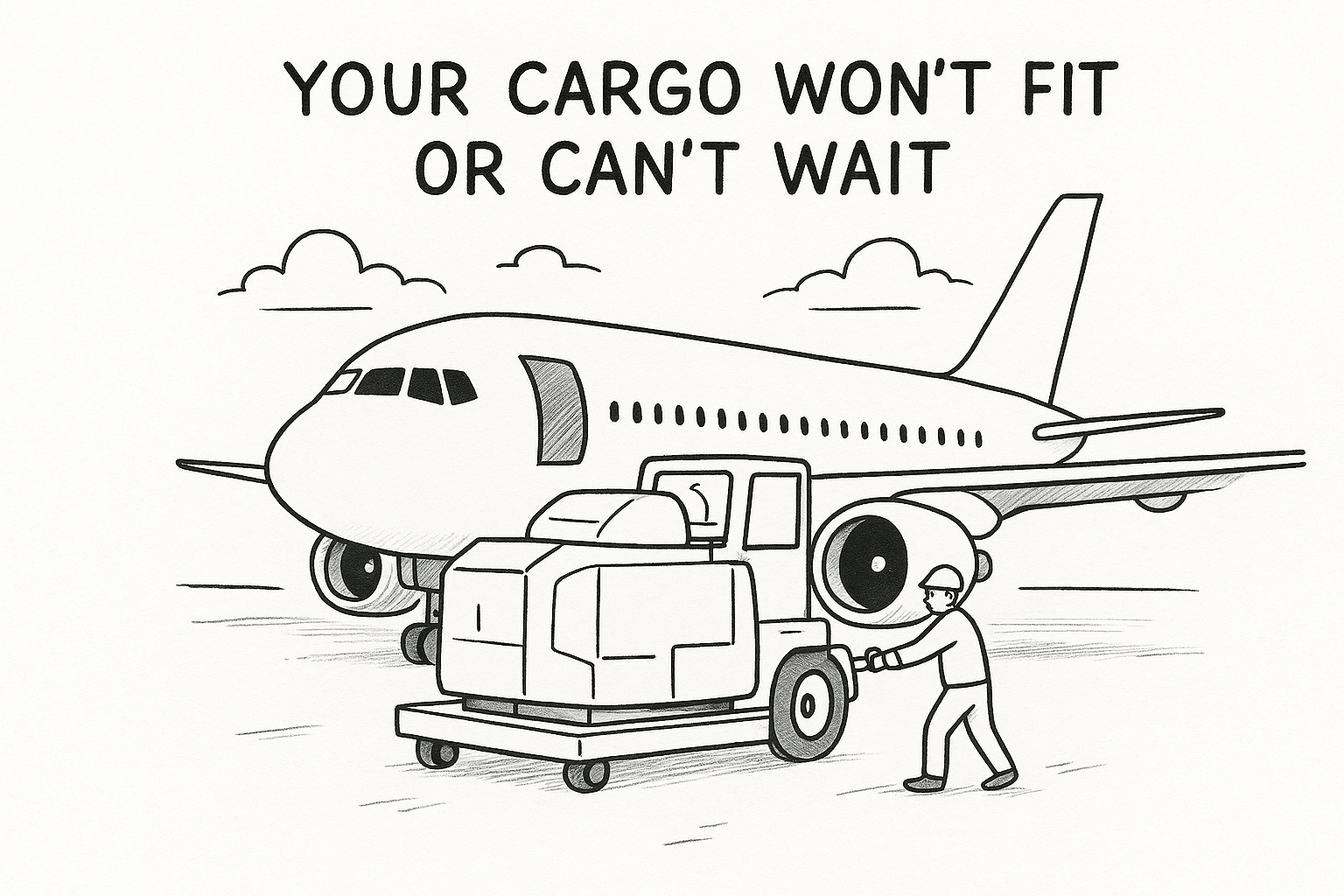
If your cargo is time-critical and technically incompatible with scheduled services, charter air freight is not a premium option, it is the only option.
Some shipments need conditions that shared aircraft simply cannot guarantee. High-value goods, live animals, dangerous goods, and temperature-sensitive pharmaceuticals often require controlled environments, specific loading sequences, or security protocols that are only achievable on a dedicated aircraft. Part-charter arrangements can work for smaller loads, but if the handling requirements are non-negotiable, full charter gives you complete control over the aircraft, the ground handling team, and the documentation chain from origin to destination. That level of control matters when errors carry serious financial or regulatory consequences.
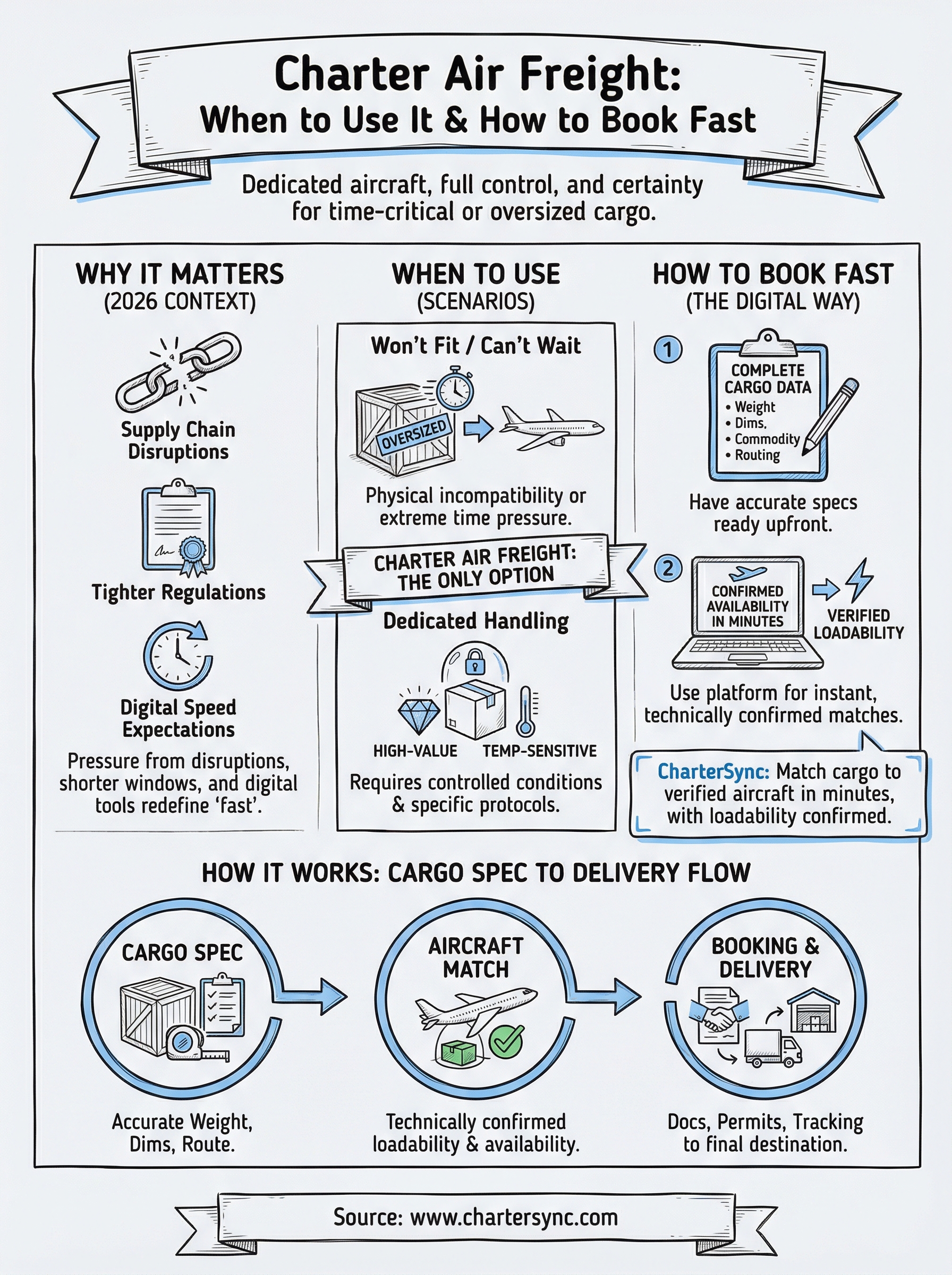
The process follows a clear sequence from initial inquiry through to delivery, and understanding each step helps you avoid the delays that occur when information is incomplete or the wrong aircraft gets selected early on. Every charter air freight booking starts with your cargo specifications, and everything downstream depends on how accurately those are captured upfront.
Your first task is providing complete cargo details: dimensions, weight, commodity type, and routing. A matching engine then compares your load against the door configurations, payload limits, and range of available aircraft in the network, returning options that are technically confirmed to carry your cargo. At this stage, you should also receive a loadability analysis confirming mass and balance, not just a general capacity estimate.
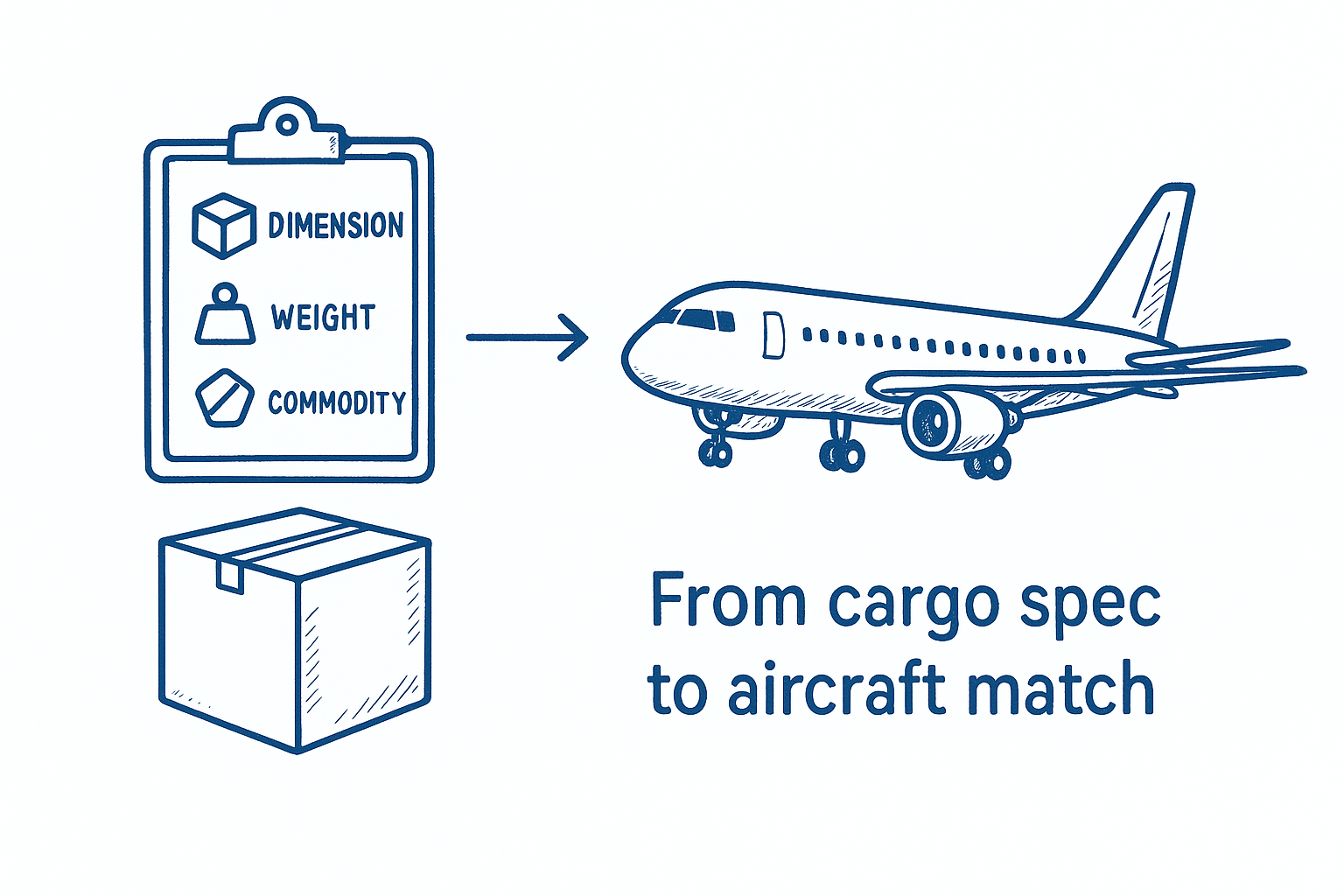
The key inputs that drive accurate matching include:
A technically confirmed match upfront eliminates the rework that happens when the wrong aircraft is booked and the error only surfaces at the warehouse door.
Once you confirm an aircraft, the documentation process begins. This covers airway bills, customs paperwork, dangerous goods declarations where applicable, and any permit requirements tied to the routing.
Ground handling is coordinated at both origin and destination, and real-time tracking gives you visibility at each stage, from warehouse departure through ramp handling to final customs clearance. The cleaner your documentation from the start, the fewer holdups you face on the ramp.
Three variables drive most of the variation in charter pricing and turnaround times: the aircraft you need, the routing you require, and the documentary requirements tied to your cargo. Understanding where cost and delay typically originate means you can anticipate problems before they surface, rather than managing them under pressure.
The aircraft you need determines a significant portion of your cost. Larger freighters with wide door configurations and high payload capacity cost more to operate and position, and that feeds directly into your quote. Routing adds another layer: positioning the aircraft from its current location to your origin airport carries a cost, and longer or more complex routes increase fuel burn and crew requirements.
The wider the gap between where the aircraft is and where your cargo is, the more your positioning fees will affect the final price.
Some routes require overflight permits or landing clearances that can take days to obtain. Failing to factor that into your booking timeline turns a fast charter into a delayed one, and the risk increases on less common routing corridors where clearance processes are slower or less predictable.
Certain commodity types, including dangerous goods and temperature-sensitive cargo, trigger additional documentation requirements that extend ground processing time regardless of aircraft availability. You reduce this risk by confirming permit lead times at the same point you confirm your charter air freight booking, not as an afterthought once the aircraft is already assigned.
Speed in charter air freight comes down to two things: the quality of the information you bring to the booking process, and the platform you use to run it. If either is weak, you lose time recovering from gaps and corrections that should never have occurred.
The fastest bookings happen when you arrive with complete cargo specifications already assembled. That means gross weight, piece dimensions, commodity type, and your required routing. When that data is accurate from the start, matching engines can return technically confirmed aircraft options immediately rather than cycling back to you with clarifying questions that add hours to the process.
The core details you need to have ready:
Older methods rely on brokers contacting operators manually, which means you wait for responses that may come back incomplete or provisionally worded. A digital platform that connects directly to operator networks returns confirmed availability with loadability analysis at the point of enquiry, not after an email chain that spans half a working day.
The single biggest time saving in the booking process is getting a technically confirmed match in the first response, not the fifth.
CharterSync does exactly that: submit your cargo details, receive matched and verified aircraft options, and move from enquiry to booking in minutes.
Charter air freight works best when the process behind it is fast, accurate, and technically confirmed from the first moment you submit your cargo details. If you are still relying on manual back-and-forth to get quotes and confirm availability, every hour you spend waiting is a risk you are carrying on behalf of your client.
The steps in this guide give you a clear framework: know your cargo specs before you reach out, confirm aircraft loadability upfront, and treat permit lead times as a booking-critical input rather than an afterthought. Applying these principles consistently removes most of the friction that turns a straightforward charter into a drawn-out process.
If you want to see what a faster, more reliable booking experience looks like in practice, submit your first cargo enquiry on CharterSync and get matched aircraft options with confirmed loadability in minutes, not hours.
.png)