.png)

The global logistics landscape has evolved dramatically, with charter cargo aircraft becoming an essential component of modern supply chain management. As businesses face increasing pressure to deliver time-sensitive shipments across continents, the flexibility and speed offered by dedicated cargo charters have transformed how companies approach air freight. Unlike scheduled commercial cargo services, charter cargo aircraft provide exclusive capacity, direct routing, and customized solutions that meet the demanding requirements of industries ranging from pharmaceuticals to automotive manufacturing. The cargo aircraft charter service market continues to expand as freight forwarders recognize the strategic advantages these services deliver.
Charter cargo aircraft operations differ fundamentally from traditional commercial freight services. When freight forwarders arrange a cargo charter, they're securing an entire aircraft dedicated exclusively to their shipment, rather than competing for limited space on scheduled flights.
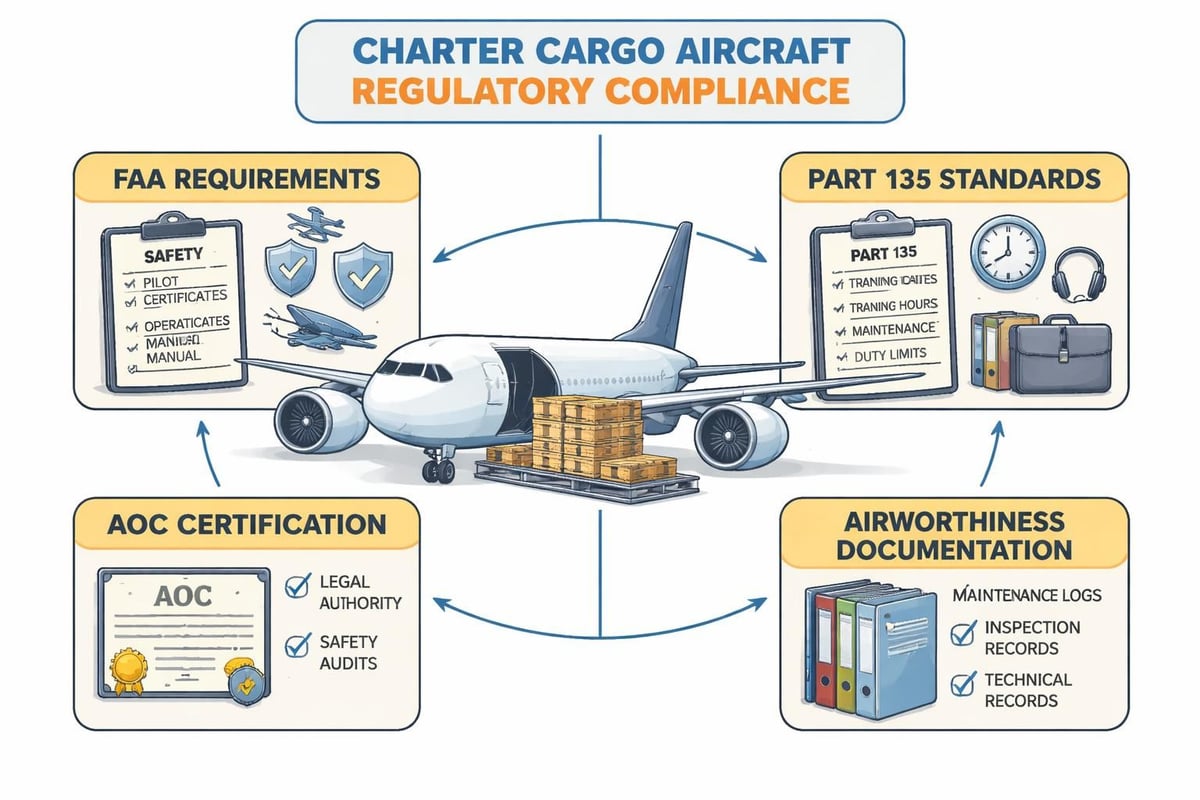
The regulatory environment governing charter cargo aircraft remains stringent across jurisdictions. In the United States, operators must comply with comprehensive FAA charter requirements that establish safety standards and operational protocols. These regulations ensure that charter operators maintain the highest levels of safety while providing flexible service options.
Aircraft operating under charter arrangements typically fall under Part 135 regulations, which govern on-demand air service. The Part 135 operational standards specify everything from crew qualifications to maintenance requirements, creating a framework that protects both cargo and personnel.
Key regulatory requirements include:
The charter cargo aircraft fleet encompasses various aircraft categories, each designed for specific operational requirements. Understanding these distinctions helps freight forwarders select appropriate solutions for their shipments.
| Aircraft Category | Payload Capacity | Typical Range | Best Applications |
|---|---|---|---|
| Narrow-Body Freighters | 15-25 tonnes | 3,000-5,000 km | Regional distribution, e-commerce |
| Wide-Body Freighters | 40-110 tonnes | 8,000-14,000 km | Intercontinental cargo, heavy equipment |
| Turboprop Cargo Aircraft | 3-8 tonnes | 1,500-2,500 km | Remote locations, short runways |
| Converted Passenger Aircraft | 20-45 tonnes | 6,000-10,000 km | General freight, automotive parts |
Modern charter cargo aircraft incorporate advanced features that enhance operational efficiency. Temperature-controlled environments support temperature-controlled freight requirements essential for pharmaceutical shipments. Specialized loading systems accommodate oversized cargo, whilst reinforced flooring handles heavy industrial equipment.
Arranging charter cargo aircraft services involves multiple considerations that impact both cost and operational success. Traditional booking processes required extensive communication between freight forwarders, brokers, and operators, often consuming hours or days.
Technology has revolutionized how businesses access charter cargo aircraft. Automated platforms now enable freight forwarders to request quotes, compare options, and confirm bookings within minutes rather than days. These systems integrate real-time aircraft availability with sophisticated matching algorithms that identify optimal solutions.
The booking workflow typically follows these stages:
Platforms specializing in air cargo charter solutions have streamlined these processes considerably, reducing manual effort whilst improving accuracy.
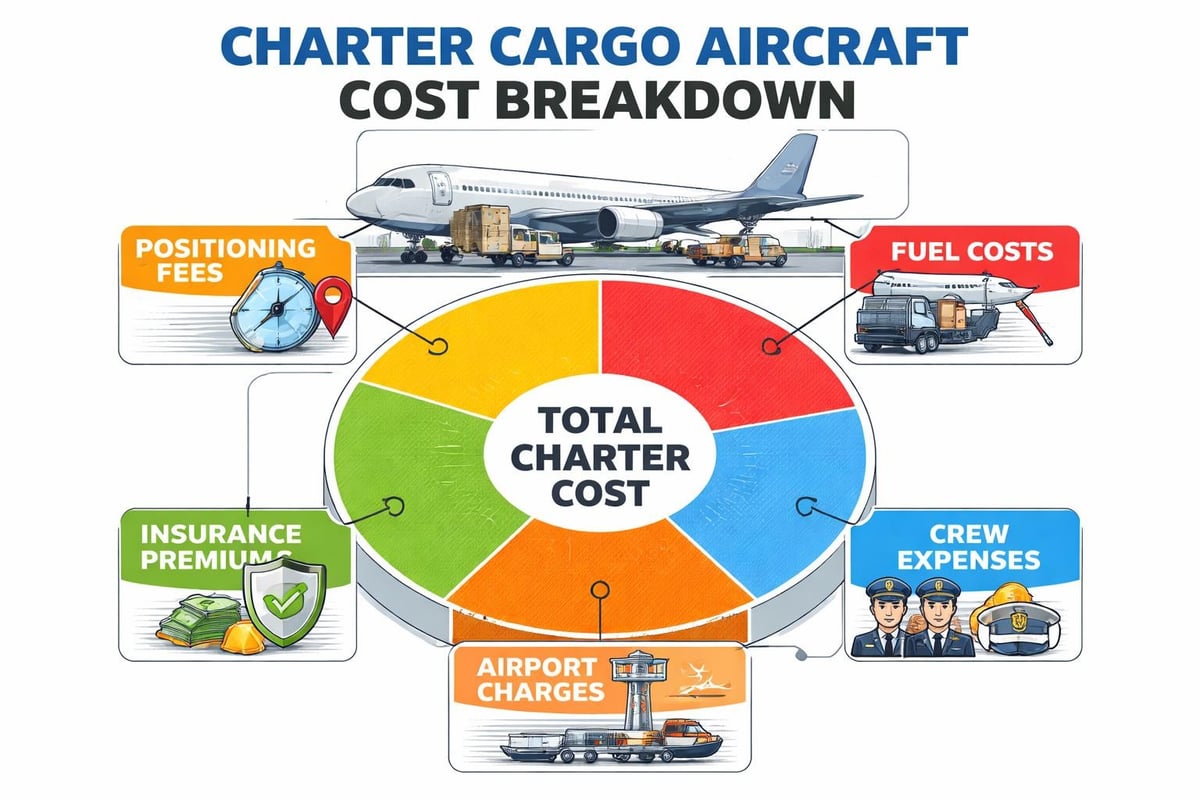
Charter cargo aircraft pricing reflects numerous variables that freight forwarders must understand. Unlike scheduled services with published rates, charter costs depend on specific operational parameters.
Primary cost drivers include:
The economics of charter cargo aircraft improve significantly when freight forwarders maximize payload utilization. A partially loaded aircraft costs nearly as much as a fully loaded one, making full charter solutions more cost-effective than part charter arrangements in many scenarios.
Charter cargo aircraft serve diverse industries with unique transportation requirements that scheduled services cannot adequately address. Understanding these applications helps freight forwarders recognize opportunities where charter solutions deliver maximum value.
The automotive sector relies heavily on charter cargo aircraft for just-in-time manufacturing operations. Production lines cannot afford delays when critical components arrive late, making the reliability and speed of charter services invaluable.
Typical automotive charter scenarios include:
Pharmaceutical companies depend on charter cargo aircraft to maintain temperature-sensitive medications and biological materials throughout transit. Standard commercial cargo spaces often lack the precise environmental controls these products require.
The pharmaceutical industry utilizes charter services for vaccine distribution, clinical trial materials, and emergency medical supplies. These shipments demand not only temperature control but also detailed documentation meeting regulatory standards across multiple jurisdictions.
Electronics manufacturers face unique challenges transporting fragile, high-value components across global supply chains. Charter cargo aircraft provide controlled environments minimizing vibration and environmental exposure that could damage sensitive equipment.
| Industry | Primary Charter Drivers | Typical Shipment Characteristics |
|---|---|---|
| Semiconductors | Production urgency, value density | Small volume, extreme value, clean environment |
| Telecommunications | Network deployment speed | Moderate weight, time-critical installation windows |
| Consumer Electronics | Market launch coordination | Seasonal peaks, synchronized global distribution |
| Industrial Equipment | Installation deadlines | Heavy, oversized, requires specialized handling |
The strategic benefits charter cargo aircraft deliver extend beyond simple transportation. Freight forwarders who understand these advantages can better serve clients facing complex logistics challenges.
Unlike scheduled cargo flights operating on fixed timetables, charter cargo aircraft depart when freight forwarders need them. This flexibility proves crucial when production schedules shift, unexpected shortages occur, or market opportunities require rapid response.
Charter operations eliminate concerns about missed connections, schedule changes, or capacity limitations that plague commercial cargo services. The aircraft departs with your cargo, following routes optimized for your specific requirements rather than airline network economics.
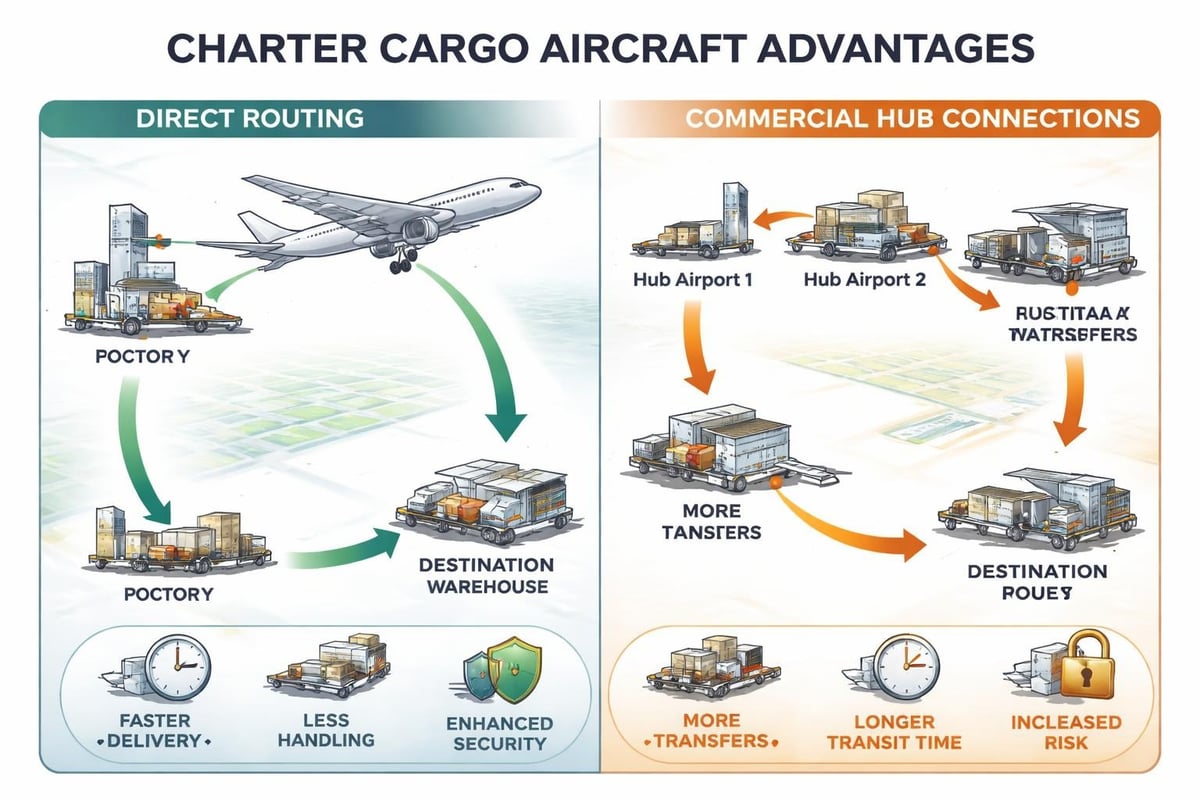
Charter cargo aircraft fly directly between origin and destination, avoiding the hub-and-spoke routing commercial airlines employ. This direct approach reduces transit time, minimizes handling, and decreases the risk of damage or loss.
Consider a shipment from Stuttgart to Bangalore. Commercial routing might involve:
Charter cargo aircraft complete the same movement in a single 9-hour flight with reduced handling touchpoints.
Exclusive aircraft use ensures freight forwarders maintain complete visibility and control over valuable shipments. The cargo never mixes with other freight, eliminating risks associated with mishandling or misrouting.
This security becomes particularly important for:
Modern charter cargo aircraft operations increasingly depend on sophisticated technology platforms that enhance efficiency, transparency, and customer experience. The traditional model of phone calls and email exchanges has given way to integrated digital systems.
Advanced platforms employ artificial intelligence to analyze thousands of variables when matching shipment requirements with available aircraft. These systems consider payload capacity, range limitations, airport infrastructure, crew availability, and regulatory constraints simultaneously.
The matching process evaluates not just whether an aircraft can physically accommodate cargo, but whether it represents the optimal solution considering cost, timing, and operational factors. This optimization delivers better outcomes than manual broker searches while completing the analysis in seconds.
Contemporary charter cargo aircraft operations provide real-time shipment tracking that gives freight forwarders and their clients unprecedented visibility. GPS-enabled aircraft positions update continuously, whilst automated notifications alert stakeholders to departure, arrival, and status changes.
This transparency builds confidence and enables proactive exception management. When weather delays affect operations, freight forwarders receive immediate alerts allowing them to update clients and adjust downstream logistics accordingly.
Digital platforms automate much of the documentation burden associated with international air cargo charter. Systems generate air waybills, dangerous goods declarations, customs documentation, and compliance certifications based on shipment parameters.
This automation reduces errors, accelerates processing, and ensures regulatory compliance across diverse jurisdictions. The technology maintains audit trails documenting every transaction and modification, supporting quality management and dispute resolution.
Choosing the right partner for charter cargo aircraft services significantly impacts operational success. Freight forwarders should evaluate potential providers against multiple criteria beyond simple pricing considerations.
Safety must remain the paramount consideration when selecting charter cargo aircraft operators. Understanding the FAA's guidance on chartering aircraft helps freight forwarders verify operator credentials and recognize potential concerns.
Key safety indicators include:
Reputable operators willingly share safety information and welcome scrutiny of their operational standards. Reluctance to provide documentation should raise immediate concerns.
Operators maintaining diverse fleets offer greater flexibility addressing varied shipment requirements. A provider with multiple aircraft types can match solutions precisely to cargo characteristics rather than forcing freight forwarders to adapt shipments to available capacity.
Fleet availability matters equally. Operators with limited aircraft may struggle to accommodate urgent requests or provide backup solutions when mechanical issues affect scheduled flights.
Global operations require charter cargo aircraft providers with worldwide operational capability. This includes not just aircraft range, but established relationships with ground handlers, customs brokers, and service providers across key markets.
Providers with robust infrastructure deliver advantages including:
Modern freight forwarding demands technology platforms that integrate seamlessly with charter cargo aircraft providers. The ability to request quotes, track shipments, and manage documentation through unified systems improves efficiency and reduces administrative burden.
Platforms like those specializing in freight forwarding streamline operations by connecting multiple providers through standardized interfaces. This integration eliminates redundant data entry whilst providing comprehensive visibility across the transportation network.
The charter cargo aircraft industry continues evolving as technology advances and market demands shift. Freight forwarders who understand emerging trends can position themselves advantageously for future opportunities.
Environmental considerations increasingly influence charter cargo aircraft operations. Operators are adopting fuel-efficient aircraft, implementing carbon offset programs, and exploring sustainable aviation fuel alternatives.
Freight forwarders face growing pressure from clients to demonstrate environmental responsibility. Selecting charter providers with credible sustainability programs helps meet these expectations whilst supporting broader industry transformation.
The charter cargo aircraft market is transitioning toward digital marketplace models that increase transparency and efficiency. These platforms aggregate capacity from multiple operators, enabling freight forwarders to compare options and book services through unified interfaces.
This marketplace evolution parallels transformations in other industries where digital platforms disrupted traditional broker-dominated models. The result: improved pricing transparency, faster booking cycles, and enhanced service quality.
While fully autonomous cargo aircraft remain years away from commercial deployment, automation is advancing rapidly across aviation operations. Enhanced autopilot systems, automated loading equipment, and AI-powered route optimization already improve charter cargo aircraft efficiency.
Future developments will likely include:
Charter cargo aircraft operations have become indispensable for businesses requiring flexible, reliable air freight solutions that scheduled services cannot adequately provide. Success demands understanding regulatory requirements, operational capabilities, and technology platforms that transform traditional charter processes into streamlined digital workflows. CharterSync combines intelligent automation with dedicated expertise to deliver fast, reliable charter solutions that help freight forwarders access global aircraft instantly, streamline bookings, and optimize every shipment with AI-powered matching and comprehensive support.

.png)