.png)
In 2026, businesses face unprecedented logistics challenges as global supply chains accelerate and shift. The need for speed, flexibility, and reliability has never been greater, making charter freight services the essential link for organisations demanding agile transport solutions. This guide offers clarity on charter freight services, helping you navigate the latest trends, service options, and innovations. Discover how customisation, time-sensitivity, and global reach can transform your supply chain, providing a real competitive edge. Ready for actionable insights and expert advice? Explore this essential guide to make confident, informed logistics decisions for the year ahead.
Charter freight services are transforming how businesses move goods in 2026. As global supply chains become more complex, companies increasingly rely on bespoke logistics solutions to meet tight deadlines and unique requirements. Understanding these services is essential for making informed choices in a fast-moving logistics landscape.
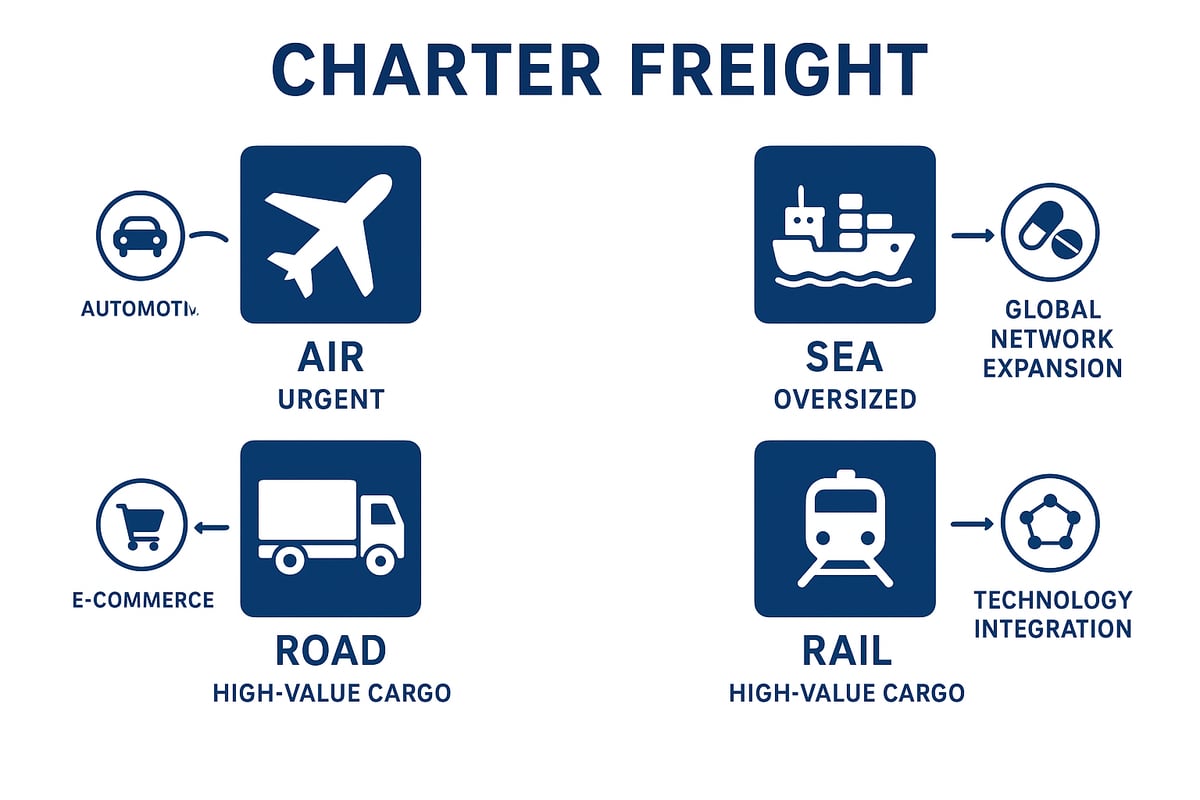
Charter freight services involve the exclusive hire of transport assets, such as aircraft, ships, lorries, or trains, for a specific shipment. Unlike scheduled freight, which operates on fixed routes and timetables, charters offer direct, tailored solutions. Modes include air charters for time-sensitive parts, sea charters for bulk or out-of-gauge cargo, and dedicated road or rail options. For example, an automotive manufacturer might use a dedicated aircraft to deliver critical components overnight. Charter freight services play a growing role in global supply chains, offering flexibility and control when it matters most.
The core advantage of charter freight services lies in their flexibility. Businesses can schedule departures and routes to fit exact needs, avoiding the constraints of fixed timetables. This is vital for transporting time-sensitive or sensitive goods that cannot wait for scheduled services. Customised solutions address unique cargo requirements, from oversized machinery to high-value electronics. The risk of delay is significantly reduced, as shipments are not subject to third-party stops or capacity shortages. For instance, perishable goods can be delivered during supply chain disruptions, safeguarding product integrity and customer satisfaction.
A diverse range of industries benefit from charter freight services. The automotive sector relies on charters for just-in-time delivery of critical parts. Pharmaceutical companies use them for temperature-controlled shipments of vaccines and medicines. High-tech and energy sectors trust charters for sensitive or oversized equipment. Event logistics, such as concerts, sports, and exhibitions, require precise timing and handling. Humanitarian aid and disaster relief depend on rapid, reliable transport during crises. E-commerce and retail turn to charters during peak seasons to meet surging demand. In fact, leading providers have completed over 100 charter flights during global emergencies, demonstrating the resilience and adaptability of these services.
When comparing charter freight services to scheduled freight, several distinctions emerge. Charters offer speed, reliability, and exclusivity, making them ideal for urgent or specialised shipments. Scheduled freight is generally more cost-effective for routine or non-urgent cargo but lacks flexibility. Charter services can be more expensive due to dedicated assets and operational complexity. Availability may be limited during peak periods. However, when scheduled capacity is unavailable or unsuitable, charter solutions provide a critical alternative. For example, during a supply chain disruption, a charter may be the only way to deliver essential goods on time.
| Feature | Charter Freight Services | Scheduled Freight |
|---|---|---|
| Speed | High | Moderate |
| Flexibility | Custom | Fixed |
| Cost | Higher | Lower |
| Availability | Limited | Regular |
| Use Cases | Urgent, special cargo | Routine shipments |
By 2026, charter freight services have expanded their reach across continents, integrating seamlessly with multimodal and intermodal transport solutions. Major providers now offer round-the-clock global operations, ensuring shipments move swiftly between air, sea, road, and rail networks. Digital platforms make charter services more accessible and efficient, enabling real-time booking and tracking. Industry trends, such as e-commerce growth and sustainability initiatives, continue to shape the sector’s evolution. For more on current industry trends and how technology is reshaping the market, see the Top 7 Trends Reshaping the Cargo Aircraft Charter Service Market. This global expansion supports businesses seeking reliable, agile logistics solutions anywhere in the world.
Charter freight services in 2026 offer an unparalleled range of options for businesses seeking speed, control, and flexibility. Whether you need a dedicated aircraft for urgent deliveries, a full vessel for project logistics, or specialised vehicles for sensitive goods, the right solution is available. Let us explore the main service types and how digital innovation is reshaping the landscape.
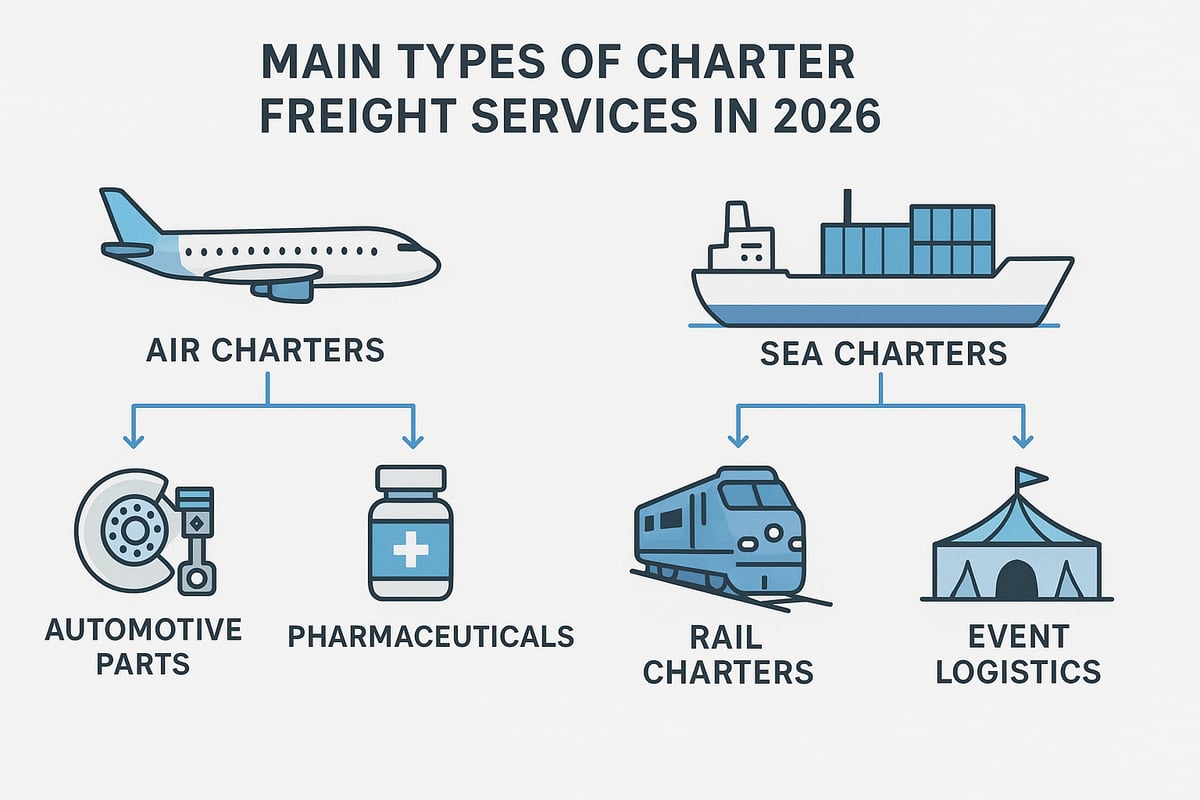
Air charter solutions provide the fastest and most flexible way to move goods globally. Full aircraft charters are ideal for urgent, large, or sensitive shipments that cannot wait for scheduled flights. For critical, high-value items, on-board courier (OBC) services ensure hand-carry delivery and full chain of custody.
Pharmaceutical shipments often require strict temperature control, and leading providers offer tailored aircraft matching to meet these needs. With 24/7 support and centralised contact points, air charter freight services minimise delays and maximise reliability. For a deeper look at these offerings, see full charter freight solutions.
Ocean and sea charters are essential for transporting bulk, oversized, or out-of-gauge cargo. Full vessel and part-vessel charters cater to project logistics, such as moving heavy energy sector equipment or large-scale construction materials.
These charter freight services are often integrated with land and rail transport, providing end-to-end solutions for complex supply chains. Flexibility in routing and scheduling allows businesses to bypass congested routes or respond to market changes swiftly. Sea charters are a cornerstone for industries with unique cargo demands and tight deadlines.
For domestic and cross-border haulage, road and rail charters offer dedicated lorries or entire trains. This approach is especially valuable in last-mile and regional distribution, where scheduled transport may fall short.
Charter freight services in road and rail are frequently used to resolve automotive supply chain emergencies, ensuring that production lines do not halt. They also benefit high-volume shipments or goods with transport restrictions, providing direct routing and enhanced security. Having a dedicated vehicle or train means your cargo is prioritised from origin to destination.
Modern charter freight services extend beyond standard transport. Providers now offer temperature-controlled, hazardous, and high-security shipments, ensuring even the most sensitive cargo arrives safely.
White glove and final mile delivery options cater to delicate or high-value goods such as medical equipment or sports technology. Event and exhibition logistics require precise timing and careful handling, making specialised charters indispensable. These value-added services provide peace of mind and a competitive edge in industries with unique requirements.
Digital transformation is revolutionising charter freight services. Intelligent booking platforms enable real-time tracking, automated documentation, and AI-powered quoting, all from a single dashboard.
With features like automated request submission and smart aircraft matching, customers experience faster, more accurate service. Transparency improves as clients can monitor shipments, manage documents, and receive updates instantly. The result is a seamless end-to-end process, reducing manual intervention and human error.
CharterSync’s AI-powered platform is at the forefront of innovation in charter freight services. Freight forwarders gain instant access to a global network of aircraft, with accurate quoting and real-time tracking built in.
Industry expertise spans automotive, pharmaceutical, and high-tech shipments, combining automation with dedicated human support. This ensures reliability and transparency throughout the shipping process. For example, a time-critical automotive part can be matched with the most suitable aircraft using AI, ensuring delivery within hours and minimising downtime.
Selecting the right partner for charter freight services can make the difference between a seamless supply chain and costly disruptions. With the global logistics landscape evolving rapidly, it is crucial to assess providers on multiple fronts. Below, we break down the essential criteria for making an informed choice.
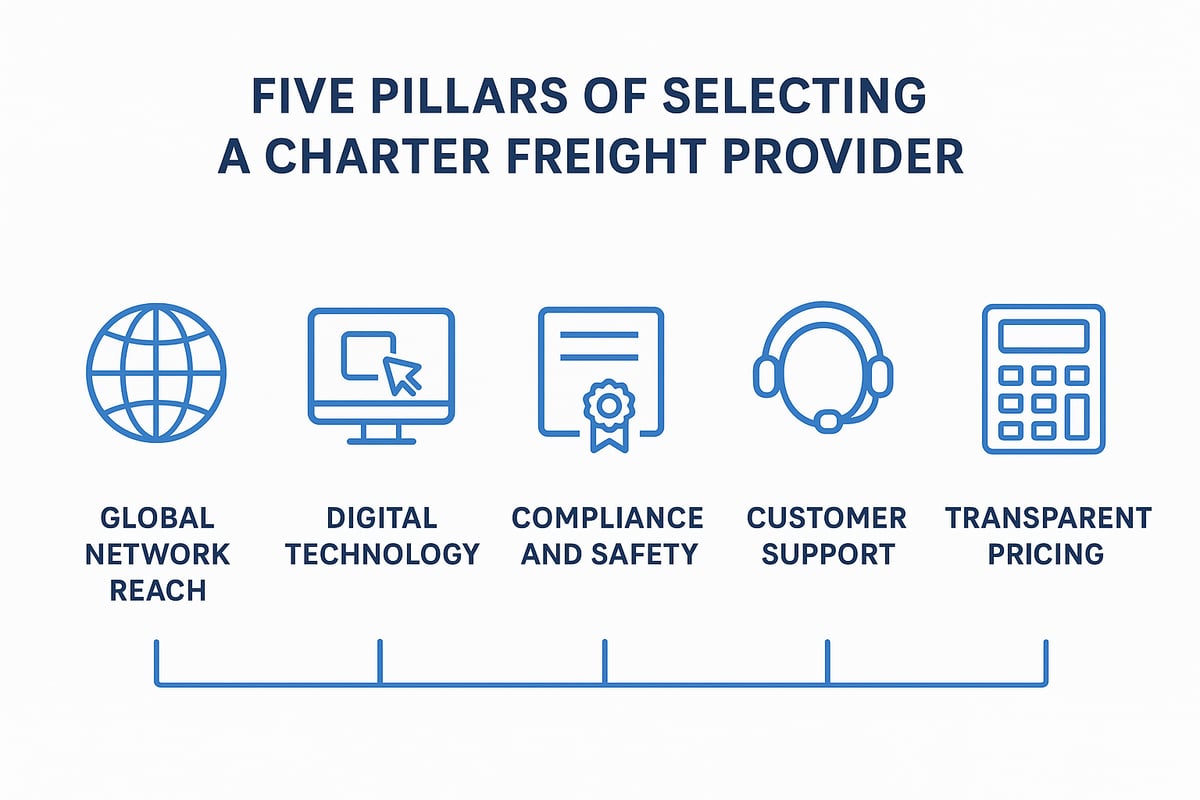
Begin by evaluating each provider’s global reach and operational support. Leading charter freight services should offer 24/7 availability and a diverse fleet to handle a wide range of cargo types. Look for proof of experience in managing similar shipments, especially during market disruptions. For instance, providers that have completed more than 100 successful charters in crisis periods demonstrate resilience and reliability.
Consider whether the provider can handle both standard and specialised cargo, such as oversized or time-sensitive goods. A strong network ensures your shipment reaches even the most remote destinations, reducing the likelihood of delays.
The use of advanced technology is now a defining factor for charter freight services. Automated platforms for quoting and booking streamline the process, while real-time visibility tools enable you to monitor shipments at every stage. Ensure your chosen provider leverages AI-powered systems for optimal aircraft or vehicle matching, which can significantly reduce transit times and costs.
For a deeper understanding of how technology is transforming air cargo charter, explore Air cargo charter technology trends. Centralised contact points and instant response rates are increasingly expected, setting industry leaders apart from the rest.
Regulatory compliance and safety are non-negotiable when choosing charter freight services. Confirm that your provider holds relevant certifications and insurance, especially for high-value, hazardous, or temperature-sensitive shipments. Experience with dangerous goods and complex regulatory requirements is essential for sectors such as pharmaceuticals and high-tech.
Transparent documentation and clear audit trails help maintain compliance and provide peace of mind. Ask for evidence of successful past operations in regulated industries to ensure your cargo will be handled according to the highest standards.
Effective customer support is a hallmark of top-tier charter freight services. Look for dedicated account management and 24/7 assistance, ensuring you have a single point of contact throughout the journey. Regular, proactive updates on your shipment’s status are invaluable, especially for time-critical freight.
Case studies highlight the importance of rapid response, such as when urgent automotive components must reach a production line without delay. Reliable communication minimises risk and keeps your supply chain moving smoothly.
Transparent pricing is a key differentiator for charter freight services. Insist on clear, itemised quotes that break down every cost, avoiding surprises later on. Leading providers offer side-by-side comparisons of charter options and detail any value-added services available, such as customs clearance, warehousing, or final mile delivery.
For example, a transparent pricing breakdown from a reputable platform enables you to weigh your options confidently. Value-added services can streamline your logistics, providing a single solution for even the most complex shipping needs.
Navigating the booking process for charter freight services in 2026 requires clarity and precision. This step-by-step guide breaks down each stage, making it easy to secure the right solution for your logistics needs. Whether you are new to charter freight services or refining your approach, these steps will help you achieve a seamless experience.
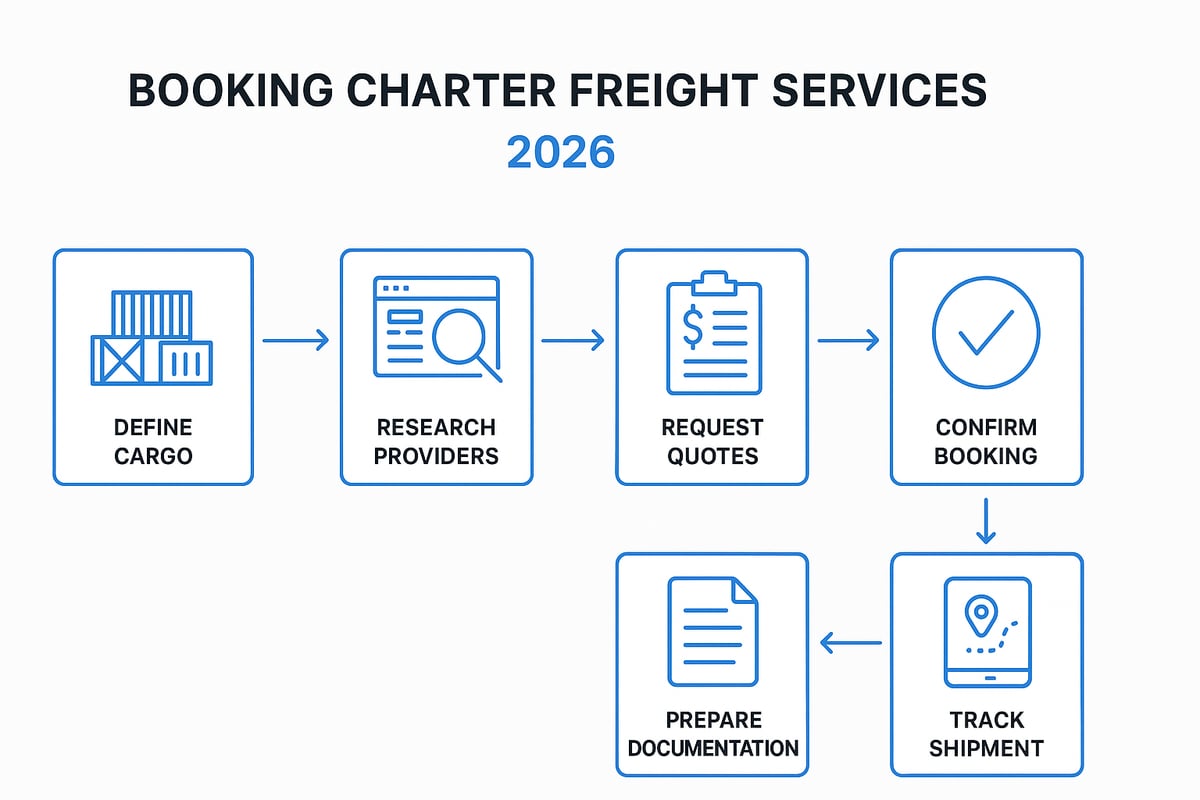
Start by gathering all critical details about your shipment. Identify the weight, dimensions, and type of goods you need to move. Specify if your cargo is urgent, hazardous, high-value, or requires temperature control. Think about handling needs, such as packaging, security, or special permits.
For example, if you are shipping automotive batteries, ensure compliance with dangerous goods regulations. Clear, detailed information is essential, as it enables charter freight services to recommend the safest and most efficient solutions. By understanding your requirements from the outset, you lay the foundation for a successful charter.
Use digital platforms to access a global network of operators offering charter freight services. Explore provider credentials and track records, focusing on experience with similar cargo and regions. Look for customer reviews and testimonials to gauge reliability.
Evaluate each provider’s platform, noting features such as instant quoting, 24/7 support, and real-time tracking. Create a shortlist of providers that align with your cargo needs and operational priorities. Careful research at this stage helps you avoid costly surprises and ensures your shipment is in capable hands.
Submit detailed requests using automated systems provided by your shortlisted charter freight services. Include all shipment details to receive accurate and tailored quotes. Leading platforms offer side-by-side comparisons, highlighting aircraft suitability, timing, costs, and loadability.
If your shipment is urgent or requires special handling, consider providers with on-board courier (OBC) solutions for the fastest delivery. Analysing each quote’s breakdown empowers you to make informed choices, balancing speed, reliability, and cost. Prioritise transparency and responsiveness during this step.
Once you have selected the most suitable option, confirm the availability of the required aircraft or vehicle with your chosen charter freight services provider. Carefully review contract terms, insurance coverage, and compliance documentation before finalising the booking.
For high-profile shipments, such as a product launch requiring a dedicated aircraft, ensure all parties are aligned on schedules and expectations. Early confirmation is crucial to securing capacity, especially during peak seasons or market disruptions. Clear communication at this stage prevents delays.
Coordinate with your charter freight services provider to arrange packing, labelling, and preparation of regulatory paperwork. Ensure all necessary permits and customs documents are ready before pick-up. Use digital tools for efficient document management and to avoid errors.
Schedule collection and supervise the loading process if possible. Proper preparation minimises the risk of delays or compliance issues. Maintaining close contact with your provider ensures a smooth transition from warehouse to aircraft, vessel, or vehicle.
Monitor your shipment in real time using the digital dashboards provided by your charter freight services platform. Receive proactive updates on status, location, and estimated arrival times. Stay alert to any exceptions or delays, and work closely with your provider to resolve issues quickly.
Upon delivery, confirm the shipment’s condition and complete final documentation for your records. Continuous tracking and communication throughout the journey enhance transparency and give you peace of mind, ensuring a successful end-to-end experience.
Understanding how pricing works in charter freight services is crucial for making informed decisions. Costs can fluctuate based on several variables, and transparency is key to avoiding unexpected charges. Let us explore the main factors that shape pricing, how quotes are structured, and what strategies can help you achieve the best value.
The price of charter freight services is shaped by the type of aircraft or vessel required, route distance, and the nature of your cargo. Large or heavy shipments demand more capacity, impacting overall costs. Special handling, such as temperature control or hazardous goods, also raises the price.
Market demand and seasonality play a significant role. Rates often spike during global disruptions or high-demand periods. For instance, as highlighted in CERAWEEK Shippers turn to longer-term leases as tanker supply tightens, vessel shortages can result in higher charter rates and a shift towards long-term agreements. Staying informed about these trends is essential for effective budgeting when using charter freight services.
A transparent quote is fundamental when engaging charter freight services. Leading providers now deliver detailed, itemised quotes, breaking down all relevant charges, from fuel to crew and handling fees. This clarity helps you avoid hidden costs and provisional estimates.
Platforms increasingly provide loadability analysis, showing how your cargo fits specific aircraft or vessels. For a deeper dive into how expedited air charters are priced and compared in today's market, see Air Freight Trends: Charters & Expedite Models. Side-by-side comparisons empower you to choose the most efficient and cost-effective options for your needs.
You can optimise costs in charter freight services by considering part-charter options or consolidating shipments. Smart routing, such as direct paths or combining different modes of transport, can further enhance efficiency.
Charter becomes most cost-effective for urgent, oversized, or high-value cargo, especially when scheduled capacity is unavailable. Analysing your supply chain needs and comparing against scheduled freight helps identify when a charter solution delivers genuine value. Always weigh urgency, cargo specifics, and prevailing market rates before committing.
Typical price ranges for charter freight services vary widely. For air charters, short-haul urgent flights can start from several thousand pounds, while long-haul or specialist shipments may reach six figures. Sea and road charters also fluctuate, with bulk loads or oversized cargo demanding premium rates.
Case studies reveal that automotive charters often cost less per kilogram than pharmaceutical due to less stringent handling requirements, although bespoke needs will influence final pricing. Ultimately, quote-based pricing ensures that each shipment reflects its unique requirements and market conditions, offering flexibility and transparency for every client.
The landscape of charter freight services is evolving at an unprecedented pace, with 2026 marking a new era for efficiency, sustainability, and technological advancement. Businesses are navigating a rapidly changing environment where innovation is key to staying competitive. Let us explore the four pivotal trends reshaping the future of charter freight services.
Charter freight services are harnessing the power of digital tools to streamline every aspect of the logistics process. AI-powered platforms are now enabling instant quoting, automated booking, and smart cargo-to-aircraft matching, which reduces manual errors and accelerates decision-making.
Real-time tracking and centralised dashboards offer complete transparency for shippers and freight forwarders. According to recent Air Charter Services Market Size | Industry Trends [2034] data, the market is expected to grow as technology adoption rises, making digital transformation central to the industry's future. With these innovations, charter freight services are becoming faster, more reliable, and easier to manage than ever before.
Environmental responsibility has become a driving force in the charter freight services sector. Providers are investing in fuel-efficient aircraft and alternative fuels to reduce emissions. Carbon offsetting programmes are being integrated into booking systems, allowing businesses to track and minimise their carbon footprint.
Sustainability initiatives also include optimised route planning, which helps decrease unnecessary mileage and fuel consumption. As regulations tighten and customer expectations shift, charter freight services that prioritise green logistics are gaining a competitive edge. These efforts are transforming the sector into a model for sustainable supply chains.
One of the most significant trends in charter freight services is the seamless integration of air, sea, road, and rail transport. Multimodal solutions enable businesses to leverage the strengths of each mode, ensuring speed, cost-efficiency, and flexibility.
Digital platforms now support unified tracking and scheduling across different transport types, giving customers end-to-end visibility over their shipments. This approach not only improves supply chain resilience but also helps charter freight services adapt quickly to disruptions or capacity constraints. As a result, companies can achieve greater agility in their logistics strategies.
The regulatory environment for charter freight services is becoming more complex, with new standards for cargo safety, data protection, and international compliance. Providers must stay ahead of changes to ensure shipments meet all legal and security requirements.
Cybersecurity is an increasing concern as digital systems become more prevalent, prompting investment in advanced data protection measures. For sensitive cargo such as pharmaceuticals and high-tech equipment, adherence to strict regulations is critical. By focusing on compliance and security, charter freight services are building trust and reliability for clients worldwide.
Now that you've got a clear understanding of how charter freight services can transform your logistics in 2026, why not see how it works in practice? With CharterSync's intelligent automation and expert support, you can streamline your air cargo operations and make every shipment count—no matter how urgent or complex. If you're ready to explore smarter, more reliable charter solutions tailored to your business, I encourage you to request a demo and experience firsthand how CharterSync can help you stay ahead in this fast moving industry.

.png)