.png)
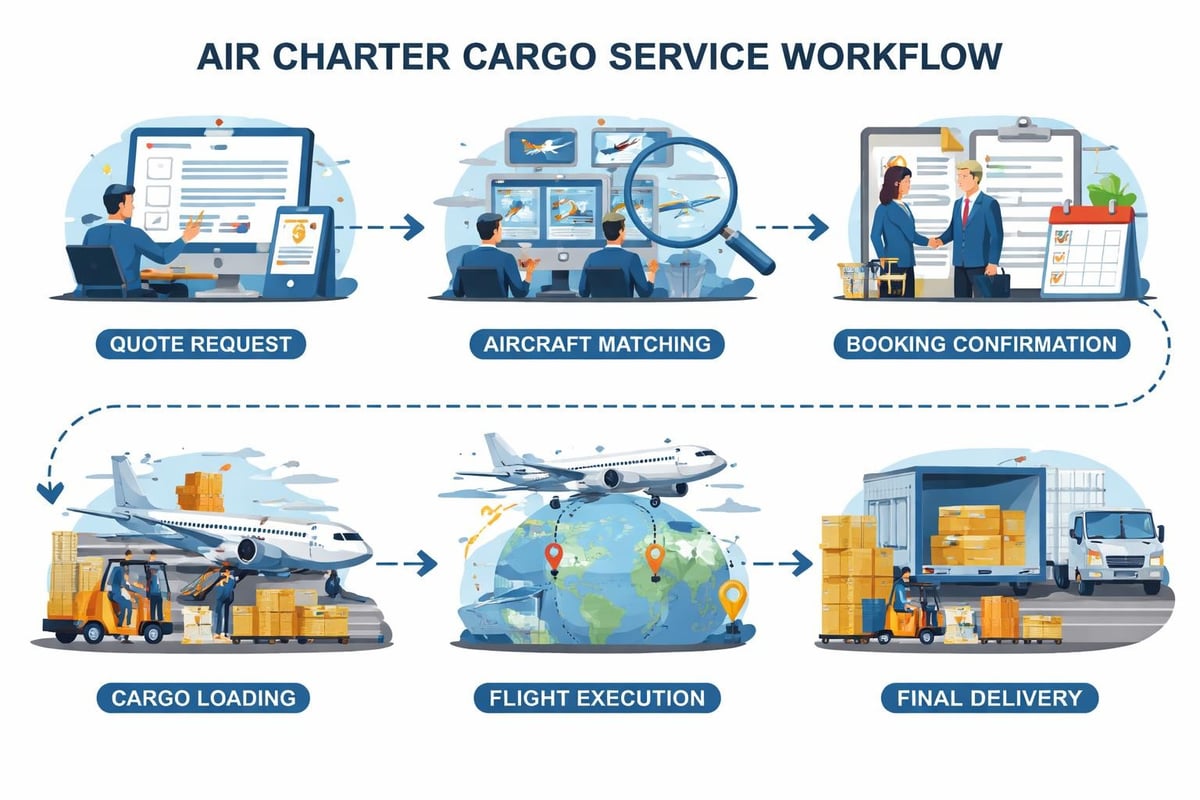
Global commerce demands speed, flexibility, and reliability. When standard shipping routes cannot meet urgent deadlines or handle specialized cargo requirements, businesses turn to dedicated air charter solutions. An air charter cargo service provides customized freight transportation using chartered aircraft, offering unparalleled control over timing, routing, and handling procedures. This tailored approach to logistics enables companies to respond to critical situations, from emergency medical equipment deliveries to automotive production line support, whilst maintaining complete visibility throughout the supply chain.
An air charter cargo service operates fundamentally differently from scheduled freight services. Rather than conforming to predetermined flight schedules and routes, charter operations create bespoke solutions for individual shipments. This flexibility proves invaluable when dealing with time-sensitive materials, oversized equipment, or cargo requiring specialized handling.
The charter model allows freight forwarders to select specific aircraft types, departure times, and direct routing between origin and destination points. Unlike commercial freight services that consolidate shipments from multiple clients, a dedicated charter can transport a single customer's cargo exclusively, eliminating transfer delays and reducing handling risks.
Businesses utilizing air charter cargo service benefit from several distinct operational advantages:
The air cargo charter market is experiencing significant growth, driven by globalization and expanding e-commerce demands. This expansion reflects increasing recognition of charter services' value proposition across multiple industries.
Different sectors leverage air charter cargo service for distinct operational requirements. Understanding these industry-specific applications illuminates the versatility of charter solutions.
The pharmaceutical industry demands rigorous temperature-controlled freight transportation for medications, vaccines, and biological materials. Charter services provide climate-controlled aircraft with continuous monitoring, ensuring product integrity throughout transit. When standard cold chain logistics cannot guarantee timing or temperature compliance, dedicated charters become essential.
Critical pharmaceutical applications include:
Just-in-time manufacturing principles make the automotive sector particularly dependent on reliable logistics. Production line stoppages due to missing components cost manufacturers substantial sums hourly. An air charter cargo service provides insurance against such disruptions, delivering critical parts directly to assembly facilities.
| Automotive Application | Charter Benefit | Time Savings |
|---|---|---|
| Emergency part delivery | Prevents line shutdown | 24-48 hours |
| New model launch support | Coordinates global rollout | 3-5 days |
| Prototype transportation | Maintains confidentiality | 12-24 hours |
| Tooling and equipment moves | Reduces setup delays | 2-4 days |
Technology companies shipping sensitive electronics, semiconductors, or proprietary equipment require secure, vibration-controlled transport. Charter services accommodate these requirements whilst providing rapid delivery for product launches, trade show exhibits, or critical infrastructure deployments.
The aerospace and defense sectors also rely heavily on charter operations for transporting classified materials, satellite components, and mission-critical equipment under strict security protocols outlined in Department of Defense air transportation requirements.
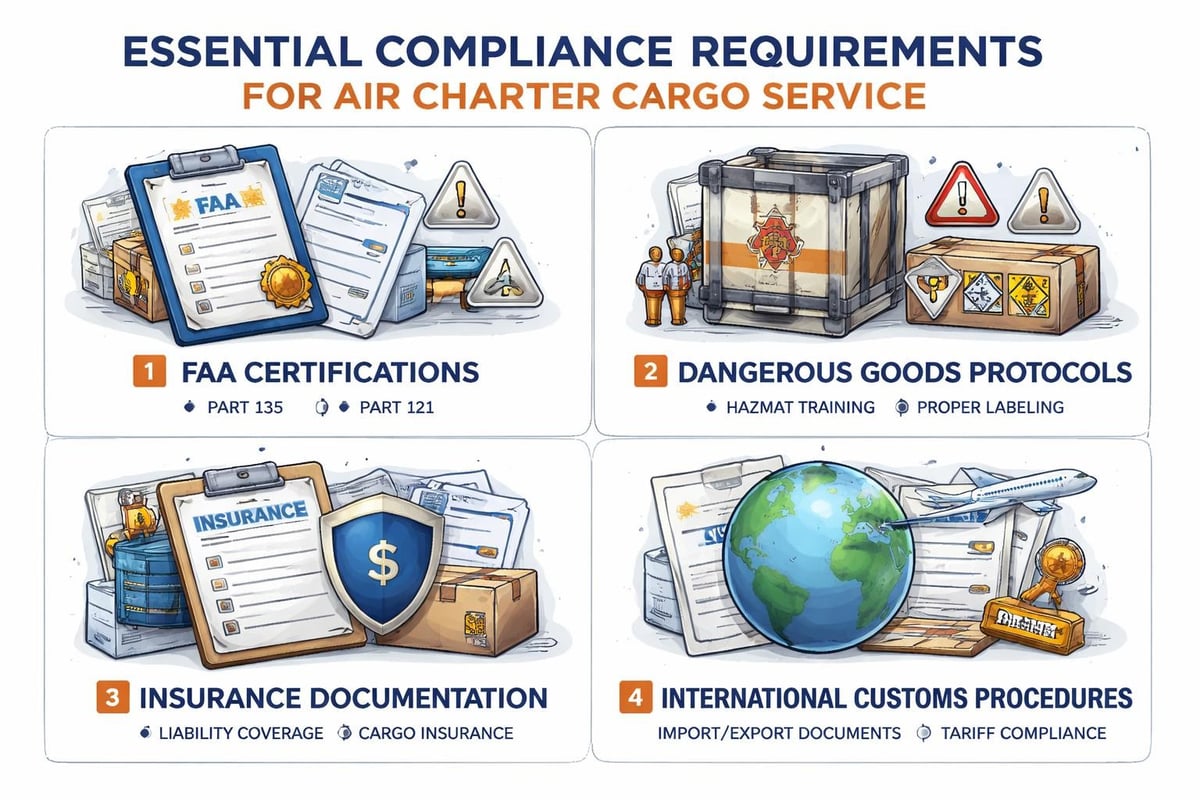
Operating an air charter cargo service demands adherence to comprehensive regulatory frameworks. In the United States, Part 135 operators must meet specific FAA requirements governing certifications, maintenance programmes, and crew qualifications. These regulations ensure safety standards whilst enabling flexible charter operations.
Many charter requests involve hazardous materials requiring specialized handling and documentation. Understanding dangerous goods regulations in air charter ensures compliance with IATA and ICAO standards. Proper classification, packaging, labeling, and documentation prevent regulatory violations whilst maintaining safety.
Charter operators must maintain current dangerous goods training for personnel and implement compliant handling procedures. This expertise proves particularly valuable for clients shipping lithium batteries, chemicals, compressed gases, or other regulated materials.
Federal regulations governing charter flights establish operational requirements including contract provisions, insurance coverage, and operational limitations. Freight forwarders must understand these regulations when arranging charter services for clients, ensuring legal compliance throughout the transaction.
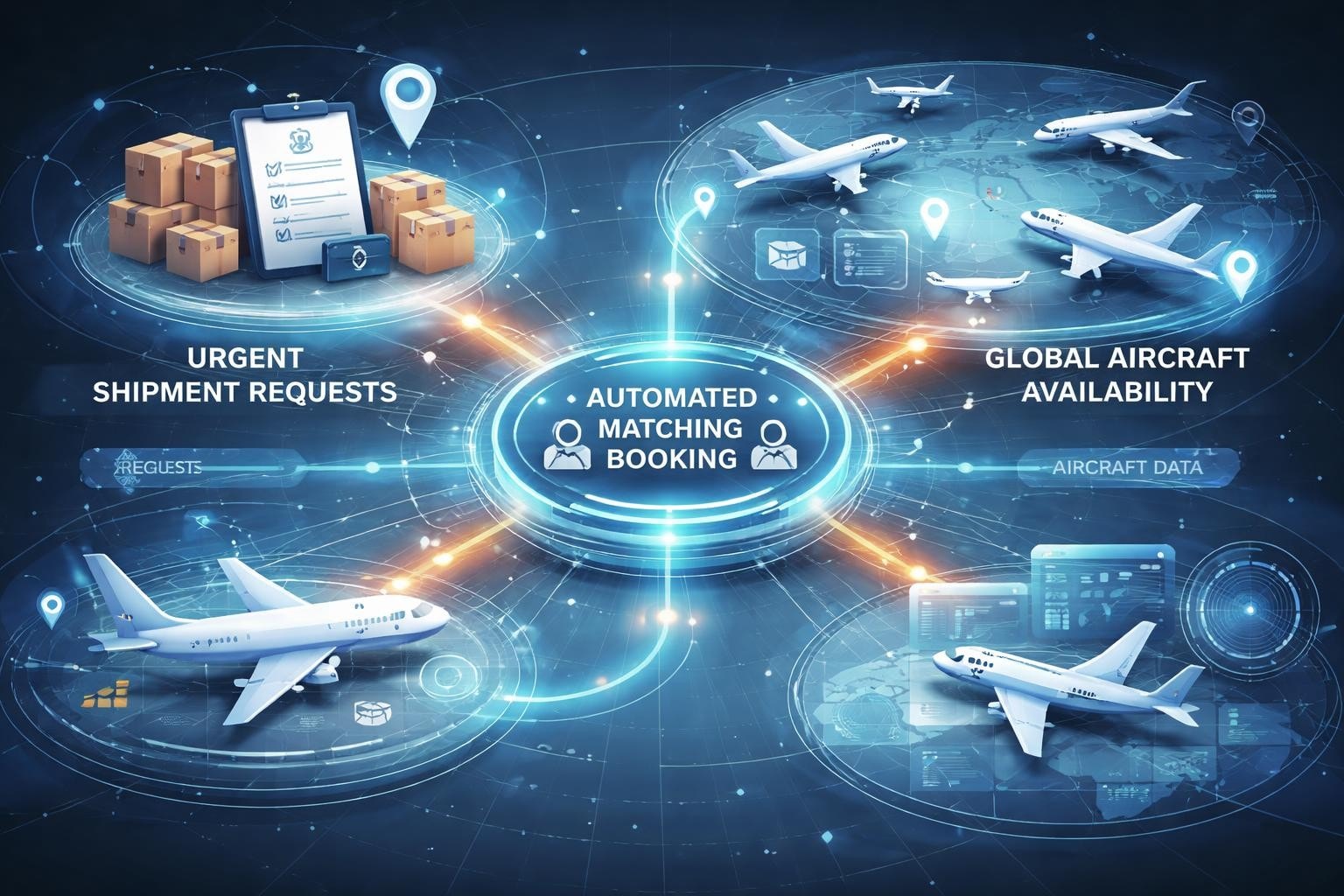
Digital platforms are revolutionizing how businesses access and manage air charter cargo service. Traditional charter booking involved numerous phone calls, manual quoting processes, and limited aircraft visibility. Modern automated systems streamline these workflows significantly.
Advanced platforms utilize artificial intelligence to match cargo requirements with optimal aircraft availability. AI-driven revenue management systems demonstrate how machine learning optimizes cargo operations through predictive analytics and automated decision-making. These technologies reduce booking times from days to minutes whilst improving solution quality.
Smart matching algorithms consider multiple factors simultaneously:
CharterSync's technology platform exemplifies this transformation, combining intelligent automation with human expertise to deliver superior charter solutions. The system provides instant access to global aircraft whilst maintaining dedicated support throughout the booking process.
Modern charter platforms eliminate friction points in traditional booking processes. Automated quoting engines provide accurate pricing within minutes, whilst digital documentation systems reduce paperwork and administrative overhead. Real-time tracking capabilities offer complete visibility from booking confirmation through final delivery.
Digital booking advantages include:
These technological improvements benefit both charter providers and customers, reducing operational costs whilst improving service quality. Freight forwarders gain competitive advantages through faster response times and enhanced client communication.
Air charter cargo service encompasses several distinct operational models, each suited to specific logistics requirements. Understanding these options enables freight forwarders to select optimal solutions for diverse client needs.
Full charter services dedicate an entire aircraft to a single shipment or customer. This approach maximizes control over timing, routing, and handling procedures. Full charters suit large volume shipments, confidential cargo, or situations demanding complete aircraft dedication.
When cargo volume does not justify full aircraft dedication, part charter options provide cost-effective alternatives. Multiple shipments share aircraft capacity, reducing per-kilogram costs whilst maintaining charter service benefits over scheduled freight.
Extremely urgent situations demand immediate action. Next flight out solutions prioritize speed above all considerations, placing cargo on the soonest available aircraft regardless of routing. This premium service addresses critical production needs, emergency equipment replacement, or time-sensitive medical deliveries.
The most secure and time-critical option involves onboard courier services, where a dedicated courier accompanies cargo throughout the journey. This approach ensures continuous custody, expedites customs clearance, and provides real-time shipment updates. High-value electronics, legal documents, and confidential prototypes frequently utilize onboard courier solutions.
| Service Type | Typical Transit Time | Best Application | Relative Cost |
|---|---|---|---|
| Full Charter | 12-48 hours | Large volumes, specialized cargo | High |
| Part Charter | 24-72 hours | Medium volumes, cost optimization | Medium |
| Next Flight Out | 4-24 hours | Extreme urgency, small packages | Very High |
| Onboard Courier | 12-36 hours | High value, security priority | Very High |
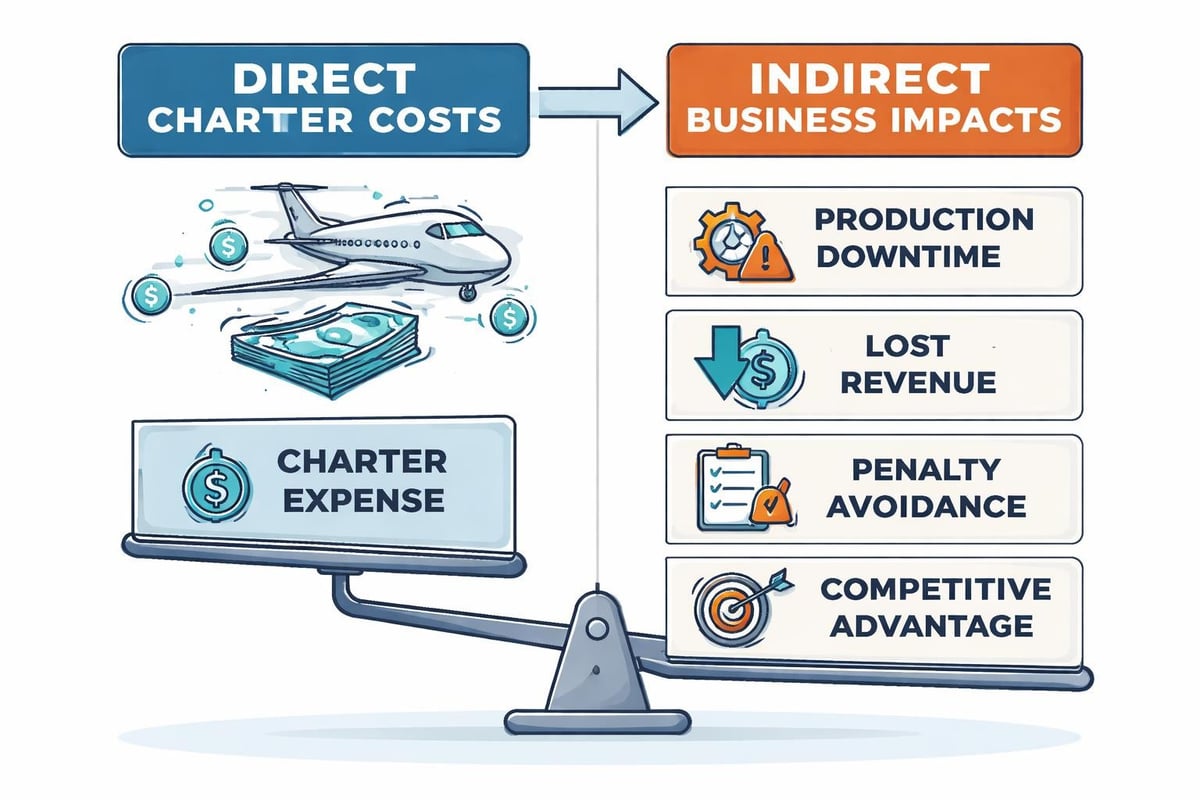
Air charter cargo service commands premium pricing compared to scheduled freight services. However, comprehensive cost analysis reveals substantial value when considering total logistics impact. Direct costs represent only one component of the economic equation.
Charter pricing depends on numerous variables including aircraft type, distance, fuel costs, positioning requirements, and airport fees. Transparent pricing models help freight forwarders accurately quote clients and manage expectations.
Beyond direct charter costs, businesses must consider indirect expenses that charter services mitigate:
When charter services prevent production line stoppages costing £50,000 per hour, a £30,000 charter fee represents exceptional value. Similarly, meeting critical product launch deadlines may generate revenues far exceeding charter expenses.
Sophisticated logistics professionals evaluate charter services through ROI frameworks rather than simple cost comparison. This analysis weighs charter expenses against business impacts including revenue protection, cost avoidance, and competitive positioning.
ROI calculation factors:
Many organizations establish charter service protocols as risk mitigation strategies, accepting higher logistics costs to ensure operational continuity. This approach proves particularly prevalent in automotive, aerospace, and pharmaceutical sectors where supply chain disruptions carry catastrophic consequences.
The air charter cargo service landscape includes numerous providers offering varying capabilities, service levels, and geographic coverage. Freight forwarders must evaluate potential partners carefully to ensure reliable performance and optimal client outcomes.
Aircraft network access determines whether providers can source appropriate aircraft for diverse requirements. Global coverage enables consistent service quality regardless of origin or destination, whilst specialized aircraft access supports unusual cargo dimensions or technical requirements.
Operational expertise separates competent providers from exceptional ones. Experienced charter specialists understand regulatory requirements, customs procedures, and handling protocols across international jurisdictions. This knowledge proves invaluable when navigating complex shipments or time-critical situations.
Technology capabilities increasingly differentiate service providers. Modern platforms offering instant quoting, real-time tracking, and digital documentation streamline operations whilst reducing administrative overhead. Integration capabilities with existing freight forwarding systems enhance workflow efficiency.
Financial stability ensures providers can fulfill commitments and maintain service quality through market fluctuations. Established companies with strong financial foundations provide greater reliability than undercapitalized newcomers.
Professional charter providers establish clear service level agreements defining performance expectations, communication protocols, and contingency procedures. These agreements should specify response times, documentation requirements, and resolution processes for operational issues.
Effective SLAs address:
Transparent SLAs protect both parties whilst establishing clear performance benchmarks. Freight forwarders should insist on comprehensive agreements when establishing charter provider relationships.
The air charter cargo service industry continues evolving rapidly, driven by technological innovation, market demands, and operational improvements. Understanding emerging trends helps freight forwarders anticipate future capabilities and competitive dynamics.
Environmental consciousness increasingly influences logistics decisions. Charter operators are exploring sustainable aviation fuel, carbon offset programmes, and operational efficiency improvements to reduce environmental impact. Clients prioritizing sustainability will favour providers demonstrating environmental stewardship.
Artificial intelligence applications will expand beyond aircraft matching into predictive maintenance, route optimization, and demand forecasting. These capabilities improve operational efficiency whilst reducing costs and enhancing service reliability. Advanced AI cargo systems demonstrate the potential for technology-driven transformation throughout charter operations.
Distributed ledger technologies promise enhanced transparency, security, and efficiency in charter documentation and payment processing. Smart contracts could automate agreement execution, whilst immutable records simplify compliance verification and audit trails.
Emerging technologies including cargo drones and electric vertical takeoff aircraft may complement traditional charter services for specific applications. Short-range, time-critical deliveries particularly suit these new platforms, potentially expanding charter service accessibility.
Freight forwarders maximizing air charter cargo service value develop sophisticated utilization strategies balancing cost, speed, and reliability. These frameworks guide decision-making whilst ensuring appropriate service selection for diverse client requirements.
Establishing clear criteria for charter utilization prevents both overuse and underutilization. Guidelines should consider shipment value, time sensitivity, production impact, and available alternatives.
Charter justification factors:
These criteria provide objective frameworks for charter recommendations, supporting client discussions with data-driven rationale.
Long-term partnerships with reliable charter providers yield significant benefits including preferential pricing, priority aircraft access, and enhanced service flexibility. Regular communication maintains relationship strength whilst providing market intelligence about capacity, pricing trends, and emerging capabilities.
Strategic freight forwarders cultivate relationships with multiple providers across different geographic regions and aircraft types, ensuring backup options and competitive alternatives. This diversification protects against single-provider dependencies whilst maintaining negotiating leverage.
Air charter cargo service represents a critical capability for freight forwarders serving clients with urgent, specialized, or high-value shipping requirements. The combination of operational flexibility, technological innovation, and expert support delivers solutions impossible through standard freight channels. CharterSync transforms charter operations through intelligent automation and dedicated expertise, providing instant access to global aircraft whilst streamlining the entire booking process for superior results across automotive, pharmaceutical, and high-tech sectors.

.png)