.png)
Imagine skipping airport queues and avoiding flight delays, arriving at your destination exactly when you choose. This is the promise of air charter in 2026. More people and businesses are turning to air charter as it becomes increasingly accessible for business trips, leisure escapes, and urgent cargo transport.
The appeal is clear. Air charter offers unmatched flexibility, privacy, and efficiency. Every journey is tailored to your needs, making it a superior alternative to crowded commercial flights.
Ready to unlock the full potential of private aviation? Explore this guide to discover everything about air charter in 2026. You will learn about regulations, service types, aircraft choices, booking steps, costs, and the latest innovations shaping the industry.
Air charter is transforming the way individuals and businesses travel in 2026. Instead of buying a seat on a scheduled flight, air charter lets you hire the entire aircraft for your exclusive use. This model offers a level of privacy and personalisation that traditional airlines cannot match.

Air charter refers to the practice of renting an entire aircraft, giving you full control over the experience. Unlike commercial airlines, which sell individual seats on fixed routes and schedules, air charter allows for customised journeys tailored to your needs. Whether you are flying for business, leisure, or cargo, the flexibility is unmatched.
The main use cases for air charter include:
According to recent estimates, there are around 15,000 business jets available globally, illustrating the scale and growth of air charter demand. For a detailed comparison of this model with traditional airlines, see Air Charter vs. Commercial Flights.
A typical example involves a corporate team chartering a jet for a multi-city roadshow, or a sports team flying directly to an international tournament. These scenarios highlight the customisation and efficiency of air charter.
Air charter is sometimes confused with air taxi services. While both provide on-demand flights, air taxis typically use smaller aircraft for short routes, whereas air charter encompasses a broader range of aircraft and journey types.
| Feature | Air Charter | Air Taxi |
|---|---|---|
| Aircraft Size | Small to large jets | Light aircraft |
| Journey Length | Short to long-haul | Short-haul |
| Customisation | High | Moderate |
| Passenger Count | 1–300+ | 1–6 |
| Use Cases | Business, leisure, cargo | Short business, personal |
In 2026, air charter is more relevant than ever, driven by the rise in global business travel, the need for flexible schedules, and an increased focus on privacy post-pandemic.
The air charter model is built on flexibility and on-demand service. Travellers or companies can select their preferred departure times, destinations, and aircraft, bypassing the constraints of commercial flight timetables.
There are several types of journeys available:
Booking an air charter can be done in several ways. You may contact operators directly, engage with specialist brokers, or use online marketplaces that compare options and provide instant quotes. In recent years, digital platforms have streamlined the booking process, making it quicker and more transparent.
Technology is playing a vital role in air charter today. Automated systems handle everything from aircraft matching to real-time updates, giving customers greater control and insight. Regulatory oversight remains essential, with authorities enforcing strict safety and compliance standards across the industry.
In summary, air charter offers a unique blend of flexibility, privacy, and efficiency, making it a preferred choice for diverse travel and transport needs in 2026.
The world of air charter is shaped by stringent regulations and robust safety standards. These frameworks ensure that every journey, whether for passengers or cargo, adheres to the highest levels of safety and compliance. Understanding the regulatory landscape is crucial for anyone considering air charter in 2026.
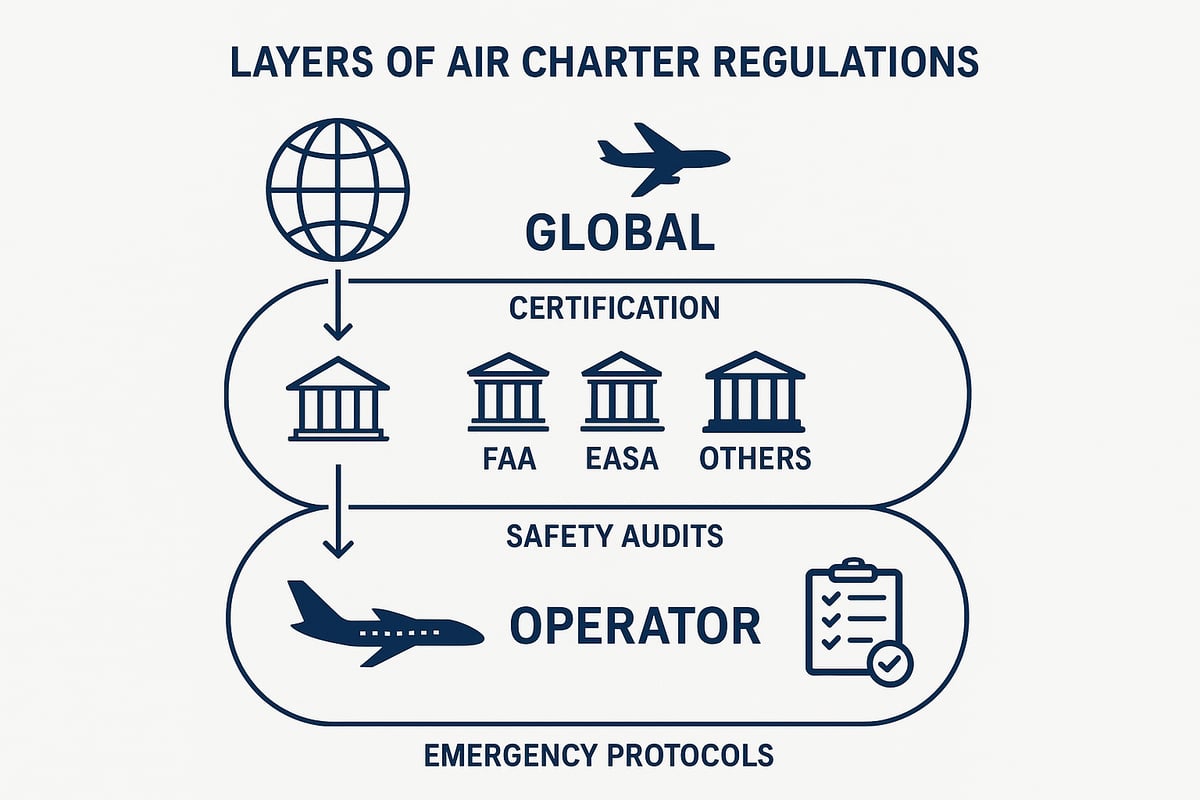
At the heart of the air charter industry lies a comprehensive global regulatory framework. International bodies, such as the International Civil Aviation Organization (ICAO), set foundational standards for safety, airworthiness, and crew qualifications. These standards are then adopted and enforced by national civil aviation authorities.
The primary distinction between air charter and scheduled commercial airlines is flexibility. Air charter operates on a non-scheduled, on-demand basis, which means flight times, routes, and even the type of aircraft can be tailored to client needs. Despite this flexibility, safety requirements remain uncompromising.
Across the globe, all air charter operators must comply with strict maintenance protocols and ensure that aircraft undergo regular inspections. Crew members are required to meet rigorous training and licensing standards. Operational procedures, including flight planning and emergency preparedness, are closely monitored.
Passenger, cargo, and air ambulance charters all fall under similar regulatory scrutiny. This ensures that, regardless of the mission, safety and operational excellence are never compromised. The result is a harmonised approach that supports the growing demand for air charter services worldwide.
While global standards provide the baseline, regional and national regulations add further layers of oversight. In the United States, the Federal Aviation Administration (FAA) governs air charter under Part 135 regulations, which dictate operator certification, flight crew duty limits, and maintenance requirements. Recent efforts by the FAA to address unauthorised charters have led to increased enforcement and updated compliance measures. For more on the FAA’s evolving approach, see FAA Ensuring Safe Public Charter Flights, Exploring Future Solutions for All Flyers.
In Europe, the European Union Aviation Safety Agency (EASA) oversees charter operations, with individual countries often imposing additional requirements. This dual-layer system ensures robust oversight from both regional and national authorities.
Emerging markets in the Middle East, Asia, and Latin America are also strengthening their regulatory frameworks as air charter demand rises. Operator certification is paramount; clients should always verify an operator’s credentials before booking. Regulatory changes in 2026 are expected to further enhance safety and expand availability, making air charter more accessible and secure across all regions.
Safety is the cornerstone of air charter, supported by a series of mandatory audits and rigorous inspections. Operators must hold comprehensive insurance covering both the aircraft and its occupants. Passengers and cargo clients alike benefit from these protections, which minimise risk and ensure peace of mind.
Emergency protocols are standard in every air charter operation. Aircraft are equipped with medical kits and, on certain missions, trained medical personnel are present. Operators must adhere to specific protocols for medical evacuations and time-critical cargo, ensuring rapid response in any scenario.
Data from regulatory authorities consistently show strong safety records for certified air charter operators. Ongoing trends indicate that enforcement actions and audits are increasing, further boosting confidence in the industry. As a result, choosing a reputable provider is the single most important step in ensuring a safe and compliant air charter experience.
The air charter landscape in 2026 is more diverse and accessible than ever before. Whether you are travelling for business, leisure, or have unique cargo needs, there is a tailored solution to match. Understanding the available types of air charter services helps you make informed decisions and ensures a seamless journey or shipment every time.
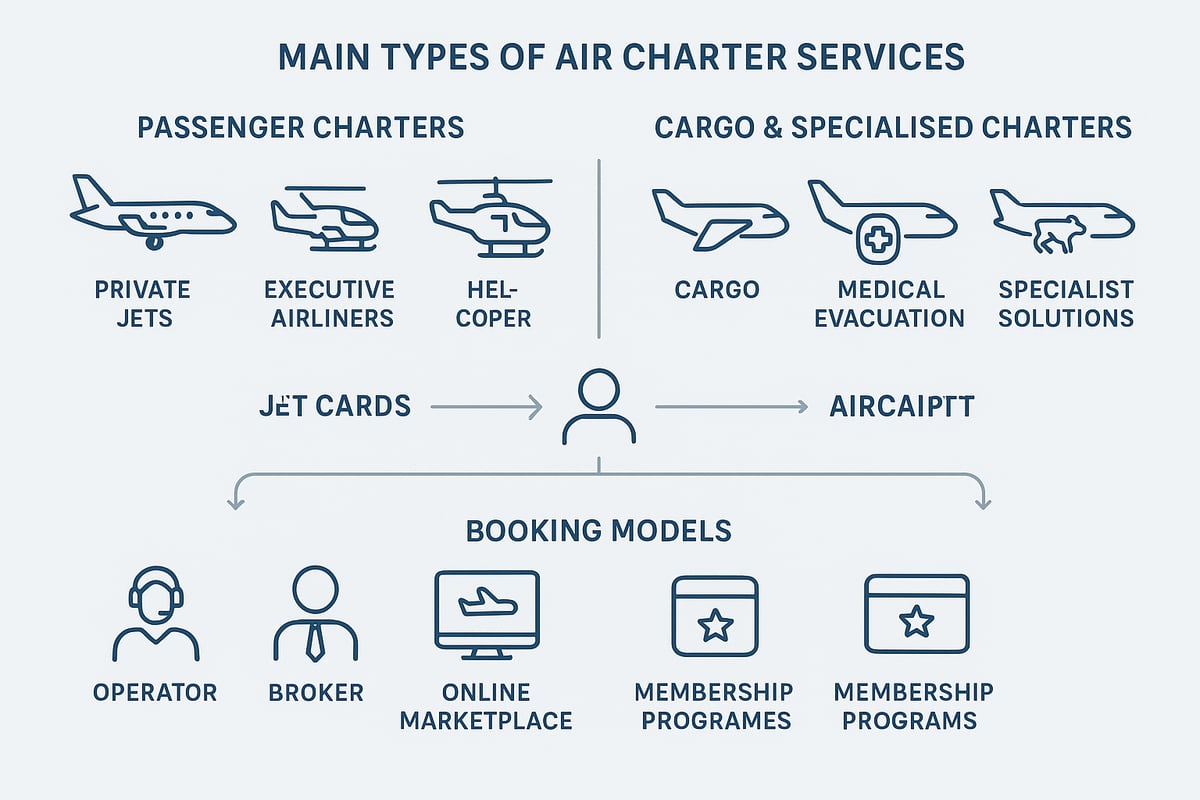
Passenger air charter services have evolved to provide unrivalled flexibility and privacy in 2026. Whether you are a business executive needing to visit multiple cities in a day, a family seeking a bespoke holiday, or a sports team travelling to an event, there is an option to suit.
Popular passenger air charter options include:
For example, helicopters are frequently chartered for high-profile events like the Silverstone races, allowing guests to bypass road congestion and arrive in style. The demand for passenger air charter continues to grow as travellers prioritise convenience, safety, and tailored experiences.
Air charter is not limited to passenger transport. In 2026, cargo and specialised charter services play a crucial role in global logistics and emergency response. These solutions are designed for time-sensitive, oversized, or sensitive shipments that cannot be accommodated on regular commercial flights.
Key types of cargo and specialised air charter include:
When speed and reliability matter most, many organisations turn to air charter for pharmaceutical deliveries or disaster relief. To understand why this mode is increasingly preferred, explore Why Choose Air Cargo Charter for a deeper look at the benefits and strategic value.
Booking an air charter in 2026 is straightforward, thanks to a range of service models that cater to different preferences and requirements. Clients can choose between working directly with charter operators, engaging brokers, or using digital marketplaces.
For instance, the rise of online marketplaces has dramatically simplified the air charter booking experience, making it possible to compare options, check availability, and secure flights in just a few clicks. This model empowers clients with greater control and flexibility.
CharterSync stands at the forefront of air charter innovation in 2026, offering an AI-powered platform that streamlines air cargo charter for freight forwarders and logistics providers. Combining automation with expert human support, CharterSync delivers full and part charters, next flight out, and onboard courier solutions.
Key features include:
CharterSync serves industries such as automotive, pharmaceuticals, high-tech, and any business with time-critical shipping demands. By revolutionising traditional air charter operations with smart technology, CharterSync is shaping a more responsive and efficient future for the sector.
Selecting the ideal aircraft is a crucial part of the air charter experience. The diverse fleet options available in 2026 mean there is a solution for every need, from quick regional hops to intercontinental journeys in ultimate luxury.
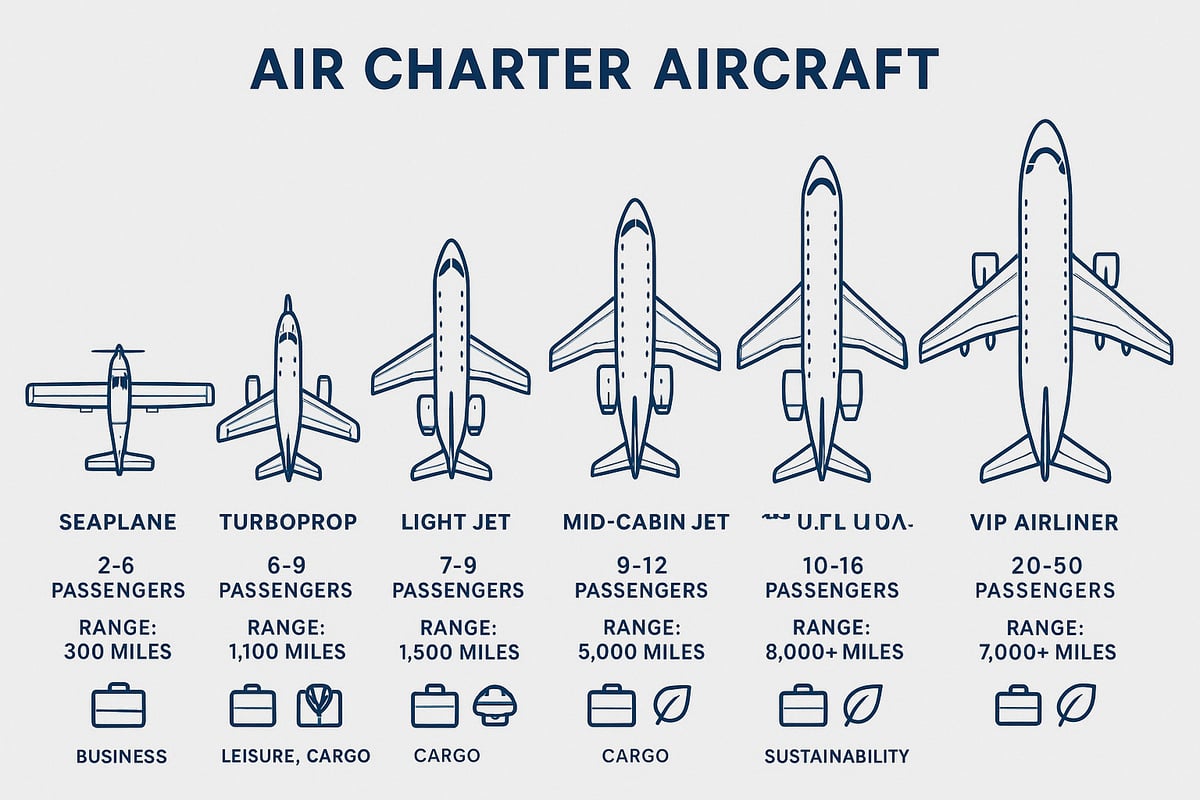
The air charter sector offers a broad spectrum of aircraft, each tailored to different mission profiles. Seaplanes, such as the DHC 2 Beaver or DHC 3 Otter, provide access to remote lakes and coastal regions. Turboprops like the Pilatus PC 12 and King Air 350 are known for efficiency on short-haul routes, making them a popular choice for regional air charter flights.
Light jets, including the Phenom 300 and Citation CJ3, deliver speed and comfort for small groups, perfect for city pairs or quick business trips. Moving up, mid-cabin jets like the Learjet 60 and Hawker 800XP offer greater range and more spacious cabins, suitable for longer journeys or larger parties.
For those seeking premium speed and luxury, super mid-cabin jets such as the Citation X and Challenger 300 are designed for non stop travel between distant cities. Large and ultra-long-range jets, like the Gulfstream G650 and Dassault Falcon 7X, are the backbone of transcontinental air charter, supporting flights between continents.
VIP airliners, including Boeing Business Jet and Airbus Corporate Jets, cater to large groups or those requiring bespoke onboard experiences. These aircraft can be configured for conferences, family travel, or entertainment on a grand scale.
| Aircraft Category | Typical Capacity | Maximum Range | Common Use Case |
|---|---|---|---|
| Seaplane | 6–10 | 1,000 km | Remote access, leisure |
| Turboprop | 6–9 | 2,500 km | Regional, business |
| Light Jet | 6–8 | 3,500 km | Short-haul, executive travel |
| Mid-Cabin Jet | 8–10 | 4,500 km | Medium-haul, group charter |
| Super Mid-Cabin Jet | 8–12 | 6,000 km | Long-haul, luxury |
| Large/Ultra-Long-Range | 12–19 | 13,000 km | Intercontinental, VIP |
| VIP Airliner | 20–100+ | 12,000 km | Corporate, large events |
This variety ensures air charter remains adaptable and efficient for all kinds of travellers.
Selecting the best aircraft for your air charter journey involves several factors. Start with the distance to be travelled, as this determines the required range. The number of passengers and amount of baggage also influence the aircraft category. For example, a turboprop is ideal for a regional trip with a small team, while an ultra-long-range jet is essential for transcontinental routes.
Budget remains a key consideration, as larger aircraft come with higher operating costs. Onboard amenities, such as Wi-Fi, meeting spaces, or premium catering, may also be important, especially for business travellers. Some air charter providers offer extensive customisation, allowing you to choose cabin layouts, entertainment options, and even branding for corporate flights.
Here are the main factors to weigh when choosing an aircraft:
Customisation has become more prevalent, with operators offering tailored interiors, gourmet catering, and advanced connectivity. Market statistics show that the US and Europe continue to lead in air charter activity, but there is notable growth in the Middle East, Asia, and Central America. For more on global market trends, see the Global Air Charter Services Market to Reach $31.7 Billion by 2026.
Environmental responsibility is now a central theme in air charter. New aircraft models are designed with improved fuel efficiency, reducing both operating costs and emissions. Operators increasingly offer flights powered by sustainable aviation fuels, supporting clients who prioritise eco friendly travel.
Fleet renewal is ongoing, with older aircraft being replaced by modern alternatives that meet stricter environmental standards. Many air charter providers now hold environmental certifications, demonstrating their commitment to sustainability. Carbon-neutral charters are also available, with operators offsetting emissions through verified programmes.
Choosing a sustainable air charter option is easier than ever in 2026, as the industry responds to both regulatory demands and client values. The move towards greener aviation ensures that private flying can align with broader environmental goals.
Booking an air charter in 2026 is a streamlined process, offering unmatched convenience and control. Whether you are organising travel for business, leisure, or urgent cargo, understanding each stage ensures a seamless experience. Let us walk through the essential steps to secure the right air charter for your needs.
Start your air charter journey by defining the purpose of your flight. Are you organising a business trip, leisure escape, or time-sensitive cargo delivery? Next, determine the number of passengers or the volume and nature of cargo involved.
Consider any special requests, such as medical needs, pet transport, or specific catering. Confirm your preferred travel dates, times, and destinations. By clarifying these details early, you ensure the air charter provider can recommend the most suitable aircraft and services.
A checklist for this step:
Careful planning at this stage sets the foundation for a successful air charter experience.
With your requirements in hand, research reputable air charter operators and brokers. Look for certified providers with a strong safety record and positive client feedback. Brokers can offer access to a broader range of aircraft by working with multiple operators.
Online platforms have transformed the air charter industry, giving you the ability to compare options and access instant quotes. Some services, such as Automated Air Cargo Charter Solutions, combine AI automation with expert support to match your needs quickly and transparently.
Key aspects to evaluate:
Diligent research ensures you choose a trusted air charter partner.
Once you have identified potential providers, request detailed quotes for your selected air charter route. Share specifics such as preferred aircraft type, route, timings, and any special needs. Review each quote carefully, noting pricing breakdowns, included services, taxes, crew costs, and landing fees.
To compare offers effectively, create a table:
| Provider | Aircraft Type | Price | Inclusions | Availability |
|---|---|---|---|---|
| Operator A | Light Jet | £7,500 | Crew, fuel, lounge | Yes |
| Operator B | Turboprop | £5,200 | Crew, catering | Yes |
Pay close attention to aircraft suitability, operator credentials, and the clarity of terms. Transparent communication and comprehensive quotes are hallmarks of a reliable air charter provider.
After selecting the best air charter option, review the contract thoroughly before signing. Ensure all agreed terms—aircraft type, route, schedule, price, and cancellation policy—are clearly stated. Understand payment terms, including deposit requirements and final payment deadlines.
Prepare necessary documentation, such as passenger lists or cargo manifests. Share any last-minute requests, like dietary preferences or ground transport. Confirm all details with your provider to avoid surprises on the day of departure.
A smooth confirmation process guarantees your air charter booking is secure and tailored to your requirements.
As your air charter flight approaches, review pre-flight logistics. Arrive at the designated private terminal (FBO) for expedited security and check-in. These terminals offer privacy, comfort, and minimal waiting times compared to commercial airports.
On the day of travel, staff will verify your documents and assist with boarding. In-flight, enjoy personalised service and amenities tailored to your needs. Upon arrival, benefit from quick disembarkation and seamless onward connections.
By following these steps, you maximise the efficiency and comfort of your air charter experience from start to finish.
Understanding the costs and value of air charter in 2026 is essential for making informed travel decisions. With a range of aircraft, flexible pricing models, and added value beyond commercial flights, air charter continues to attract both business and leisure travellers.
Several variables affect air charter pricing. The type and size of aircraft play a significant role, as larger jets incur higher operational expenses. Distance and route complexity also impact costs, especially when flying to remote or congested airports.
Additional factors include airport fees, crew wages, and fluctuating fuel surcharges. Seasonal demand and last-minute bookings can further influence rates. Whether you select a light jet for a quick city hop or a long-range aircraft for intercontinental travel, each choice shapes the final price of your air charter.
Air charter providers offer a variety of pricing structures to suit different needs. The most common models include hourly rates and fixed pricing for specific routes. Jet cards and membership schemes provide prepaid hours at set rates, ideal for frequent flyers seeking predictability.
Empty leg flights represent cost-saving opportunities, allowing travellers to book one-way journeys when aircraft reposition without passengers. Here is a summary table for quick comparison:
| Model | Description | Typical Use Case |
|---|---|---|
| Hourly Rate | Pay per flight hour | Occasional, flexible travel |
| Fixed Price | Set route and aircraft fee | Predictable, popular routes |
| Jet Card | Prepaid hours, fixed rates | Frequent business travel |
| Empty Leg | Discounted one-way segments | Flexible leisure or business |
Choosing the right model depends on your travel frequency, flexibility, and budget for air charter.
When evaluating air charter, consider not just the upfront cost but the broader value. Pay-per-use charters can be more cost-effective than full aircraft ownership, especially for those flying less often. Group travel often yields savings compared to multiple first-class commercial tickets.
Added benefits include privacy, time savings, and increased productivity. For instance, a corporate team using air charter for a multi-city roadshow can maximise efficiency and comfort while minimising downtime. Transparent service and operational safety, such as compliance with the expanded SMS mandate, further enhance the overall value proposition.
Clear, itemised quotes are crucial in the air charter market. Look for detailed breakdowns covering all charges, including taxes, landing fees, crew expenses, and fuel. This transparency helps you spot and avoid unexpected costs.
To ensure a smooth experience:
Recent trends show increased competition and more transparent pricing in the air charter sector. As regulatory requirements evolve, including enhanced safety management systems, clients can expect even greater confidence in the value and reliability of their air charter experience.
The air charter industry is undergoing rapid transformation in 2026, blending cutting edge technology with changing market demands. These innovations are redefining the experience for both passengers and cargo clients. In this section, we explore emerging trends shaping air charter and what they mean for the future.
Technology is at the forefront of air charter evolution. AI powered platforms now enable real time aircraft matching, instant pricing, and automated documentation. Digital marketplaces let clients compare operators and book flights in minutes. Real time tracking and smart workflows have become standard, increasing transparency and efficiency.
Cargo operations are experiencing a similar revolution. Platforms such as Air Cargo Charter Innovations exemplify how automation and digital tools are streamlining processes for freight forwarders. These advancements are making air charter more accessible and user friendly for all.
Sustainability is now a core focus for air charter providers. Operators are investing in new aircraft models with improved efficiency and are widely adopting sustainable aviation fuels. Many now offer carbon neutral flights and participate in offset programmes to reduce environmental impact.
Eco certification is increasingly important, with operators seeking to demonstrate their commitment to green practices. Clients are also demanding more transparency regarding emissions and fuel sources, ensuring air charter remains a responsible travel choice.
Air charter is no longer reserved for the elite. The rise of online platforms and competitive pricing is opening up the market to new regions and demographics. Emerging markets in Asia, the Middle East, and Latin America are seeing significant growth in demand for both passenger and cargo services.
Statistics project continued double digit growth in the global air charter market through 2026. As affordability increases, more businesses and private individuals are turning to air charter for convenience and efficiency.
Personalisation is a defining feature of modern air charter. Clients can now tailor every aspect of their journey, from bespoke catering and entertainment to branded cabin interiors. VIP airliners are being customised for luxury holidays, corporate branding, or special events.
Advanced connectivity and in flight technology ensure productivity and comfort. Operators are focusing on delivering seamless, memorable experiences that exceed expectations.
Regulatory frameworks are evolving to keep pace with innovation in air charter. Digital compliance tools streamline documentation and help operators meet international standards. Enhanced security protocols and passenger screening ensure safety without compromising convenience.
The impact of global events has accelerated updates in regulations and operational standards. For those interested in upcoming changes, resources such as What Are the New Regulations and Standards in Air Cargo and Ground Handling Operations? provide valuable insights into new requirements taking effect in 2026.
With the world of air charter evolving rapidly in 2026, you now have more options and smarter tools than ever to move cargo quickly and reliably. If you’re curious about how intelligent automation and expert support can make your air cargo operations more efficient, why not see it in action? Whether you’re focused on speed, transparency, or seamless global access, you deserve solutions that truly work for your business. If you’d like to experience how CharterSync is transforming air cargo chartering for freight forwarders, request a demo and discover the difference for yourself.

.png)