.png)
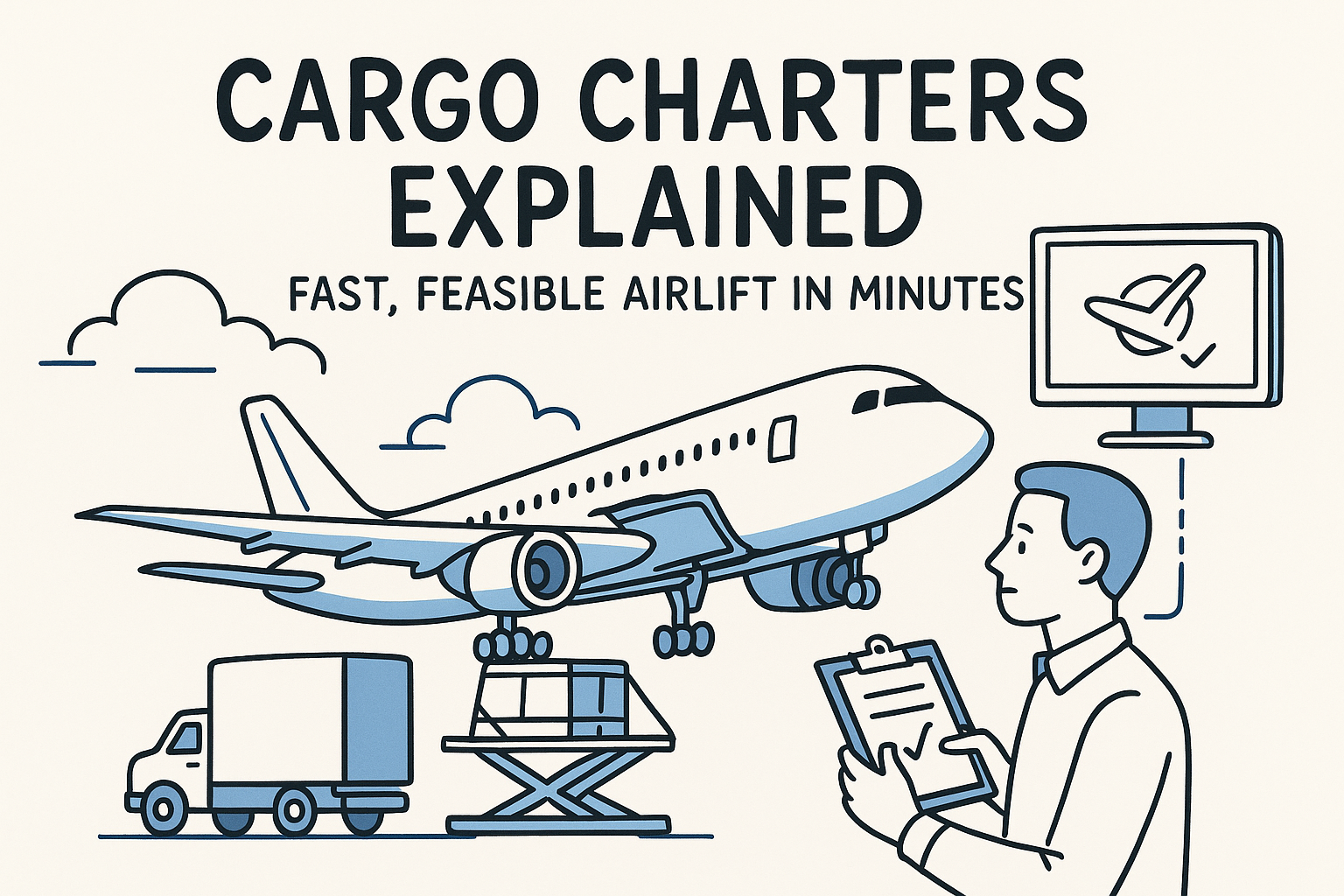
When a shipment is too heavy for scheduled freight, too urgent for sea transport, or too oversized for standard aircraft holds, cargo charters become the only viable option. They give freight forwarders and logistics teams dedicated aircraft capacity on their terms, specific routes, specific timelines, no sharing cargo space with other shippers.
The problem is that arranging one has traditionally meant hours of back-and-forth emails, provisional quotes with no technical backing, and little visibility once the cargo is airborne. For professionals handling time-critical or complex shipments, that uncertainty is a real operational risk. Getting a confirmed, loadable solution shouldn't require a dozen phone calls and a spreadsheet full of unverified estimates.
That's exactly why we built CharterSync, a digital platform that matches your cargo specifications against verified aircraft data and returns technically feasible options in minutes, not hours. This article breaks down what cargo charters actually involve, how they work from inquiry to delivery, and what to look for when choosing a chartering solution that gives you speed without sacrificing accuracy.
Standard air freight books space on scheduled commercial flights. You pay for a portion of the hold, share that space with other shippers, and work around fixed departure times and carrier-defined routes. Cargo charters operate on entirely different terms: you book the entire aircraft for your shipment alone, which means you control the route, the timing, and exactly how the cargo is loaded and secured on board.
When your shipment can't flex to fit a scheduled service, a charter gives you the aircraft that flexes to fit your shipment.
With scheduled air freight, your cargo moves when the airline decides it moves. Charter operations work the other way around. You specify the origin and destination, and the operator sources an aircraft that can fly that exact routing. If you need to move cargo from a regional airport that no scheduled carrier serves, a charter removes the need for costly transshipment legs that add time, extra handling, and unnecessary risk to an already complex operation.
| Scheduled Air Freight | Cargo Charter | |
|---|---|---|
| Capacity | Shared hold space | Full aircraft |
| Routing | Fixed airline network | Your chosen route |
| Timing | Airline schedule | Your timeline |
| Cargo type | Standard dimensions only | Oversized, hazardous, specialised |
One critical difference that gets missed in most comparisons is technical confirmation. With scheduled freight, you may only discover loading restrictions after committing to a booking. With cargo charters, a proper solution confirms aircraft door dimensions, payload limits, and operational range before any commitment is made. That removes the risk of arriving at the airport with cargo that physically won't fit, which is a costly mistake that can set an entire supply chain operation back by 24 hours or more.
When production lines go down, relief equipment needs to move in hours, not days. When a humanitarian response is activated, medical supplies can't wait for the next available freight slot on a commercial route. Cargo charters exist for exactly these situations, where the cost of delay far outweighs the cost of a dedicated aircraft.
The right charter option isn't just about speed. It's about putting the right aircraft on the right route with confirmed capacity before anything moves.
Some shipments are too large, too hazardous, or too time-sensitive for any scheduled service to handle. Oversized industrial components, live animals, dangerous goods, and temperature-sensitive cargo all carry handling requirements that most commercial carriers won't accommodate without significant lead time. With cargo charters, you choose an aircraft specifically rated for your cargo type, which removes the guesswork and the risk of your shipment being offloaded at the last minute.
Specific cargo categories that regularly require dedicated charters include oil and gas equipment, aerospace parts, motorsport vehicles, and emergency relief supplies. These aren't edge cases; they represent a significant and growing portion of global air cargo demand.
The process behind cargo charters follows a clear sequence, from submitting your cargo details to receiving confirmation and tracking the shipment through to delivery. Understanding each stage helps you spot where delays typically enter the process and what a good operator should handle at each step.
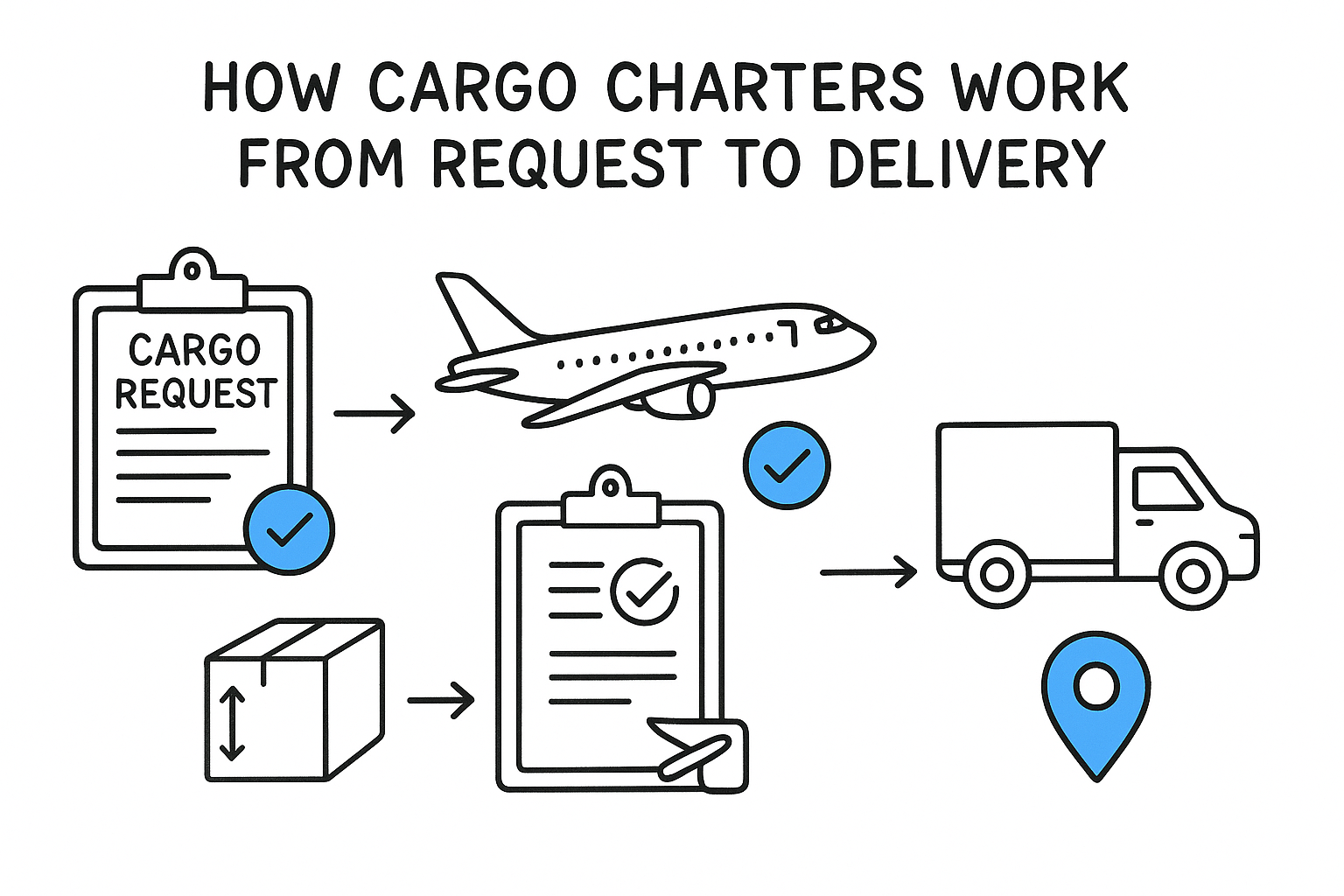
You start by submitting your cargo specifications: dimensions, weight, dangerous goods classifications, origin, destination, and required departure window. The operator then matches those details against available aircraft, checking payload capacity, door dimensions, and range. Confirmed availability at this stage is what separates a reliable solution from a provisional estimate.
A quote that hasn't been verified against actual aircraft data isn't a quote. It's a guess.
Key checks at the matching stage:
Once you accept an option, the operator manages permits, ground handling coordination, and all required documentation. You receive tracking updates as the aircraft departs, transits, and arrives. A properly managed charter gives you live visibility at every stage, so you're never waiting on a phone call to find out where your cargo is.
Choosing the wrong aircraft or operator can derail your cargo charters before the shipment leaves the ground. You need to verify two things upfront: that the aircraft is technically suitable for your cargo, and that the operator holds the right credentials for your route and cargo type.
Confirmed aircraft availability and operator certification are the two non-negotiables in any charter selection.
When evaluating options, focus on door dimensions, payload capacity, and range. An aircraft that can carry the weight but can't physically fit your cargo through its door is no use to you. Always request written loadability confirmation before committing to any option.
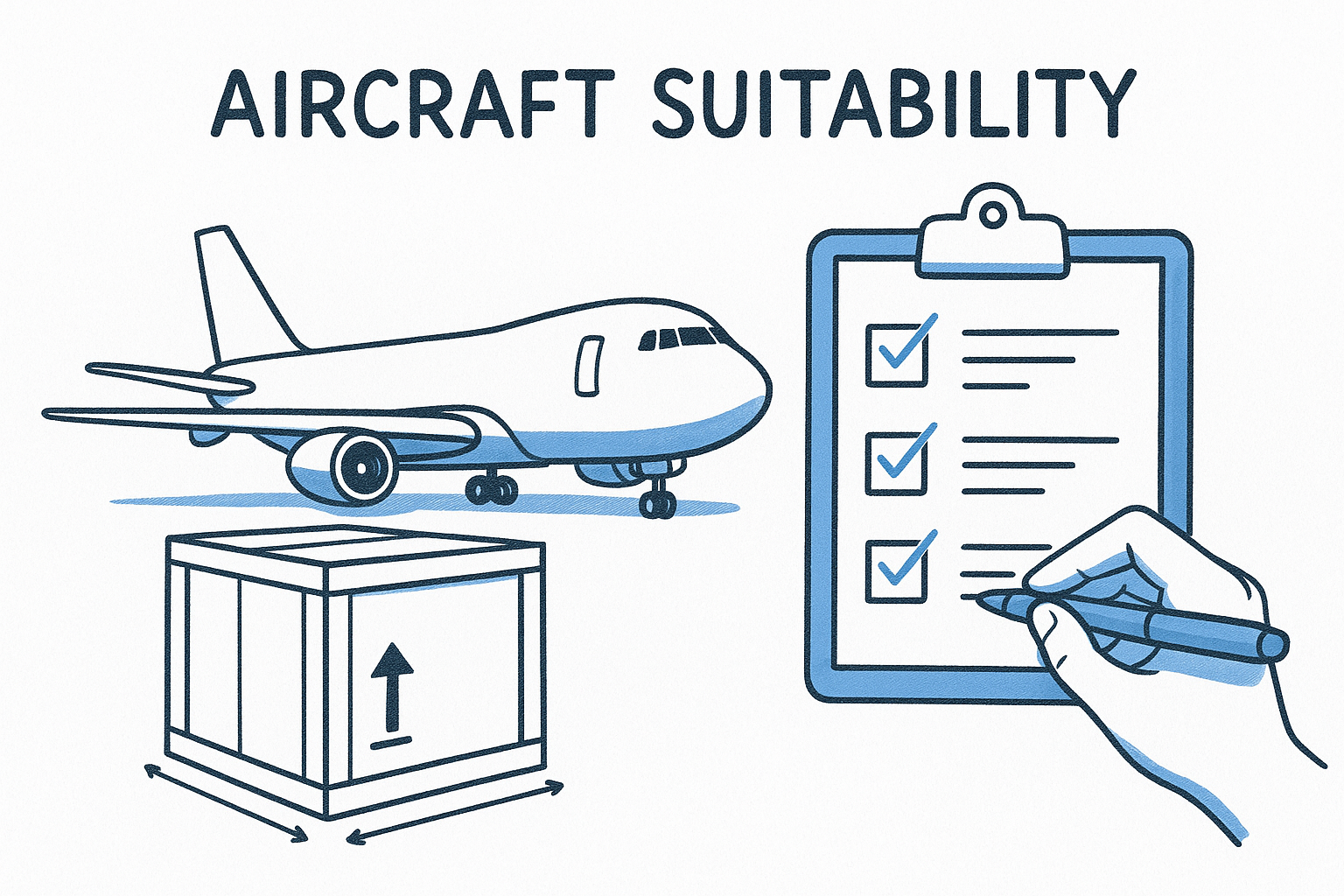
Key checks before booking:
Not all operators carry the same approvals. Air operator certificates (AOCs) vary by region and cargo type, so confirm the operator is certified for your specific route and cargo classification. Asking for evidence of similar past operations reduces the risk of last-minute complications when your timeline is tight.
You should also verify insurance coverage and whether the operator has an established process for handling permit applications relevant to your cargo category. Operators who regularly manage complex cargo types already have the agent relationships in place, which cuts lead times considerably.
Cargo charters carry a higher price point than scheduled freight, but the cost reflects what you're buying: dedicated capacity, a confirmed route, and a fixed timeline. Understanding what drives pricing helps you evaluate quotes accurately and avoid paying for variables that a well-matched aircraft would eliminate.
A quote that looks cheap but carries unconfirmed permit status can cost far more once delays and rerouting fees stack up.
Aircraft type, routing distance, and positioning fees are the three main cost variables. If the aircraft needs to reposition from another location to reach your origin airport, that empty leg cost typically passes to you. Specify your departure window clearly from the start to give operators the best chance of minimising that expense.
Key factors that affect your final quote:
Overflight and landing permits vary significantly by region and cargo classification. Hazardous goods, oversized loads, and certain cargo categories require additional approvals that take time to secure. Confirm permit lead times with your operator before locking in a departure date, especially on routes crossing multiple jurisdictions.
Submitting incomplete cargo dimensions at the inquiry stage is the most common cause of booking delays and last-minute aircraft changes. Provide accurate packed measurements and confirm dangerous goods classifications upfront to keep the process moving without costly re-quoting.
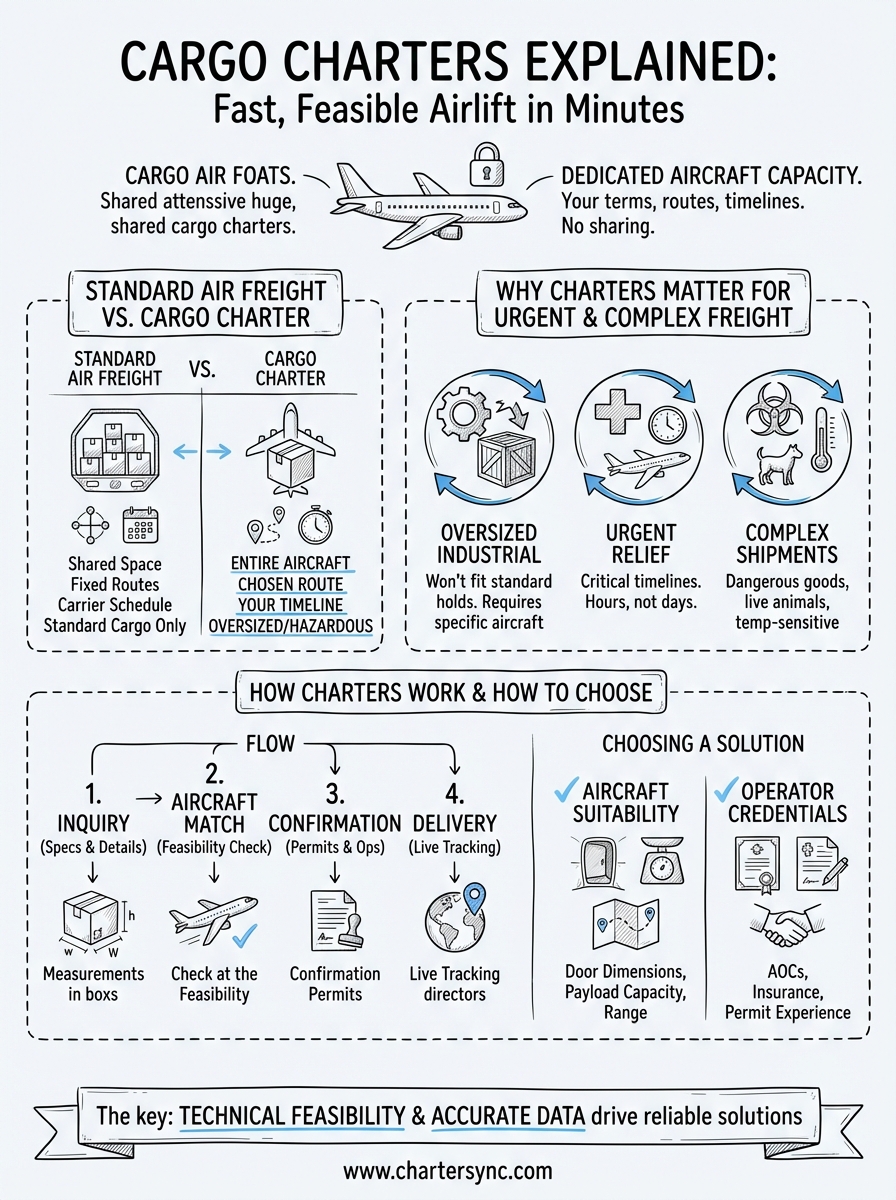
Cargo charters give you dedicated aircraft capacity when scheduled freight can't meet your requirements. Whether you're moving oversized industrial equipment, responding to a production-line emergency, or shipping dangerous goods on a non-standard route, a charter removes the compromises that come with shared hold space. The key is confirming technical feasibility before you commit, not after.
Every element covered in this article points back to the same principle: accurate data at the inquiry stage drives every decision that follows. Submitting precise cargo dimensions, confirmed dangerous goods classifications, and a clear departure window gives operators what they need to return a verified match rather than a provisional estimate. That accuracy is what turns a complicated process into a reliable one.
If you're ready to get technically confirmed charter options in minutes rather than hours, get a cargo charter quote on CharterSync and see how a digital platform handles the complexity for you.

.png)