.png)
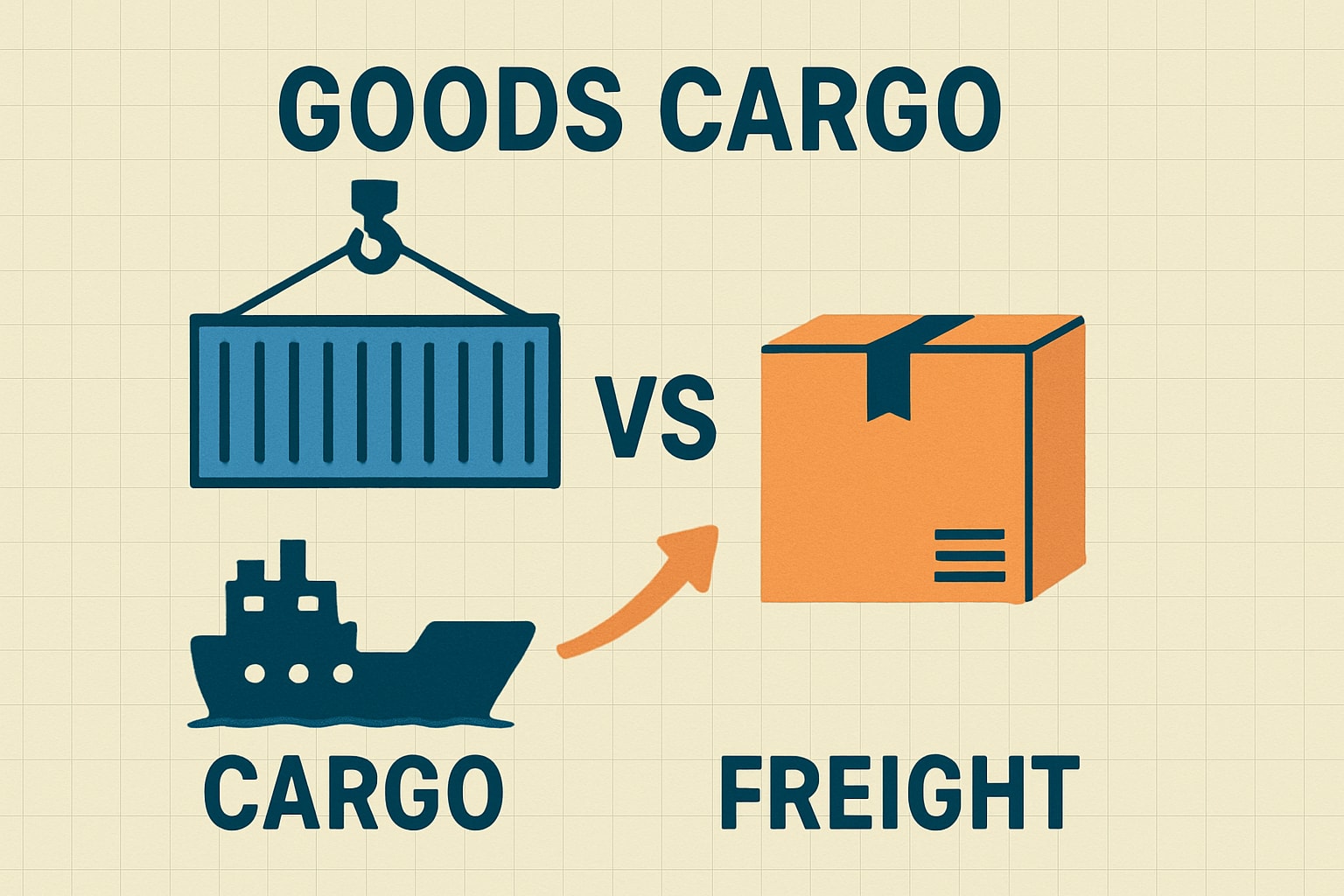
When shipping goods internationally or within the UK, many professionals find themselves puzzled by the terms goods cargo and freight. Are they truly interchangeable, or do they carry distinct meanings that could impact your business?
This article cuts through the confusion, demystifying the differences between goods, cargo, and freight for logistics professionals, shippers, and businesses navigating the global supply chain in 2026.
We will explore clear definitions, legal and insurance implications, transport modes, documentation, and the latest industry trends. Real-world scenarios will highlight why accurate terminology is critical.
Unlock actionable insights and avoid costly mistakes by understanding these essential terms. Make smarter logistics decisions in 2026 with clarity and confidence.
When working in logistics or supply chain management, understanding the difference between goods cargo and freight is essential. These terms often appear interchangeable, yet each carries unique meanings and implications. Misusing them can lead to costly mistakes or compliance issues, especially as the industry continues to evolve in 2026.

Let us begin with the basics. The term "goods" refers to tangible products or commodities that are bought, sold, or transported. In the context of goods cargo, "goods" is the broadest category, encompassing everything from consumer electronics to raw materials.
"Cargo" specifically describes goods or merchandise that are conveyed in bulk, typically by a vehicle, ship, aircraft, or train. The word "cargo" comes from the Spanish "cargar," meaning "to load," and has been used in the shipping industry since the late 16th century. It is most often used for goods in transit, especially in maritime and air transport.
"Freight" can refer both to goods transported in bulk and the cost or process of transporting those goods. The term derives from the Middle Dutch "vrecht," meaning "transported load" or "payment for transport." Over time, its meaning has expanded to include various aspects of the shipping process.
Here is a simple table for quick comparison:
| Term | Definition | Typical Use |
|---|---|---|
| Goods | Tangible products or commodities | General, all industries |
| Cargo | Goods in bulk transit (ship, plane, train) | Maritime, air, bulk |
| Freight | Goods in transit or transport cost/process | Rail, road, billing |
In everyday conversation, people may use these terms loosely. However, in logistics, context is crucial. For example, goods cargo is the correct phrase when discussing commodities being loaded onto a ship, but "freight" is used when referring to the cost of moving those goods.
As highlighted in the Cargo definitions and distinctions, industry professionals must use terms precisely, as their meanings influence documentation, insurance, and compliance.
A recent survey found that 60% of UK logistics professionals report confusion between "cargo" and "freight." This confusion can affect everything from contract wording to insurance claims, making it vital to understand the distinctions.
The use of goods cargo terminology varies significantly across transport sectors and regions. In maritime and air transport, "cargo" is the standard term, as in "bulk cargo" or "air cargo." In contrast, "freight" dominates rail and road transport, visible in phrases like "freight train" or "road freight."
Regional differences further complicate matters. For example, in the UK and Europe, "cargo" is commonly associated with sea and air shipments, while "freight" is preferred for overland transport. In North America, "freight" often refers to both the goods and the charges for moving them.
Let us look at an example. A shipment of electronics flown from London to Frankfurt is termed "air cargo" during flight, but once it moves by lorry from the airport to a warehouse, it becomes "road freight." This change in terminology affects the documentation, insurance, and regulatory requirements for the goods cargo at each stage.
Globalisation has encouraged some standardisation, but differences remain. Misusing these terms can result in documentation errors or compliance risks, such as incorrect customs declarations or insurance coverage disputes.
Understanding the proper use of goods cargo terminology is not just a matter of semantics. It is a practical necessity for anyone involved in logistics, helping to ensure accurate paperwork, appropriate insurance, and efficient movement of goods worldwide.
Understanding the legal and insurance implications of goods cargo is essential for anyone involved in shipping, logistics, or supply chain management. The distinctions between goods cargo and freight are not just semantic. They play a pivotal role in determining contract terms, insurance coverage, and liability in the event of loss or damage.

In the world of goods cargo, international law sets the stage for how responsibilities and liabilities are allocated. Several major conventions define the rules:
Precise terminology is crucial. The legal definition of goods cargo in a contract determines when liability transfers from shipper to carrier. For example, referring to freight as a cost rather than the physical items can lead to disputes if a claim arises for damaged goods.
A real-world case involved a shipping contract where the word “freight” was used ambiguously. When a consignment was lost, the insurer contested the claim, arguing that only the cost of carriage, not the goods cargo, was covered. The result was a lengthy legal battle and delayed compensation.
Misuse of terms is not rare. A recent survey found that 60% of UK logistics professionals have witnessed confusion between goods cargo and freight, leading to documentation errors and compliance risks. Regulators and insurers rely on exact definitions to process claims and assign responsibility.
The key takeaway: Always check the specific wording in contracts and documentation. A single misused term can shift liability or void an insurance claim, highlighting why goods cargo terminology must be correct at every stage.
Selecting the right insurance depends on understanding the differences between goods cargo and freight. Each mode of transport and each type of shipment brings its own insurance requirements.
Types of Insurance:
| Insurance Type | Coverage Scope | Typical Context |
|---|---|---|
| Cargo Insurance | Loss/damage to goods during maritime or air | International shipments |
| Goods in Transit | Loss/damage to goods moved by road/rail | Domestic or regional shipments |
| Freight Insurance | Cost of transport or sometimes goods themselves | All modes, varies by policy |
Cargo insurance is designed for international shipments, typically by sea or air. It covers the value of the goods cargo from the moment they are loaded until arrival at the destination. For more detail on how cargo insurance works and why it is vital, see this Cargo insurance overview.
Goods in transit insurance is used mainly for road and rail, protecting goods cargo within a specific country or region. Its terms differ, often covering shorter distances and different risks.
Freight insurance can be confusing, as it may refer to insuring the cost of carriage or, in some policies, the goods cargo itself. Understanding which definition your policy uses is essential to avoid gaps in coverage.
Recent updates to the CII syllabus for 2025–26 highlight the importance of mastering these distinctions for anyone involved in logistics or insurance. Real-world scenarios, such as a shipment of electronics mislabelled as freight rather than goods cargo, have led to denied claims due to incorrect documentation.
In summary, choosing the correct insurance type for your goods cargo is not just about compliance. It is about risk management, financial protection, and ensuring business continuity.
When it comes to the movement of goods cargo, the terminology used across different modes of transport is far from uniform. Each sector—sea, air, rail, and road—relies on specific language that shapes documentation, insurance, and compliance. Understanding these distinctions is essential for anyone wanting to avoid costly errors or delays in the logistics process.

The term goods cargo can mean different things depending on the transport mode. In maritime shipping, “cargo” is the standard term, whether referring to bulk commodities, containerised shipments, or breakbulk items. Bills of lading, which act as both receipt and document of title, always refer to the goods as cargo. Insurance policies often specify “cargo insurance” for sea shipments, reflecting this industry norm.
Air transport also uses “cargo” to describe goods cargo in transit, but with a distinct twist. The phrase “air cargo” is widely used to denote the physical goods, while “air freight” can refer to either the goods or the transportation cost. This duality can cause confusion, especially for new shippers. For further clarity on this, see Air cargo vs air freight explained.
Rail transport typically uses “freight” to describe the movement of goods cargo. Trains are called “freight trains,” and documents like the CIM consignment note use the term “freight” rather than cargo. Road transport follows a similar pattern, with “freight” and “goods in transit” both appearing in contracts and insurance policies.
Here’s a summary table:
| Mode | Preferred Term | Example Document | Typical Insurance |
|---|---|---|---|
| Sea | Cargo | Bill of Lading | Cargo Insurance |
| Air | Air Cargo/Freight | Air Waybill | Air Cargo Insurance |
| Rail | Freight | CIM Consignment Note | Goods in Transit Insurance |
| Road | Freight/Goods in Transit | CMR Note | Goods in Transit Insurance |
As multimodal shipments become more prevalent, clarity is vital. For instance, a consignment of electronics may start as sea cargo, become rail freight, and finish as goods in transit by lorry. If the terminology is not clearly defined at each stage, the risk of documentation errors, insurance disputes, or compliance failures increases.
Precise terminology for goods cargo is not just a matter of preference—it is fundamental to logistics operations and legal compliance. Key documents such as bills of lading (sea), air waybills (air), and CMR notes (road) all use specific wording for the type of goods cargo they cover. An incorrect label can lead to customs delays or even denial of insurance claims.
Consider a scenario where a shipment is labelled as “cargo” for a road journey, but the insurance policy only covers “goods in transit.” In such cases, claims may be denied, leaving the shipper at significant financial risk. Similarly, using “freight” in place of “cargo” on an air waybill might confuse digital tracking systems or create issues with international customs authorities.
Digitalisation has intensified the need for accurate goods cargo terminology. Freight forwarders now depend on automated systems that require precise input. Errors in term selection can propagate through the supply chain, causing delays, miscommunication, or regulatory breaches.
Freight forwarders play a crucial role in bridging these gaps. They ensure that the correct terminology for goods cargo is used at every handover, whether in physical documents or digital workflows. This vigilance is especially important as logistics platforms integrate AI and blockchain, which demand consistency for interoperability.
In summary, the language used to describe goods cargo varies by transport mode and has real-world implications for documentation, insurance, and compliance. As the logistics industry becomes more connected and digital, getting the terminology right is more important than ever.
Cost structures in the world of goods cargo are shaped by various factors, from the method of transport to the specific terminology used in contracts and billing. Understanding these commercial perspectives is crucial for logistics professionals, shippers, and businesses aiming for transparency and efficiency in 2026.

When discussing goods cargo, the terms “freight” and “cargo” often appear in billing and commercial negotiations. However, they each represent distinct concepts in cost structures. Freight typically refers to the price charged for transporting goods cargo, while cargo handling fees relate to the physical management and movement of the shipment.
A typical sea freight invoice for goods cargo might include the following elements:
| Cost Component | Description | Calculation Basis |
|---|---|---|
| Freight Rate | Charge for transport | Weight, volume, route |
| Surcharges | Additional fees (fuel, security, etc) | Fixed or variable |
| Cargo Handling Fees | Loading/unloading, warehousing | Per unit or per tonne |
| Documentation Charges | Preparing shipping documents | Per shipment |
Freight rates for goods cargo are usually calculated based on weight or volume for sea and air, and by distance or service type for road and rail. Cargo handling fees may vary depending on the type and nature of the goods cargo, as well as the complexity of loading or unloading.
It is important to note that misunderstanding these terms can lead to costly errors. For example, confusing “cargo” fees with “freight” charges may result in overpaying or disputes during settlement. According to industry reports, global freight rates for goods cargo are expected to stabilise in 2026 following pandemic volatility. For a deeper look at how these charges are structured, see this resource on freight rates and shipping costs.
Billing approaches also differ. “Cargo” may be billed by container or pallet, while “freight” is often tied to the journey’s distance and the type of service chosen. This distinction impacts not only the bottom line but also how businesses plan and negotiate their logistics contracts.
The roles of shippers, consignees, and carriers are central to managing goods cargo cost structures. Each party uses terminology to define responsibilities and liabilities, which can vary depending on the transport mode and commercial agreement.
Shippers are typically responsible for preparing the goods cargo and ensuring it is correctly documented. Their liability often extends to cargo damage before the point of handover. Carriers, on the other hand, are accountable for the safe delivery of the freight and may assume broader financial responsibility once the goods cargo is in transit. Consignees, as recipients, must understand these distinctions to avoid disputes over delayed or damaged shipments.
Freight forwarders play a vital role in bridging gaps between these parties. They ensure that the correct terminology is used in contracts, invoices, and insurance documents. For example, specifying whether a shipment is classified as “goods cargo” or “freight” can impact insurance coverage and claims processing.
Misusing terms like “cargo” and “freight” in goods cargo contracts can lead to confusion, delayed payments, or even legal disputes. By focusing on accurate language, all parties help ensure smoother commercial transactions and reduce the risk of overcharging or denied claims.
In summary, understanding the nuanced differences between goods cargo, freight, and related cost structures empowers businesses to negotiate better rates, avoid costly mistakes, and maintain strong industry relationships.
Misunderstanding the distinctions between goods cargo and freight can lead to costly mistakes in real-world logistics. Below, we explore practical scenarios that highlight the tangible impact of these terms, from insurance claims to digital transformation.
Getting terminology right is critical when handling goods cargo across global supply chains. Let’s examine three scenarios where precision made all the difference.
Case 1: Air Cargo for Automotive Parts
A UK-based automotive supplier needed to ship high-value components quickly to a factory in Germany. The shipment was classified as air cargo and insured accordingly. When turbulence caused minor damage, the insurer processed the claim smoothly, as the documentation matched the goods cargo description and mode of transport. Using the correct term streamlined the entire process.
Case 2: Pharmaceuticals as Goods in Transit
A pharmaceutical company transported temperature-sensitive medicines by lorry across the UK. The shipment was covered under goods in transit insurance, not cargo insurance, because it travelled solely by road. When a refrigeration fault occurred, the insurer’s quick response was due to the accurate use of goods cargo terminology in the policy and transport documents.
Case 3: Multimodal Shipping – From Sea Cargo to Rail Freight
A global electronics retailer moved goods from China to the UK using multiple transport modes. The shipment started as sea cargo, then became rail freight upon arrival in Europe. Each leg required different documentation and insurance. Failure to update the goods cargo status between modes could have invalidated coverage or caused customs delays.
E-commerce Billing Confusion
An online retailer underestimated freight costs by misclassifying their shipment as cargo instead of freight. This led to unexpected surcharges and supply chain delays, impacting customer satisfaction. According to a 2025 survey, 45% of UK SMEs have faced documentation issues due to errors in goods cargo terminology.
Key Takeaways Table
| Scenario | Correct Term | Mode(s) | Outcome |
|---|---|---|---|
| Automotive parts | Air cargo | Air | Fast insurance claim, no delay |
| Pharmaceuticals | Goods in transit | Road | Immediate insurer support |
| Electronics (multimodal) | Cargo/Freight | Sea, Rail | Smooth customs, valid insurance |
| E-commerce shipment | Freight/Cargo | Multimodal | Billing error, delayed deliveries |
For more on the importance of accurate documentation and compliant processes, see this guide on shipment and cargo documentation.
As logistics becomes more automated, the importance of precise goods cargo terminology is only increasing. Digital platforms, AI-driven systems, and blockchain solutions now underpin many global supply chains.
Modern freight management software relies on exact goods cargo classifications to automate booking, customs clearance, and insurance. If the term entered is incorrect, the system may generate invalid documents or even reject a shipment.
Blockchain-based digital ledgers also demand clarity. Each transaction records the specific type of goods cargo, ensuring traceability and reducing disputes. For example, a shipment logged as "air cargo" will trigger different compliance checks than one listed as "goods in transit."
AI-powered tools require precise language to match shipments with correct carriers and routes. A single mislabelled goods cargo entry can disrupt the entire chain, from quoting to delivery. As automation expands, logistics professionals must prioritise ongoing training to keep up with evolving digital standards and terminology.
In summary, the future of logistics will reward those who understand and consistently apply the correct goods cargo terminology. This precision will be vital for compliance, efficiency, and customer satisfaction.
The landscape for goods cargo is rapidly evolving, with 2026 poised to bring new challenges and opportunities across logistics and supply chains. From digital documentation and sustainability initiatives to ongoing professional training, understanding the trajectory of goods cargo terminology and practices has never been more important.
Industry standards for goods cargo are shifting as multimodal transport becomes the norm. Businesses increasingly move shipments using a combination of sea, air, rail, and road, each with its own documentation and terminology. For example, the adoption of electronic consignment notes (eCMR) and electronic air waybills (eAWB) is accelerating across Europe and Asia, streamlining processes and requiring precise use of goods cargo terms at every stage.
A recent industry forecast predicts that by 2026, 85 percent of cross-border shipments will use digital documentation. This trend places greater pressure on shippers and freight forwarders to apply the correct terminology, as digital systems depend on standardised definitions for goods cargo, cargo handling, and freight charges. Misclassification can result in delays, compliance issues, or financial penalties.
Regulatory bodies are also issuing new guidelines for digital documentation and cargo tracking, making it critical for professionals to stay current. For a deeper dive into how the meaning and handling of cargo is evolving within shipping, see this resource on cargo in shipping processes.
| Milestone | Description | Impact on Goods Cargo |
|---|---|---|
| eCMR Adoption | Digital road consignment notes | Faster, more accurate records |
| eAWB Expansion | Digital air waybills | Reduced paperwork |
| Multimodal Integration | Unified tracking across modes | Consistent terminology needed |
Sustainability is now a defining driver for the goods cargo sector. Green freight initiatives are being embedded into global logistics, with carbon reporting requirements distinguishing emissions by mode of transport. This means that the term goods cargo must be used accurately to reflect the nature and journey of shipments for regulatory and ESG reporting.
For example, companies are now required to provide detailed breakdowns of freight emissions, whether moving breakbulk cargo by sea or express goods cargo by air. Clear terminology is essential both for compliance and for benchmarking supply chain resilience.
Key sustainability trends shaping goods cargo in 2026:
As regulations tighten, businesses that prioritise clarity in goods cargo labelling and documentation will be best positioned to meet new standards and customer expectations.
The complexity of goods cargo management is driving a renewed focus on professional training and ongoing education. Industry qualifications such as the CII M90 syllabus now place greater emphasis on understanding the distinctions between goods, cargo, and freight, which directly impact insurance, compliance, and daily operations.
Logistics firms are investing in staff upskilling to reduce costly errors and claims related to goods cargo misclassification. Training programmes increasingly include digital systems proficiency, regulatory updates, and case study analysis to reinforce correct usage of terminology.
Key areas of focus for 2026:
As the goods cargo landscape continues to evolve, organisations that invest in knowledge and digital tools will secure a competitive advantage in a rapidly changing market.
Having explored the real differences between goods, cargo, and freight, you now understand how crucial the right terminology is for efficient logistics, clear documentation, and effective risk management. If you want to put this insight into action and streamline your air cargo operations with precision, why not see how CharterSync’s intelligent platform can help? You’ll discover how AI-powered tools and expert support can simplify bookings, ensure compliance, and keep your shipments moving smoothly—no matter how complex your requirements. Ready to experience a smarter way to manage air cargo? request a demo

.png)