.png)
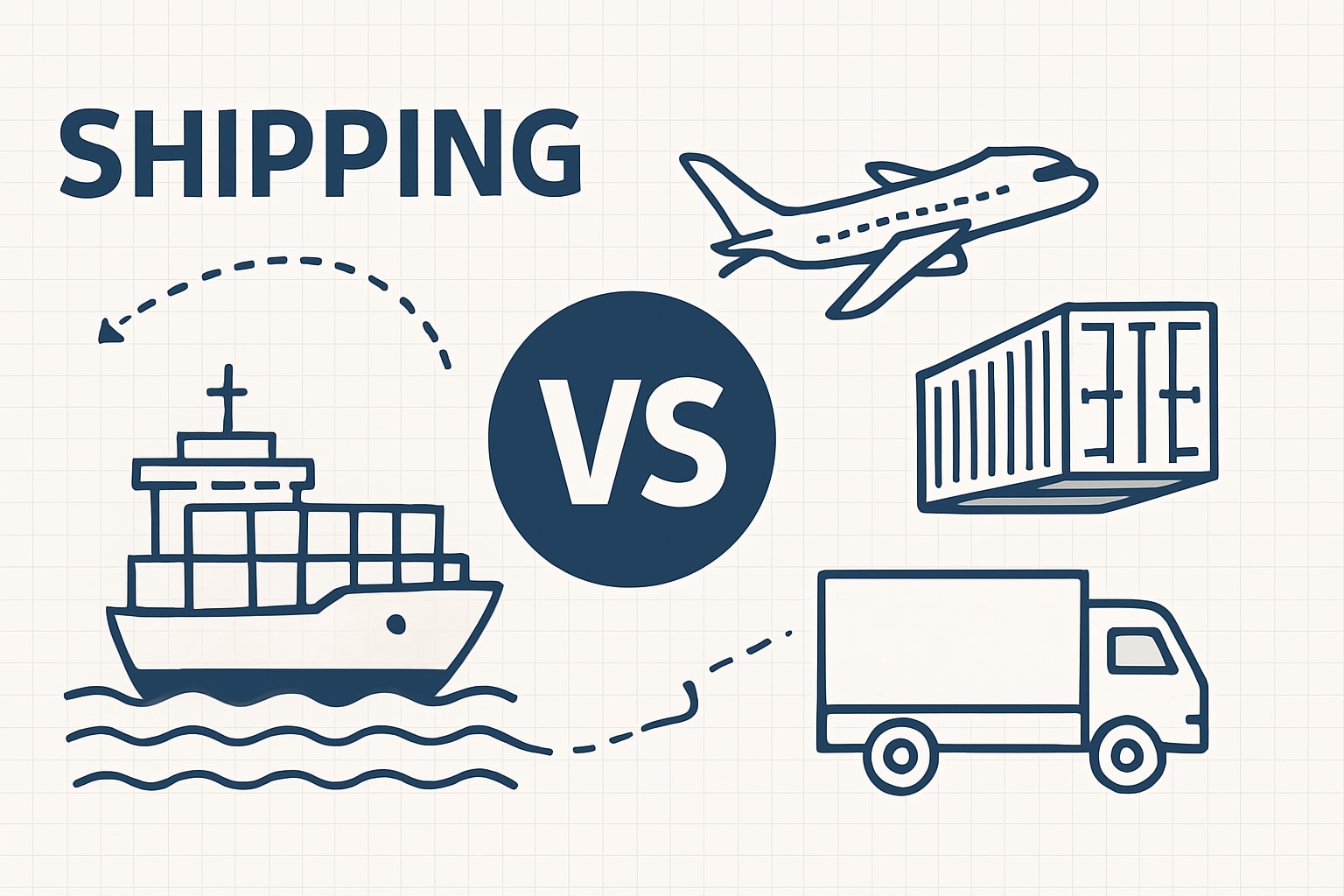
In 2026, global logistics have become more complex and fast-paced, making it essential to understand the distinction between shipping and freight. Many individuals and businesses find these terms confusing, yet knowing the difference is vital for cost savings and improved efficiency. This article will demystify shipping and freight, guiding you through their definitions, core differences, processes, and the impact of technology. By the end, you will have the insights needed to streamline your deliveries and confidently choose the right solution for your needs.
Understanding shipping and freight in 2026 means looking at how these terms have evolved with global commerce and technology. The boundaries are shifting, but their core differences remain essential for businesses and individuals. Let’s break down what each term means, where they overlap, and how industry language is adapting.
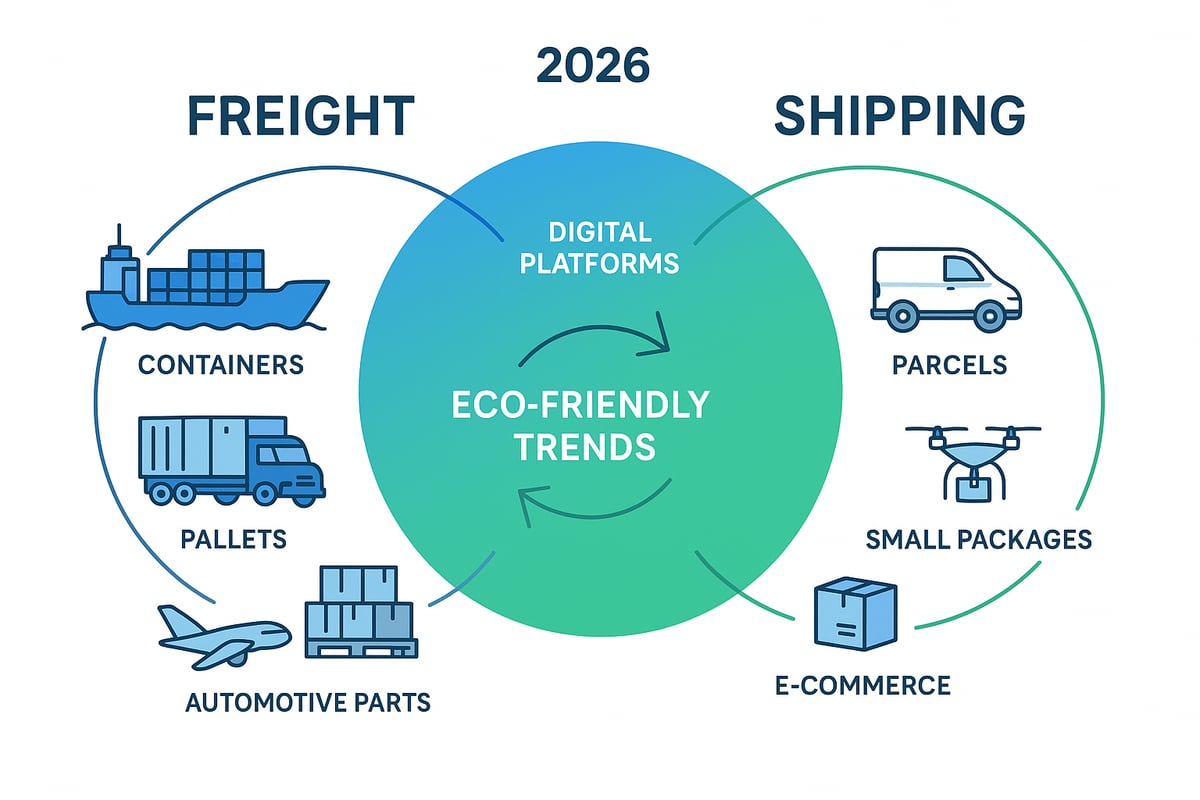
Freight in 2026 refers to the large-scale movement of goods, primarily for commercial purposes. This involves transporting bulk items by land, sea, or air using trucks, trains, container ships, and cargo planes. Companies use freight for heavy or oversized products, such as machinery or automotive parts, especially in intercontinental trade.
Freight services are increasingly multimodal, combining several transport modes for efficiency and sustainability. Businesses now consider eco-friendly practices, choosing electric trucks or sea routes to reduce emissions. For example, an automotive manufacturer may use rail and sea freight to move parts from Europe to Asia, taking advantage of cost savings on bulk loads.
Freight volumes continue to rise globally, with sea freight dominating bulk goods transport. As shipping and freight become more interconnected, understanding freight’s role is crucial for businesses seeking the best logistics solutions.
Shipping in 2026 has expanded beyond its original meaning of sea transport. Now, shipping covers the movement of goods by land, sea, or air, typically for smaller loads. Both businesses and individuals use shipping for small to medium-sized shipments, such as e-commerce parcels or urgent documents.
Online retailers rely on shipping to deliver products directly to consumers, taking advantage of rapid delivery networks and advanced tracking. For instance, a retailer might ship products to thousands of customers daily, offering fast and reliable service for individual parcels.
The surge in global e-commerce has driven parcel shipping volumes to new heights, making shipping and freight important terms for anyone involved in logistics. Shipping is now essential for both commercial and personal deliveries, reflecting the demand for speed and convenience.
The terms shipping and freight are often used interchangeably, but they have distinct meanings within the logistics industry. Professionals maintain clear definitions, while consumers may not notice the difference. Technology continues to blur these lines, as digital platforms let users book freight or shipping services with similar ease.
For example, a freight forwarder might offer “shipping” solutions for large cargo, combining the efficiency of freight with the accessibility of shipping services. This blending of terms is driven by the rise of digital freight marketplaces and smart warehousing, as highlighted in 6 Trends Shaping Shipping & Logistics in 2025.
As the logistics landscape evolves, understanding the nuances between shipping and freight helps businesses select the right service for their needs, whether for bulk trade or individual parcels.
Shipping and freight each have their own categories and regulatory requirements. Freight is classified as air freight, sea freight, land freight, LTL (less-than-truckload), and FTL (full-truckload). Shipping categories include express, parcel, courier, and standard shipping.
| Category | Freight | Shipping |
|---|---|---|
| Modes | Air, sea, land (trucks, rail) | Land, sea, air |
| Typical Loads | Pallets, containers, bulk goods | Parcels, small packages |
| Documentation | Bills of lading, commercial invoices, permits | Shipping labels, customs |
| Example | FCL export of electronics | Express courier for samples |
Regulations vary, with freight requiring detailed documentation and customs clearance, while shipping is often simpler, especially for low-value parcels. For instance, air freight needs specific airway bills, whereas shipping a parcel might only need a customs declaration.
Understanding the core differences between shipping and freight is essential for businesses and individuals navigating the logistics world in 2026. These two terms, while often used interchangeably, represent distinct concepts that impact everything from cost to delivery speed. Let us examine the primary factors that set them apart.
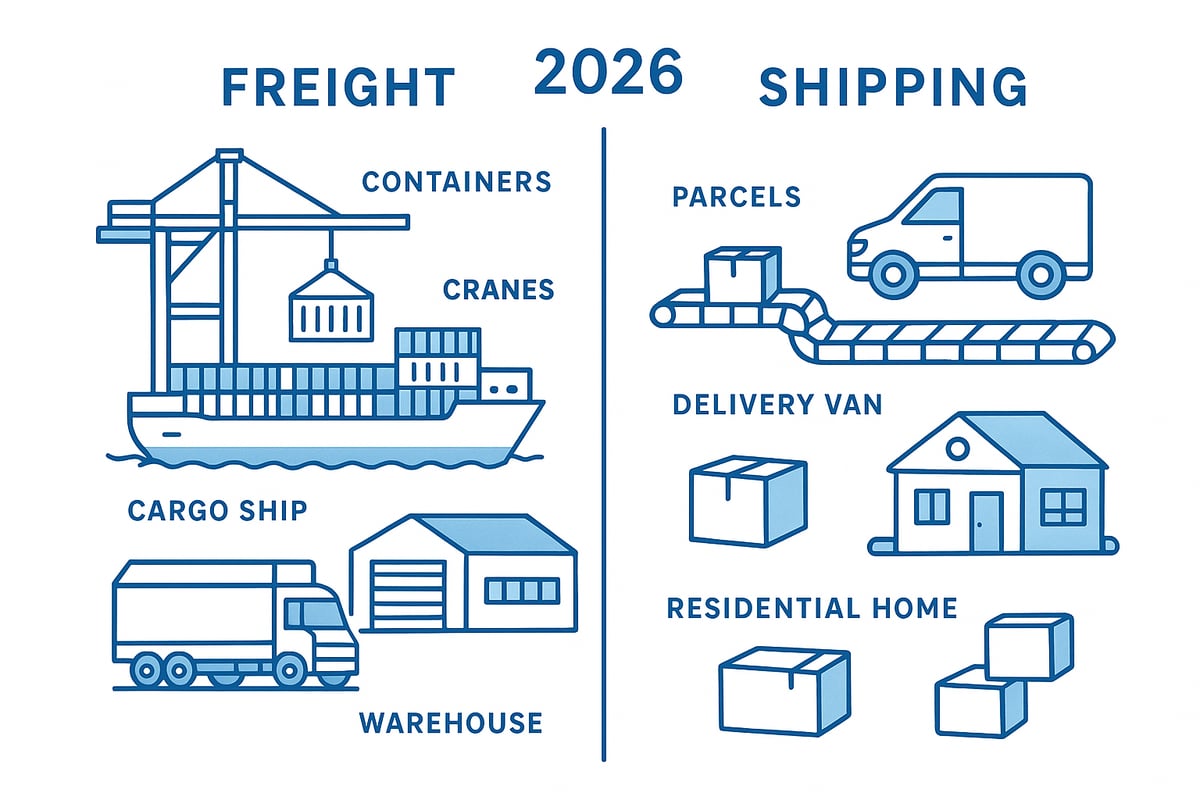
The most immediate difference between shipping and freight is the scale of goods moved. Freight typically refers to the transport of large, bulk consignments—often measured in pallets, containers, or tonnes. This method is favoured by manufacturers, wholesalers, and organisations managing inventory or restocking warehouses.
Shipping, on the other hand, deals with smaller, individual parcels. These are the packages sent by e-commerce retailers directly to consumers or small businesses. The rise of online shopping has driven a surge in parcel shipping, making it a staple for direct-to-consumer deliveries.
For example:
A general rule in 2026 is that freight shipments usually exceed 150 lbs or involve multiple pallets, while shipping covers lighter, single-package deliveries. This distinction is at the heart of how shipping and freight shape logistics strategies.
Shipping and freight also diverge in the vehicles and equipment they require. Freight utilises heavy-duty lorries, rail wagons, container ships, and cargo planes. Specialised tools such as cranes and forklifts are essential for loading and unloading bulk goods, especially at ports and terminals.
Shipping, in contrast, relies on small delivery vans, postal vehicles, and automated parcel sorting systems. Parcels are typically handled manually or moved along conveyor belts, enabling rapid processing and efficient last-mile delivery.
Consider this comparison:
The equipment used reflects the operational needs of shipping and freight, ensuring each can handle their respective volumes and destinations efficiently.
Cost is a significant differentiator between shipping and freight. Freight is generally priced based on weight, volume, distance travelled, chosen mode of transport, and any special handling requirements. This model rewards bulk shipments, offering lower per-unit costs as volume increases.
Shipping, meanwhile, is priced by weight, size, delivery speed, and destination. While shipping is more expensive per unit for small items, it provides speed and convenience for urgent or one-off deliveries.
For instance:
Data from the logistics sector shows freight becomes more economical per kg as shipment size increases, while shipping remains the best option for small, time-sensitive packages. These pricing differences play a crucial role in deciding between shipping and freight.
Delivery speed is another major point of contrast. Freight services focus on optimising costs for large volumes, often at the expense of speed. Shipments may pass through several warehouses or transfer points, especially when using sea or rail.
Shipping, by design, prioritises speed and direct delivery. Parcels are routed swiftly from sender to recipient, often with real-time tracking. For example, sea freight may take weeks to cross continents, while next-day courier shipping can deliver a parcel within 24 hours.
Data from 2026 suggests shipping can be two to five times faster than freight for small parcels. This disparity in speed means the choice between shipping and freight often hinges on delivery urgency.
The final key difference between shipping and freight lies in their typical destinations and recipients. Freight is predominantly used for business-to-business (B2B) shipments, supplying warehouses, distribution centres, and retailers. It is also capable of reaching remote or industrial locations that require large-scale deliveries.
Shipping serves business-to-consumer (B2C) needs, delivering directly to homes, small offices, or urban addresses. This approach caters to the expectations of modern consumers for convenience and reliability.
For example:
This distinction in destination and recipient is central to how shipping and freight are deployed across supply chains in 2026.
The processes behind shipping and freight are the backbone of the modern logistics industry. Understanding how each operates in practice helps demystify their differences and highlights which solution fits your needs. From initial booking to final delivery, every step is optimised for efficiency, security, and compliance.
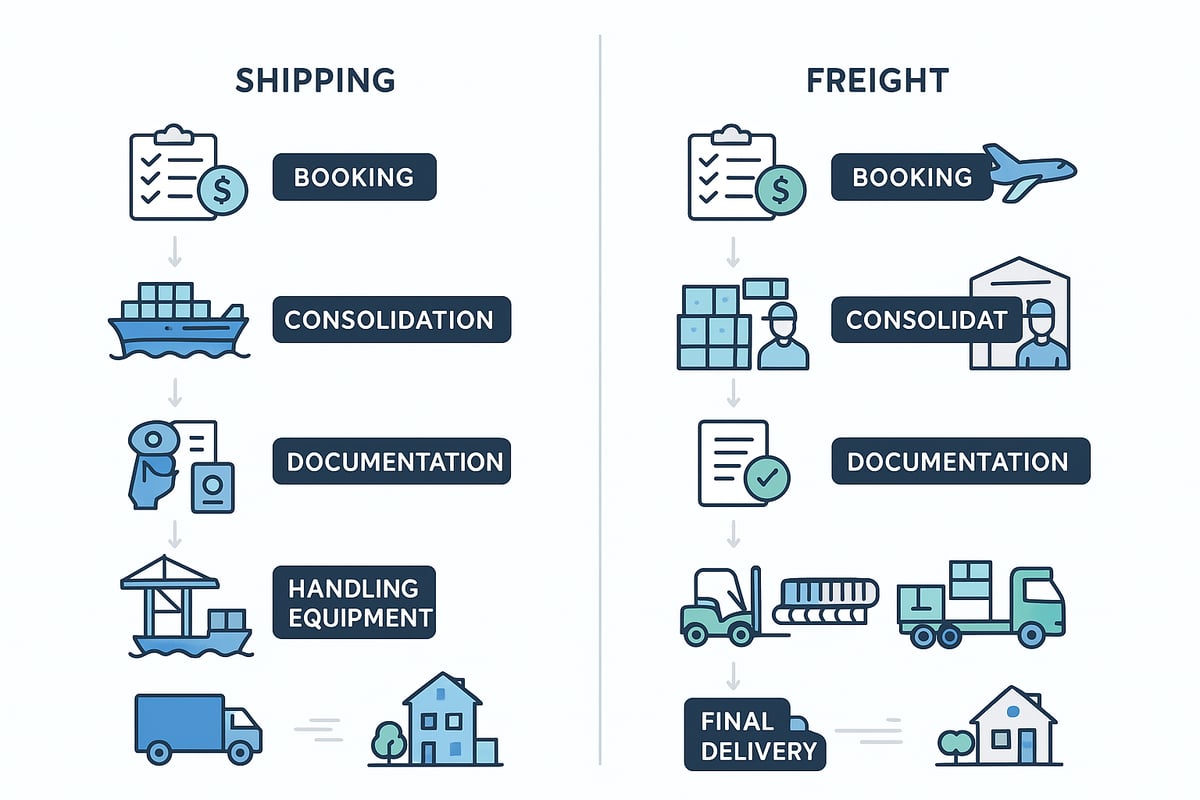
The freight logistics workflow is designed for large-scale, often complex, cargo movements. The journey begins with booking and scheduling, typically managed by freight forwarders or logistics providers. This stage involves confirming space on the chosen transport mode, whether by land, sea, or air.
Cargo is then consolidated, and essential documentation such as bills of lading and commercial invoices is prepared. Customs clearance is a critical step, especially for international freight. Intermodal transfers, such as moving containers from ship to rail, are common and require precise coordination.
For example, a manufacturer exporting automotive parts may book a full container load, moving goods by rail to a port, then by sea to an overseas destination. Most international shipping and freight operations involve several handovers and multiple parties. For a deeper dive into the booking process, see this guide on the freight booking process explained.
Shipping logistics are tailored for smaller, more frequent deliveries, making them ideal for e-commerce and personal shipments. The process starts with direct booking through online platforms or postal services. Parcels are labelled and sorted at central facilities, using automated systems for speed and accuracy.
Unlike freight, shipping typically bypasses warehousing, focusing on rapid last-mile delivery to homes and businesses. Simplified customs processes are used for low-value shipments, reducing delays and paperwork.
For instance, when you order a product online, the retailer ships it via an express courier, who manages sorting and delivers it directly to your door. Shipping and freight processes share some similarities, but shipping is optimised for speed and convenience.
Handling requirements differ significantly between shipping and freight. Freight operations rely on heavy-duty equipment such as cranes, forklifts, and container handlers, especially at ports and distribution centres. These tools are essential for loading and unloading bulky or palletised cargo.
In contrast, shipping uses conveyor belts, automated sorting machines, and manual handling for individual parcels. The scale of equipment reflects the volume and type of goods being moved.
| Equipment Type | Freight | Shipping |
|---|---|---|
| Cranes | Yes | No |
| Forklifts | Yes | Limited |
| Conveyor Belts | Limited | Yes |
| Manual Handling | Occasional | Frequent |
Whether using cranes for heavy machinery or conveyor belts for parcels, the choice depends on the specific shipping and freight requirements.
Documentation is a pillar of both shipping and freight, but the complexity varies. Freight shipments demand detailed paperwork, including bills of lading, commercial invoices, and import/export permits. These documents ensure legal compliance and facilitate customs clearance.
Shipping, especially for parcels, requires simpler documentation, often just a shipping label and basic customs declaration for international deliveries. For example, air freight will need specific airway bills, while a standard parcel may only require a label and a brief description.
Regulatory compliance is more demanding for freight, reflecting the higher value and volume of goods involved. The right approach depends on whether you are managing shipping and freight for bulk or individual shipments.
Safety and security protocols are paramount in both shipping and freight, but the level of protection differs. Freight shipments, often comprising high-value or sensitive cargo, require robust insurance policies and security measures. This includes secure storage, tracking, and protection against loss or damage.
Shipping, dealing with smaller parcels, typically uses standard insurance with lower risk per item. For example, freight insurance might cover an entire electronics container, while shipping insurance protects individual consumer goods.
Despite fewer claims in freight, their value tends to be much higher. Understanding these differences helps you choose the right insurance and security for your shipping and freight needs.
Rapid advances in technology are redefining the landscape of shipping and freight. From digital platforms to artificial intelligence and sustainability initiatives, these innovations are propelling the industry into a new era of efficiency, transparency, and environmental responsibility.

Digital platforms are now central to shipping and freight operations. Online booking systems allow shippers to compare rates and secure transport in minutes, removing previous manual bottlenecks. Automation is equally transformative, with advanced parcel sorting and cargo handling technologies reducing errors and speeding up workflows.
For freight, digital platforms enable real-time tracking of containers and cargo, providing transparency across the supply chain. In shipping, customers benefit from automated updates and simplified booking. The adoption of these technologies means both shipping and freight now deliver improved reliability, greater speed, and enhanced user experience.
Artificial intelligence is driving smarter decision-making in shipping and freight. AI-powered algorithms analyse vast datasets to optimise delivery routes, forecast demand, and set dynamic pricing. For freight, AI matches specific cargo with the best available mode, whether road, rail, air, or sea.
In shipping, AI tools predict delivery times and identify the most efficient last-mile routes. This results in fewer delays and better resource allocation. The integration of artificial intelligence across shipping and freight is expected to double by 2026, ensuring faster, more cost-effective logistics for businesses and consumers alike.
Sustainability is now a top priority in shipping and freight. Freight operators are increasingly turning to rail and sea options to reduce carbon emissions, while electric and hybrid vehicles are becoming standard for land transport. In shipping, companies invest in carbon-neutral parcel delivery and eco-friendly packaging solutions.
These initiatives are driven by regulatory pressures and consumer demand for greener supply chains. According to recent insights, Sustainability Initiatives Shaping Logistics Practices in 2026 are pushing the industry towards electrification, AI-based optimisation, and reduced emissions, ensuring that shipping and freight can meet ambitious environmental targets.
Blockchain technology is enhancing transparency and security within shipping and freight. Freight forwarders use blockchain to create tamper-proof digital documentation, such as electronic bills of lading, which streamlines customs clearance and reduces fraud.
In shipping, blockchain enables parcel-level tracking and authenticates high-value shipments, building trust for both senders and recipients. As more companies pilot blockchain solutions, the industry is moving towards more transparent, accountable, and efficient logistics. The adoption of blockchain in shipping and freight is set to accelerate, supporting secure global trade.
Understanding how shipping and freight differ in cost, efficiency, and value is essential for making the right logistics decision in 2026. Each method offers unique advantages depending on the type of goods, shipment size, and urgency. In this section, we break down the comparison points to help you make informed choices for your business or personal needs.
Shipping and freight each have distinct pricing structures. Freight becomes significantly cheaper when transporting large volumes or heavy goods. This is due to economies of scale, where consolidating shipments reduces the cost per unit.
| Factor | Freight (Bulk) | Shipping (Parcel) |
|---|---|---|
| Cost per kg | Lower (bulk rates) | Higher (per parcel) |
| Handling fees | Spread over many units | Applied per package |
| Example | 10,000 units by sea | 10,000 parcels by air |
For example, moving 10,000 units via sea freight can cost up to 80% less per kilogram than sending them individually through air shipping. Businesses dealing with high-volume inventory often choose freight to optimise cost efficiency.
When urgency is paramount or the shipment is small, shipping and freight offer different cost advantages. Shipping is designed for parcels under 70kg, making it ideal for sending single items, samples, or urgent goods.
Shipping providers offer flexible pricing based on parcel weight, size, and speed. For one-off deliveries, shipping minimises handling fees and administrative requirements. If you need to send a product sample to a client overnight, shipping is the most cost-effective and reliable option.
Cost efficiency for shipping and freight depends on shipment size and timing. Evaluate your needs to determine which model aligns with your budget.
Shipping and freight also diverge in their operational efficiency and reliability. Freight excels in moving large, scheduled shipments, ensuring predictable delivery for bulk goods. However, it is less flexible and may involve longer lead times due to consolidation and customs processes.
Shipping, on the other hand, is highly adaptable. It supports next-day or express deliveries, with on-time delivery rates exceeding 95%. For retailers and e-commerce businesses, shipping and freight are often used together: shipping for direct-to-consumer orders, freight for inventory restocking.
The right choice depends on your priorities. Consider whether flexibility or bulk scheduling is more important for your operations.
Modern shipping and freight solutions go beyond basic transport. Freight providers offer custom services such as temperature-controlled logistics, hazardous goods handling, and dedicated warehousing. For instance, temperature-controlled freight is essential for pharmaceuticals and perishables, ensuring goods arrive in perfect condition. Learn more about temperature-controlled freight solutions and how they enhance value for sensitive shipments.
Shipping prioritises customer experience with features like real-time parcel tracking, delivery notifications, and easy returns. These services boost satisfaction and transparency, especially for B2C deliveries.
Ultimately, the choice between shipping and freight should factor in both operational needs and the level of service your recipients expect.
Selecting between shipping and freight in 2026 requires a clear understanding of your shipment’s unique needs. As logistics evolve, making the right choice can drive efficiency, cut costs, and improve delivery outcomes. Let’s break down the key considerations to guide your decision.
The starting point for any decision between shipping and freight is shipment size and urgency. If you are moving a large volume of goods or heavy items, freight services are typically the better fit. Freight is ideal for palletised loads, full containers, or bulky equipment. On the other hand, shipping is designed for small, urgent, or lightweight parcels.
For example, trade fair equipment sent to an international expo would go via freight, while promotional samples heading to multiple clients would use shipping. In 2026, 60% of e-commerce businesses rely on shipping and freight solutions tailored to their order profiles, ensuring speed for customers and cost efficiency for bulk inventory.
The end recipient and destination play a major role in the shipping and freight decision. Freight excels when delivering to warehouses, distribution centres, or business addresses, where unloading equipment and staff are available. Shipping is optimised for home addresses, small businesses, and urban locations where speed and accessibility are key.
For instance, sending bulk books to a distributor calls for freight, while mailing a single book to a reader is best handled by shipping. If you want to understand the complexities of final delivery, especially for residential or urban addresses, see how final delivery and shipping shape customer experience in 2026.
Budget remains a central factor when comparing shipping and freight. Freight services offer lower per-unit costs for high-volume shipments, making them ideal for restocking and large inventory movements. Shipping provides flexibility and speed for smaller, time-sensitive deliveries, though per-item costs may be higher.
Consider the following table for a quick comparison:
| Criteria | Freight | Shipping |
|---|---|---|
| Cost per unit | Lower (bulk) | Higher (small parcels) |
| Speed | Slower | Faster |
| Flexibility | Less | High |
For seasonal stock replenishment, freight is often preferred. For holiday gifts or urgent samples, shipping wins.
The level of regulatory complexity can tip the balance between shipping and freight. Freight shipments require extensive documentation, such as bills of lading, export permits, and detailed customs paperwork. Compliance is stricter, especially for international moves or high-value goods.
Shipping, however, usually involves simpler procedures, particularly for parcels below value thresholds or not subject to special controls. For example, exporting electronics in bulk via freight means more paperwork and regulatory checks, while sending a sample overseas via shipping can be as simple as attaching a customs declaration.
In summary, by carefully evaluating size, urgency, destination, budget, and compliance needs, you can confidently choose the most effective shipping and freight solution in 2026.
The landscape of shipping and freight is rapidly evolving, with new trends shaping how goods move across the globe. As 2026 approaches, understanding what lies ahead is crucial for businesses and individuals relying on logistics. Let us explore the most significant developments that will define shipping and freight in the coming years.
E-commerce continues to fuel exceptional growth in small parcel shipping worldwide. More consumers expect same-day or next-day deliveries, particularly in urban centres. This demand is reshaping the shipping and freight sector, with micro-fulfilment centres and advanced last-mile solutions becoming standard.
Shipping and freight providers are investing heavily in infrastructure to meet these expectations. The volume of e-commerce shipments is projected to rise by 15 percent annually through 2026. Retailers and logistics companies alike are expanding their networks to keep pace, ensuring that shipping and freight remains agile and responsive to market needs.
A major trend in shipping and freight is the integration of multimodal logistics solutions. Companies are combining freight transport modes, such as sea, rail, and lorry, with shipping services for seamless end-to-end delivery. This approach allows goods to move efficiently from global distribution hubs right to customers’ doors.
Integrated logistics services are now offered by 40 percent of providers, enabling faster and more reliable deliveries. According to 8 Logistics Trends Shaping 2026 for North American Shippers, this blended approach is helping shippers optimise costs and reduce transit times. Multimodal integration is set to become a defining feature of shipping and freight strategies.
Sustainability is at the forefront of the shipping and freight agenda in 2026. New regulations, like the EU’s zero-emission freight corridor mandates, are driving significant change. Companies are investing in electric delivery fleets and green infrastructure to meet these requirements.
Shipping and freight operations are also adopting carbon-neutral practices and exploring alternative fuels. The rise of green shipping corridors and eco-friendly packaging is a direct response to customer and regulatory pressure. As sustainability expectations rise, businesses that adapt quickly will gain a competitive edge in the logistics marketplace.
Technology is revolutionising shipping and freight, with AI, IoT, and automation delivering measurable results. Predictive analytics, real-time tracking, and smart route planning are becoming industry norms. These advancements are expected to cut logistics costs by 20 percent by 2026.
Automation is also reducing errors while speeding up processing times. As highlighted in The State of U.S. Freight in 2026: Key Trends Shaping the Logistics Industry Going into the New Year, technology adoption drives both efficiency and sustainability. Shipping and freight providers that leverage these innovations will set the standard for reliability and customer satisfaction.
After exploring the essential differences between shipping and freight in 2026, it’s clear that having the right tools and expertise can make all the difference for your logistics strategy. If you’re looking to streamline your operations, save time, and gain a competitive edge with intelligent automation and expert support, we’re here to help. Let us show you how CharterSync’s platform can transform the way you manage air cargo charters—whether you handle urgent shipments, complex supply chains, or high value goods across industries. To see how it works in practice, you can request a demo today.

.png)