.png)
In 2026, global trade is evolving rapidly, with supply chains facing greater complexity and urgency than ever before. Navigating this landscape requires a reliable freight forwarding service that can manage every detail from start to finish.
This essential guide will help you understand the fundamentals of freight forwarding service, explore different service types, examine the latest technology advancements, and address environmental considerations. You will also learn how to select the right provider to keep your shipments moving smoothly.
Unlock actionable insights to streamline your shipping, reduce costs, and stay compliant. Use this guide to make confident, informed freight forwarding decisions in 2026.
Freight forwarding services are the cornerstone of modern supply chains, ensuring goods move smoothly across borders and continents. Whether you are a manufacturer or a retailer, understanding how these services function is vital for efficient global operations. In this section, we will break down the fundamentals of freight forwarding, clarify the roles within the network, and explain the language that shapes the industry.

A freight forwarding service acts as the expert intermediary between shippers (the sender of goods) and carriers (the companies physically transporting the cargo). The core purpose is to organise shipments, manage documentation, and ensure compliance with international regulations.
For example, if a UK company needs to send goods to the US, the freight forwarder arranges the best route, handles customs paperwork, and coordinates with carriers. Unlike carriers, who own the transport vehicles, or 3PLs, who may manage broader logistics, freight forwarders specialise in orchestrating the movement of goods.
| Role | Core Function | Owns Transport Assets? |
|---|---|---|
| Freight Forwarder | Arranges, documents, coordinates | No |
| Carrier | Physically transports cargo | Yes |
| 3PL Provider | Manages logistics end-to-end | Sometimes |
To explore these fundamentals further, see this helpful overview: freight and forwarding explained.
Freight forwarding service providers are essential for both international and domestic trade. They streamline complex logistics, offering supply chain visibility and reducing risk. With the global freight forwarding market valued in the billions and expanding rapidly, demand for expert coordination is high.
During times of disruption, such as the 2025 tariff changes or sudden geopolitical shifts, freight forwarders play a crucial role. They adapt quickly, rerouting shipments and ensuring compliance while minimising delays. Companies like UPS and Denholm Good Logistics have demonstrated the importance of forwarders in maintaining trade flows through uncertainty.
Efficient freight forwarding service not only moves goods but also protects business continuity during global events.
A successful freight forwarding service requires seamless collaboration among diverse stakeholders:
For instance, coordinating a cross-border shipment often means working with customs brokers to clear goods and warehousing providers to store items before delivery. Air, ocean, and road segments must be synchronised for timely, cost-effective shipments.
The strength of these relationships determines how efficiently a freight forwarding service can respond to changing market demands and regulatory landscapes.
The freight forwarding service industry uses specialised terminology. Understanding these terms is essential for compliance and cost control:
Familiarity with these terms empowers shippers to make informed decisions and avoid costly misunderstandings. Reliable shipping glossaries, such as those from UPS, provide valuable reference points for anyone navigating the freight forwarding service landscape.
Freight forwarding service offerings in 2026 are more diverse, technology-driven, and specialised than ever before. Businesses rely on a range of transport modes and value-added solutions to keep supply chains moving smoothly. Understanding the main types of freight forwarding service available is crucial for selecting the best fit for your logistics needs.

Air freight remains the fastest option for international shipments, ideal for time-sensitive and high-value goods. In 2026, freight forwarding service providers offer express, next-flight-out, and temperature-controlled solutions to meet varying demands. For instance, pharmaceutical firms often use air freight to guarantee rapid, secure delivery of medicines.
The sector has grown, with air freight now accounting for a significant share of global forwarding volumes. To learn more about how these solutions work in practice, see this detailed guide on air freight cargo shipping. Choosing the right air freight forwarding service ensures reliability, speed, and compliance for urgent shipments.
Ocean freight is the most cost-effective freight forwarding service for large, non-urgent shipments. Full Container Load (FCL), Less than Container Load (LCL), reefer containers, RORO, and dry bulk options are all widely available. UK exporters frequently rely on ocean freight to reach markets in the US and Asia, benefiting from lower costs on high-volume cargo.
Industry data shows that over 2,300 ocean shipping lanes are managed daily by leading providers. Ocean freight forwarding service is particularly well-suited for manufacturers and retailers with consistent, high-volume shipments. It offers flexibility in cargo size and type, making it a mainstay in global trade.
Road and ground freight are essential components of any comprehensive freight forwarding service, especially for domestic and intra-European logistics. Providers offer Less-than-Truckload (LTL) and Full Truckload (FTL) options to handle different shipment sizes efficiently.
For example, European businesses use cross-border road freight to distribute goods rapidly across the continent. This freight forwarding service is crucial for last-mile delivery and port-to-door transport, ensuring that goods reach their destinations on time, even in congested urban areas.
Multimodal freight forwarding service combines air, ocean, and road transport to optimise speed, cost, and flexibility. Providers coordinate each leg of the journey, consolidating shipments where possible to reduce customs clearance times and expenses.
A common example is shipping goods from Asia to Europe by combining sea and air routes, resulting in faster delivery at a lower cost than air alone. Multimodal and consolidation services are ideal for complex supply chains and businesses seeking efficient, adaptable logistics solutions.
The modern freight forwarding service landscape includes a host of value-added and specialised offerings. Customs brokerage, warehousing, inventory management, and project forwarding for oversized cargo are now standard.
For instance, handling out-of-gauge equipment for construction projects requires dedicated expertise and tailored solutions. There is a growing demand for specialised freight forwarding service in 2026, with providers offering temperature-controlled, hazardous goods, and high-security logistics to meet evolving client needs.
Navigating the modern freight forwarding service landscape in 2026 requires a clear understanding of each stage in the process. Whether you are a seasoned logistics manager or shipping internationally for the first time, knowing these steps will help you optimise your supply chain. The freight forwarding service process is built around five essential steps, each designed to ensure cargo moves efficiently and compliantly from origin to destination.

The first step in any freight forwarding service is the initial consultation and needs assessment. Here, the freight forwarder gathers all relevant shipment details, including the type of cargo, its volume, point of origin, and final destination. Timelines and deadlines are also established at this stage.
Special requirements, such as the need for temperature-controlled transport or handling hazardous goods, are discussed in detail. For example, shipping automotive parts or high-tech equipment may require tailored packaging or extra security measures. This personalised approach ensures the freight forwarding service can design a solution that meets your business objectives and compliance standards.
Once requirements are clear, the freight forwarding service moves to quoting and route planning. The forwarder obtains quotes from various carriers and compares transport modes, such as air, ocean, or road, to find the best balance of cost and speed. Advanced digital platforms now play a key role in this step, providing real-time pricing and route optimisation.
Automated quoting tools help clients see live availability and transit times, simplifying decision-making. For example, a company shipping electronics from the UK to Asia might receive several route options, each with its own trade-offs. This step ensures your freight forwarding service delivers both efficiency and transparency.
With a route and carrier selected, the freight forwarding service proceeds to booking and documentation. Space is secured with chosen carriers, and all necessary shipping documents are prepared. This includes bills of lading, commercial invoices, and customs declarations.
Accurate documentation is vital for compliance with Incoterms and international regulations. Many forwarders now use digital systems to streamline this process, reducing errors and delays. For a detailed look at how this step unfolds, see this booking freight step-by-step guide. Proper documentation is the backbone of a smooth freight forwarding service.
After booking, the freight forwarding service coordinates cargo handling, warehousing, and loading operations. Real-time tracking technology enables clients to monitor shipments at every stage, from pickup to final delivery. Digital platforms provide instant updates and proactive alerts, which is especially important for sensitive cargo like pharmaceuticals.
Working closely with logistics partners, the forwarder ensures safe handling and prompt responses to any issues. This step adds a layer of transparency and control, helping businesses mitigate risks and maintain supply chain visibility. A robust freight forwarding service makes tracking and visibility a standard part of the process.
The final step in the freight forwarding service process is customs clearance and delivery to the end destination. The forwarder manages all customs formalities, duties, and taxes, often working with customs brokers to ensure smooth border crossings. This is particularly critical for shipments moving through multiple countries or subject to new trade regulations.
Port-centric logistics and local expertise can expedite the import or export process, reducing dwell times and avoiding costly delays. Once cleared, the shipment is delivered to the final recipient, completing the freight forwarding service cycle. Timely, compliant delivery is the hallmark of a reliable partner.
Technology is transforming every aspect of freight forwarding service in 2026. The sector is embracing digital tools and advanced systems, making logistics faster, smarter, and more transparent for businesses worldwide.
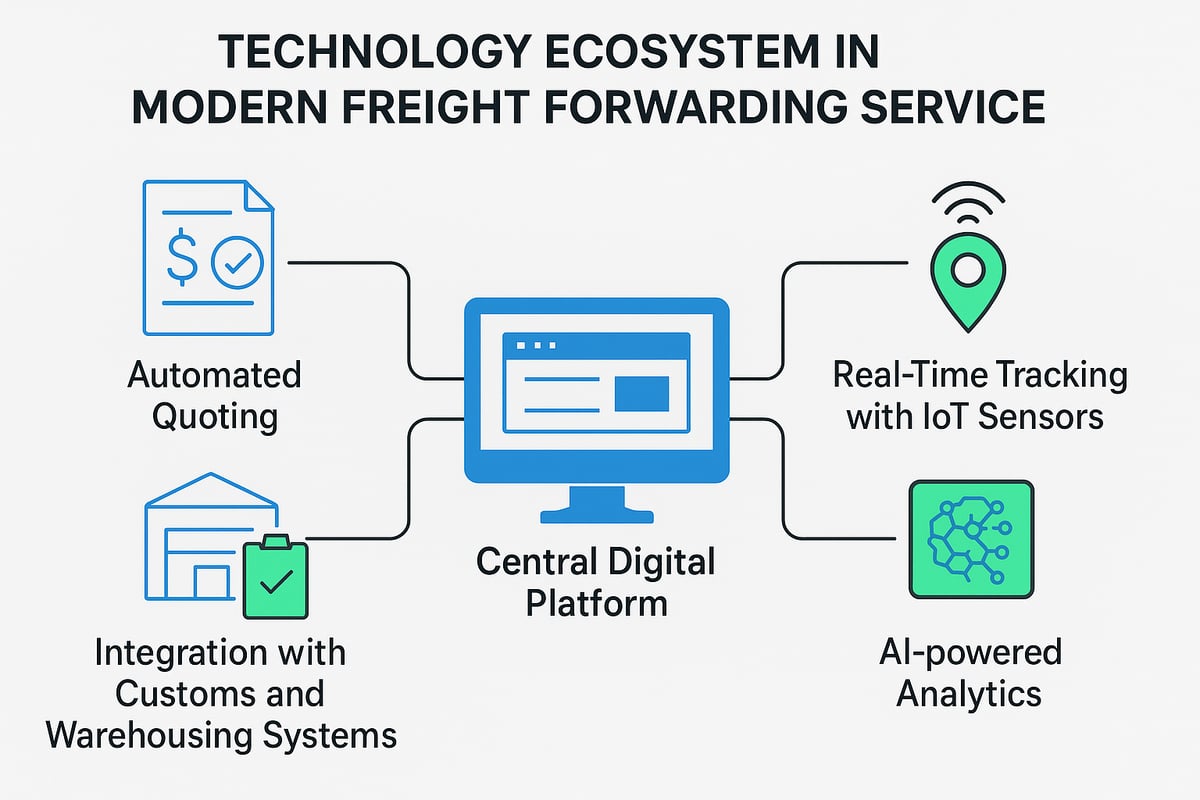
Digital platforms are now the backbone of every leading freight forwarding service. Centralised dashboards allow users to quote, book, and monitor shipments from a single interface.
Automation is driving efficiency at every step. AI-powered tools handle document processing, extract cargo details, and reduce manual errors. For example, automated workflows can instantly match shipment requirements with the best carrier options, saving time and minimising risk.
Businesses using digital platforms benefit from faster response times and fewer administrative headaches. This digital shift is making freight forwarding service more accessible and reliable for shippers of all sizes.
Real-time tracking has become a core feature for any modern freight forwarding service. IoT-enabled sensors and GPS devices provide live updates on shipment location, temperature, and condition.
Advanced analytics help monitor order status, flag exceptions, and support proactive intervention. For example, sensitive pharmaceutical shipments can be tracked minute by minute, ensuring compliance with safety standards.
With real-time visibility, freight forwarding service providers can quickly resolve issues and keep customers fully informed throughout the journey.
Data is now a strategic asset for every freight forwarding service. Big data analytics and predictive modelling are used to optimise supply chain performance and manage risks.
Scenario planning tools help companies prepare for disruptions such as tariffs or geopolitical shifts. By analysing shipment histories and market trends, forwarders can recommend the best routes and schedules to maximise on-time delivery.
Embracing data-driven strategies enables freight forwarding service providers to deliver measurable improvements in efficiency and reliability.
Seamless integration is essential for a successful freight forwarding service in 2026. Digital platforms now connect effortlessly with customs authorities, carriers, warehousing, and eCommerce systems.
Centralised document management streamlines communication and reduces paperwork. For example, integrated solutions support instant customs clearance and automated inventory updates for eCommerce businesses.
This high level of connectivity ensures that every freight forwarding service can respond quickly to market changes and customer needs.
The next wave of innovation is reshaping the freight forwarding service landscape. AI is enabling smarter quoting, operational efficiency, and predictive route planning. Blockchain technology offers secure, transparent documentation and payment processing.
Emerging solutions for carbon tracking and emissions reduction are helping providers meet sustainability goals. For a detailed look at upcoming innovations, see this overview of Freight Forwarding Technology Innovations.
Staying ahead of these trends will be crucial for any freight forwarding service aiming for long-term success and compliance.
Sustainability and compliance are rapidly reshaping the freight forwarding service landscape in 2026. Customers and regulators now expect providers to deliver not only efficiency but also responsible environmental practices. As the industry grows, meeting these expectations is crucial for long-term success.
The freight forwarding service sector is a significant contributor to global carbon emissions. Shipping, air, and road transport collectively account for a large share of the logistics industry’s environmental footprint. Regulatory pressure and consumer expectations for greener supply chains are increasing every year.
Many freight forwarding service providers now offer carbon tracking and emissions reporting as standard, helping shippers measure and manage their environmental impact. For example, some companies provide detailed sustainability dashboards alongside shipment tracking, allowing clients to make more informed decisions.
The industry’s response to sustainability is driven by both regulation and market demand, with the Freight Forwarding Market Growth Report highlighting the rising importance of eco-friendly logistics solutions.
Reducing emissions is a top priority for every modern freight forwarding service. Key strategies include:
By implementing these measures, freight forwarding service providers help clients meet environmental targets without sacrificing reliability. For example, switching from air to sea freight for non-urgent shipments can cut emissions significantly.
The most successful providers integrate sustainability into their operations, ensuring that green logistics are part of every decision.
Compliance is essential for any freight forwarding service operating across borders. Regulations cover customs procedures, security, and increasingly, environmental standards. The introduction of new tariffs in 2025 and evolving trade agreements have made compliance even more complex.
Freight forwarding service providers must stay updated on requirements such as post-Brexit customs rules and global emissions reporting standards. Working closely with customs brokers and regulatory authorities ensures smooth shipments and avoids costly delays.
Businesses that prioritise compliance not only reduce risk but also gain a competitive edge by demonstrating their commitment to responsible trade.
Technology is transforming how the freight forwarding service industry approaches sustainability. Digital tools now enable real-time monitoring of emissions, automated compliance checks, and data-driven optimisation of routes and loads.
Advanced platforms integrate carbon tracking with shipment visibility, providing actionable insights for shippers and forwarders alike. The adoption of freight forwarding software, as discussed in the Freight Forwarding Software Market Report, supports greener decision-making and transparent reporting.
With these innovations, freight forwarding service providers can help their clients achieve ambitious sustainability goals, while maintaining operational excellence.
Selecting the ideal freight forwarding service in 2026 can significantly influence your supply chain’s efficiency, costs, and resilience. The right partner offers more than just shipping; they bring expertise, technology, and tailored solutions that match your business needs.
Below, we break down the essential factors to consider when choosing your freight forwarding service partner.
When evaluating a freight forwarding service, start by examining their experience within your sector and their ability to handle your specific cargo types. Industry expertise ensures they understand unique challenges, whether you are shipping automotive parts, electronics, or perishable goods.
Look for providers offering tailored solutions, such as out-of-gauge project forwarding or specialist handling for sensitive items. If your shipments require temperature control or rapid delivery, ensure your partner excels in these areas, referencing their approach to temperature-controlled freight solutions.
Checklist for service evaluation:
A robust freight forwarding service will adapt to your growth, scale with demand, and address complex logistics.
Modern freight forwarding service providers should offer advanced digital tools for quoting, booking, and real-time tracking. Access to centralised dashboards and automated documentation streamlines your daily operations.
Consider the quality of customer support. Dedicated account managers provide a personal touch, while standardised helpdesks may suit less complex needs. Ensure your partner offers 24/7 support and proactive updates, especially for time-sensitive shipments.
Key technology and support features:
A reliable freight forwarding service integrates technology with human expertise, ensuring your shipments are always visible and supported.
A freight forwarding service with a strong global network ensures your goods move seamlessly across borders. Evaluate their coverage on major trade lanes, and ask about local warehousing or port-centric facilities for faster transfers.
Local expertise is vital for navigating customs and regulatory requirements in each region. Partners with facilities at key locations, such as Felixstowe or Heathrow, can expedite shipments and reduce delays.
Consider these network strengths:
A well-connected freight forwarding service bridges the gap between global reach and local agility, providing a consistent experience worldwide.
Transparent pricing is non-negotiable when selecting a freight forwarding service. Insist on clear, itemised quotes and clarification of any potential surcharges or hidden fees.
Compare the range of value-added services, such as customs brokerage, insurance, and warehousing. Comprehensive service packages often deliver better long-term value than basic shipping alone.
Sample comparison table:
| Service Feature | Partner A | Partner B |
|---|---|---|
| Itemised Pricing | Yes | No |
| Customs Brokerage | Included | Optional |
| Warehousing | Yes | No |
A trustworthy freight forwarding service helps you avoid surprises and ensures your logistics remain cost-effective and compliant.
Now that you have a clear understanding of the freight forwarding landscape in 2026 and how innovative platforms like CharterSync are transforming air cargo operations, you may be wondering how this technology can help streamline your own shipping processes. With instant access to global aircraft, real time smart quoting, and expert support, you can navigate complex supply chains with greater confidence and efficiency. If you would like to see how these solutions can work for your business, I invite you to request a demo and experience the future of freight forwarding first hand.

.png)