.png)

Imagine being able to track air shipment progress in real time, from the moment it leaves the warehouse until it arrives at its final destination. In today’s fast-paced logistics world, staying informed throughout the journey is essential for reliability and peace of mind.
This guide will help you understand how to track air shipment effectively in 2026. We will explore how new technologies, changing regulations, and advanced platforms are making global logistics more transparent and secure.
Discover the fundamentals of tracking, the latest innovations, step-by-step guidance, and expert strategies to keep your shipments visible and protected at every stage.
Air shipment tracking is the process of following cargo as it moves through the global supply chain by air. In 2026, the ability to track air shipment accurately is vital for businesses, freight forwarders, and logistics professionals. It enables you to see exactly where your goods are at any moment, improving transparency and reducing uncertainty for all parties involved.
When you compare track air shipment methods with tracking for sea, rail, or road freight, several differences emerge. Air shipment is typically faster, requires more precise timing, and involves more complex security and customs processes. Unlike ocean freight, which may update only at ports, air shipment provides frequent status updates at multiple points.
Tracking air shipment supports operational efficiency by streamlining processes and reducing manual checks. It also enhances security, as stakeholders can monitor for tampering or route deviations in real time. Customer satisfaction rises when clients receive timely updates, reducing anxiety about delivery times.
The backbone of track air shipment in 2026 is real-time data. IoT sensors collect information on location, temperature, and humidity, sending it to cloud-based platforms. These systems allow users to access live dashboards and receive instant notifications about their cargo, making the entire process more predictable and reliable.
Common tracking milestones include:
Despite these advances, challenges remain in the quest to track air shipment. Data can still be fragmented between carriers and platforms, making cross-border visibility difficult. Technology gaps exist in some regions, and not all cargo handlers use the latest tracking tools.
According to industry reports, 90 percent of logistics firms now consider real-time tracking essential for customer retention. This highlights how important it is to track air shipment with the latest tools and platforms.
A clear example is the pharmaceutical sector, where companies rely on end-to-end temperature and location monitoring to protect sensitive medicines. For a deeper look at how this works, see this guide on temperature-controlled freight tracking, which explains the extra steps needed to ensure product integrity and compliance.

The ability to track air shipment with pinpoint accuracy in 2026 is built on a foundation of rapidly advancing technology. Over the past decade, tracking systems have evolved from basic location updates to a fully digital, interconnected network of sensors, data platforms, and intelligent analytics.
As digital transformation accelerates, understanding the technologies underpinning modern air cargo tracking is essential for every logistics professional. Let’s explore the journey from manual processes to AI-driven insights, and see how these innovations shape the way we track air shipment today.

A generation ago, companies relied on manual logs and paper-based records to track air shipment. This method often led to delayed updates, missing data, and limited visibility, particularly for international movements.
The introduction of barcode scanning in the 1990s marked the first major step towards digital tracking. Barcodes improved the accuracy and speed of recording shipment milestones, enabling logistics teams to track air shipment more efficiently across complex supply chains.
Radio Frequency Identification (RFID) technology further enhanced tracking by allowing wireless, automated identification of cargo at key checkpoints. This reduced manual errors and improved data reliability.
GPS integration was the next leap, providing real-time location updates for shipments in transit. GPS allowed shippers to track air shipment while airborne, bridging the visibility gap between departure and arrival.
By 2026, major airlines and freight forwarders have embraced blockchain for shipment authentication and secure data sharing. Blockchain creates a tamper-proof digital ledger, ensuring every transaction related to a shipment is traceable.
According to IATA, 75% of air cargo shipments now utilise IoT-enabled sensors, reflecting the industry’s shift towards automated, data-driven tracking. For a deeper look at how digital tools are transforming freight forwarding, see this Technology in air cargo charter overview.
| Technology | Key Benefit | Adoption Year |
|---|---|---|
| Manual Logs | Basic record-keeping | Pre-1990s |
| Barcode Scanning | Faster milestone capture | 1990s |
| RFID | Automated identification | 2000s |
| GPS | Real-time location | 2010s |
| Blockchain | Secure data sharing | 2020s |
| IoT Sensors | End-to-end monitoring | 2020s-2026 |
As tracking tools evolve, the ability to track air shipment becomes not just a possibility, but a standard expectation.
In 2026, real-time data is the heartbeat of air cargo tracking. IoT sensors are now embedded in pallets, containers, and even individual shipments, constantly collecting information on temperature, humidity, shock, and precise location.
These IoT devices transmit data to cloud-based platforms, which aggregate and display live shipment information on intuitive dashboards. Logistics managers can track air shipment progress at every stage, from warehouse pick-up to delivery at the final destination.
Mobile apps and API integrations have further democratised access to tracking data. Whether on a desktop or mobile device, users can receive instant notifications about shipment departures, arrivals, customs status, and any exceptions that may arise.
Smart containers, equipped with multiple sensors, are a game-changer for high-value or sensitive cargo like electronics and perishables. They provide continuous updates on environmental conditions, helping operators track air shipment integrity and intervene quickly if thresholds are breached.
With live dashboards and automated alerts, shippers and consignees no longer wait for manual updates. Instead, they benefit from proactive visibility and the confidence that their cargo is monitored every step of the way.
Artificial intelligence has redefined how logistics professionals track air shipment, bringing advanced forecasting and automation into daily operations.
AI-powered platforms analyse vast datasets, including weather patterns, route congestion, and airport operations, to predict estimated time of arrival (ETA) with remarkable accuracy. This empowers stakeholders to track air shipment schedules and anticipate potential delays, reducing uncertainty in cross-border logistics.
Automated alerts generated by machine learning algorithms flag deviations from planned routes, customs holds, or unexpected delays. These alerts enable teams to respond rapidly, reroute shipments if needed, and minimise disruption.
Predictive analytics also plays a critical role in risk mitigation. AI identifies anomalies in sensor data—such as sudden temperature swings or prolonged stops—that could indicate issues with sensitive cargo. This allows operators to track air shipment conditions and take corrective action before problems escalate.
Industry data shows that AI has helped reduce shipment delays by 30% on intercontinental routes, reflecting its value in improving operational efficiency and customer satisfaction.
As these technologies mature, the ability to track air shipment is no longer limited to location updates. Today, logistics professionals benefit from actionable insights, automated workflows, and unprecedented transparency throughout the cargo journey.
Tracking your cargo is easier and more reliable than ever in 2026. This step-by-step guide shows you exactly how to track air shipment effectively, using the latest tools and best practices. Whether you are new to logistics or a seasoned freight forwarder, following these steps ensures full visibility every step of the way.
Every journey to track air shipment begins with the Air Waybill, or AWB. This document is the unique identifier for your cargo, assigned by your carrier or freight forwarder at the point of booking.
You can usually find your AWB on shipment confirmations, booking emails, or by requesting it directly from your logistics partner. The AWB is essential, as it connects your shipment to all digital tracking systems.
For example, entering the AWB number 123-45678901 allows instant access to real-time updates across platforms. Without it, tracking is impossible. So, always secure your AWB before proceeding.
To track air shipment efficiently, select a platform that matches your needs. Options include airline portals, freight forwarder dashboards, and advanced third-party solutions.
Here’s a quick comparison:
| Platform Type | Features | Ideal For |
|---|---|---|
| Airline Portal | Direct carrier data, basic updates | Single-carrier shipments |
| Freight Forwarder | Multi-carrier, value-added services | Complex supply chains |
| Third-Party Platform | Consolidated tracking, analytics | Global shipments |
When evaluating, look for real-time data, global coverage, and a user-friendly interface. For more details on how forwarding integrates with tracking, see the Freight forwarding and shipment tracking guide.
Global platforms now consolidate multiple carriers, making it easy to track air shipment from one dashboard, regardless of route complexity.
With your AWB in hand, enter the number and any required shipment details into your chosen platform. Most systems now offer instant status updates and live dashboards.
Typical status messages include "Departed", "In Transit", "Arrived at Customs", and "Delivered". Real-time notifications alert you to key events, such as customs clearance or delivery exceptions. Some platforms even allow you to set up automated alerts for each milestone.
This step is vital to track air shipment without gaps, ensuring you are always informed about your cargo’s current location and condition.
Understanding each update is crucial when you track air shipment. Key status indicators represent milestones in your cargo’s journey:
For sensitive cargo, such as pharmaceuticals, platforms now provide temperature and humidity logs at each stage. If you see alerts for delays, holds, or route changes, respond quickly by contacting your carrier or forwarder. Proactive monitoring helps avoid costly surprises.
Even with advanced systems, issues can arise when you track air shipment. Common problems include missing updates, data discrepancies, or delayed scans.
To troubleshoot:
If issues persist, escalate through carrier or platform support channels. Many systems now offer digital proof of delivery, streamlining dispute resolution. Keeping records of all tracking communications will help resolve problems faster.
CharterSync’s AI-powered air cargo charter platform makes it easier than ever to track air shipment. With real-time updates, smart aircraft matching, and full end-to-end visibility, users always know where their cargo is.
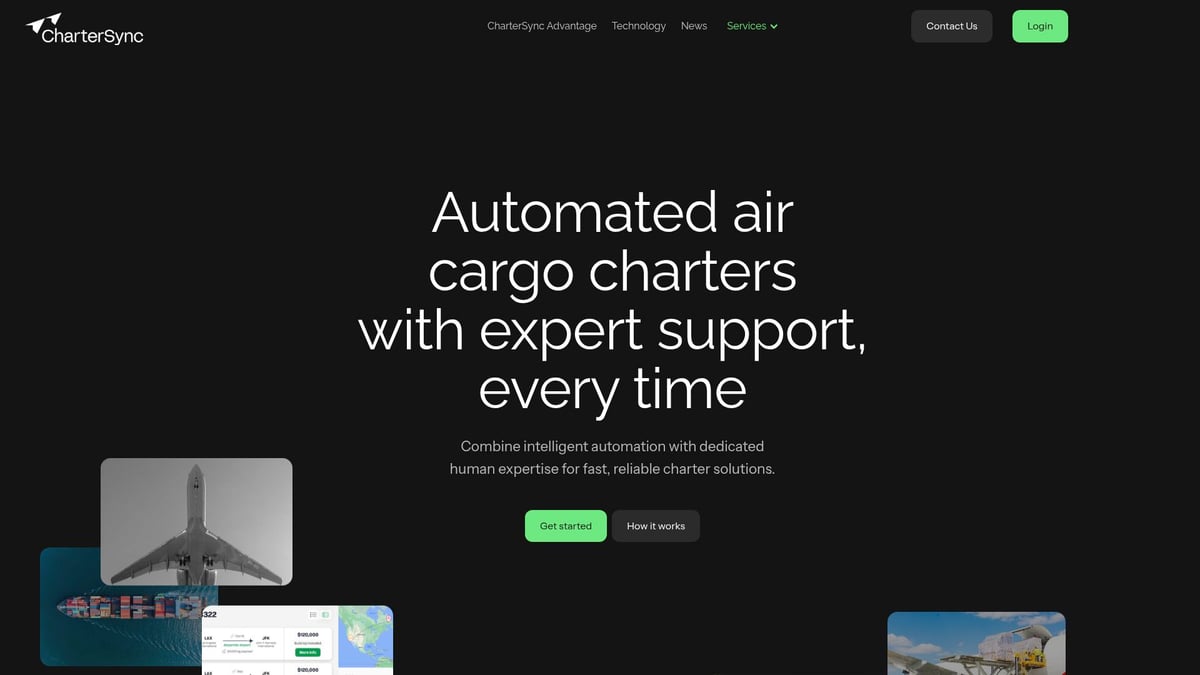
Instant access to a global fleet, automated notifications, and expert support ensure every shipment is monitored closely. The unified dashboard allows freight forwarders and logistics professionals to manage and resolve tracking issues efficiently, delivering peace of mind on every shipment.
Staying compliant and secure has never been more critical for those who track air shipment in 2026. With regulations evolving and digital security threats rising, understanding the latest global requirements is essential to keep your cargo moving safely and efficiently.

Regulations governing air cargo have become more comprehensive, directly impacting how companies track air shipment worldwide. Major bodies such as IATA, ICAO, the European Union, and US authorities now require advanced data submission and end-to-end transparency.
Each region enforces slightly different rules, creating a complex compliance landscape. For example, the EU’s ICS2 demands detailed shipment data before goods enter its borders, while the US has tightened screening requirements for all inbound cargo. Staying updated with the IATA's 2026 Cargo and Ground Operations Manuals helps logistics professionals navigate these evolving standards confidently.
| Regulatory Body | Key Requirement | Impact on Tracking |
|---|---|---|
| IATA | Digital documentation, e-freight | Real-time visibility |
| EU (ICS2) | Pre-arrival data submission | Enhanced security |
| US (ACAS) | Advanced screening | Faster customs process |
The ability to track air shipment accurately hinges on understanding and adapting to these changing regulations.
New data privacy laws have reshaped how companies track air shipment and share sensitive information. Regulations such as GDPR and similar frameworks in other regions require strict controls over who can access shipment data and how it is processed.
These rules protect customer and business data but can sometimes limit real-time information sharing across borders. Logistics providers must ensure their tracking systems comply with both local and international privacy standards, balancing transparency with legal obligations.
Security is paramount, especially for high-value or sensitive goods. To track air shipment securely, companies are deploying tamper-evident seals, secure chain of custody protocols, and advanced monitoring technologies.
For pharmaceuticals, electronics, or confidential shipments, real-time tracking combined with physical security measures helps prevent theft, tampering, and loss. Enhanced screening at airports and digital verification processes further reduce the risk of in-transit incidents.
The move towards e-freight and digital customs clearance has transformed how businesses track air shipment. Over 60% of air cargo shipments now require digital documentation, streamlining border crossings and reducing paperwork delays.
A notable example is the EU's Import Control System 2 (ICS2) Phase 3 Implementation, which makes pre-arrival data submission mandatory for all air shipments entering the EU. This regulation ensures authorities receive detailed cargo information upfront, improving both security and efficiency.
Digital customs processes also enhance transparency, allowing shippers and consignees to access real-time updates as their cargo clears each regulatory checkpoint.
As regulations multiply, harmonisation efforts are helping to simplify compliance for those who track air shipment across borders. Organisations like IATA are working with governments to align standards, reduce data silos, and close visibility gaps in the global supply chain.
Balancing compliance with operational efficiency is a daily challenge. Shippers and freight forwarders must stay agile, adapting their processes to meet evolving requirements while maintaining high service levels for customers.
Ultimately, regulatory harmonisation and digital innovation are making it easier to track air shipment with confidence, ensuring security, transparency, and customer satisfaction.
Achieving complete visibility and minimising delays when you track air shipment is crucial for every logistics operation in 2026. With digital platforms, real-time data, and a globalised supply chain, adopting proven best practices and leveraging advanced technology can make a measurable difference. Here are expert tips to help you stay ahead.
To effectively track air shipment, start by ensuring your documentation is accurate and complete. Missing or incorrect details can cause delays at customs or checkpoints. Digital records help automate this process, reducing errors.
Partner with carriers and digital platforms that offer real-time, multi-modal tracking. Choose solutions that integrate seamlessly with your internal systems, providing a single source of truth for all your shipments. For a comprehensive overview of available services, see this air shipment services overview.
Plan shipments with buffer times. Even with the best technology, weather, airport congestion, or regulatory checks can cause unexpected delays. Build in flexibility to your schedules to keep your supply chain resilient.
Proactive communication is key. Top-performing shippers maintain regular contact with all parties, enabling quick responses to exceptions or disruptions. By following these steps, shippers have reduced exceptions by up to 25 percent.
Harnessing predictive analytics is a game-changer when you track air shipment. Modern platforms analyse weather patterns, strike risks, and airport congestion to forecast possible disruptions. This allows you to reroute or reschedule proactively, minimising delays.
Automated status alerts and milestone reporting can be set up for each shipment. These notifications keep your team informed in real time, enabling faster reactions. Integrating tracking data with supply chain management systems ensures end-to-end visibility and supports smarter decision-making.
For example, automated alerts have been shown to cut response times to shipment issues by half. The use of IoT sensors and real-time monitoring tools, as highlighted by the IATA's Interactive Cargo Initiative, is driving greater transparency and reliability across the industry.
To track air shipment successfully, foster transparent communication between shippers, carriers, and consignees. Shared digital dashboards provide a unified view of shipment status, helping all parties stay aligned.
Proactively share tracking data to build trust and anticipate potential issues. This not only reassures customers but also allows partners to prepare for any required actions at the next milestone.
A prime example is the automotive industry, where supply chains rely on shared platforms to synchronise just-in-time deliveries. This collaborative approach reduces the risk of misrouted shipments and speeds up problem resolution.
Establish clear escalation procedures for exceptions or delays. With everyone informed and empowered, shipment visibility is maximised and costly disruptions are minimised.
As we’ve explored, keeping pace with air shipment tracking in 2026 means leveraging the smartest tools and insights to stay ahead of the curve. With CharterSync, you get the benefit of real time updates, AI powered matching, and seamless support, all in one intuitive platform. If you’re ready to transform how you manage and monitor your shipments—ensuring speed, transparency, and reliability at every step—why not see it in action for yourself You can request a demo and discover firsthand how effortless air cargo tracking can be.

.png)