.png)
Getting air cargo quotes used to mean sending emails to multiple brokers, waiting hours (sometimes days) for responses, and then manually comparing numbers in a spreadsheet. For freight forwarders and logistics managers handling time-sensitive shipments, that delay can cost more than money, it can cost a client relationship.
The good news: you don't have to work that way any more. Digital charter platforms like CharterSync now let you request, compare, and confirm quotes in minutes rather than days. With AI-driven aircraft matching and transparent side-by-side pricing, the guesswork is replaced by data-backed certainty, confirmed availability, loadability analysis, and all-in costs on one screen.
This guide walks you through how to obtain and compare air cargo rates effectively, what to look for beyond the headline price, and how to book your charter online without the back-and-forth that slows traditional procurement down.
Before you can compare air cargo quotes effectively, you need to understand what each one actually contains. A quote is not just a single number. It is a bundle of costs, conditions, and technical confirmations that together tell you whether a shipment is feasible and what you will genuinely pay in total, before any surprises at the booking stage.
A quote without a loadability confirmation is an estimate, not a commitment - verify technical feasibility before you treat any figure as final.
Every charter quote covers several distinct line items. The aircraft charter rate is the base fee, which reflects the aircraft type, routing, and positioning. On top of that, you will typically see fuel surcharges, handling fees, landing and navigation charges, and sometimes permit costs for restricted airspace or specific countries. Some quotes bundle these into a single all-in figure, while others break them out separately. Always check which approach a quote uses before you compare two options side by side, because a lower headline number can easily hide higher ancillary costs.
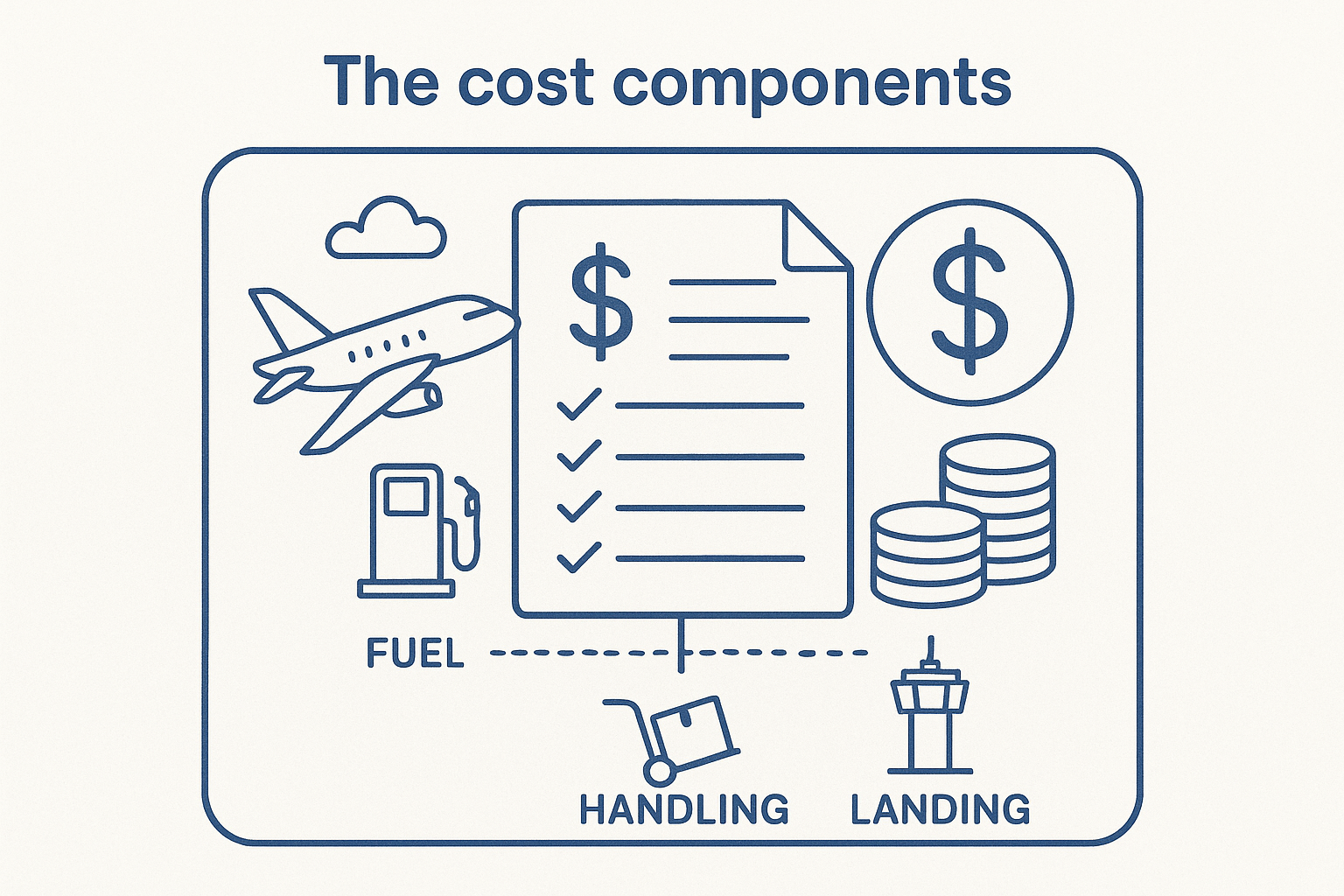
The final figure in any quote shifts based on a set of specific variables. Cargo weight and dimensions are the most direct driver: a shipment that requires a wide-body freighter rather than a converted passenger aircraft will cost significantly more. Routing and positioning also matter, since one-way charters often carry a repositioning charge because the aircraft needs to return empty after delivery. Timing plays a clear role too, as urgent departures on short notice typically attract higher rates. Knowing these variables before you request quotes means you send accurate details from the start, which leads to figures that reflect your actual shipment rather than a provisional guess.
The accuracy of any air cargo quote depends entirely on what you submit at the start. If you send incomplete or estimated figures, operators return provisional numbers that will shift when your actual cargo is verified. Pulling this information together before you request quotes avoids wasted rounds of back-and-forth and gives you comparable results from the outset.
Your shipment specifications are the single biggest price driver. Before you request anything, have the following details confirmed:
If your cargo is classified as dangerous goods, flag it from the first contact: many operators will not accept DG cargo, and omitting this detail invalidates the quote entirely.
Specify your origin and destination airports using IATA codes (for example, MAN to JFK), and confirm your required departure date. A firm date gives operators the ability to check real aircraft positioning and availability, rather than returning a speculative estimate based on assumed routing.
Once you have your cargo details confirmed, the next step is requesting quotes in a way that lets you compare them accurately. Sending identical information to every operator is the only way to ensure the figures you receive reflect the same shipment, not different interpretations of vague inputs. If one operator quotes on estimated weight and another on confirmed weight, the numbers are not comparable and any decision you make from them carries risk.
Sending a structured request every time removes ambiguity and ensures each quote covers the same scope. Use the template below as your starting point:
- Origin / Destination: [IATA code] to [IATA code]
- Departure date: [DD/MM/YYYY]
- Total gross weight: [kg]
- Dimensions per piece: [L x W x H cm]
- Number of pieces: [#]
- Cargo type: [General / Valuable / Dangerous Goods]
- Special handling: [Yes / No - specify]
- Quote required: All-in, including surcharges and permits
Always request all-in pricing explicitly: operators who quote base rates only return figures that look competitive but exclude significant ancillary costs.
When air cargo quotes come back, verify that each one covers the same cost components before you look at the headline number. Standardise the figures yourself if needed, and check that each quote addresses the following:
Receiving competitive air cargo quotes means nothing if the aircraft cannot physically accommodate your cargo. Before you move forward with any booking, confirm that the operator has run a loadability analysis against your actual dimensions and weight. A price that looks attractive on paper becomes a problem at the ramp if your cargo does not fit through the door.
Check that each quote includes a confirmed loadability result, not just an assumed fit. Before you commit, verify the following against your cargo:
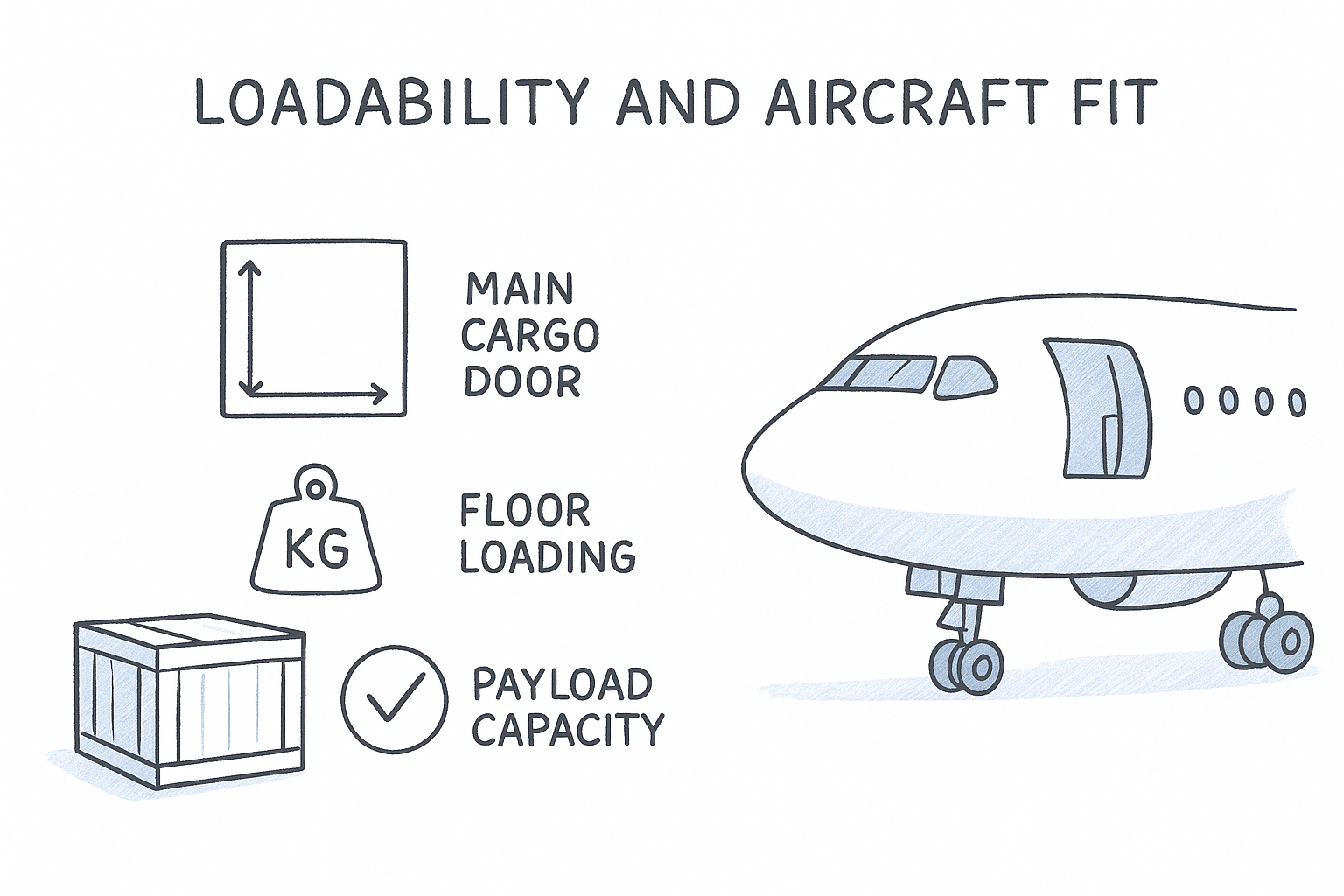
If no loadability confirmation is provided, treat the quote as provisional and request one before you proceed.
Permit requirements vary significantly by routing and cargo type. Some corridors require overflight permits that take 48 to 72 hours to obtain. Factor this into your departure timeline and ask each operator to confirm permit lead times upfront, so a tight schedule does not collapse at the final stage before departure.
Once you have confirmed loadability and aligned on all-in pricing, the booking itself should take minutes. A digital platform removes the phone calls and PDF approvals that slow traditional chartering down, letting you confirm availability, sign off on terms, and receive booking confirmation inside the same workflow where you requested your air cargo quotes.
When you book through a digital platform like CharterSync, the system holds your confirmed aircraft against your cargo specifications and departure date. Before you confirm, check the booking summary against the following:
Managing documentation is where many bookings lose time after confirmation. A centralised dashboard lets you upload, access, and share all shipping documents from one location, so nothing gets lost in an email chain.
A missing document at the ramp delays departure: upload everything before the aircraft is scheduled to depart.
Keep your air waybill, packing list, and dangerous goods declarations (where applicable) attached to the booking record from the moment you confirm, and share access with your ground handler directly through the platform.
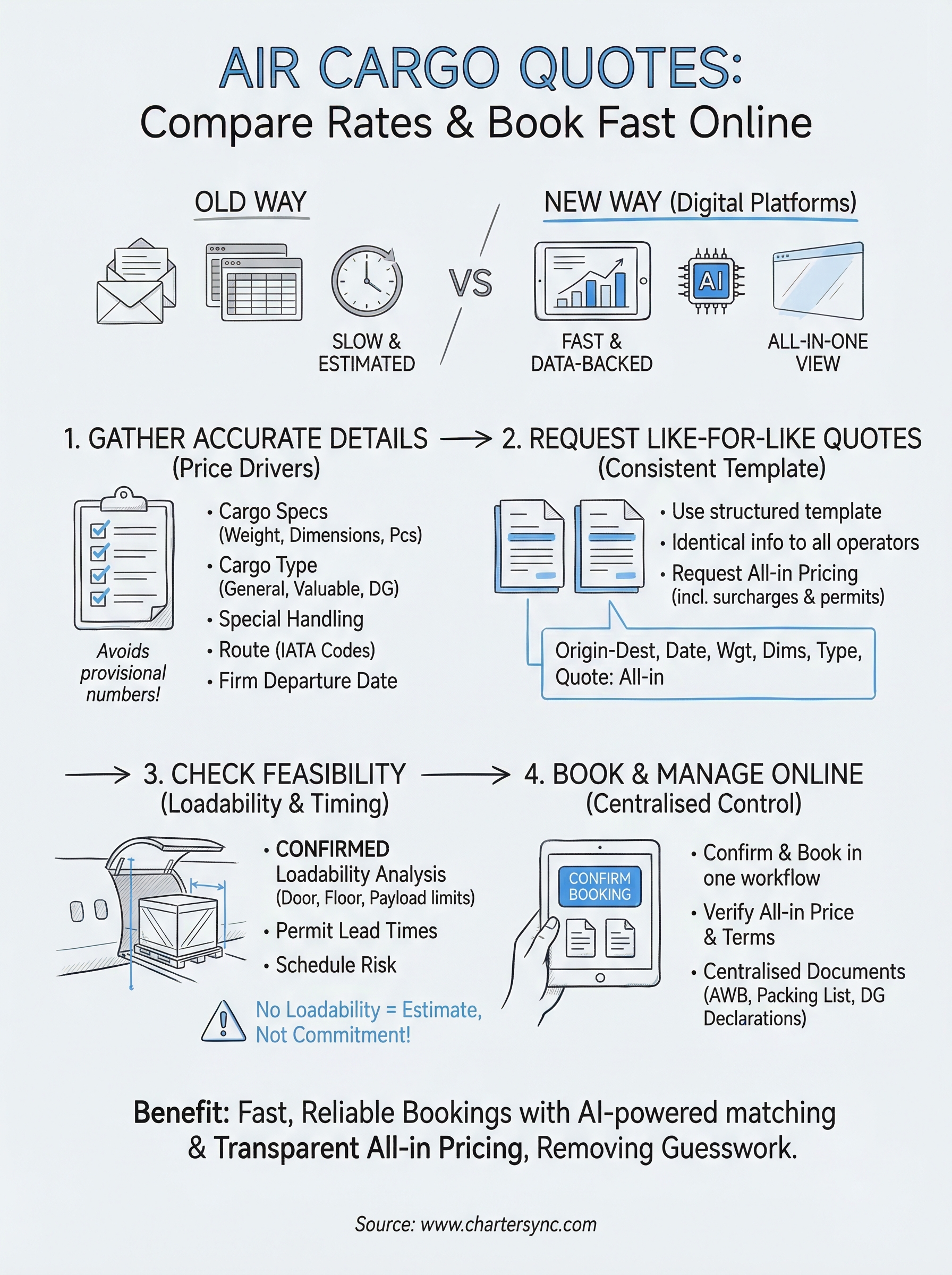
You now have a clear process for getting air cargo quotes that are accurate, comparable, and technically confirmed before you commit to anything. Start with your cargo specifications, send consistent requests, verify loadability and permit lead times, and book through a platform that keeps your documents in one place. Each step removes a point of failure that trips up traditional charter procurement.
The difference between a fast, reliable booking and a slow, uncertain one usually comes down to the quality of the information you provide upfront and the tools you use to manage the process. Platforms that combine AI-powered aircraft matching with transparent, all-in pricing remove the guesswork entirely and give you confirmed answers in minutes rather than hours.
If you want to skip the manual back-and-forth and get your next charter confirmed faster, request your air cargo quote on CharterSync and see confirmed availability against your exact cargo specifications straight away.
.png)