.png)
In 2026, the competition for customer loyalty will be won or lost at the final delivery stage. This critical phase can make or break a brand’s reputation in the eyes of today’s demanding consumers.
This comprehensive guide reveals the essential insights, emerging trends, and proven strategies businesses need to excel at final delivery. You will discover what final delivery truly means, the latest innovations shaping logistics, best operational practices, and how to overcome common challenges.
Equip your business with actionable knowledge to optimise operations and secure a competitive edge in a fast-evolving landscape.
Final delivery, often referred to as the last mile, is the crucial stage in logistics where goods travel from the distribution hub directly to the recipient. This segment is the point at which customer experience is truly defined, as it represents the final touchpoint between a brand and its customer. The scope of final delivery ranges from local courier drop-offs to sophisticated parcel terminal networks, each designed to meet the ever-increasing demands of modern consumers.
At its core, final delivery is the bridge between efficient supply chains and customer satisfaction. WAPI highlights that this phase has shifted from a purely operational concern to a strategic priority, with businesses now focusing on customer-centric models. The evolution has been rapid, moving from reliance on traditional postal services to advanced courier systems and automated collection points. Unlike traditional shipping, final delivery is highly localised, requires smaller vehicles, and operates within tighter timeframes to meet expectations.
To better understand these differences, consider the following comparison:
| Aspect | Traditional Shipping | Final Delivery |
|---|---|---|
| Coverage | National/international | Local/urban focus |
| Time Sensitivity | Days to weeks | Hours to 48 hours |
| Vehicle Size | Large lorries | Vans, bikes, small vehicles |
| Customer Interaction | Minimal | Direct, real-time communication |
| Flexibility | Limited | High (doorstep, terminals, etc) |
The demand for express, same-day, and next-day services is now driving the standard for final delivery. According to WAPI, a 24-48 hour delivery window has become a decisive factor for consumers when making purchases. Retailers and logistics providers are under pressure to offer these accelerated options, not only to remain competitive but also to ensure positive brand experiences.
The growth of eCommerce has dramatically increased both the volume and complexity of final delivery. Online retailers, marketplaces, and brands are integrating with a wide range of couriers, such as DPD and Royal Mail, to streamline operations and offer greater flexibility. WAPI’s integration with over 20 domestic and global courier partners exemplifies this trend. The rise of parcel terminals and automated solutions further illustrates how the sector is adapting to higher order volumes and more demanding delivery preferences.
Technological advancements are reshaping the landscape of final delivery. Innovations in route optimisation, real-time tracking, and automation are making fulfilment more efficient and reliable. For a deeper dive into how AI-driven solutions and autonomous vehicles are transforming last-mile delivery, see the latest Last-Mile Delivery Trends 2025.
Ultimately, final delivery is no longer an afterthought but a key differentiator in logistics and eCommerce. As customer expectations evolve, businesses must continue to innovate and adapt their final delivery strategies to remain ahead in a competitive market.
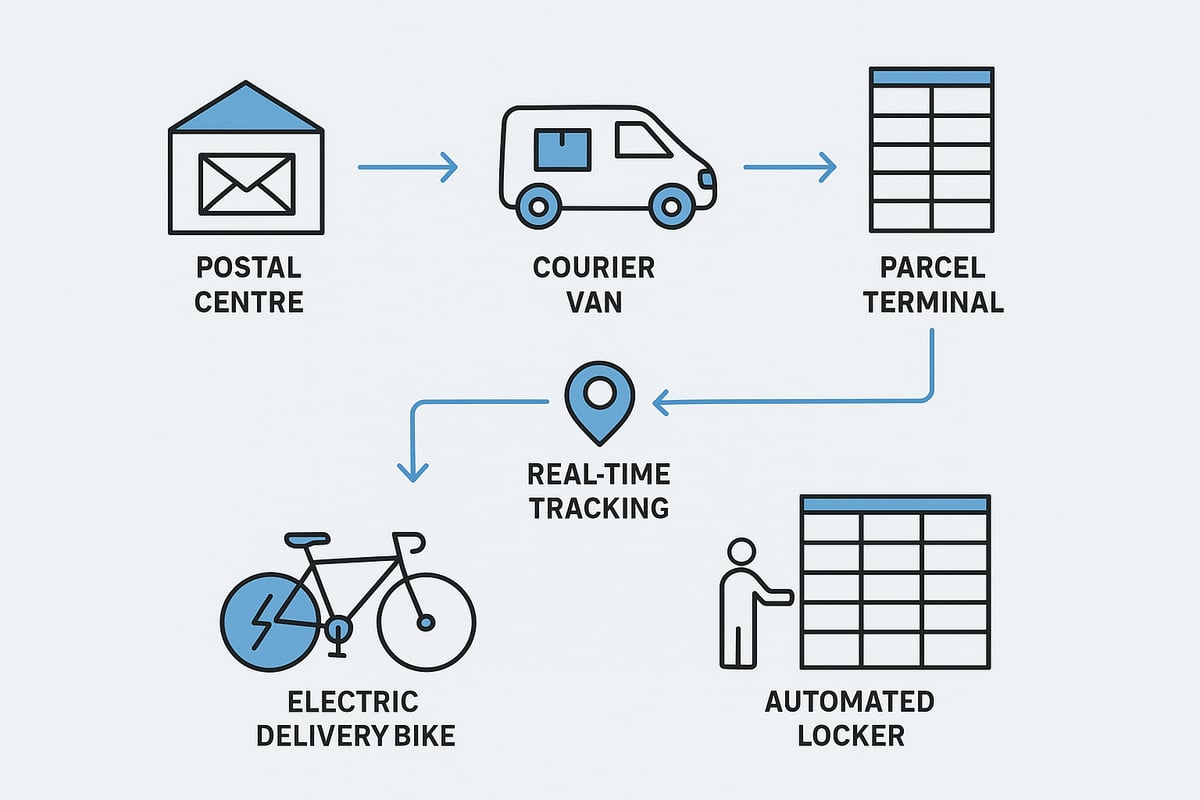
The final delivery process in 2026 has evolved into a sophisticated, customer-focused journey. Each stage is designed to enhance efficiency, visibility, and satisfaction. By understanding each step, businesses can unlock the full potential of final delivery and stay ahead in a competitive market.
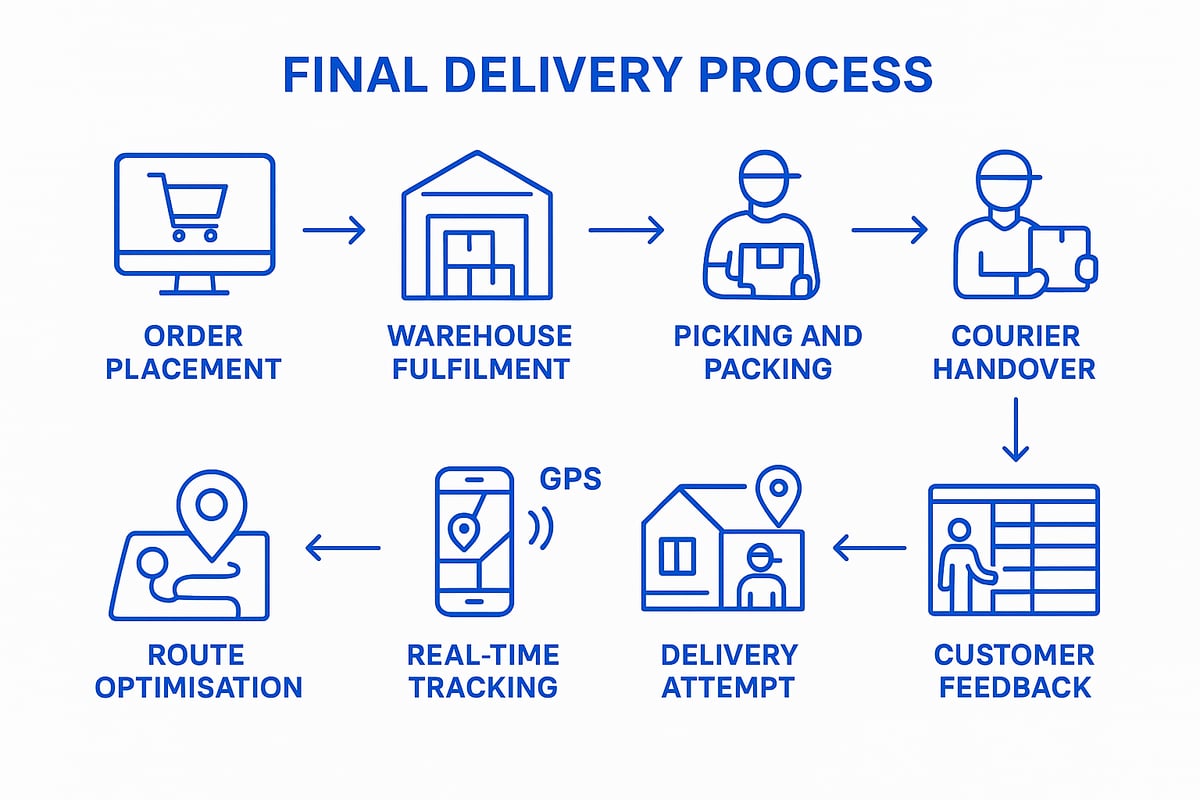
The final delivery journey begins the moment a customer places an order online. This triggers a seamless workflow at the fulfilment centre, where systems instantly register the order.
Staff or automated robots then pick, pack, and label each parcel, ensuring it is ready for last mile distribution. Attention to detail at this stage is vital for accuracy and speed. Integration with platforms like Shopify, eBay, and BigCommerce allows for real-time updates and error-free processing.
Once prepared, parcels are sorted based on destination and delivery method. Effective sorting ensures each package enters the correct channel for final delivery, whether that is direct to doorstep, a parcel terminal, or a local collection agency.
After dispatch, parcels are handed over to the courier network, postal service, or parcel terminal provider. At this point, real-time tracking is activated, and customers receive notifications about their shipment’s progress.
Modern route optimisation tools, powered by AI, GPS, and advanced analytics, calculate the most efficient delivery paths. This step is crucial for meeting the demand for rapid, reliable final delivery. Digital systems enable dynamic re-routing to avoid delays and reduce operational costs.
The use of mobile payment terminals further streamlines the process. Couriers can accept cash on delivery (COD) or card payments at the customer’s location, providing flexibility and convenience. Automated parcel terminals and agency collection points offer alternative delivery options for those unable to receive parcels at home.
To learn more about how technology is transforming these logistics processes, see Technology transforming freight forwarding.
The final stage of final delivery focuses on the successful handover of the parcel. Couriers attempt delivery at the specified location, whether that is a doorstep, parcel locker, or agency.
Upon delivery, confirmation is recorded digitally, often with a photo or signature as proof. Customers are invited to provide feedback, closing the loop and allowing businesses to monitor satisfaction.
This customer engagement is essential for refining final delivery operations. Insights from feedback help identify bottlenecks and drive continuous improvement. The integration of digital systems ensures that each delivery is tracked, documented, and analysed for future optimisation.
Businesses that master every phase of final delivery are best positioned to meet rising expectations in 2026. A well-executed process not only reduces errors but also builds enduring customer trust.
Final delivery is the most critical and complex stage in logistics today. Businesses face a range of challenges that can impact speed, reliability, and customer satisfaction. Understanding these obstacles and how to overcome them is essential for any company aiming to stay ahead in 2026.
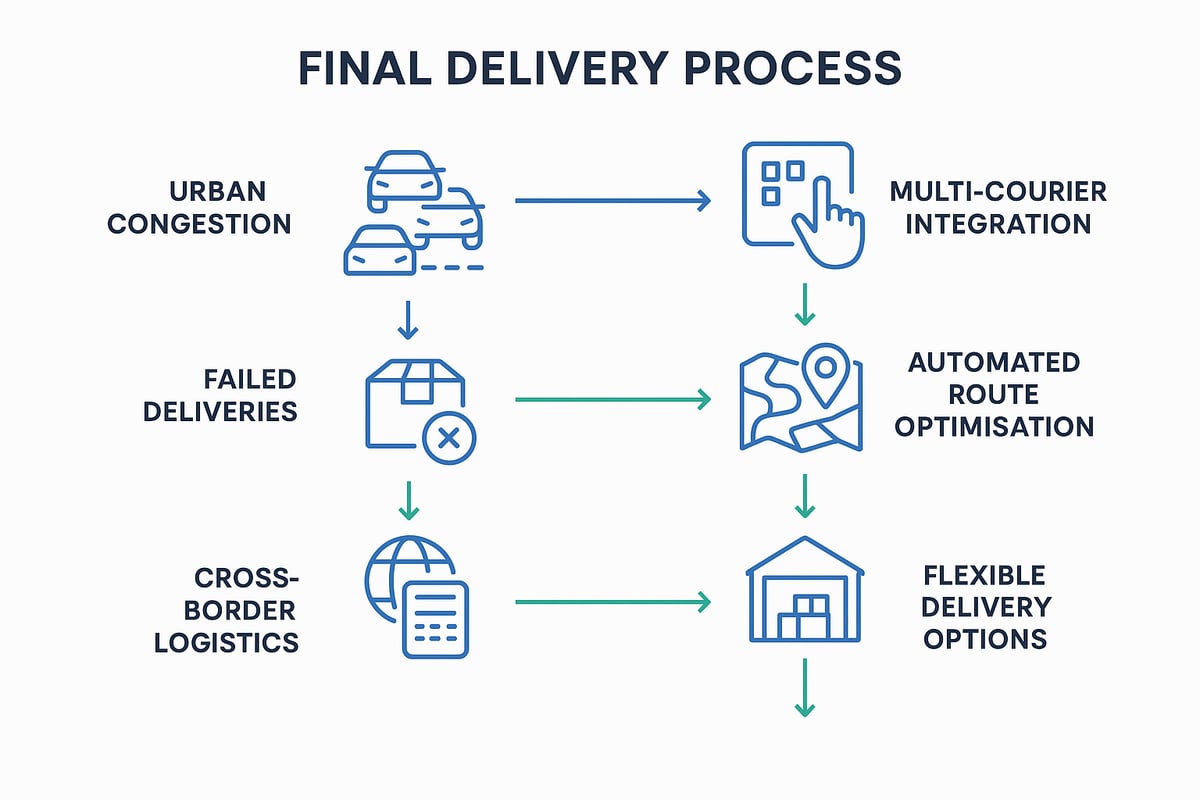
Urban congestion remains a top issue for final delivery, especially in densely populated cities. Traffic delays, restricted access zones, and parking limitations all contribute to longer delivery times and higher costs. Failed delivery attempts, often due to recipients not being home or unclear addresses, further increase operational expenses and reduce efficiency.
Cross-border logistics introduce another layer of complexity. Navigating customs procedures, regulatory compliance, and differing local requirements can slow down the final delivery process. As eCommerce expands internationally, these hurdles become even more pronounced.
Customer expectations have also risen sharply. Consumers now demand real-time tracking, transparent communication, and multiple delivery options. They expect final delivery to be accurate, fast, and flexible. According to recent industry research, 24-48 hour delivery has become a baseline expectation for many online shoppers.
Managing these challenges requires robust solutions:
A summary table illustrates how these challenges are met with tailored solutions:
| Challenge | Solution |
|---|---|
| Urban congestion | Automated route optimisation, local hubs |
| Failed deliveries | Flexible delivery options, real-time comms |
| Cross-border logistics | Multi-courier partnerships, compliance tools |
| Rising operational costs | Warehouse network expansion, automation |
| Customer expectations | Advanced tracking, multiple delivery modes |
For businesses looking to refine their final delivery strategy, understanding future trends is crucial. The 2026 Delivery & Logistics Trends Report provides valuable insights into urban logistics solutions, supply chain resilience, and the innovations shaping the sector.
The final delivery landscape is evolving rapidly. Companies that invest in technology, expand their courier networks, and prioritise customer-centric models will be best positioned to meet the demands of 2026. By addressing these challenges head-on and implementing proven solutions, your business can turn final delivery into a true competitive advantage.
The landscape of final delivery is set for dramatic change by 2026, as technology and consumer expectations drive a wave of innovation. Businesses need to stay ahead by understanding the most transformative trends shaping the journey from distribution hub to doorstep. Staying informed on these developments will help organisations optimise final delivery and maintain a competitive edge.
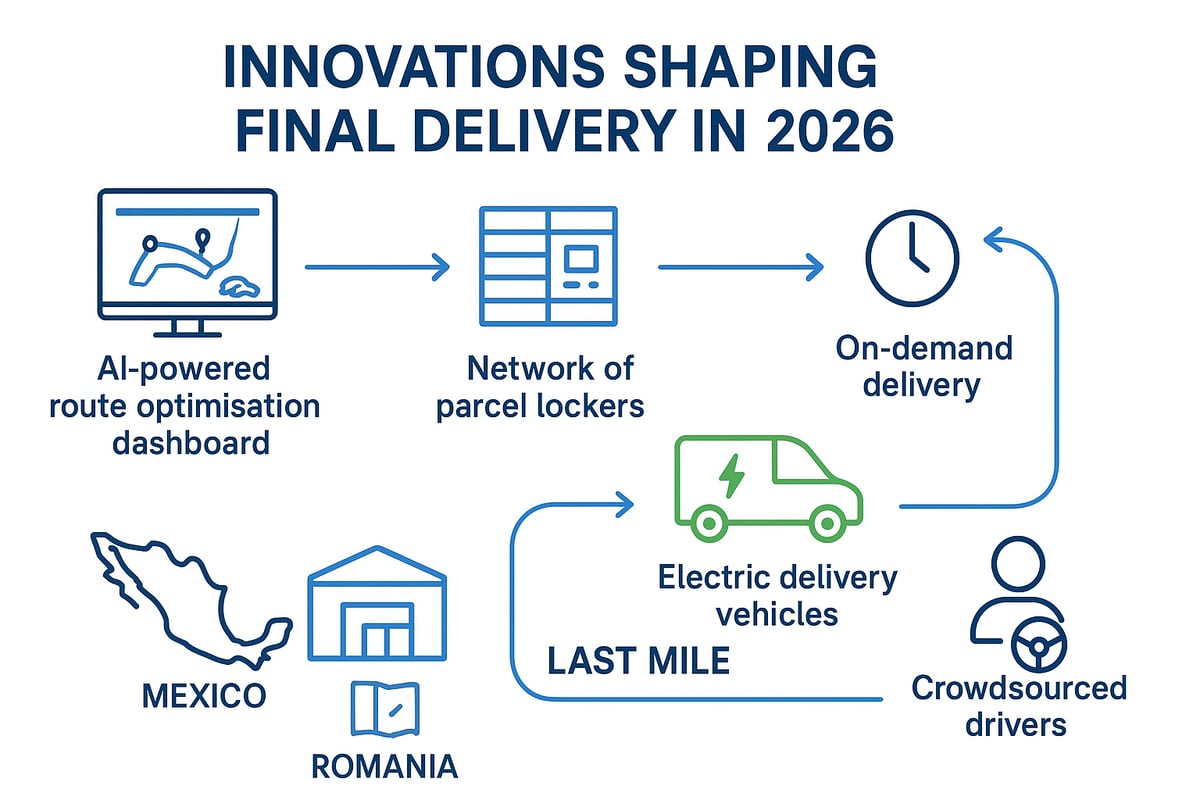
AI is revolutionising final delivery by enabling predictive ETA calculations and dynamic rerouting. With real-time data, logistics platforms can anticipate delays and optimise delivery routes instantly. Automation is also reshaping operations, as robotics and smart parcel sorting reduce manual errors and speed up processing.
Robotic solutions are gaining momentum, with a significant uptick in adoption for last-mile delivery. According to Robotic Last-Mile Deliveries Uptick, many logistics providers now deploy robots for doorstep and locker deliveries, enhancing speed and reliability. These advances set a new standard for final delivery efficiency.
Sustainability is becoming integral to final delivery operations. Logistics companies are investing in electric vehicles and eco-friendly delivery methods to reduce emissions and meet environmental targets. These green initiatives appeal to eco-conscious consumers and support corporate responsibility goals.
Cross-border fulfilment is also accelerating, with networks expanding into new regions such as Mexico and Romania. Businesses are strategically placing warehouses closer to customers, enabling rapid shipping and simplified customs processes. By 2026, over 30 countries are expected to receive parcels in just two business days through express networks, making fast, sustainable final delivery a global reality.
Consumer demand for flexibility is driving the rise of on-demand and crowdsourced delivery models. Customers increasingly expect a choice of delivery windows, instant tracking, and alternative collection options such as parcel lockers and automated points. This shift requires logistics providers to adapt quickly and offer a range of convenient final delivery solutions.
Global reach is expanding as fulfilment centres open in emerging markets and integrate advanced technologies. Pan-European and international networks allow retailers to serve cross-border shoppers efficiently, meeting the growing demand for seamless and timely final delivery experiences.
| Innovation | Description | Benefit |
|---|---|---|
| AI-powered Management | Predictive ETAs, dynamic rerouting | Faster, reliable delivery |
| Robotics & Automation | Automated sorting, robotic couriers | Reduced errors, efficiency |
| Sustainable Methods | Electric vehicles, green logistics | Lower emissions, appeal |
| Parcel Locker Networks | Automated collection points | Flexible customer options |
| Cross-Border Fulfilment | Warehouses in new regions | Rapid international shipping |
| On-Demand/Crowdsourced | Flexible timing, alternative delivery | Enhanced convenience |
Final delivery in 2026 will be defined by innovation, adaptability, and responsiveness to consumer needs. To keep pace, businesses must invest in the latest technology, prioritise sustainability, and expand their reach. For more insights on evolving customer expectations, see the latest Ecommerce Delivery Statistics 2025. By embracing these trends, organisations can ensure their final delivery operations are future-proof and customer-focused.
Mastering final delivery in 2026 demands more than just speed. It requires a holistic approach that weaves together technology, partnerships, infrastructure, and adaptability. As customer expectations continue to rise, businesses must build a future-proof final delivery strategy that is resilient, scalable, and ready for disruption.
Strategic Selection of Delivery Partners and Networks
A robust final delivery strategy begins with the right mix of delivery partners. Assess networks for coverage, reliability, and the ability to provide express and next-flight-out services. By collaborating with multiple providers, businesses can offer customers rapid options across regions. For instance, leveraging express and next-flight-out services enables fulfilment in as little as a few hours, meeting urgent demands and strengthening your competitive edge.
Evaluate each partner’s integration capabilities, technology stack, and track record for on-time performance. This approach ensures your final delivery operations remain agile, even during peak periods or unexpected disruptions.
Embracing Technology and Automation
Investing in automation, AI, and advanced fulfilment software is now essential for scalable final delivery. Modern platforms centralise order management, automate warehouse tasks, and optimise route planning using predictive analytics. These tools empower teams to handle higher volumes with fewer errors, while providing accurate delivery estimates to customers.
Adopting IoT-enabled tracking devices and digital proof of delivery systems further enhances transparency. Automation not only improves operational efficiency but also supports the rapid adaptation required in a dynamic logistics landscape.
Expanding Infrastructure and Flexibility
Proximity matters in final delivery. Expanding your warehouse and distribution centre footprint brings inventory closer to end customers, reducing transit times and enabling same-day or next-day fulfilment. Flexible delivery models, such as parcel terminals, collection agencies, and doorstep handovers, cater to diverse customer preferences and reduce failed deliveries.
Regularly review your network to identify opportunities for localised fulfilment and expansion into new markets. This adaptability is crucial for maintaining a seamless customer experience as demand patterns evolve.
Sustainability, Compliance, and Data-Driven Agility
Sustainability is no longer optional. Incorporate green delivery initiatives, such as electric vehicles and eco-friendly packaging, to align with consumer expectations and regulatory requirements. Ensure compliance with cross-border rules and customs for smooth international shipments.
Leverage real-time data and analytics to identify bottlenecks, forecast demand, and refine your strategy. Enhanced visibility, as highlighted in air cargo intelligence and supply chains, is vital for continuous improvement and risk management. Data-driven agility will set apart final delivery leaders in 2026.
Summary Table: Strategic Pillars for Future-Proof Final Delivery
| Pillar | Action Point | Benefit |
|---|---|---|
| Partner Selection | Diversify networks, enable express options | Faster, more reliable delivery |
| Technology & Automation | Invest in AI, IoT, fulfilment software | Efficiency, scalability |
| Infrastructure | Expand warehouses, offer flexible models | Proximity, customer choice |
| Sustainability & Compliance | Prioritise green practices, regulatory adherence | Reputation, global reach |
| Data & Visibility | Use real-time analytics and tracking | Agility, continuous improvement |
In summary, the ability to adapt and innovate in final delivery will define logistics leaders in 2026. By investing in partners, technology, infrastructure, and data, your business will be well-equipped to exceed customer expectations and thrive in a rapidly changing environment.
As you reflect on the strategies and innovations shaping final delivery in 2026, it’s clear that staying ahead means embracing both technology and expert insight. If you’re ready to see how intelligent automation and real human support can transform your air cargo charter operations, why not take the next step? Discover how CharterSync’s platform brings speed, accuracy, and reliability to logistics—helping you optimise every stage of your supply chain. If you’re interested in experiencing these benefits firsthand, I invite you to request a demo and see the difference for yourself.

.png)