.png)
Getting an accurate quote for shipping has never been more vital than in 2026. As global supply chains put greater emphasis on speed, transparency, and cost-efficiency, understanding how to obtain the right quote for shipping is essential for both businesses and individuals.
This guide will break down what a shipping quote is, why it matters for your bottom line, and how to secure the best rates and service every time. You will learn the basics, step-by-step processes, cost factors, smart comparison strategies, mistakes to avoid, and future trends. Discover how the right approach can save you money, reduce disputes, and keep your shipments moving smoothly.
Understanding a quote for shipping is essential for anyone moving goods in today's fast-paced global economy. A quote for shipping is a formal estimate provided by carriers or logistics providers, outlining the cost to move goods from one location to another. It serves as the foundation for planning, budgeting, and ensuring smooth delivery. As the backbone of modern logistics, this estimate helps both businesses and individuals avoid surprises and manage their shipping expenses with confidence.
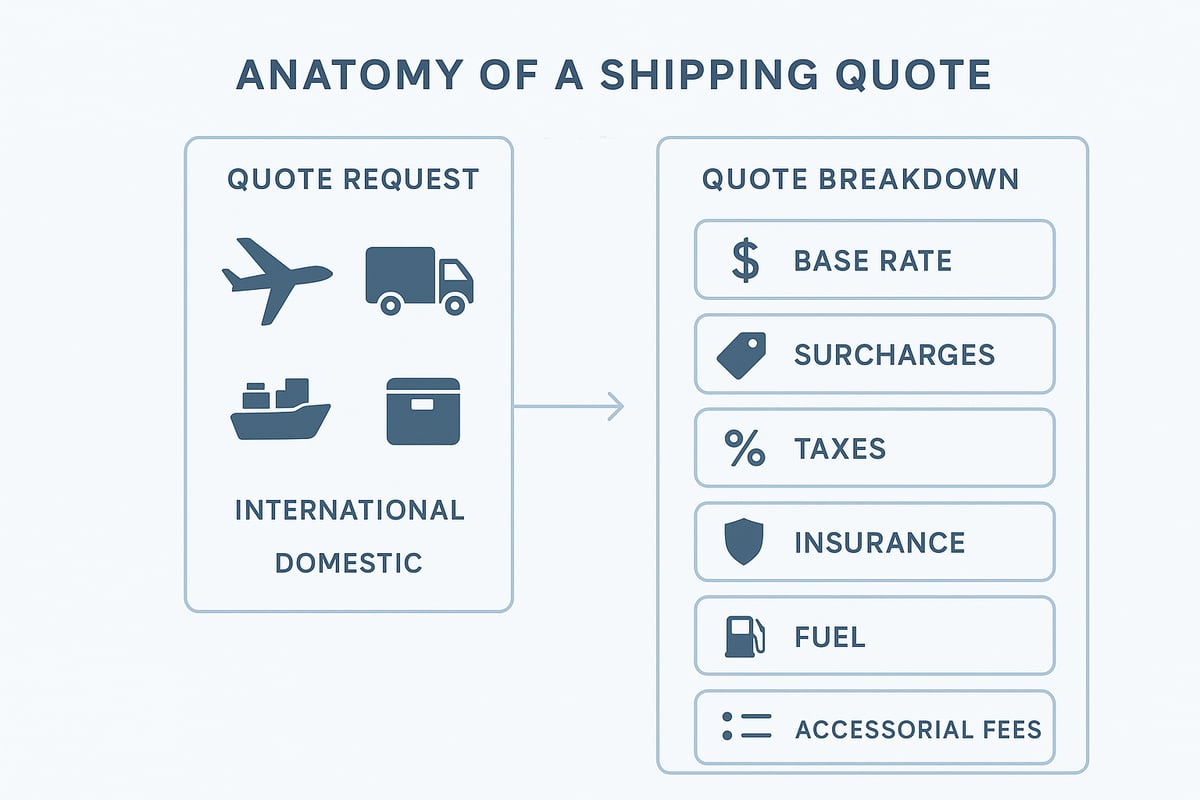
A quote for shipping is much more than just a price tag. It is a detailed estimate that specifies the total cost of transporting goods, taking into account origin, destination, service level, and any additional requirements. Whether you are shipping a single parcel or a full truckload, the quote for shipping acts as a binding reference for both you and the logistics provider.
If you want to understand the fundamentals, the Shipping and Freight Overview provides an excellent foundation for how quotes are structured and why they are crucial in the freight industry.
Shipping quotes are not one-size-fits-all. There are several types, each tailored to different needs:
Selecting the right type of quote for shipping depends on factors such as urgency, cargo size, and destination.
Every quote for shipping is made up of several key components. Understanding these can help you spot potential hidden costs and negotiate better rates:
These elements are itemised in your quote for shipping, providing transparency and clarity.
Accurate shipping quotes are vital for business operations. They enable precise budgeting, improve supply chain planning, and boost customer satisfaction by reducing the risk of unexpected costs. In 2025, more than 60% of UK SMEs cited shipping expenses as their top logistics concern, according to Statista.
Consider this example: A business needs to send a pallet from London to Berlin. Comparing an air quote for shipping with a road quote reveals key differences:
| Mode | Transit Time | Cost (£) | Key Benefit |
|---|---|---|---|
| Air | 1 day | 1,200 | Speed for urgent goods |
| Road | 3 days | 700 | Cost-effective option |
Choosing the right quote for shipping can determine whether a business meets tight deadlines or keeps costs under control.
Transparency in a quote for shipping is non-negotiable. Clear quotes help eliminate hidden fees and reduce disputes, protecting both shippers and customers. In e-commerce, where speed and reliability drive competitiveness, a transparent quote for shipping supports accurate delivery promises and strengthens customer trust.
For global trade, the quote for shipping is a strategic tool. It ensures businesses can compare options, optimise routes, and stay agile in response to market changes. As shipping becomes more digital and data-driven, the importance of a clear and accurate quote for shipping will only continue to grow.
Navigating the process of obtaining a quote for shipping can seem daunting, but breaking it down into clear steps helps ensure accuracy, transparency, and cost-effectiveness. In 2026, digital tools and streamlined procedures make it easier than ever for businesses and individuals to secure the best rates and services for their needs.
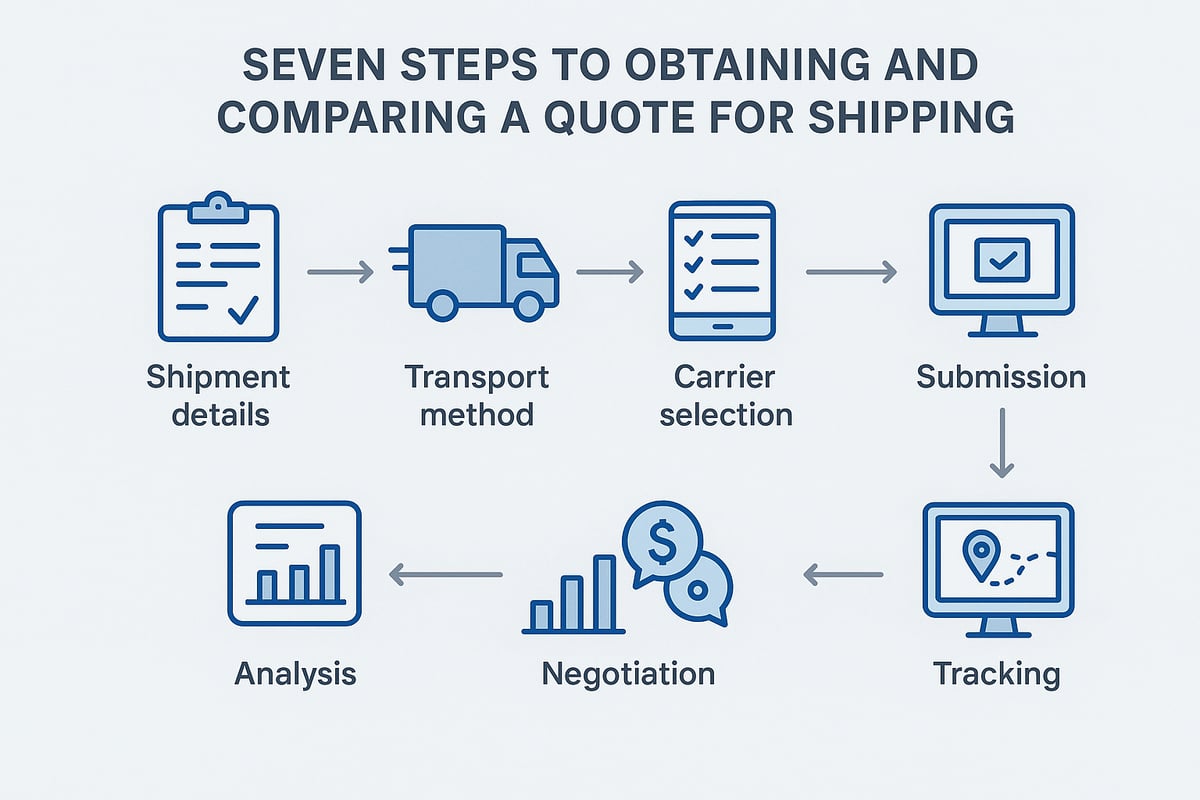
Begin by collecting all the necessary details about your shipment. For an accurate quote for shipping, you must provide exact dimensions, total weight, and the type of packaging used. Note the pickup and delivery addresses, including any special access instructions or delivery restrictions.
Record the declared value of your goods and consider if you need extra insurance. If your items are fragile, hazardous, or perishable, note these requirements. For example, shipping high-value electronics may require anti-static packaging and specific handling. Having all this data ready ensures your quote for shipping is both precise and tailored to your needs.
The next step in securing a quote for shipping is deciding on the most suitable mode of transport. Options include air, sea, road, rail, or a combination of these (multimodal). Each method has its own balance of speed, cost, and reliability.
Consider the nature of your goods and the urgency of delivery. For instance, bulk commodities often travel by sea to save on costs, while urgent pharmaceuticals are best sent by air for speed and temperature control. Selecting the right method will directly influence your quote for shipping and the level of service you receive.
Once you know your shipment details and preferred transport mode, you need to find the right partners for your quote for shipping. You can approach direct carriers, freight forwarders, or use online digital platforms that aggregate multiple providers.
In 2026, automated platforms offer instant quoting, saving time and reducing manual errors. For example, an automated system can provide immediate air cargo quotes, matching your requirements with available capacity in seconds. Always check the reputation and reliability of any carrier or platform before requesting your quote for shipping.
Submitting a detailed and accurate quote request is crucial to avoid delays or costly re-quotes. Enter all shipment information carefully, ensuring nothing is omitted. Required documents often include a commercial invoice, packing list, and any necessary export or import licences.
Most platforms offer user-friendly online forms, but some carriers may accept requests via phone or email. For a practical walkthrough of this stage, see Booking Freight Step-by-Step, which illustrates the end-to-end process for getting a quote for shipping and confirming your booking.
After submitting your request, you will receive one or more quotes for shipping. Carefully review each quote’s breakdown, including the base rate, surcharges, estimated transit time, and any extra fees.
To compare options effectively, ensure you are evaluating quotes for identical services. Hidden costs can lurk in fine print, such as fuel surcharges or liftgate fees. Use a comparison table like the example below to spot differences:
| Quote Element | Carrier A | Carrier B |
|---|---|---|
| Base Rate | £500 | £480 |
| Surcharges | £75 | £120 |
| Transit Time | 3 days | 4 days |
| Insurance Included | Yes | No |
This approach helps you select the most competitive and transparent quote for shipping.
With quotes in hand, it is time to negotiate. Many providers are open to adjusting rates, especially for regular customers or larger shipments. Clarify the validity period of each quote for shipping, as market conditions can cause prices to fluctuate quickly.
Once you reach an agreement, confirm all terms in writing, including transit times, included services, and cancellation policies. Securing your booking promptly ensures the quoted rate is locked in and your shipment is scheduled without delay.
After booking, proactive management is key to a successful delivery. Modern shipping platforms offer real-time tracking dashboards, providing automated updates on every stage of your shipment.
Set up notifications for key milestones such as pickup, customs clearance, and final delivery. This visibility not only improves customer satisfaction but also helps resolve any issues swiftly. Effective tracking completes your quote for shipping journey, ensuring transparency and peace of mind.
Understanding what shapes a quote for shipping in 2026 is essential for businesses aiming to control costs and avoid surprises. Shipping rates are not static—they depend on a complex mix of shipment details, routes, transport modes, market dynamics, regulations, and value-added services. Let’s break down the factors that have the biggest impact on your shipping quote.
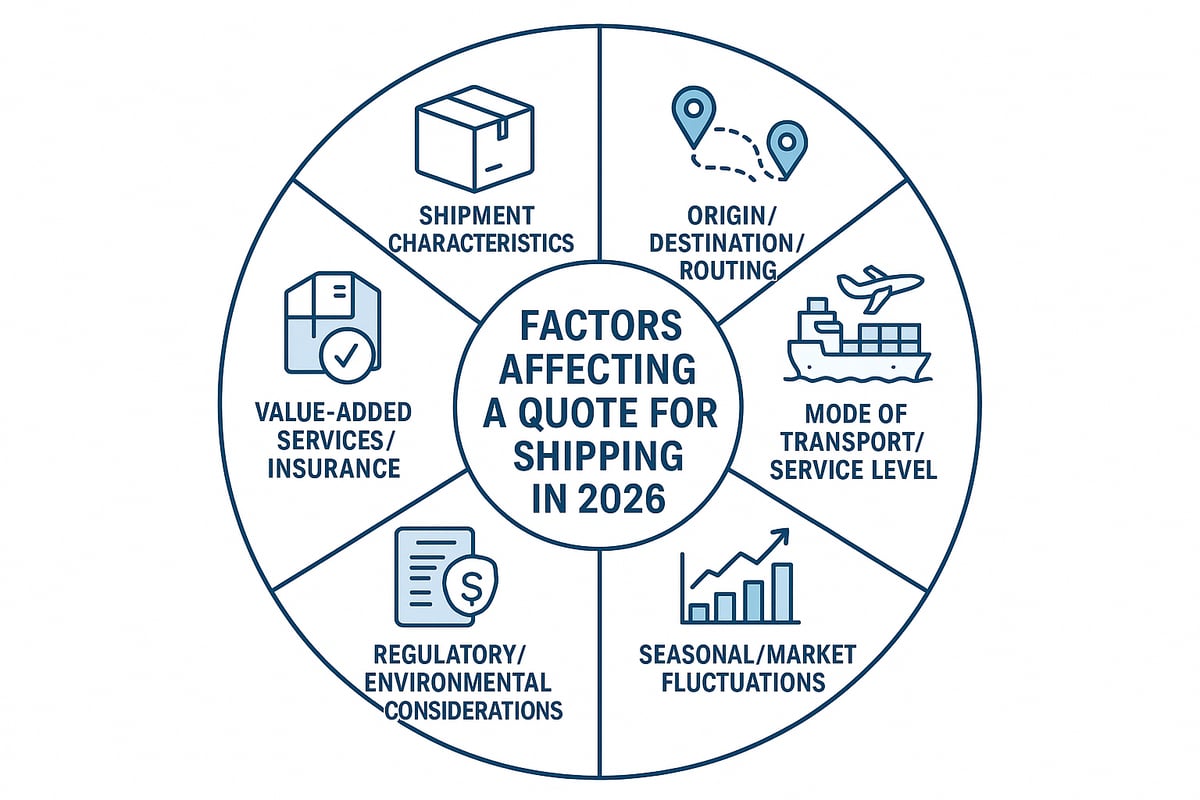
The physical nature of your shipment is the foundation of any quote for shipping. Carriers calculate rates based on size, weight, volume, and density. Odd-shaped or oversized cargo often incurs additional handling fees or requires special equipment.
For example, shipping a standard pallet of goods is typically less expensive per kilogram than transporting irregular machinery, which may not fit on standard transport systems. Always provide precise measurements and weights to ensure your quote for shipping reflects the true cost and avoids costly re-quoting.
Where your goods start and finish their journey has a major effect on the quote for shipping. International shipments, especially those to remote or landlocked regions, may require multimodal solutions and involve higher customs clearance costs.
Geopolitical factors and local regulations can also introduce delays or extra charges. For instance, shipping from London to Berlin is usually straightforward and cost-effective, while sending goods to Central Asia often involves more complex routing, impacting the overall quote for shipping.
Choosing between air, sea, road, rail, or a combination changes both the price and speed of delivery. Express services and direct routes cost more but offer faster transit, while consolidated shipments are slower but budget-friendly.
In 2025, air freight rates rose by 8% due to increased fuel costs and demand, according to the IATA Air Cargo Market Analysis March 2025. Selecting the right mode is crucial when requesting a quote for shipping—urgent pharmaceuticals may fly, while bulk raw materials travel by sea.
Timing is everything for a quote for shipping. Rates surge during peak seasons, such as holidays or major global events, when demand outpaces supply. Market volatility, fuel surcharges, and capacity constraints can all drive prices up unexpectedly.
A classic example is the spike in rates during Chinese New Year, when factories close and shipping volumes soar. Planning shipments around these periods can help secure a more favourable quote for shipping.
Regulations and environmental policies are increasingly shaping every quote for shipping. Customs duties, VAT, and compliance requirements can add significant costs, especially for cross-border shipments.
Green initiatives, such as the EU Emissions Trading System, often introduce carbon offset fees or require compliance with stricter standards. If your shipment is subject to these rules, it is vital to factor them into your quote for shipping to avoid hidden expenses.
Every extra service adds another layer to your quote for shipping. Options like insurance, specialist packaging, warehousing, and white-glove delivery all raise the final price but can be essential for high-value or sensitive cargo.
For example, adding temperature control for pharmaceutical shipments ensures product integrity but increases costs. Always clarify which value-added services are included in your quote for shipping and which are optional to make informed decisions.
When reviewing a quote for shipping, achieving cost savings and service optimisation requires a strategic approach. Comparing quotes goes beyond simply looking at the lowest price. Instead, it involves a multi-layered analysis of all relevant factors. Let us break down the most effective strategies for making the right choice.
A fair comparison between each quote for shipping starts with consistent, accurate data. If shipment details vary across requests, you risk misleading price differences and service mismatches.
For example, if one carrier quotes for a next-day service and another for a three-day delivery, comparing costs directly is misleading. By ensuring all quotes are based on identical parameters, you gain true clarity and avoid costly surprises.
Looking solely at the base rate in your quote for shipping can be deceptive. Many costs are hidden in surcharges, insurance, and handling fees.
A simple table can help you compare:
| Service Element | Carrier A | Carrier B |
|---|---|---|
| Base Rate | £1200 | £1150 |
| Fuel Surcharge | £90 | £130 |
| Insurance | £50 | £60 |
| Total | £1340 | £1340 |
This approach ensures your quote for shipping reflects the true cost and supports better budgeting.
Price is only one part of a quote for shipping. Carrier reliability and service quality directly impact your supply chain and customer satisfaction.
Imagine Carrier A offers a lower quote but has frequent delays. Carrier B, slightly more expensive, boasts a flawless record and proactive communication. In such cases, the reliability factor can outweigh minor cost differences in your quote for shipping.
Digital innovation has transformed how businesses obtain and compare a quote for shipping. Modern platforms aggregate rates, automate data entry, and provide instant comparisons.
For a deeper dive into how digital solutions streamline the process, explore Platform Shipping Solutions. Leveraging technology not only saves time but also reduces manual errors and increases transparency in every quote for shipping you request.
Negotiating your quote for shipping can yield substantial savings, especially for recurring or high-volume shipments.
For example, a business shipping weekly may secure a 10% discount by committing volume upfront. Do not hesitate to discuss terms and negotiate, as carriers often have flexibility that is not immediately visible in your initial quote for shipping.
Requesting a quote for shipping is more than just ticking boxes on a form. Simple errors or oversights can result in costly delays, unexpected expenses, or lost opportunities. By understanding the most frequent mistakes, you can turn a routine quote for shipping into a strategic advantage for your business.
1. Incomplete or Inaccurate Shipment Details
A common pitfall is providing incorrect dimensions, weight, or packaging information. If the details in your quote for shipping are off, you risk re-quotes, shipment delays, or even extra charges. Always double-check addresses, declared values, and special handling instructions before submission.
2. Focusing Solely on Price
Selecting the lowest quote for shipping might seem logical, but it can be risky. Low prices sometimes indicate subpar service, unreliable transit times, or lack of support during disruptions. Consider the carrier’s reputation, reliability, and service level alongside the cost.
3. Overlooking Hidden Fees and Unclear Terms
Quotes often include base rates, but surcharges and accessorial fees are sometimes buried in the fine print. Not reviewing these extras can turn an attractive quote for shipping into an expensive surprise. For insights into common surcharges in air freight, see Air Freight Cargo Shipping Insights. Always request a full cost breakdown and ask questions if any terms seem vague.
4. Failing to Compare Transit Times
Many businesses compare quotes based only on cost, ignoring potential differences in delivery speed. Two quotes might look similar but have vastly different transit times. Always align transit time with your needs, especially for time-sensitive goods.
5. Ignoring Insurance and Liability Coverage
Assuming that basic insurance is included in your quote for shipping can be a costly error. Most standard quotes offer minimal coverage. If your goods are high-value or fragile, verify insurance options and understand liability limits to avoid financial loss.
6. Not Confirming Quote Validity and Lock-In Periods
Shipping rates fluctuate rapidly. If you assume your quote for shipping is valid indefinitely, you may face price hikes or, worse, invalid bookings. One UK business lost £2,000 due to an expired quote and a sudden rate increase. Always check the validity period and confirm your booking within the lock-in window.
7. Overlooking Unclear Quotes and Communication
Lack of clarity in quote terms or poor communication leads to misunderstandings and delays. In fact, 35% of logistics managers report that unclear quotes are a major cause of shipment delays, according to Freightos. Take time to clarify each element of your quote for shipping and maintain open lines with your carrier.
Avoiding these mistakes will help you secure accurate, transparent, and competitive quotes, ensuring smooth shipping operations and protecting your bottom line.
The landscape for obtaining a quote for shipping is evolving rapidly. In 2026, technological advancements, sustainability pressures, and customer expectations are reshaping the way businesses approach shipping logistics. Staying ahead means understanding these innovations and how they influence cost, speed, and transparency in the quote for shipping process.
Automation and artificial intelligence are transforming how companies receive a quote for shipping. Modern platforms use AI to analyse shipment data, optimise routing, and provide instant, highly accurate estimates. These tools minimise manual errors and cut down the time it takes to receive a quote from hours to just minutes.
For example, AI-driven algorithms can now process large volumes of requests, learning from market trends and historical pricing. This means shippers receive more reliable and competitive quotes, even during volatile periods. According to IATA Air Cargo Demand Up 5.5% in November 2025, increased demand is driving the adoption of such technologies across the industry.
Environmental responsibility is now a critical factor when requesting a quote for shipping. In 2026, many digital platforms offer integrated carbon calculators, helping businesses estimate the environmental impact of their shipments alongside cost.
The quote for shipping process now often includes options for carbon offsetting or choosing greener transport modes. As regulations tighten and consumer demand for sustainability grows, companies are prioritising eco-friendly logistics. Platforms increasingly display emissions data, making it easier to select both cost-effective and sustainable options.
No two shipments are identical, and the quote for shipping is becoming more tailored than ever. Platforms leverage big data and dynamic pricing models to generate quotes specific to industry, cargo type, and service requirements.
For instance, pharmaceutical companies may require temperature-controlled transport, while automotive firms prioritise speed and reliability. Modern quoting tools analyse these needs in real-time, ensuring each quote is aligned with unique business objectives. This level of personalisation helps businesses secure the optimal balance between cost and performance.
Transparency is now at the heart of the quote for shipping process. Shippers expect detailed breakdowns of costs, including surcharges, insurance, and ancillary fees, before committing to a booking.
Blockchain technology is being adopted for tamper-proof documentation, while real-time tracking systems provide live updates on shipment status. Customers can follow every step, from quote acceptance to delivery, minimising disputes and building trust throughout the shipping journey.
Seamless integration between quoting tools and supply chain management platforms is a defining trend in 2026. When requesting a quote for shipping, data now flows automatically between inventory, booking, and tracking systems via APIs.
This connectivity enables just-in-time ordering, automated reordering, and proactive logistics planning. Shippers benefit from fewer manual touchpoints and greater visibility, reducing delays and improving overall efficiency. Industry forecasts, such as those in the IATA Global Outlook for Air Transport June 2025, highlight integration as key to future competitiveness.
CharterSync is revolutionising the quote for shipping experience in the air cargo sector. Their automated platform combines AI-powered matching with expert human oversight, delivering instant, transparent air cargo charter quotes.

Freight forwarders benefit from smart aircraft recommendations and seamless booking. This is especially valuable for industries such as automotive, pharmaceuticals, and high-tech, where speed and reliability are paramount. For example, a freight forwarder can secure a last-minute charter for urgent medical supplies, receiving a quote and booking confirmation within minutes. The CharterSync approach reduces manual workload, increases operational speed, and enhances confidence in time-critical shipments.
If you’re looking to put these insights into action and experience how modern technology can simplify your air cargo operations, you don’t have to navigate it alone. With CharterSync, you can instantly access accurate and transparent shipping quotes, streamline your bookings, and rely on a team that truly understands the demands of your industry. Whether you’re shipping critical pharmaceuticals, automotive parts, or high tech equipment, having the right partner makes all the difference. If you’re ready to see how seamless your air cargo quoting process can be, I encourage you to request a demo and explore CharterSync’s intelligent platform for yourself.

.png)