.png)
In 2026, platform shipping is undergoing rapid transformation, with businesses facing unprecedented complexity and competition. Shifting consumer expectations and advances in technology are driving change across global logistics networks.
This guide provides expert insights and practical strategies for mastering platform shipping in today’s fast-paced environment. You will discover emerging trends, step-by-step processes, innovative technologies, evolving regulations, and proven tactics to future-proof your operations.
Stay ahead by exploring actionable guidance designed to streamline your platform shipping approach and deliver measurable results for your business.
The landscape of platform shipping in 2026 is marked by rapid transformation. Businesses are striving to keep pace with the surge in e-commerce, technological change, and evolving customer expectations. As we take a closer look at the current state, it is clear that platform shipping requires strategic adaptation and ongoing innovation.

Platform shipping has been propelled forward by the explosive growth of global e-commerce. Retailers are now operating across borders, leading to higher shipping volumes and complex fulfilment requirements. The shift to omnichannel retail demands integrated shipping solutions that connect online and offline sales seamlessly.
Consumers expect faster, more transparent, and sustainable deliveries. In 2025, same-day delivery demand increased by 35% year on year, reflecting a market that values speed and reliability. Cross-border shipping is no longer optional; it is central to reaching new markets. With this expansion, businesses must adapt platform shipping strategies to handle diverse regulations and customer preferences.
Adapting to these changes is essential for any business engaging in platform shipping today.
Despite opportunities, platform shipping faces significant challenges. High shipping costs remain a persistent concern, especially with fluctuating fuel prices and ongoing inflation. Managing these costs while maintaining speed and service quality is a delicate balance.
Supply chain disruptions, whether from geopolitical tensions or natural events, require agile responses. Labour shortages have accelerated the adoption of automation, but integrating new technologies can be complex and resource-intensive. Balancing environmental responsibilities with operational efficiency is now a critical part of decision-making.
Businesses must address:
Overcoming these hurdles is crucial for platform shipping success in 2026.
Competition in platform shipping is fiercer than ever. Tech giants and digital-first logistics platforms are entering the market, raising the bar for both technology and customer experience. Companies must differentiate through innovation, service, and reliability.
Amazon and Alibaba continue to lead with fulfilment automation and advanced logistics solutions, setting industry benchmarks. Their investment in smart warehousing and real-time tracking has redefined delivery standards. For insights into how technology is transforming freight forwarding, see Air Cargo Charter Technology Advancements.
To remain competitive, businesses must:
Staying ahead in platform shipping means continually innovating and learning from market leaders.
The regulatory landscape for platform shipping is evolving rapidly. In 2026, updates from bodies like IMO and IATA introduce new international standards, impacting documentation and operational processes. Digital documentation and electronic airway bills (eAWB) are now standard, improving efficiency but requiring robust platform integration.
Customs requirements are tightening, with a focus on digital compliance and data security. Sustainability reporting is also now mandatory, with businesses expected to track and report emissions as part of their platform shipping operations.
Key compliance areas include:
Adhering to these regulations is vital for any business looking to scale platform shipping globally.
Mastering platform shipping in 2026 requires a systematic approach, blending technology, strategy, and customer focus. By following these essential steps, businesses can streamline operations, reduce costs, and deliver an exceptional experience at every stage.
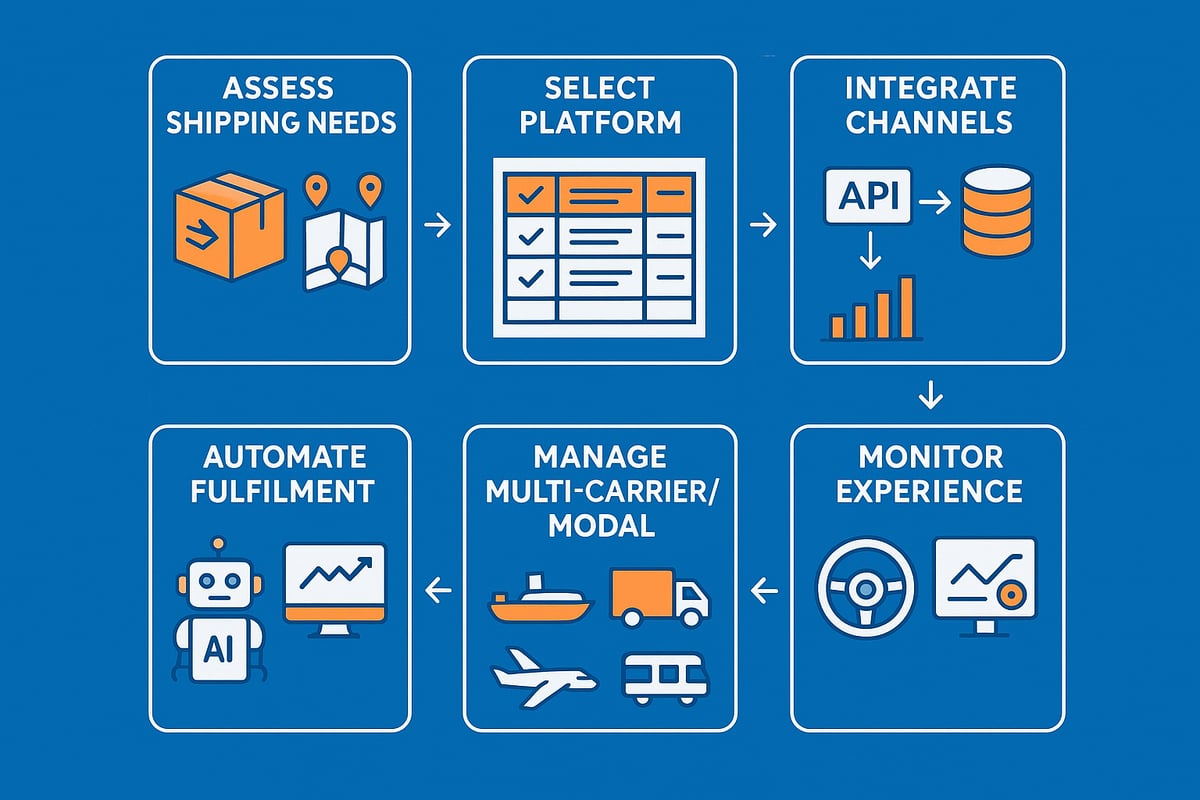
The foundation of effective platform shipping is a thorough assessment of your business requirements. Start by identifying your product categories, average shipment volumes, and primary destination markets. Are you shipping high-value electronics, perishables, or bulky goods? Each type demands unique handling and compliance considerations.
Next, analyse your customers’ expectations. Do they require same-day delivery, precise tracking, or sustainable packaging? Understanding these needs allows you to tailor your platform shipping strategy for maximum satisfaction.
For example, shipping temperature-sensitive pharmaceuticals requires robust monitoring and fast transit times. In such cases, partnering with providers that specialise in controlled environments is critical. By aligning your operations with product and customer needs, you set the stage for platform shipping success.
Choosing the optimal solution is crucial for scaling your platform shipping operations. Evaluate platforms for core features such as automation, seamless integration, scalability, and advanced analytics. Consider the following comparison:
| Feature | Platform A | Platform B | Platform C |
|---|---|---|---|
| Automation | Yes | Partial | Yes |
| API Integration | Yes | Yes | No |
| Scalability | High | Medium | High |
| Analytics | Advanced | Basic | Advanced |
| Support | 24/7 | 9-5 | 24/7 |
Beyond features, assess the user interface for ease of use and the availability of customer support. A platform shipping provider with responsive service can resolve issues quickly, keeping your operations on track. Take time to compare leading platforms and select one that best aligns with your business goals.
Seamless integration is essential for efficient platform shipping. Modern platforms offer API-driven connections to major e-commerce systems such as Shopify, Magento, and WooCommerce. This enables real-time synchronisation of orders and inventory, reducing the risk of overselling or delays.
A unified Order Management System (OMS) allows for centralised control, making it easier to manage stock levels and automate fulfilment triggers. For example, a retailer integrating their OMS with a shipping platform can automatically update inventory and initiate shipments as soon as orders are placed.
To maximise efficiency, ensure your platform shipping system supports robust integration options and provides clear documentation for technical teams. This investment in connectivity pays dividends in speed and accuracy.
Automation is at the heart of modern platform shipping. Artificial intelligence and machine learning are increasingly used to optimise shipping routes, select the most cost-effective carriers, and predict delivery windows. Automated systems also handle labelling, customs documentation, and real-time tracking updates.
According to DHL, 60 percent of shippers now cite automation as the key factor in reducing errors and speeding up fulfilment. By automating repetitive tasks, businesses not only improve accuracy but also free up staff for higher-value activities.
When implementing automation, prioritise solutions that are flexible and scalable. This ensures your platform shipping processes can adapt as your business grows or as market conditions change.
A robust platform shipping strategy leverages multiple carriers and modes of transport to optimise cost, speed, and reliability. By integrating air, sea, road, and rail options within a single platform, you gain flexibility to select the best route for each shipment.
Multi-carrier strategies also help mitigate risks associated with disruptions or capacity shortages. For instance, dynamically allocating carriers for cross-border deliveries allows you to balance cost and service while meeting varying regulatory requirements.
For deeper insights on effective freight booking across platforms and modes, see Multi-Modal Freight Booking Insights. Adopting these best practices ensures your platform shipping operation remains agile in a rapidly changing market.
Continuous monitoring is vital for platform shipping excellence. Real-time tracking provides visibility into every shipment, while proactive exception management helps resolve issues before they impact the customer. Integrate communication tools, such as SMS, email, and live chat, to keep customers informed throughout the delivery process.
Leverage analytics dashboards to track key metrics like delivery times, cost per shipment, and customer satisfaction. Regularly reviewing this data allows you to identify bottlenecks and implement improvements.
Ultimately, a customer-centric approach to monitoring ensures your platform shipping process not only meets but exceeds expectations, driving loyalty and repeat business.
The landscape of platform shipping is being rapidly redefined by cutting-edge technologies in 2026. From AI-driven automation to real-time data tracking, these innovations are not only streamlining logistics but also shaping new industry standards.
Businesses embracing these advances in platform shipping are positioned to meet rising customer demands, reduce costs, and gain a distinct competitive edge. Let us explore the pivotal technologies revolutionising this sector.
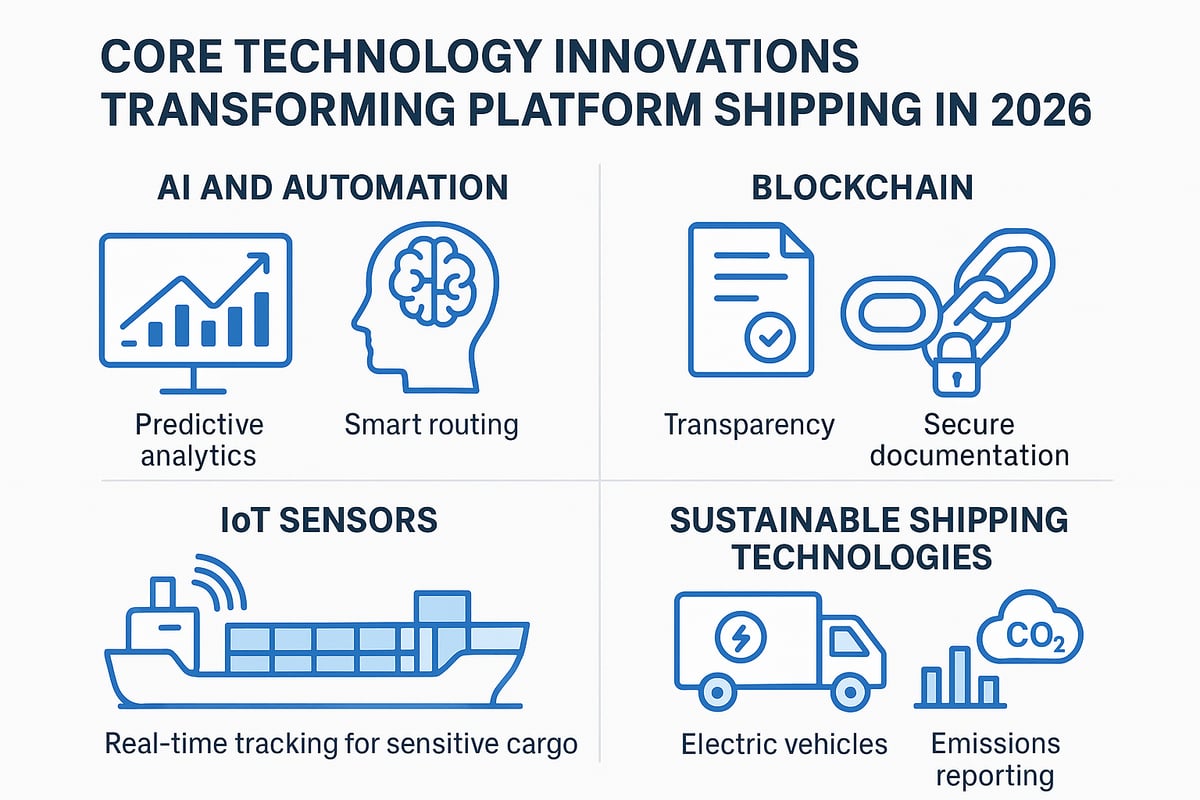
Artificial intelligence is now at the heart of platform shipping, driving efficiency and accuracy throughout the supply chain. Predictive analytics tools analyse historical and real-time data to forecast demand, optimise inventory, and prevent stockouts.
Smart routing powered by AI selects optimal delivery routes, adapting dynamically to traffic and weather conditions. This results in quicker deliveries and lower operational costs for platform shipping providers. Dynamic pricing algorithms further help balance supply and demand, maximising profitability.
For instance, AI-powered platforms can reduce delivery times by up to 25 percent, a vital advantage in today’s fast-paced market. If you want to dive deeper into how AI is shaping logistics, see AI and autonomous decision-making in logistics. As AI continues to evolve, it will remain a cornerstone of advanced platform shipping strategies.
Blockchain technology is transforming platform shipping by providing end-to-end visibility and enhancing trust in global logistics networks. Every transaction and shipment update is securely recorded on a tamper-proof ledger, making it easy to trace the movement of goods.
Digital documentation and automated smart contracts simplify customs clearance and regulatory compliance. This reduces paperwork, speeds up processes, and helps prevent fraud. Platform shipping companies using blockchain can assure clients of the integrity and authenticity of their shipments.
Case studies in pharmaceutical shipping demonstrate how blockchain safeguards sensitive products, ensuring compliance with strict handling regulations. As regulatory requirements increase, blockchain adoption in platform shipping will become more widespread.
The Internet of Things (IoT) has become a game-changer for platform shipping. By embedding smart sensors in packages and containers, companies gain real-time visibility into location, temperature, and humidity.
This level of monitoring is essential for high-value and perishable goods, where any deviation can lead to losses. Customers benefit from accurate, real-time updates, which build trust and enhance the brand reputation of platform shipping providers.
According to recent forecasts, IoT-enabled shipments are expected to reach 80 percent market penetration by 2026. This wide adoption signals that real-time data is now a standard expectation in platform shipping.
Sustainability is now a central pillar of platform shipping innovation. Electric vehicles and alternative fuels are being integrated into delivery fleets to minimise carbon emissions.
Many platform shipping solutions now offer emissions tracking and reporting, helping businesses meet regulatory standards and appeal to eco-conscious customers. Carbon offset programmes are also being embedded directly into shipping workflows.
Retailers adopting green shipping options see improved brand loyalty, as customers increasingly choose companies that prioritise the environment. As regulations tighten, sustainable technologies will become a fundamental component of platform shipping.
Staying ahead in platform shipping requires a proactive approach to regulation, sustainability, and compliance. As 2026 unfolds, the regulatory landscape is shifting rapidly, placing new demands on logistics providers and businesses alike. Every platform shipping strategy must now address evolving rules, environmental obligations, and security protocols to ensure smooth, responsible operations.
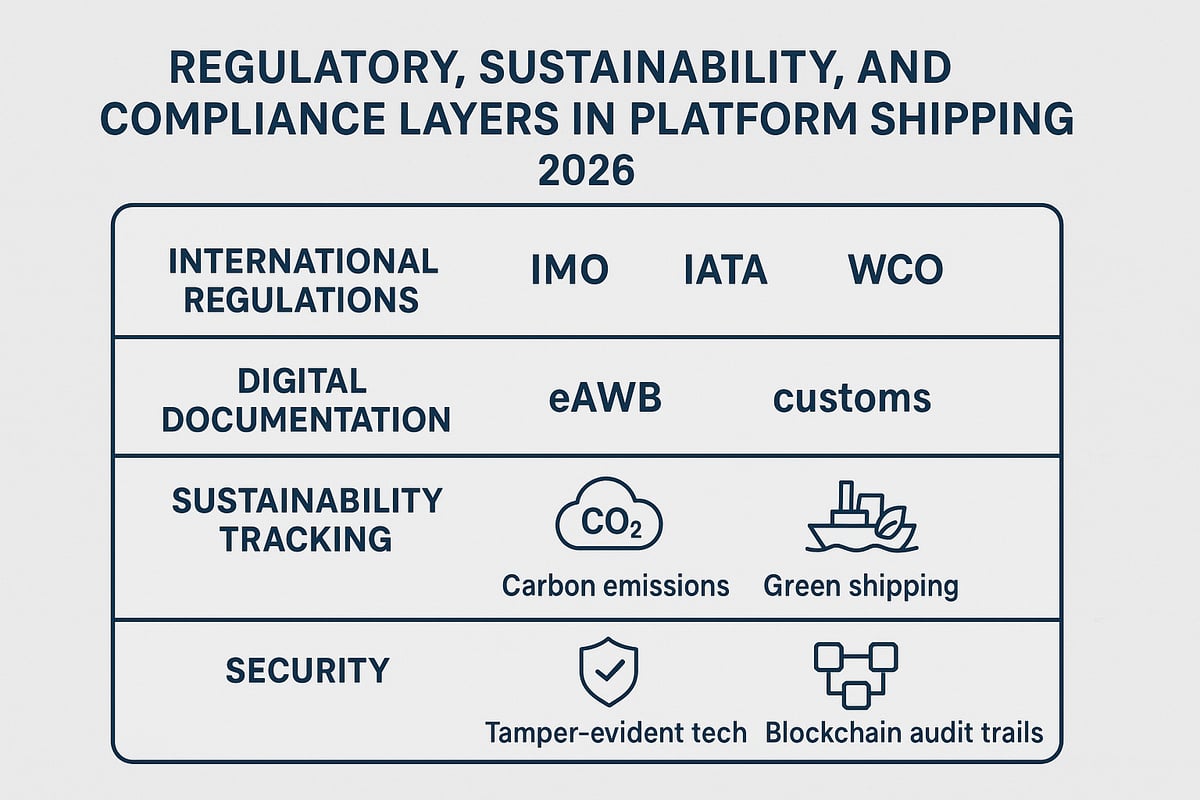
The international regulatory framework for platform shipping has seen significant changes in 2026. Updated guidelines from the International Maritime Organization (IMO), International Air Transport Association (IATA), and World Customs Organization (WCO) are shaping how goods move across borders. Digital documentation is now the standard, with electronic air waybills (eAWB) and automated customs clearance streamlining processes.
Compliance with data privacy and cybersecurity standards is critical. Platform shipping providers must ensure all customer and shipment data is securely managed, meeting GDPR and other regional requirements. Failure to adapt can lead to delays, penalties, or even shipment rejection at border controls.
A proactive approach means staying informed of regulatory updates and maintaining flexibility in your platform shipping workflows. This ensures shipments remain compliant and reach their destinations without unnecessary friction.
Sustainability is no longer optional for platform shipping in 2026. Carbon emissions tracking and transparent reporting are now mandated in many jurisdictions. Businesses must integrate green shipping options and carbon offsets directly into their platform shipping processes.
Key sustainability requirements include:
Brands are increasingly using emissions data to empower consumers to make greener choices. Platforms that offer clear, accurate sustainability information stand out in a competitive market. For further insight into these trends, see Sustainability initiatives shaping logistics practices in 2026.
Security is a top priority for platform shipping, especially for high-value or sensitive goods. Best practices include secure handling protocols, use of tamper-evident technologies, and maintaining a digital audit trail for every shipment. These measures protect against theft, loss, and tampering.
In 2026, digital tools such as blockchain are increasingly used to provide end-to-end visibility and security. By leveraging blockchain for transparent and secure supply chains, platform shipping providers can ensure documentation is tamper-proof and chain of custody is verifiable.
Industry projections indicate a continued focus on loss prevention, with advanced analytics and IoT-enabled sensors enhancing security throughout the journey.
Platform shipping must adapt to varying regulatory environments across regions such as the EU, US, and APAC. Each market has distinct rules for customs, documentation, and environmental standards. For example, post-Brexit UK/EU requirements demand new processes for cross-border shipments.
Sector-specific compliance is also crucial. Pharmaceutical, perishable, and hazardous goods each have unique mandates. Successful platform shipping strategies incorporate real-time regulatory updates and workflow flexibility to ensure compliance, regardless of the destination or cargo type.
Understanding and addressing these differences enables businesses to minimise risk, avoid costly errors, and maintain a strong reputation in global trade.
Adapting your platform shipping approach for the future is essential in a landscape defined by rapid change. Businesses that anticipate market shifts and build flexibility into their logistics will gain a decisive edge. In this section, discover how to keep your platform shipping strategy resilient, scalable, and ready for whatever 2026 brings.
Staying competitive in platform shipping means embracing technology before your competitors do. Proactive adoption of tools like AI-driven route optimisation, predictive analytics, and blockchain enhances efficiency and transparency.
Building partnerships with forward-thinking logistics providers can accelerate your innovation journey. For example, using Automated Air Cargo Charter Solutions allows instant access to global aircraft networks, enabling the rapid, flexible shipments required by time-sensitive industries.
Early adopters of these innovations often secure greater market share. They quickly respond to disruptions, adapt to changing requirements, and set new standards for platform shipping excellence.
As demand surges during seasonal peaks or international expansion, your platform shipping solution must scale without friction. Cloud-based platforms offer flexibility, supporting increased order volumes and new markets with minimal infrastructure changes.
Leverage multi-carrier integrations to diversify fulfilment options. This approach reduces risk, optimises costs, and ensures consistent service regardless of market volatility. According to McKinsey, 70 percent of retailers plan to invest in scalable shipping solutions by 2026.
Automated processes and real-time data synchronisation between inventory, sales channels, and shipping partners streamline operations. This scalability is central to sustainable growth in platform shipping.
Customer experience is a defining factor for success in platform shipping. Personalisation, real-time tracking, and transparent communication build trust and loyalty.
Integrating returns management directly into your shipping platform creates a seamless post-purchase experience. Customers value proactive updates about shipment status, delays, or delivery windows via SMS, email, or live chat.
Brands that prioritise customer-centric shipping platforms often see increased loyalty and repeat business. Make customer feedback a core part of your continuous improvement process for platform shipping.
Disruptions are inevitable in global logistics. Scenario planning prepares your platform shipping strategy for events like supply chain shocks, geopolitical changes, or sudden demand shifts.
Diversify carriers, routes, and fulfilment locations to minimise exposure to risk. Automated tools help quickly reroute shipments or switch providers when disruptions occur. Case studies from 2025 show that retailers with flexible, data-driven logistics weathered disruptions more effectively.
A resilient platform shipping setup is your safety net, ensuring business continuity and customer satisfaction in turbulent times.
Continuous measurement is key to optimising platform shipping. Track metrics such as delivery times, cost per shipment, and customer satisfaction to identify improvement opportunities.
Leverage analytics dashboards and real-time feedback loops to refine processes. Incorporating insights from Digital transformation and smart container technology can provide deeper supply chain visibility and efficiency through IoT integration.
Retailers using data-driven optimisation report cost reductions of up to 15 percent. By making performance monitoring central to your platform shipping strategy, you set the stage for long-term success.
As you look ahead to 2026 and consider how technology, automation, and expert guidance can transform your shipping strategy, it's clear that staying ahead means leveraging the right tools and expertise. If you're ready to streamline your air cargo operations, access global capacity instantly, and benefit from intelligent automation with dedicated support, why not see how CharterSync can help you meet the demands of tomorrow? Let's explore what smarter, faster, and more reliable shipping could look like for your business—request a demo and experience the future of platform shipping first hand.

.png)