.png)
In a world where global trade is accelerating, efficient cargo support stands as the backbone of supply chain success. The ability to manage, track, and optimise shipments directly impacts competitiveness and customer satisfaction.
Today’s logistics sector is shaped by rapid technological advancements and shifting regulations. Professionals face increasing pressure to deliver faster, more transparent services while navigating complex supply chains.
By adopting the latest cargo support solutions, companies can unlock new efficiencies, protect their operations from disruption, and meet evolving market demands. This guide will explore the latest trends, digital innovations, practical strategies, and future outlook for logistics professionals.
Leverage these insights to optimise your operations and maintain excellence in an ever-changing industry landscape.
In 2026, the landscape of cargo support is being shaped by a complex web of global trends, technological advancements, and shifting market demands. Logistics professionals must remain agile as the industry faces heightened expectations, increased complexity, and the need to balance efficiency with compliance and sustainability.
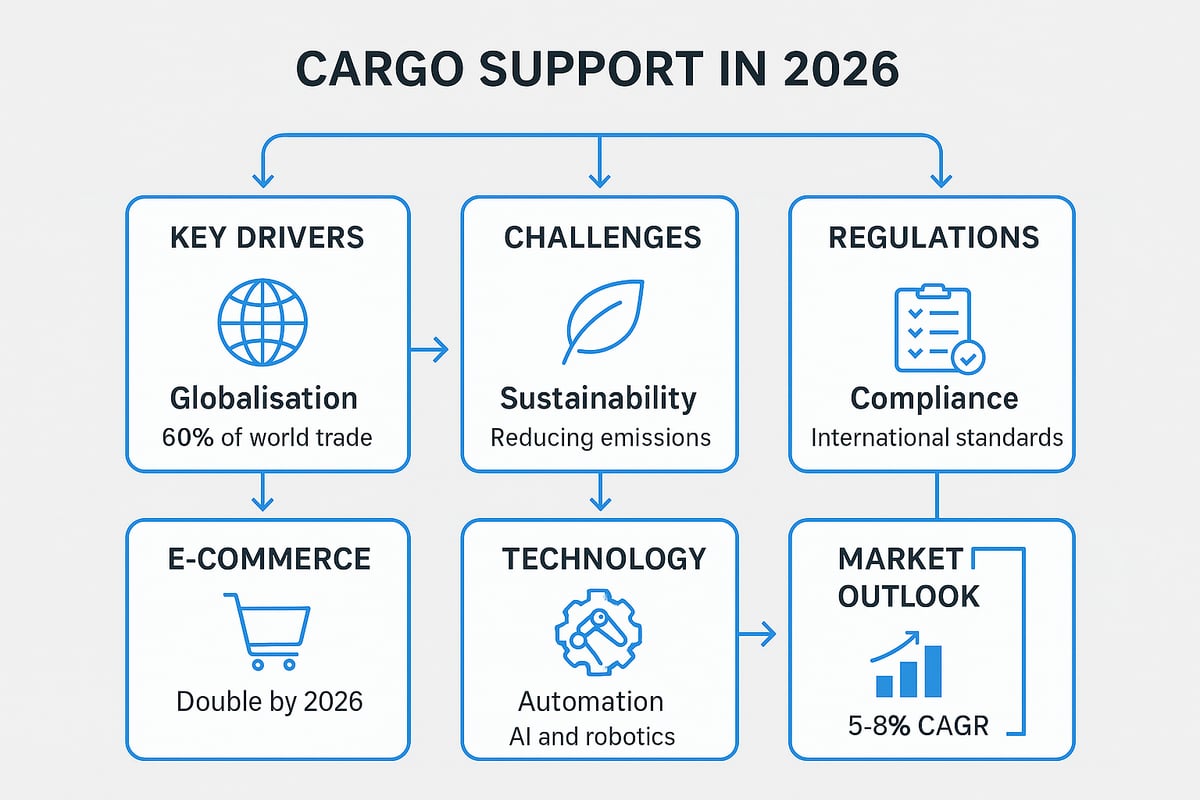
Several powerful forces are redefining cargo support in 2026. The surge in globalisation and e-commerce is pushing cargo volumes to record highs. Customers now expect faster, more transparent deliveries, placing new pressures on logistics providers. Supply chains are more complex, often spanning multiple modes and continents.
Regulatory changes and compliance requirements are evolving rapidly, while environmental sustainability is driving adoption of green logistics practices. The rise of just-in-time and on-demand delivery models means cargo support must be more agile than ever. For example, the growth in cross-border e-commerce has dramatically increased the demand for flexible and responsive support solutions.
Despite advancements, cargo support faces significant challenges. Disruptions such as geopolitical tensions, pandemics, and climate events can halt operations unexpectedly. Capacity constraints and congestion at key hubs can result in costly delays.
Security threats, including cargo theft, require constant vigilance. Fluctuating fuel prices and operational costs add another layer of complexity. Ensuring end-to-end cargo visibility remains a top priority. For instance, port congestion in 2024 led to widespread delays, highlighting the need for rapid intervention and robust support. For deeper insights into overcoming such logistical hurdles, see When Supply Chains Move: Air Cargo Intelligence.
Technology is revolutionising cargo support at every stage. Digital platforms now enable seamless booking and tracking, reducing manual errors and improving transparency. Automation in warehousing and cargo handling has boosted efficiency, while IoT devices provide real-time cargo monitoring for condition and location.
AI-driven tools are transforming demand forecasting and resource allocation, allowing for smarter planning. Blockchain technology is gaining traction for secure documentation and transaction processing. Lufthansa Cargo’s digital eServices are a prime example, streamlining shipments and enhancing the overall cargo support experience.
Compliance is a cornerstone of effective cargo support. International air and sea cargo regulations are becoming more stringent, and customs requirements demand accurate documentation. Environmental policies are pushing operators to adopt greener practices, such as lower-emission transport and sustainable packaging.
Safety standards for hazardous and sensitive goods are also evolving. Initiatives like IATA’s ONE Record are setting new benchmarks for unified data sharing, helping cargo support providers meet both regulatory and environmental goals with greater efficiency.
The global air cargo market is forecast to grow at a compound annual growth rate of 4.1% through 2026. Investment in digital cargo support solutions is rising, with over 320 cargo stations worldwide operated by leading carriers such as Lufthansa Cargo.
There is a notable increase in demand for temperature-controlled and specialised cargo support, particularly in industries like pharmaceuticals and high-tech. Automation and AI adoption are expected to accelerate, reshaping how cargo support is delivered and managed across the supply chain.
Navigating the world of cargo support means understanding the diverse solution types available to logistics professionals. Each type plays a unique role in streamlining operations, improving efficiency, and addressing the evolving needs of the global supply chain.
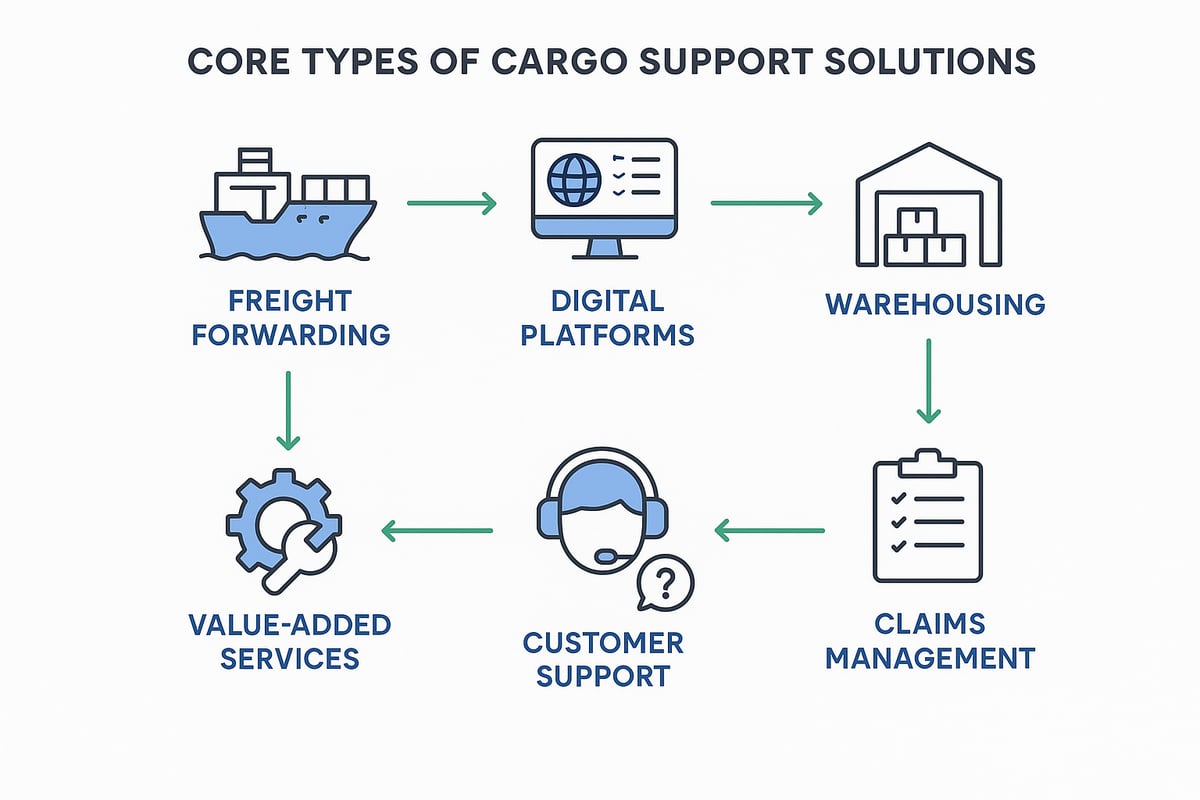
Freight forwarding is at the heart of cargo support, acting as the orchestrator for moving goods across borders. Providers consolidate shipments, handle complex documentation, and ensure compliance with customs regulations.
Value-added services such as insurance, warehousing, and customs clearance are often included. For industries like automotive and pharmaceuticals, end-to-end management is essential for timely, secure delivery. The strength of a freight forwarder lies in its network reach and strategic partnerships, enabling flexible and reliable cargo support on a global scale.
Digital platforms are revolutionising how cargo support is delivered. Online booking, real-time tracking, and automated schedule management are now standard. Integration with airline and shipping carrier systems ensures seamless data flow and transparency.
Shippers benefit from reduced manual errors and faster response times. Self-service portals empower users to manage shipments independently, reflecting the growing demand for digital-first solutions. Tools like eBooking and eTracking are becoming industry benchmarks for efficient cargo support operations.
Efficient warehousing and handling are crucial components of cargo support. Automated storage and retrieval systems (AS/RS) optimise space and speed up operations. Temperature-controlled and secure storage facilities protect sensitive goods, while robotics enable precise, rapid cargo transfers.
Proximity to major transport nodes is vital for minimising delays. For more on optimising these processes, see Cargo Handling Best Practices. Major cargo hubs now leverage cutting-edge technology to meet the demands of modern logistics and robust cargo support.
Specialised cargo support services address unique and sensitive shipment requirements. Dangerous goods handling ensures regulatory compliance and safety. Logistics for live animals and perishable products maintain quality and welfare throughout transit.
White-glove delivery services cater to high-value or fragile items, offering enhanced security and care. Advanced solutions include temperature deviation analysis for pharmaceuticals and customised support for oversized cargo. These tailored offerings are central to delivering trusted cargo support across sectors.
Exceptional customer support is a foundation of effective cargo support. Providers offer 24/7 helpdesks, live chat, and multi-lingual assistance to handle queries and disruptions swiftly. Automated notifications keep clients updated on shipment status, reducing uncertainty.
Self-service account management tools streamline access to documentation and booking information. Many digital-native businesses now prefer active live chat support for real-time problem-solving. Fast response times are critical for minimising operational disruptions and maintaining trust in cargo support services.
Managing claims and irregularities is an integral facet of cargo support. Providers facilitate straightforward processes for reporting lost, damaged, or delayed cargo. Online claim forms and tracking systems simplify resolution and boost transparency.
Support teams guide clients through regulatory and documentation challenges, ensuring compliance and swift action. Transparent communication is essential for resolving disputes and maintaining positive client relationships. Efficient claims management reinforces confidence in the reliability of cargo support solutions.
Digital transformation is revolutionising cargo support, reshaping how logistics providers operate in a fast-paced, interconnected market. Technologies like automation, AI, IoT, and blockchain are not just enhancing efficiency but also unlocking new opportunities for proactive management and customer satisfaction. The following sections explore how digital advancements are driving the next wave of innovation in cargo support.
Automation and AI are at the forefront of cargo support, enabling logistics teams to streamline operations and reduce manual errors. AI-powered tools facilitate instant quote generation and optimal aircraft matching, while automated data extraction accelerates document processing. Predictive analytics help forecast demand and allocate resources efficiently, minimising costly delays.
For instance, CharterSync’s AI Sync tool allows instant request submissions, offering rapid aircraft access for urgent shipments. The benefits of integrating automation into cargo support include improved accuracy, faster turnaround times, and a more agile response to market changes. According to the Cargo Management Technology Solutions Industry Report, the adoption of AI and automation is accelerating across the industry, driven by a need for scalable, reliable solutions.
Real-time tracking is essential for modern cargo support. IoT-enabled sensors provide precise location and condition monitoring, allowing logistics providers to detect temperature fluctuations, delays, or security breaches instantly. Integration with carrier and warehouse systems ensures seamless flow of information along the supply chain.
Lufthansa Cargo’s real-time tracking dashboard exemplifies how digital tools empower operators and customers alike. By delivering instant alerts and transparent updates, cargo support teams can proactively resolve issues and maintain high service standards. Enhanced visibility not only meets regulatory demands but also builds trust with clients.
Blockchain technology is transforming documentation processes within cargo support, offering tamper-proof records and enabling secure smart contracts. By digitising and sharing shipment data on a decentralised ledger, companies can streamline customs clearance and regulatory compliance.
IATA’s ONE Record initiative demonstrates how blockchain can unify data sharing across the cargo support ecosystem. This reduces paperwork, eliminates manual verification steps, and enhances traceability for sensitive shipments. As a result, cargo support providers can ensure higher security and integrity for critical documents.
The shift to self-service is redefining customer engagement in cargo support. User-friendly digital portals now enable shippers to book, pay, and manage support activities without delay. Automated notifications and streamlined document management significantly reduce administrative burdens.
Multi-channel support, including web, mobile apps, and email, gives clients more flexibility and control. Tools like eAWB data capture simplify compliance, while faster response times elevate satisfaction. As digital experiences become the norm, cargo support providers must prioritise reliability and customer-centric features.
CharterSync exemplifies digital transformation in cargo support by blending intelligent automation with sector expertise. Its AI-powered platform delivers fast aircraft access, smart route matching, and accurate quoting, all within a unified dashboard.
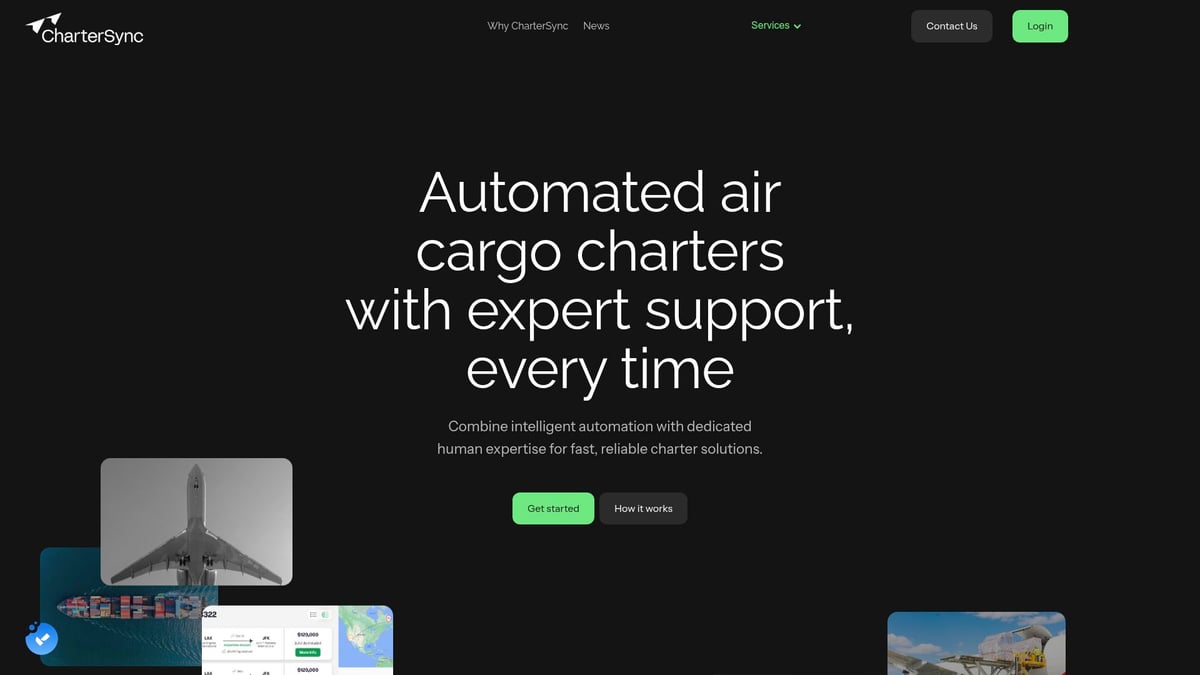
Customers benefit from seamless booking, real-time tracking, and comprehensive document management. CharterSync’s specialised support for automotive, pharmaceutical, and high-tech shipments ensures tailored solutions for complex requirements. With transparent pricing and dedicated assistance, CharterSync sets a new benchmark for efficient and responsive cargo support.
Implementing modern cargo support solutions requires a structured approach. Each step, from assessing your organisational needs to ongoing risk management, is essential for maximising operational efficiency and staying competitive in the evolving logistics sector.
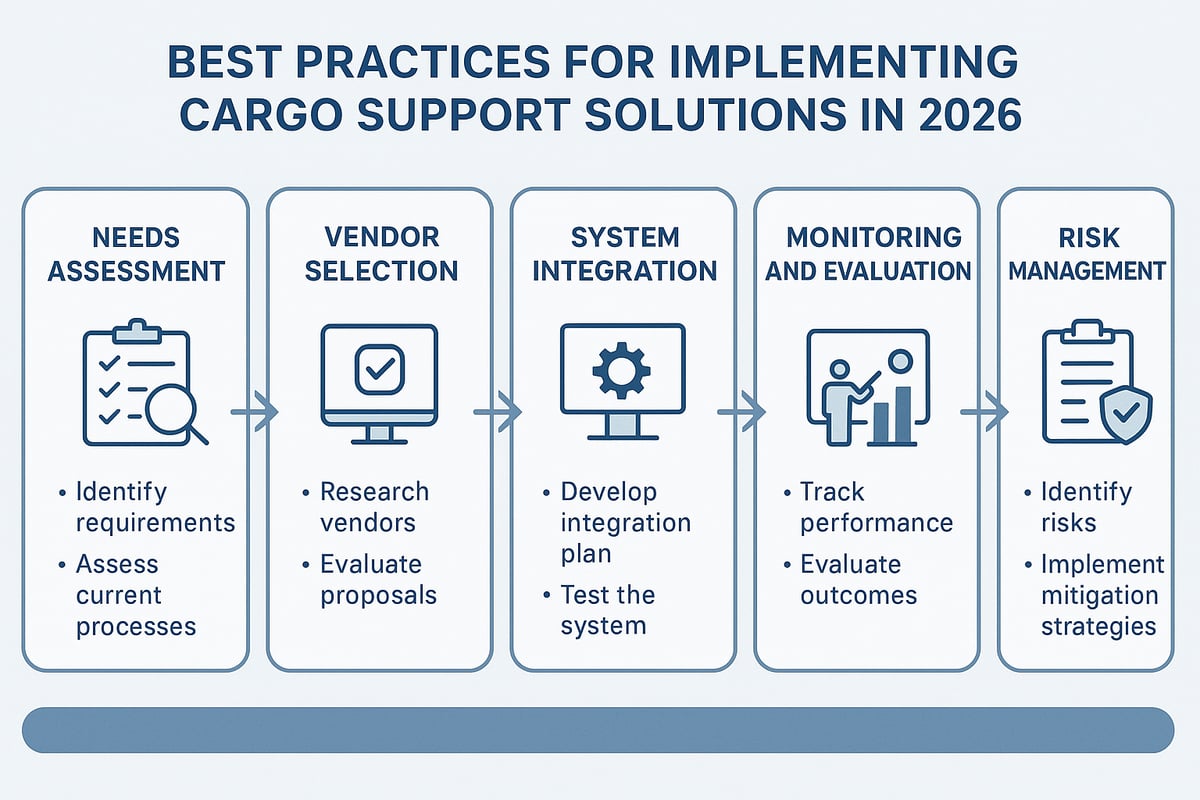
Before adopting any cargo support solution, begin with a thorough needs analysis. Evaluate your current and projected cargo volumes, as well as the complexity of your supply chain.
Identify pain points such as delays, manual processes, or visibility gaps. Align the chosen cargo support system with your business goals and future growth plans. Engage stakeholders across operations, IT, and compliance to ensure all perspectives are considered.
A gap analysis between digital and manual workflows helps pinpoint what improvements are necessary. This groundwork ensures the new cargo support solution delivers measurable value from day one.
Choosing the best vendors for cargo support can make or break your implementation. Evaluate providers based on industry experience, global reach, and their ability to handle specialised cargo types.
Look for case studies and customer testimonials to gauge reliability. Assess whether their platforms integrate smoothly with your existing systems. Consider how AI and blockchain are reshaping the sector, as highlighted in the Freight Forwarding Industry Outlook 2025-2034.
Finally, compare support options like live chat, phone, or self-service to ensure your cargo support needs are fully addressed.
Seamless integration is critical for effective cargo support. Ensure compatibility with your ERP, WMS, and TMS platforms to avoid data silos.
Plan for data migration and map out processes to streamline the transition. Comprehensive training and change management minimise operational disruptions. Monitor and troubleshoot issues during rollout to maintain business continuity.
Digital transformation is accelerating, as seen in the Air Cargo Charter in 2025 article, making integration a key success factor for modern cargo support solutions.
Empowering your team is essential for successful cargo support implementation. Develop tailored training programmes that cover new digital tools, workflows, and compliance requirements.
Incentivise adoption through recognition and ongoing support. Encourage continuous learning as technologies evolve. Address resistance to change by clearly communicating the benefits and providing resources like video tutorials or hands-on workshops.
Well-trained staff ensure your cargo support processes remain efficient and responsive to market demands.
Continuous improvement is the backbone of high-performing cargo support. Set clear KPIs such as response times, error rates, and claim resolution durations.
Collect user feedback through surveys or direct communication. Use analytics to identify trends and areas for optimisation. Regularly benchmark your performance against industry standards and competitors.
For example, tracking reductions in claim resolution times after implementation demonstrates tangible benefits of your cargo support solution.
Robust risk management safeguards your cargo support operations against disruptions. Identify potential risks like cyber threats, capacity shortages, or supply chain interruptions.
Implement mitigation strategies and ensure ongoing compliance with international regulations. Schedule regular audits and update protocols as rules evolve. Stay agile by adapting to new customs requirements and security standards.
Building resilience through contingency planning ensures your cargo support remains reliable, no matter the challenge.
The world of cargo support is on the brink of transformation as we move into 2026 and beyond. Logistics professionals are witnessing rapid innovation, with new technologies and evolving customer demands driving the future of supply chain management. Let us explore the trends that will shape cargo support in the coming years.
AI, robotics, and hyper-automation are set to redefine cargo support operations. Artificial intelligence will power decision-making in cargo routing and allocation, ensuring optimal use of resources. Robotics will automate cargo handling, packing, and sorting, boosting speed and accuracy. Hyper-automation will allow seamless integration of processes, from booking to delivery. Fully automated cargo terminals are emerging in major airports, significantly improving efficiency and reducing operational costs. As these technologies mature, cargo support providers will see reduced errors and faster turnaround times, enabling them to meet the growing demands of global trade.
Sustainability is now a central pillar in cargo support strategy. The shift towards eco-friendly packaging and electric vehicles is accelerating, as firms strive to reduce their carbon footprint. Carbon tracking and offset programmes are becoming standard features for shipments, driven by both regulatory requirements and customer preferences. The adoption of electric vehicles is also being optimised using advanced frameworks, such as the CARGO: Co-Optimization Framework for EV Charging and Routing, which helps logistics companies enhance efficiency while supporting green initiatives. Green corridors and sustainable air cargo projects are gaining traction, ensuring cargo support aligns with environmental goals.
Security and compliance are critical to future cargo support. Advanced screening and monitoring technologies, including AI-powered anomaly detection, are being deployed to safeguard shipments. Biometric access controls and cargo authentication are enhancing security at every stage. The industry is moving towards global harmonisation of security standards, making cross-border operations smoother. Stricter regulations, particularly for sensitive cargo sectors, are expected. As a result, cargo support teams must continually update protocols to stay compliant and resilient in the face of evolving threats.
Personalisation is transforming how cargo support providers interact with clients. Customisable support packages are tailored to specific customer needs, from shipment types to preferred communication channels. Predictive customer service, powered by data analytics, allows providers to proactively resolve issues before they escalate. Self-service dashboards deliver real-time insights and tailored recommendations, improving user experience and building loyalty. Automated notifications and multi-channel support ensure that cargo support remains responsive and adaptive, meeting the expectations of a diverse client base.
The expansion of global support networks is enabling cargo support providers to serve more regions and industries. Multi-modal and cross-border services are growing, supported by partnerships with regional carriers and logistics providers. Localisation of support teams, with multi-lingual capabilities, ensures effective communication across markets. For example, having over 320 cargo stations worldwide allows providers to respond quickly to emerging opportunities and challenges. This expansion is essential for meeting the needs of new markets and increasingly complex trade routes, strengthening the global reach of cargo support.
Data-driven decision making is at the heart of next-generation cargo support. By leveraging big data and predictive analytics, providers can forecast demand, optimise capacity, and improve operational efficiency. Real-time analytics enable swift responses to disruptions, while predictive maintenance minimises equipment downtime. Industry reports, such as the Air Cargo Market Analysis March 2025, highlight the growing importance of analytics in shaping strategies. Collaborative data sharing across the supply chain further enhances transparency and agility, making cargo support more resilient and responsive to market changes.
As you’ve explored the latest trends, best practices, and digital advancements shaping cargo support for 2026, it’s clear that having the right solutions in place is crucial for staying ahead. If you’re ready to see how intelligent automation and expert support can transform your air cargo operations, I invite you to take the next step. Discover first-hand how CharterSync’s platform delivers real time access to global aircraft, accurate quoting, and seamless booking—all backed by dedicated industry experts. To experience these benefits for yourself, request a demo and see how you can elevate your cargo operations with confidence.

.png)