.png)
Airplane cargo powers the world behind the scenes, making sure fresh fruit, vital medical supplies, and urgent electronics cross continents every single day. Yet, most people never see the complex, high-speed system that keeps global trade moving.
This essential 2026 guide will unravel the mysteries of airplane cargo, showing how it operates, why it is crucial, and what steps you can take to ensure your shipments are efficient, compliant, and cost-effective.
Are you ready to discover insider knowledge, industry trends, and practical tips? Dive in and master the essentials of this vital global engine.
Airplane cargo is the backbone of fast and reliable global logistics. It refers to any goods or freight transported by air, rather than by sea or land. Unlike passenger baggage, airplane cargo is loaded, stored, and handled according to strict processes designed to maximise safety, speed, and efficiency.
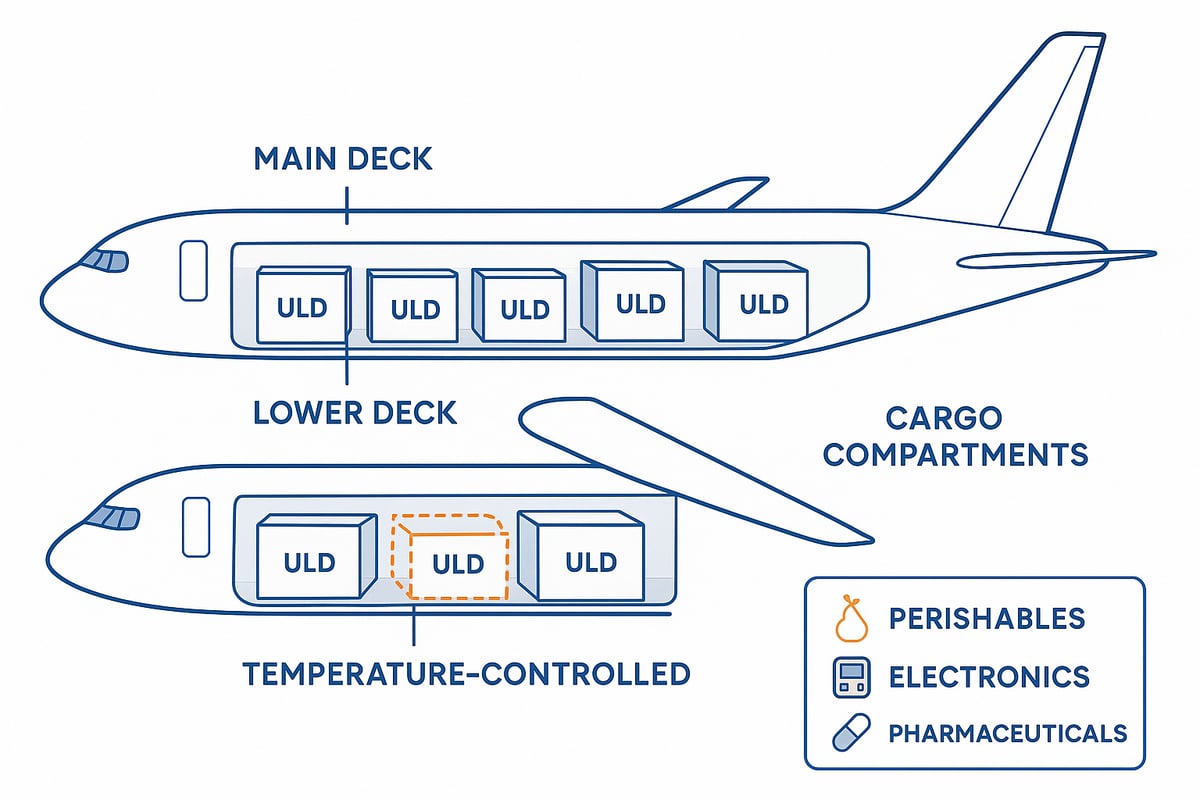
At its core, airplane cargo encompasses all types of goods shipped via aircraft, from small parcels to oversized machinery. It is a critical part of the supply chain for industries that depend on rapid, time-sensitive deliveries. Airplane cargo moves through dedicated cargo aircraft or within the cargo holds of passenger planes, ensuring goods reach their destinations swiftly and securely.
Airplane cargo is distinct from luggage carried by travellers. While passenger baggage is handled for convenience, airplane cargo is processed with commercial priorities, using specialised equipment and documentation.
The importance of airplane cargo in global trade cannot be overstated. Despite representing less than 1% of total trade volume by weight, it accounts for over 35% of the global trade value, according to IATA’s 2025 Air Cargo Demand Report. This reflects the high value and urgency of goods typically moved by air.
Industries such as pharmaceuticals, electronics, and automotive rely on airplane cargo for just-in-time deliveries. The rapid growth of e-commerce has also driven demand for air transport, as businesses and consumers expect shorter delivery times for online orders.
Airplane cargo is used to transport a wide range of goods, each with unique handling requirements. Common examples include:
This diversity highlights how airplane cargo supports both everyday needs and specialised industries.
There are two main types of aircraft used for transporting airplane cargo:
| Aircraft Type | Description | Typical Use Case |
|---|---|---|
| Cargo Aircraft | Aircraft designed only for freight, with large doors and reinforced floors. | Heavy, oversized, or high-volume shipments |
| Passenger Aircraft | Planes carrying passengers, with a portion of the lower deck (belly hold) reserved for cargo. | Mixed passenger and cargo routes |
Cargo aircraft can carry larger and heavier loads, while passenger planes offer flexibility and frequent schedules. Both types require precise planning to balance weight and maintain flight safety.
Speed, security, and reliability are the cornerstones of airplane cargo operations. Strict protocols ensure that goods are loaded, tracked, and delivered with minimal risk of delay or loss.
Understanding airplane cargo requires familiarity with key terms:
A powerful example is the global distribution of COVID-19 vaccines. Airplane cargo enabled rapid, temperature-controlled delivery of millions of doses to remote and urban locations alike. This operation relied on advanced tracking, strict handling standards, and international coordination, demonstrating how vital airplane cargo is for public health and global supply chains.
The anatomy of an airplane cargo hold blends engineering, logistics, and rigorous safety. Understanding the structure and features of these holds is essential for anyone involved in airplane cargo, from freight forwarders to compliance managers. Let us break down the main elements that keep the world’s goods flying safely and efficiently.
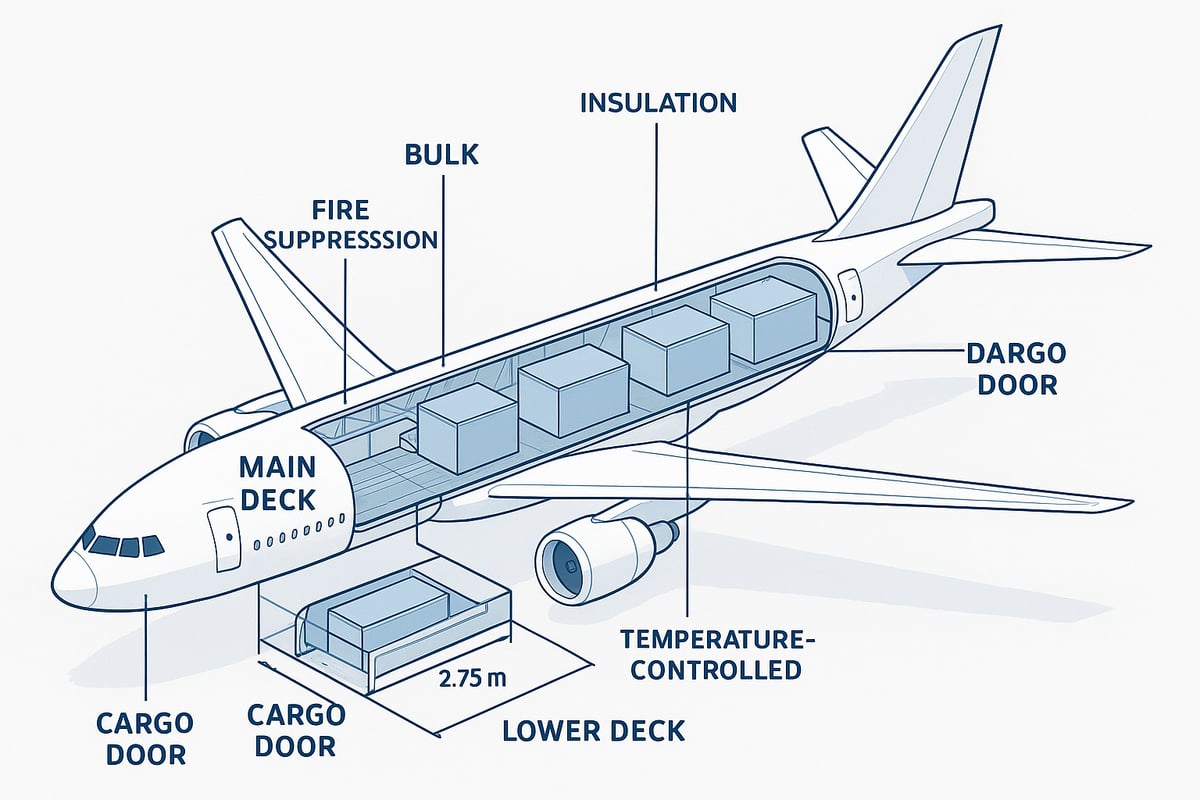
Airplane cargo holds are meticulously engineered spaces located in both the main deck and lower deck of various aircraft models. The precise placement of these holds is crucial for balancing the aircraft and ensuring flight safety. On dedicated freighters, such as the Boeing 777F, cargo can occupy the entire main deck, while passenger aircraft typically utilise the lower deck, often referred to as the belly hold, for cargo transport.
Construction materials must be lightweight yet robust, with aluminium alloys and advanced composites commonly used. For temperature-sensitive airplane cargo, insulation is added within the hold walls to maintain consistent environmental conditions. Door dimensions vary by aircraft, but large, reinforced doors with secure locking mechanisms are standard to facilitate the loading of oversized shipments.
Modern loading mechanisms include powered rollers and cargo loaders, allowing for efficient movement of Unit Load Devices (ULDs) and pallets. Weight and balance calculations are performed before every flight to ensure the safe distribution of airplane cargo throughout the hold.
| Feature | Boeing 777F | Airbus A330 (P2F) |
|---|---|---|
| Main Deck Hold | Full-width, high volume | Converted for containers |
| Lower Deck | Two large compartments | Two compartments |
| Door Size (max) | 3.72 x 3.05 m | 3.60 x 2.58 m |
| Max Payload | 102,000 kg | 61,000 kg |
This careful design ensures that every kilogram of airplane cargo is secure, accessible, and protected during transit.
Cargo holds are classified to accommodate diverse airplane cargo needs. The main types include:
Each hold type offers specific benefits. For instance, temperature-controlled holds are vital for the safe delivery of pharmaceuticals and fresh produce. For a deeper dive into the importance and operation of these holds, see temperature-controlled freight solutions.
Fire suppression systems are a standard feature in hazardous goods holds, and regular inspections ensure compliance with international regulations. The adaptability of cargo holds means airplane cargo operators can meet a wide array of industry needs, from urgent medical supplies to high-value electronics.
Safety and security lie at the heart of airplane cargo operations. All holds are equipped with sophisticated fire detection and suppression systems, including smoke detectors and halon extinguishers. Security screening protocols, such as X-ray scanning and access controls, are strictly enforced to prevent unauthorised access and detect prohibited items.
Stringent regulations govern the handling of dangerous goods and restricted items. Compliance with international standards ensures that every airplane cargo shipment is packed, labelled, and documented according to strict guidelines. Tamper-evident seals and advanced tracking systems, including RFID and GPS, enable real-time monitoring and enhance traceability throughout the journey.
A notable case study is the implementation of new ICAO security standards, which introduced enhanced screening procedures and digital tracking for high-risk shipments. This advancement has significantly improved the reliability and safety of airplane cargo across the industry.
The journey of airplane cargo from origin to destination involves a series of well-defined steps that ensure efficiency, safety, and compliance. Each stage, from initial booking to in-flight monitoring, is crucial for maintaining the integrity and timely delivery of goods.
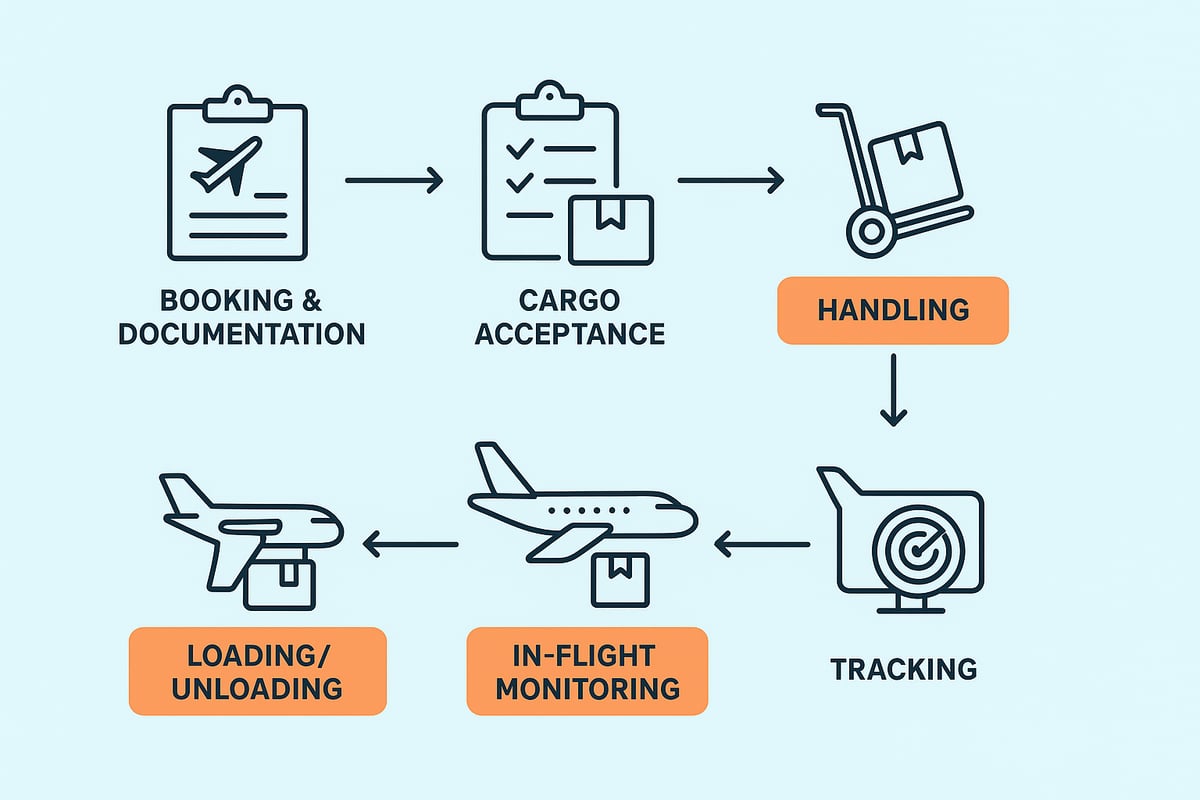
Every airplane cargo shipment begins with a booking. Shippers can reserve space directly with an airline, through a freight forwarder, or using digital platforms. The choice depends on factors such as urgency, complexity, and volume.
Accurate documentation is essential for airplane cargo to move smoothly through the supply chain. The air waybill acts as a contract and receipt, while commercial invoices and packing lists provide details for customs authorities. For international shipments, thorough paperwork prevents costly delays.
To streamline the booking process and avoid common pitfalls, many shippers rely on digital solutions. For a comprehensive overview of best practices, see Air cargo booking essentials. Customs clearance requirements also vary by destination, so it is important to ensure all documents are in order.
For example, when an automotive manufacturer needs to ship critical parts urgently, booking must happen quickly, and all documentation must be precise. This ensures airplane cargo is prioritised and cleared for rapid transit.
Once booked, airplane cargo arrives at the airport for acceptance. Airlines and ground handlers inspect the shipment, checking for correct labelling, weight, and packaging. Only cargo that meets safety and documentation criteria is accepted for transport.
Unit Load Devices (ULDs) and cargo pallets are used to consolidate goods efficiently. Special care is required for sensitive items such as live animals, pharmaceuticals, or dangerous goods. Handlers follow strict protocols to ensure these shipments meet regulatory standards.
A careful acceptance process reduces the risk of delays or damage. For example, pharmaceuticals require temperature monitoring and special handling to maintain efficacy. By following established procedures, handlers protect the integrity of every airplane cargo shipment.
After acceptance, airplane cargo is prepared for loading. Ground handling teams use equipment such as high loaders, dollies, and conveyor belts to move goods into the aircraft. The loading sequence is carefully planned to maintain the aircraft’s balance and maximise space.
Cargo is secured using nets, straps, and locks to prevent shifting during flight. At the destination, unloading is coordinated with ground transport providers to ensure a swift transfer. Real-time tracking systems monitor the movement of goods throughout the process.
For express shipments, turnaround times are critical. A well-coordinated team can unload and reload an aircraft within a tight window, ensuring airplane cargo continues its journey without unnecessary delays.
During flight, maintaining the right environment is vital for certain types of airplane cargo. Advanced systems monitor temperature, humidity, and pressure within the cargo hold, especially for perishable or high-value goods.
Modern tracking technologies, such as RFID and GPS, provide real-time updates to shippers and ground teams. This visibility allows for immediate action if any issue arises. Communication between flight crews and ground staff is essential for urgent or sensitive shipments.
For instance, electronics manufacturers often require live tracking of their shipments to protect against loss or damage. In these scenarios, robust monitoring ensures the safe and timely arrival of every airplane cargo consignment.
Navigating the intricate world of airplane cargo means understanding the rules that keep goods, people, and the environment safe. Regulations are not just paperwork, they are the backbone of secure, efficient, and global air transport. Let us explore the essential frameworks, compliance requirements, and safety standards shaping airplane cargo in 2026.
Airplane cargo operates within a web of international and national regulations. Global bodies such as the International Air Transport Association (IATA), International Civil Aviation Organization (ICAO), and European Union Aviation Safety Agency (EASA) set the standards for safety, efficiency, and environmental responsibility.
National aviation authorities then adapt and enforce these rules, ensuring that every airplane cargo movement meets strict benchmarks. In 2026, sustainability mandates are front and centre, with new emissions targets and green reporting requirements shaping airline operations. Airlines must also comply with the latest digital documentation standards and advanced cargo information submissions.
A summary table of primary regulatory bodies:
| Regulatory Body | Focus Area | Key 2026 Mandate |
|---|---|---|
| IATA | Safety, efficiency | E-docs, green compliance |
| ICAO | Security, emissions | CORSIA, ACI |
| EASA | EU safety, environment | ETS, digitalisation |
For a forward-looking view on how these regulations may evolve, consult the FAA Aerospace Forecast 2025-2045, which analyses trends impacting airplane cargo worldwide.
Managing dangerous goods is a cornerstone of airplane cargo safety. Items such as lithium batteries, chemicals, and infectious substances are classified under strict guidelines. Each type is subject to specific packaging, labelling, and documentation rules to prevent incidents during air transport.
Handlers and shippers must undergo specialised training to keep up with evolving standards. For instance, lithium batteries must be packed in UN-approved containers and clearly labelled to ensure quick identification. The air waybill must specify the nature of the goods and their handling requirements.
Key steps for compliant handling:
This rigorous approach ensures that airplane cargo containing hazardous or sensitive items travels safely and legally.
Security and customs compliance are vital pillars of airplane cargo operations. Every shipment is subject to security screening using methods like X-ray scanners, sniffer dogs, and increasingly, AI-driven systems that flag anomalies before loading. Tamper-evident seals and real-time tracking help maintain the integrity of high-value or restricted cargo.
Customs procedures require detailed documentation, including commercial invoices and packing lists, to support risk assessment and legal import or export. Advanced cargo information (ACI) systems enable authorities to review cargo data before arrival, speeding up clearance and minimising delays.
Recent trade changes, such as Brexit, have made compliance even more complex. Shippers must stay updated on new tariffs, customs requirements, and documentation to avoid costly disruptions. The ability to adapt quickly to geopolitical shifts is now a defining feature of successful airplane cargo operations.
Technology is reshaping airplane cargo, making operations faster, smarter, and greener than ever before. From automation to sustainability, the 2026 landscape is defined by transformation at every stage of the supply chain.
Automation is now central to airplane cargo operations. Artificial intelligence streamlines booking, cargo matching, and quoting, reducing manual errors and turnaround times. Modern digital platforms allow shippers and freight forwarders to track shipments in real time, manage documentation, and receive instant updates.
For instance, an integrated cargo management system can automatically allocate space, generate waybills, and ensure compliance with regulations. This reduces time spent on paperwork and enables rapid response to urgent shipping needs.
According to the 2025 Vision for the Future of Air Cargo Facilities, automation not only increases efficiency but also supports scalability as global trade grows. As airplane cargo volumes rise, automation ensures supply chains remain resilient and cost-effective.
Smart containers are revolutionising airplane cargo by introducing real-time monitoring and control. These advanced unit load devices (ULDs) are equipped with IoT sensors to track temperature, humidity, and shock during transit.
This technology is invaluable for sensitive goods such as pharmaceuticals and electronics. Shippers receive alerts if conditions deviate from the required range, helping prevent spoilage or damage. The ability to view shipment status from origin to destination builds trust and supports regulatory compliance.
Smart containers also enhance security. With GPS and RFID tracking, operators can locate airplane cargo at any point in the journey. This level of transparency is now expected by both businesses and regulators.
Sustainability is at the forefront for the airplane cargo industry in 2026. Airlines are investing in sustainable aviation fuel (SAF) to cut emissions and lower their carbon footprint. Electric ground handling equipment is now standard at many major airports, reducing reliance on fossil fuels.
Many operators are also adopting carbon offset programmes, allowing customers to support environmental projects that compensate for emissions. These initiatives are not just a response to regulations, but also reflect the industry's commitment to a greener future.
Airplane cargo providers are aligning with global targets for net-zero operations, driving investment in new technology and cleaner practices.
As airplane cargo processes become more digital, cybersecurity is a top priority. Protecting sensitive customer data and shipment details is crucial for maintaining trust and meeting regulatory standards.
Airlines and logistics firms now implement advanced encryption, multi-factor authentication, and continuous monitoring of digital platforms. This helps defend against cyberattacks that could disrupt shipments or compromise confidential information.
The industry has responded to recent cyber threats by investing in dedicated IT security teams and regular system audits. For airplane cargo, robust digital protection is as important as physical security.
CharterSync is leading the way in digital transformation for airplane cargo charter. Its AI-powered platform automates aircraft selection, quoting, and booking, making the process faster and more transparent for freight forwarders.
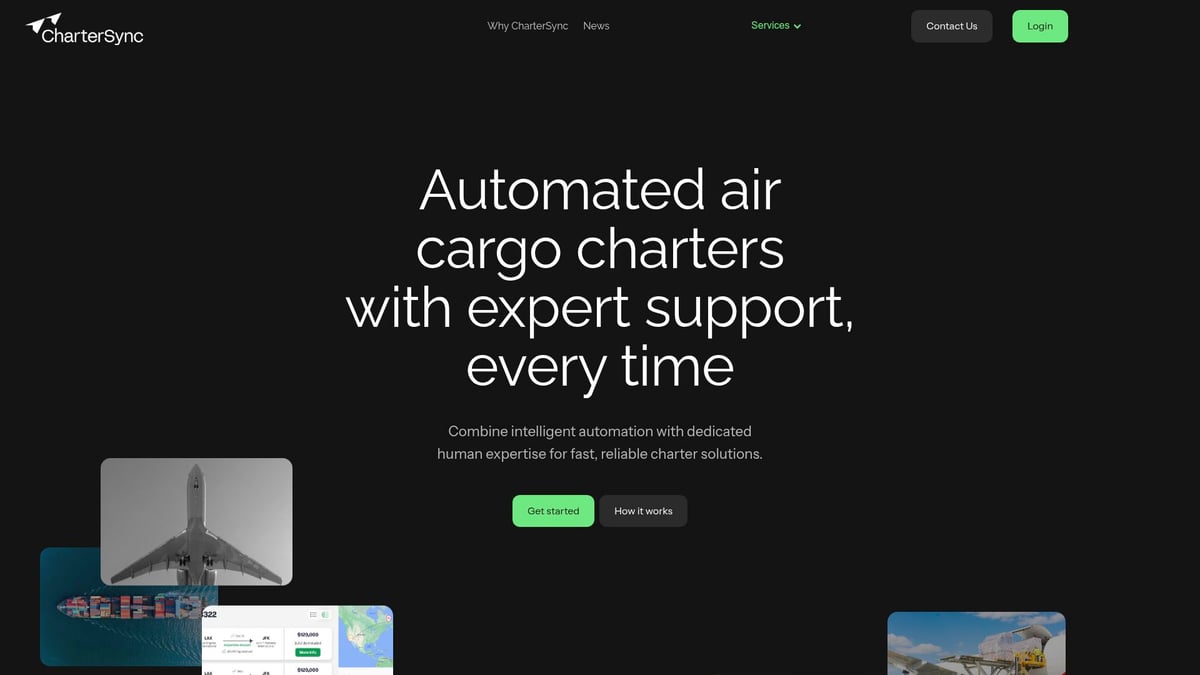
With instant access to available aircraft, users can secure the best options for time-critical shipments. The platform offers clear pricing, expert support, and industry-specific solutions for sectors like automotive, high-tech, and pharmaceuticals.
CharterSync’s commitment to innovation is evident in its real-world impact. For a deeper look at how the company is shaping the future, discover their air cargo charter innovation and see how digital tools are improving reliability and efficiency in airplane cargo.
The world of airplane cargo is rapidly evolving, influenced by shifting global demands and technological advances. Understanding the trends shaping the industry is critical for businesses, shippers, and logistics professionals aiming to stay ahead. Let us explore the key forces set to define the future of airplane cargo.
E-commerce is a primary catalyst for the expansion of airplane cargo. The surge in online shopping has transformed logistics, fuelling demand for faster and more reliable air freight solutions. Consumers now expect same-day or next-day delivery, especially for cross-border parcel shipments.
This shift puts pressure on airlines and logistics providers to innovate. Many are reconfiguring their networks to prioritise express delivery routes and invest in dedicated freighter aircraft. For example, the rise of global e-commerce platforms has led to a significant increase in the volume of small packages moving via airplane cargo.
In response, companies are integrating advanced tracking systems and optimised sorting facilities to handle the growing flow. As e-commerce continues to expand, the role of airplane cargo in global supply chains will only become more vital.
Recent years have highlighted the importance of resilience in airplane cargo networks. Disruptions from the pandemic, geopolitical tensions, and natural disasters have exposed vulnerabilities in traditional logistics models.
To mitigate risks, companies are diversifying their supply chains, adopting flexible routing, and utilising multi-modal logistics strategies. This means integrating air with road, rail, or sea transport to ensure continuity. Contingency planning has become a standard practice, with real-time data used to identify and respond to emerging threats.
These efforts help maintain service levels and minimise delays. As uncertainty persists, building robust airplane cargo networks will remain a top priority for the industry.
Technological innovation is ushering in a new era for airplane cargo. Next-generation freighters, such as the Boeing 777-8F, offer increased capacity and fuel efficiency. Automation is also transforming ground operations, with robotic systems speeding up sorting and loading.
One of the most exciting developments is the use of drones and autonomous aircraft for last-mile delivery. For example, the Pipistrel Nuuva V300 Development project demonstrates how hybrid-electric, unmanned cargo aircraft could revolutionise express shipments in remote or hard-to-reach areas.
These advances promise greater flexibility and cost savings, positioning airplane cargo to meet future logistics demands.
Sustainability is now at the forefront of airplane cargo operations. Regulators and industry bodies are tightening emissions standards, prompting airlines to invest in greener solutions. The adoption of sustainable aviation fuel, energy-efficient aircraft, and carbon offsetting initiatives is accelerating.
Compliance with programmes such as ICAO CORSIA and the EU ETS is mandatory for many operators. Airlines are also exploring electric ground equipment and eco-friendly packaging to reduce their environmental footprint.
By embracing these changes, the airplane cargo sector is taking meaningful steps towards a more sustainable future.
As airplane cargo operations become more complex, the industry faces a growing shortage of skilled personnel. There is high demand for qualified cargo handlers, pilots, and logistics experts who can navigate new technologies and regulatory requirements.
To address this, airlines and logistics firms are investing in training and upskilling programmes. Partnerships with aviation academies and universities are helping to build a pipeline of talent for the next generation of airplane cargo professionals.
Attracting and retaining skilled staff will be essential to maintain operational excellence in a competitive landscape.
Airplane cargo flows are sensitive to global events. Trade wars, sanctions, and regional conflicts can disrupt established routes and create volatility in demand.
Companies are responding by developing agile strategies, such as shifting operations, seeking alternative markets, and closely monitoring policy changes. Staying informed and prepared is key to navigating the unpredictable nature of global trade.
Digitalisation is reshaping the airplane cargo experience. Customers now expect real-time visibility, seamless booking, and transparent communication throughout the shipment journey.
The integration of digital platforms across the cargo supply chain is making these expectations a reality. Airlines and freight forwarders are leveraging data analytics and automation to deliver faster, more reliable service.
This digital transformation is setting a new standard for customer satisfaction in airplane cargo.
As we've explored the essentials of airplane cargo, from how goods move seamlessly across continents to the advanced technology shaping the future, it's clear that staying ahead means embracing smart, efficient solutions. If you're ready to simplify your air cargo charter experience and benefit from intelligent automation, transparent pricing, and expert support, why not see it in action for yourself You can request a demo and discover how CharterSync is transforming the way freight forwarders move time critical shipments around the world.

.png)