.png)
Florida is rapidly becoming the epicentre of air cargo innovation, setting the stage for a transformation in global logistics by 2026. As trade volumes surge and digital technologies reshape supply chains, the state’s airports and infrastructure are evolving to meet new demands.
This guide is designed for logistics professionals, shippers, and businesses seeking clarity and confidence when navigating air cargo florida. You will explore regulatory changes, infrastructure upgrades, and digital solutions that are shaping the industry.
Unlock strategies to streamline your shipping, reduce costs, and stay ahead of emerging trends. Dive in for expert insights and actionable steps for success.
Florida is rapidly transforming into a global gateway for air cargo. The state’s growth is driven by robust trade expansion, significant infrastructure investments, and a wave of digital innovation. In this section, we break down the key factors shaping the air cargo florida market in 2026, helping shippers and logistics professionals stay ahead.
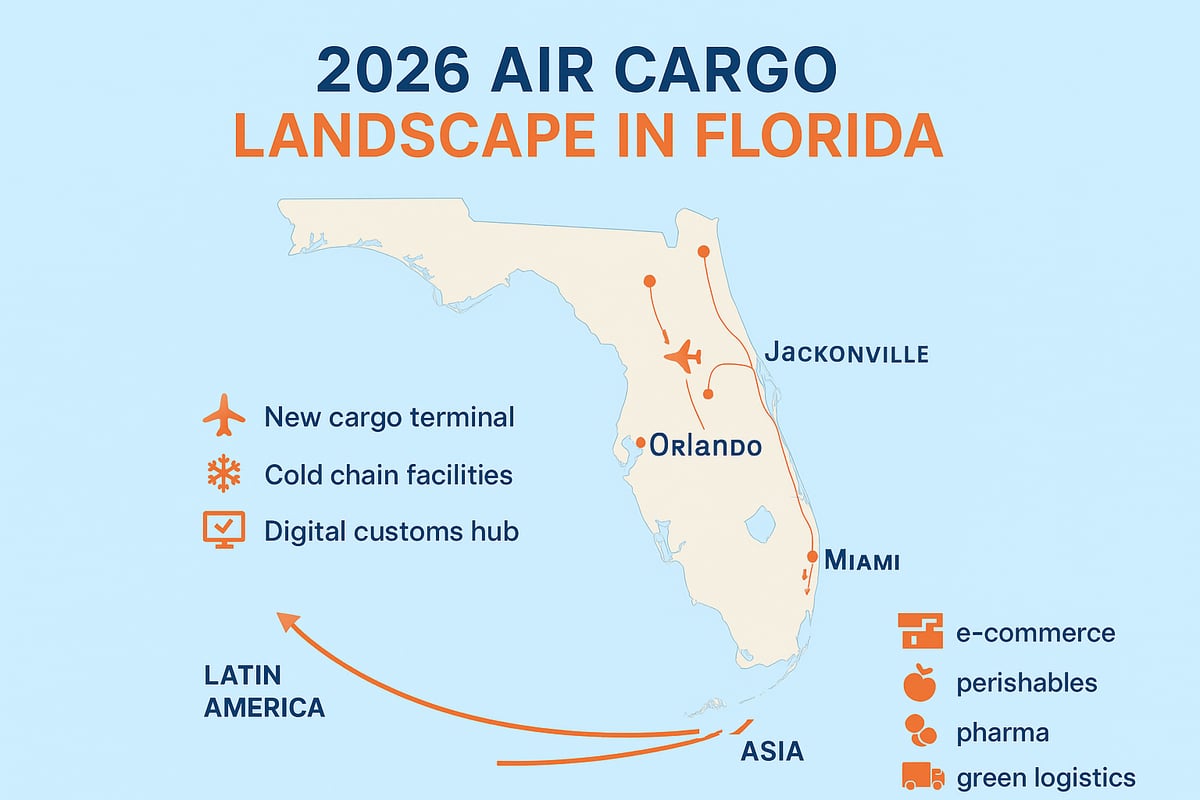
Economic expansion is propelling air cargo florida into the spotlight. By 2026, Florida’s GDP is projected to grow steadily, with exports to Latin America, Europe, and Asia increasing. E-commerce and the demand for perishable goods are fuelling this surge.
Miami serves as a prime example, acting as the leading hub for perishables entering the United States. In 2023, Florida airports handled over 3 million tonnes of air cargo, and this figure is set to rise by 15 percent by 2026. Key trade partners include Brazil, Mexico, Germany, and China, with new routes emerging to accommodate shifting global supply chains.
The combination of trade growth and evolving consumer demands is cementing air cargo florida as a vital link in global logistics.
Florida’s airports are investing heavily to support the evolving needs of air cargo florida. Miami International Airport is at the forefront, introducing new cargo terminals and state-of-the-art cold chain facilities. This expansion will add 400,000 square feet of cargo space by 2026, supporting increased volume and specialised shipments. According to Miami International Airport's Cargo Expansion, a $400 million investment is driving this transformation.
Orlando International Airport is expanding to cater to the surge in e-commerce and high-tech shipments. Tampa and Jacksonville are stepping up as regional cargo hubs, with new investments in automation, green technology, and customs systems.
Key infrastructure upgrades include:
These developments ensure air cargo florida remains competitive and efficient for global shippers.
The regulatory environment for air cargo florida is evolving rapidly. The impact of USMCA and new international trade agreements is reshaping cross-border operations. Customs processes are being modernised, with digital documentation and pre-clearance standards becoming mandatory across Florida’s airports.
Enhanced security and compliance requirements are being introduced, affecting both transit times and documentation. The U.S. Customs and Border Protection (CBP) is rolling out automated clearance systems, reducing paperwork and streamlining shipment flows.
Key regulatory changes:
These regulatory shifts are designed to make air cargo florida more secure, efficient, and aligned with global standards.
Innovation is redefining air cargo florida in 2026. Sustainable aviation fuels and green logistics solutions are on the rise, with airports and carriers adopting eco-friendly practices. Drones and autonomous vehicles are being deployed for both ground handling and last-mile delivery.
Digital booking platforms are now commonplace, offering real-time cargo tracking and instant quotes. There is significant growth in pharma, automotive, and high-value technology shipments, supported by advanced cold chain and security technologies.
These trends position air cargo florida at the cutting edge of logistics, offering speed, transparency, and sustainability.
The competitive landscape for air cargo florida is dynamic and diverse. Major cargo airlines like DHL and FedEx are expanding their operations, while regional carriers and integrators introduce specialised services. Freight forwarders and digital brokers play a vital role in connecting shippers with the right solutions.
Niche specialists are emerging, focusing on perishables, temperature-controlled shipments, and oversized cargo. Digital platforms are increasing their market share, offering flexibility and tailored options for complex logistics needs.
By 2026, air cargo florida is expected to be a highly competitive market, with both established and emerging players driving innovation.
Shippers leveraging air cargo florida in 2026 gain access to global markets and new trade lanes. However, they must also navigate capacity constraints, seasonal surges, and regulatory complexity.
Balancing speed, cost, and sustainability is crucial. The evolving landscape offers opportunities for growth, but requires shippers to stay informed and adaptable.
Successfully shipping air cargo from Florida in 2026 requires a strategic approach. With evolving regulations, infrastructure, and technology, understanding each step is essential for smooth, cost-effective operations. This guide breaks down the process in practical detail, so you can confidently navigate the air cargo florida landscape.
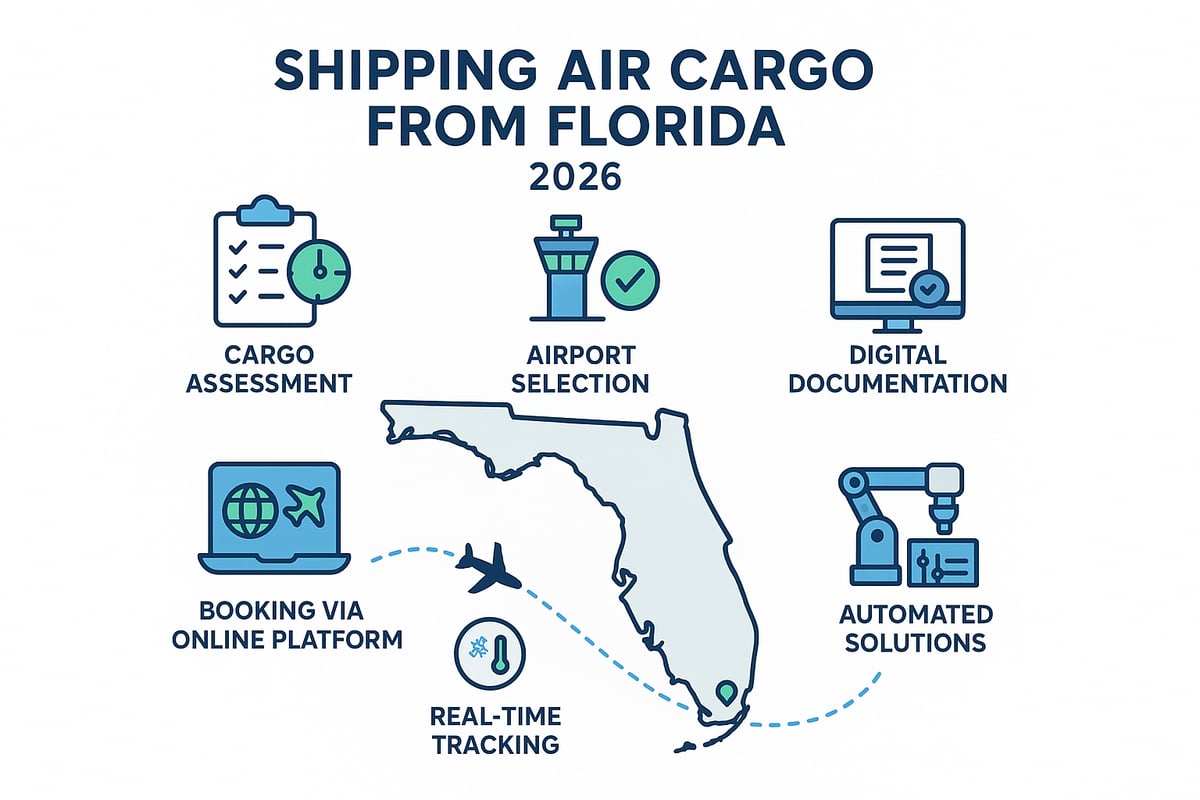
Begin by identifying exactly what you need to ship. Determine whether your cargo is perishable, pharmaceutical, electronic, automotive, or falls into another specialised category. Consider the urgency, volume, and any special handling needs, such as temperature control or hazardous materials compliance.
Pharmaceutical and biotech shipments, for example, often require strict temperature management. For these, explore temperature-controlled freight solutions to ensure regulatory and quality standards are maintained throughout transit.
Ask yourself:
By clarifying these details, you set a solid foundation for efficient air cargo florida operations.
Florida offers several major airports, each with unique strengths. Compare Miami International, Orlando International, Tampa, and Jacksonville for route coverage, facilities, and specialisation.
| Airport | Key Strengths | Best Suited For |
|---|---|---|
| Miami | Latin America routes, cold chain | Perishables, pharma |
| Orlando | E-commerce, tech cargo expansion | Electronics, high-value |
| Tampa | Regional gateway, new investments | Automotive, general cargo |
| Jacksonville | Fast customs, regional role | Oversized, project cargo |
Evaluate carriers based on reliability, network reach, and ability to handle your cargo type. Consider direct flights for speed or connecting options for cost savings. For air cargo florida, Miami is a leading choice for perishables bound for Latin America, while Orlando excels in tech and e-commerce.
Accurate documentation ensures your shipment moves quickly and avoids costly delays. In 2026, you will need:
Embrace digital customs and eAWB adoption for faster processing. New regulations require enhanced security screening and export controls, so stay updated on compliance standards. Miami International, for example, uses automated clearance systems that streamline customs checks for air cargo florida.
Always double-check requirements for your cargo type and destination to avoid paperwork errors and compliance issues.
Choose the best booking channel for your needs. Freight forwarders, digital platforms, and direct airline bookings are all common options. In 2026, digital platforms provide instant quotes, transparent pricing, and simplified booking for air cargo florida.
Key preparation steps:
Example digital booking workflow:
1. Enter cargo details (type, weight, dimensions)
2. Select airport, carrier, and service level
3. Receive instant quote and confirm booking
4. Upload digital documents for customs clearance
Careful preparation at this stage minimises delays and maximises efficiency.
Take advantage of real-time tracking technologies available in 2026. From IoT sensors to automated notifications, shippers can monitor temperature, location, and status at every stage. Customer portals provide full visibility, helping you manage exceptions and respond swiftly to disruptions.
For air cargo florida, these tools are especially valuable for perishable and high-value shipments. Set up alerts for key milestones and maintain communication with your carrier or forwarder.
If issues arise, such as weather delays or customs holds, proactive management keeps your supply chain on track.
Digital transformation is reshaping air cargo florida logistics. Integrated platforms leverage AI and automation for booking, route optimisation, and exception management.
Benefits include:
Digital freight matching tools help you find the best capacity instantly. Automation minimises manual tasks, freeing your team for higher-value activities. Embrace these solutions to stay competitive in the evolving air cargo florida market.
Navigating air cargo florida pricing in 2026 requires a sharp understanding of rate drivers, service options, and strategic value. With growing demand and evolving technology, businesses must optimise costs while maintaining reliability and speed. This section breaks down the core factors, models, savings strategies, and future trends that will shape your air cargo florida experience.
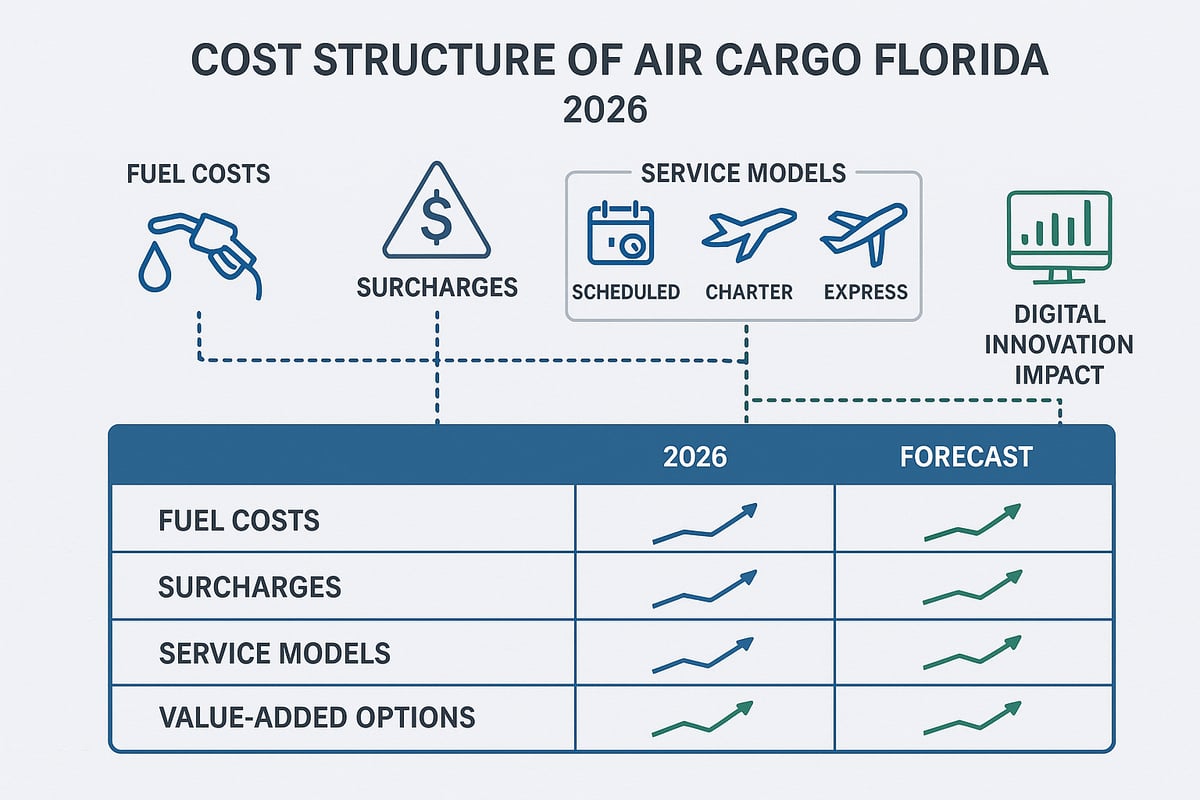
Several core elements will impact air cargo florida rates in 2026. Fuel prices remain a major variable, with fluctuations directly affecting overall costs. Capacity and the balance between supply and demand also play a pivotal role, especially during peak periods.
Surcharges are increasingly common for security, handling, and seasonal demand. Regulatory compliance, particularly with new green logistics standards, may introduce additional fees. Forward-thinking shippers will monitor these cost drivers closely to optimise their air cargo florida budgets.
Choosing the right service model is vital for air cargo florida users. Each offers unique advantages depending on your cargo type and urgency.
| Model | Flexibility | Speed | Cost | Best For |
|---|---|---|---|---|
| Scheduled | Moderate | Standard | Lower | Routine shipments |
| Charter | High | Fastest | Higher | Urgent, oversized, or specialised cargo |
| Express | Low | Fast | Premium | Small, time-critical items |
Charter services, in particular, are evolving rapidly. As explored in Air cargo charter technology 2025, digital platforms now streamline bookings and enhance cost transparency, making charter a more attractive option for air cargo florida shippers.
Smart cost management is essential for air cargo florida success. Consolidating shipments can reduce rates by maximising load efficiency. Optimising packaging minimises dimensional weight charges and potential damage.
Leverage digital booking tools to access competitive quotes instantly. Building long-term partnerships with carriers and forwarders often unlocks volume discounts and priority allocations. When negotiating, focus on total value, not just base rates, to maximise savings for your air cargo florida shipments.
Investing in value-added services can protect and enhance your air cargo florida operation. Temperature-controlled solutions are critical for pharma and perishables. White-glove handling offers extra care for sensitive or high-value cargo.
Premium options such as priority boarding, late cut-offs, and advanced tracking provide peace of mind and faster transit. Many pharma shippers now rely on tailored cold chain services to maintain strict quality standards throughout the air cargo florida journey.
Looking ahead, air cargo florida rates are expected to rise by 5 to 8 percent by 2026, influenced by inflation, regulatory changes, and increased investment in digital and green technologies. Staying proactive with cost forecasting and technology adoption will be key.
Monitor inflation rates, trade policy shifts, and new tech rollouts as you plan budgets. By aligning your strategy with these trends, you can maintain cost control and ensure continued value from air cargo florida services.
Navigating regulatory compliance, security, and risk management is critical for anyone involved in air cargo florida. As the sector evolves, understanding the new requirements and best practices is essential for smooth, secure shipments in 2026.
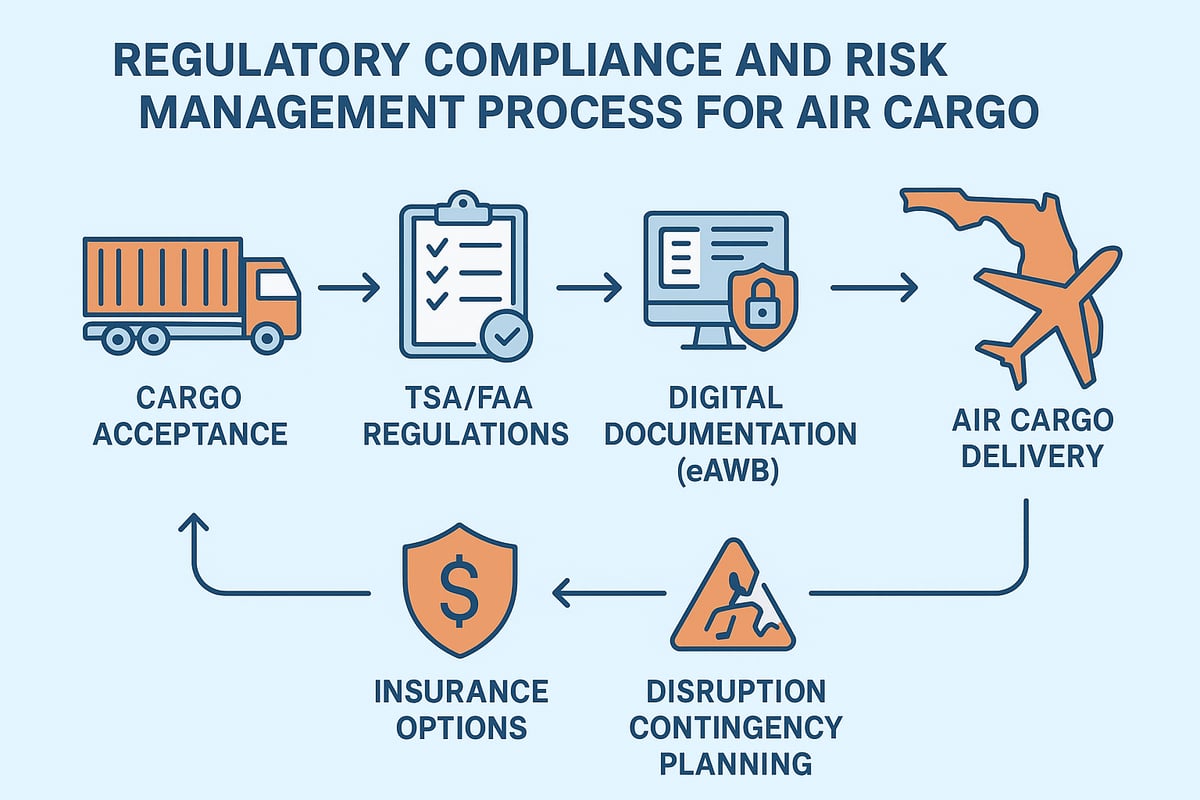
The regulatory environment for air cargo florida is rapidly transforming. In 2026, updated TSA and FAA rules set higher standards for security and operational transparency across all major airports. These changes are designed to harmonise with global customs and security protocols, making international shipments more predictable and secure.
Digital documentation is now mandatory. Every air cargo florida shipment must use electronic Air Waybills (eAWB) and digital certificates. Automated screening systems verify documentation before cargo acceptance, reducing manual errors. Pre-clearance programmes at Florida’s largest airports streamline customs, helping shippers avoid unnecessary delays.
Staying current with these developments is essential. Regular training and compliance audits will help businesses avoid penalties and ensure that air cargo florida remains efficient and compliant with international trade requirements.
Security in air cargo florida is more advanced than ever. The latest AI-driven screening technologies automatically detect risks, enabling faster and more accurate cargo inspections. These systems use machine learning to identify unusual patterns and flag high-risk shipments for further review.
Chain of custody protocols are now strictly enforced, particularly for high-value goods like pharmaceuticals and electronics. Every stage, from acceptance to delivery, must be logged and traceable. Automated notifications alert shippers to any irregularities, supporting proactive risk management.
For air cargo florida, compliance with these security measures is non-negotiable. Robust protocols protect shipments from theft, tampering, and regulatory breaches, building trust with clients and authorities.
Efficient documentation is a cornerstone of compliant air cargo florida operations. In 2026, all shipments require digital paperwork, including eAWBs, digital certificates, and automated customs data submissions. These tools minimise errors and accelerate clearance.
Pre-clearance and expedited processing at Florida airports allow shippers to move goods swiftly through customs. Automated systems cross-check cargo data with regulatory requirements, reducing bottlenecks and avoiding costly delays.
Intelligent digital platforms now play a vital role. They enhance visibility, streamline submissions, and support supply chain resilience. For further insight into how technology is optimising these processes, see Air cargo intelligence for supply chains.
Insurance and liability management are crucial for air cargo florida, especially with rising shipment values and complex global routes. Shippers can choose from a range of cargo insurance policies, including all-risk and specific peril coverage, to suit their needs.
Carrier liability is clearly defined in contracts, outlining responsibilities during transit. It is vital to review and negotiate these terms to protect against unforeseen losses. Digital platforms assist by providing transparent documentation and alerts for policy expirations.
Effective risk mitigation also involves regular assessment of routes, partners, and packaging standards. For air cargo florida, proactive strategies ensure resilience against disruptions and enhance the value proposition for clients.
Air cargo florida faces unique risks from hurricanes, labour actions, and global incidents. Successful shippers develop detailed contingency plans, diversifying routes and partners to maintain flow during disruptions.
Drawing on lessons from past events, businesses prepare backup solutions and maintain strong communication channels. This agility ensures that air cargo florida remains dependable, even when faced with unexpected challenges.
Florida is fast becoming a leader in air cargo florida innovation, driven by transformative digital and sustainability trends. The state’s airports and logistics hubs are investing heavily in smart technologies and future-ready infrastructure. These changes are redefining how air cargo florida services operate, promising increased efficiency, transparency, and value for shippers and logistics providers.
Smart airport technology is reshaping air cargo florida operations. Miami International and other key hubs are rolling out automated cargo handling, robotics, and AI-based scheduling. These advancements reduce processing times and help manage growing cargo volumes. Digital twin technology is also being piloted, enabling real-time simulation of airport operations for predictive planning.
Florida’s commitment to infrastructure is significant, with the state’s $15.5 billion transportation investment boosting digital transformation and supporting new smart cargo terminals. These upgrades position air cargo florida at the forefront of efficiency and innovation.
Sustainability is a core focus for air cargo florida in 2026. Airports and carriers are adopting sustainable aviation fuel (SAF), aiming to reduce carbon emissions substantially. Electrification of ground handling fleets is becoming standard, cutting local pollution and noise.
Many Florida airports are striving for green certifications, implementing advanced waste management, and introducing carbon offsetting programmes. These efforts ensure air cargo florida remains competitive while meeting global environmental standards.
Key sustainability initiatives include:
Digital freight platforms are revolutionising air cargo florida by streamlining booking, quoting, and tracking. Shippers and forwarders can now access instant quotes, real-time cargo status, and seamless communication with carriers. These platforms have reduced average booking times by 60%, transforming operational efficiency.
Advanced platforms offer:
Industry leaders are also leveraging air cargo charter innovation to provide flexible, technology-driven solutions for time-sensitive shipments in Florida.
New technologies are unlocking further efficiencies in air cargo florida. Drones are being trialled for last-mile delivery and on-airport logistics, helping speed up urgent shipments. IoT sensors are embedded in cargo to track temperature, humidity, and location, ensuring sensitive goods arrive in perfect condition.
Blockchain is gaining traction for secure, tamper-proof documentation and transparent supply chains. Together, these technologies reduce errors, mitigate risk, and enhance trust.
| Technology | Benefit to Air Cargo Florida |
|---|---|
| Drones | Faster last-mile delivery |
| IoT Sensors | Real-time cargo monitoring |
| Blockchain | Secure, transparent records |
Looking ahead, air cargo florida will see further integration of automation, green tech, and digital platforms. Anticipated regulatory updates will demand even greater digital compliance and security. New trade lanes and cargo types will emerge as Florida strengthens its position in global logistics.
To future-proof operations, shippers and logistics professionals should:
By embracing these trends, businesses can confidently navigate air cargo florida’s fast-evolving landscape.
As you look ahead to navigating Florida’s dynamic air cargo scene in 2026, it’s clear that digital innovation and expert support will be essential for keeping your operations agile and competitive. We’ve explored how automation, smarter matching, and transparent quoting can transform the way you move goods—especially in fast-paced industries like automotive, pharma, and high-tech. If you’re ready to see how intelligent automation and real human expertise can elevate your shipping strategy, you don’t have to wait. Why not request a demo and discover first-hand how CharterSync can help you streamline your air cargo charters in Florida?

.png)