.png)
Transportation aircraft are the backbone of global commerce, seamlessly linking continents and enabling industries to thrive. As the demand for rapid, reliable logistics grows, understanding these aircraft has never been more crucial.
This expert guide provides a deep dive into the evolution, categories, technologies, and future trends of transportation aircraft as we approach 2026. Whether you are a logistics professional or an industry newcomer, you will gain insights to make informed decisions.
Explore how advances in aircraft design, digital systems, and operational strategies are shaping the future. Get ready to navigate the world of air transport with clarity and confidence.
The story of transportation aircraft is a testament to innovation, resilience, and the demands of a connected world. Over the decades, these aircraft have evolved to meet shifting economic, technological, and environmental requirements. From humble beginnings to their vital role today, the journey of transportation aircraft underpins global trade and mobility.
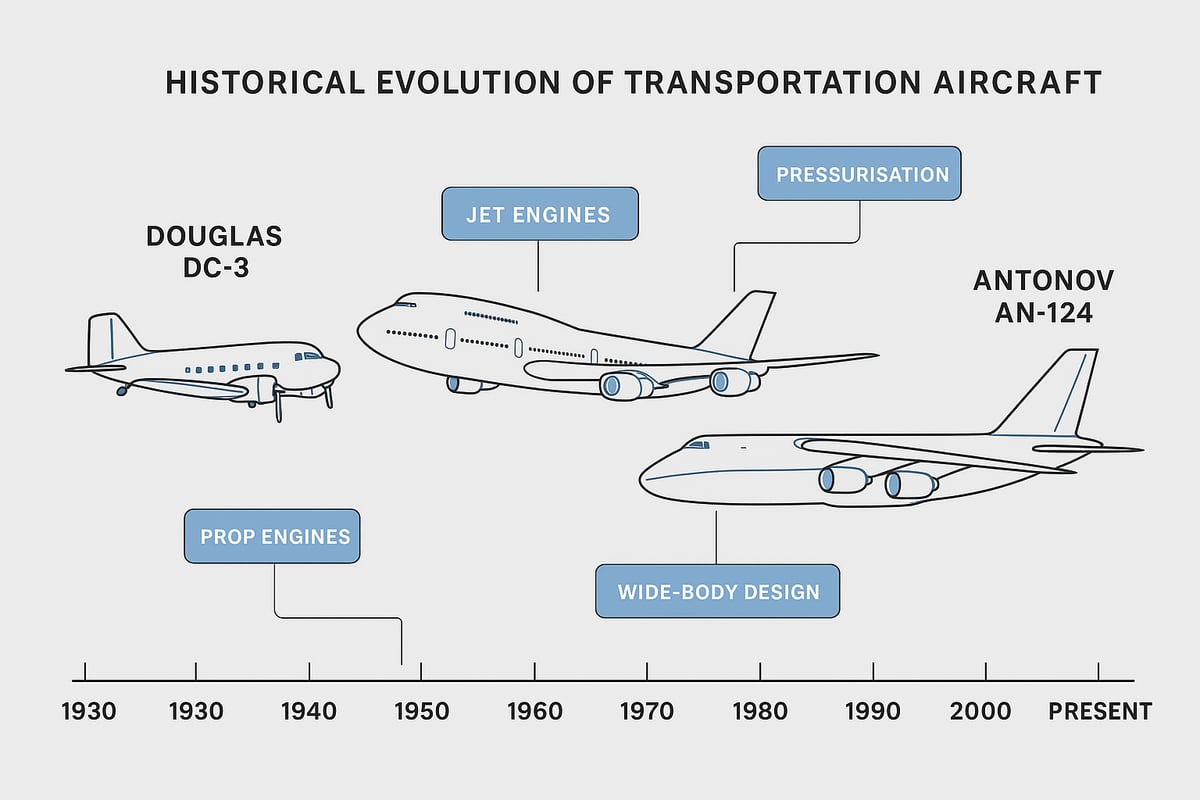
The origins of transportation aircraft date back to the early 20th century, when the first cargo and passenger flights paved the way for modern aviation. Aircraft such as the Douglas DC 3 revolutionised air travel, offering reliability and efficiency for both freight and passengers. Jet engines, cabin pressurisation, and wide-body designs soon followed, each transforming the scope and scale of operations.
Global conflicts, like World War II, spurred rapid advancements in transportation aircraft, driving innovation to meet urgent military and humanitarian needs. Notable models including the Boeing 747 and Antonov An 124 set new standards for size and payload, cementing their place in aviation history.
The expansion of international air freight and passenger routes marked a new era for transportation aircraft. Deregulation and globalisation enabled airlines to expand fleets, optimise routes, and cater to a growing demand for speed and efficiency. The result was a dramatic surge in air cargo volumes, with IATA reporting 66.2 million tonnes moved globally in 2023.
Wide-body jets became the backbone of intercontinental trade, while specialised freighters addressed unique logistics challenges. Transportation aircraft adapted to accommodate everything from perishables to oversized machinery, helping industries thrive in a competitive market.
As transportation aircraft grew in number and impact, regulatory bodies introduced standards to address noise, emissions, and safety. The International Civil Aviation Organisation (ICAO) and schemes like CORSIA set benchmarks for environmental performance, influencing aircraft design and operations.
Sustainability became a priority, with manufacturers investing in lightweight materials, fuel-efficient engines, and improved aerodynamics. These regulatory and environmental shifts have shaped the trajectory of transportation aircraft, ensuring compliance and future readiness.
The digital revolution has fundamentally transformed transportation aircraft operations. Early adoption of avionics and flight management systems enhanced navigation and safety, while digital cargo tracking improved transparency. In recent years, integrated logistics solutions and smart automation have become standard, with AI-driven platforms streamlining planning, maintenance, and booking.
For a deeper look at how technology is reshaping this sector, see Technology transforming air cargo, which explores digital innovations that boost efficiency and reliability for transportation aircraft operators.
The evolution of transportation aircraft offers valuable lessons for today’s industry. Historical challenges, from technical failures to market disruptions, have driven continuous improvement in safety, design, and operational resilience. Each generation of transportation aircraft reflects responses to global events and lessons learned from past incidents.
Understanding this evolution enables operators, shippers, and policymakers to make informed decisions, ensuring transportation aircraft remain central to global logistics and economic growth.
Modern transportation aircraft are the backbone of global logistics, supporting the movement of goods and people across continents. Their diversity reflects a complex industry that balances payload, efficiency, and adaptability. To understand how to select and leverage the right transportation aircraft, it is essential to explore their types, core capabilities, and the latest advancements shaping their performance.
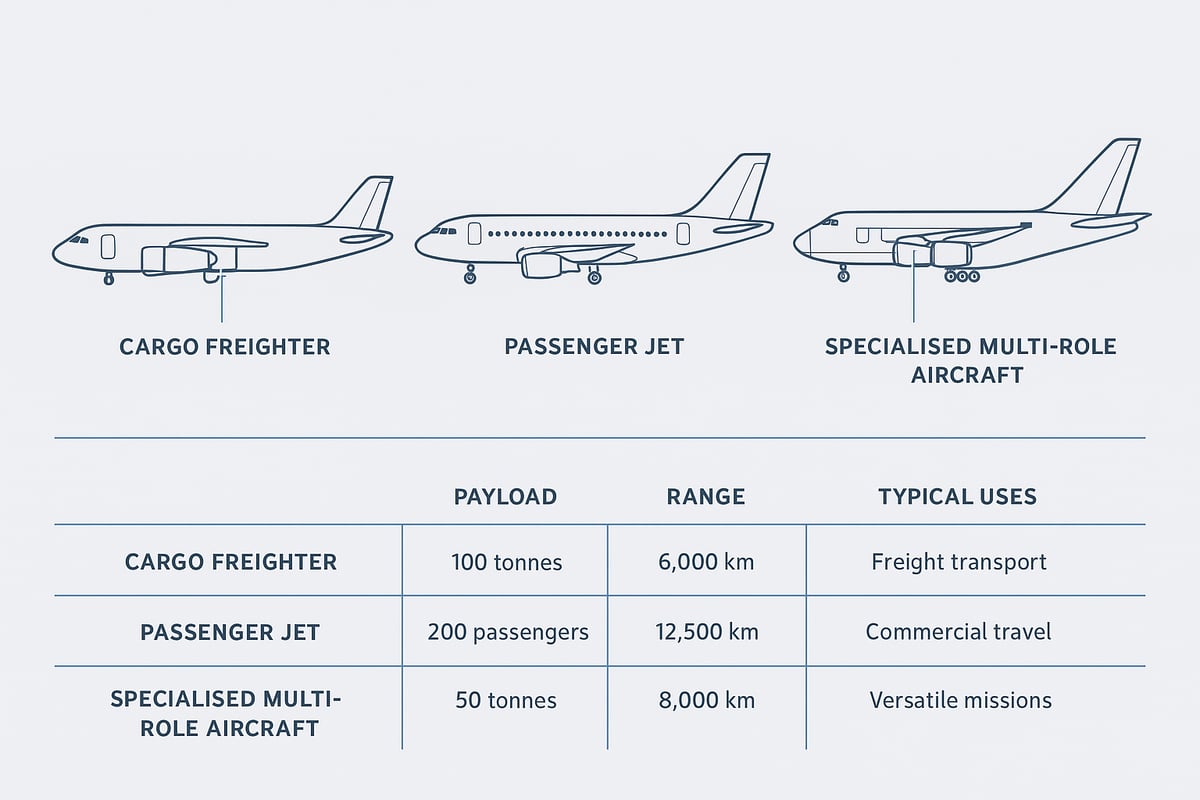
Transportation aircraft fall into three main categories: cargo freighters, passenger jets, and specialised multi-role aircraft. Cargo freighters, such as the Boeing 777F, are dedicated to goods transport, optimised for high payload and large cargo doors. Passenger jets, like the Airbus A350, focus on comfort, range, and speed for travellers. Specialised multi-role aircraft, such as the Lockheed C-130, can switch between cargo, passenger, or emergency missions.
Selecting the right transportation aircraft is crucial for efficient logistics. Factors like cargo type, volume, and urgency influence the choice. For a deeper dive into matching aircraft to specific cargo needs, you can explore this guide on suitable cargo charter aircraft.
Each type serves a unique role in the aviation ecosystem.
A defining feature of transportation aircraft is their payload and range. Narrow-body freighters typically carry up to 20 tonnes, while wide-body models exceed 100 tonnes. Oversize freighters, such as the Antonov An-225 Mriya, have set records with payloads of 250 tonnes.
Range is equally important. Intercontinental aircraft can travel over 8,000 kilometres non-stop, while regional jets are optimised for shorter, frequent hops. Operators must balance payload against range for maximum efficiency.
| Aircraft Type | Typical Payload | Max Range |
|---|---|---|
| Narrow-body | 15–20 tonnes | 4,000–6,000 km |
| Wide-body | 100+ tonnes | 8,000+ km |
| Oversize Freighter | 250 tonnes | 4,500 km |
Payload and range determine the suitability of transportation aircraft for specific routes and cargo.
Design choices in transportation aircraft directly affect their operational capabilities. Main deck cargo bays in freighters allow for oversized items, while lower hold compartments in passenger jets carry baggage and smaller freight. Some aircraft feature combi or quick-change configurations, enabling a rapid switch between passenger and cargo layouts.
Fuselage shape, reinforced floors, and large cargo doors are key for handling heavy or bulky loads. These design elements distinguish transportation aircraft from other aviation types.
Smart design ensures transportation aircraft remain versatile.
Fuel consumption has become a critical consideration for transportation aircraft operators. Modern wide-body freighters consume around 2.5–3 litres per tonne-kilometre, while older models are less efficient. Advances in composite materials, improved aerodynamics, and engine technology contribute to reduced fuel burn.
Sustainability is now a priority, with aircraft manufacturers adopting lightweight structures and eco-friendly features. Operators are increasingly focused on meeting strict emission standards and lowering their carbon footprint.
These innovations help transportation aircraft align with global sustainability targets.
The operational flexibility of transportation aircraft is essential for meeting diverse logistics needs. Fast loading and unloading, minimal ground time, and adaptability to various cargo types drive efficiency. Aircraft with large cargo doors, reinforced floors, and modular interiors handle everything from perishables to dangerous goods.
Efficient ground handling and short turnaround times keep transportation aircraft in the air, maximising productivity.
This flexibility makes transportation aircraft indispensable for time-critical logistics.
Managing the costs of transportation aircraft involves balancing direct operating expenses, such as fuel, crew, maintenance, and landing fees. Wide-body freighters, despite higher upfront costs, often deliver lower cost per tonne-kilometre for long-haul routes. Maintenance schedules, spare parts availability, and aircraft age all influence total cost of ownership.
Operators must also factor in insurance, regulatory compliance, and unexpected repairs. A well-maintained transportation aircraft fleet reduces downtime and ensures reliable service.
Effective cost management underpins the viability of transportation aircraft operations.
The landscape of transportation aircraft is evolving rapidly. New-generation freighters offer advanced efficiency and range, while eVTOLs (electric vertical take-off and landing aircraft) promise urban cargo solutions. Unmanned drones are being developed for short-haul, high-frequency deliveries in cities.
Prototypes of these new classes are already in testing, aiming to support last-mile logistics and niche markets. As technology matures, these innovative transportation aircraft will complement traditional fleets.
Emerging aircraft will shape the future of transportation aircraft and redefine logistics possibilities.
Modern transportation aircraft are at the forefront of a technological revolution. New advances are reshaping how cargo and passengers move across the globe. These changes are driven by the need for efficiency, sustainability, and adaptability. Let us explore the key innovations shaping the sector as we approach 2026.
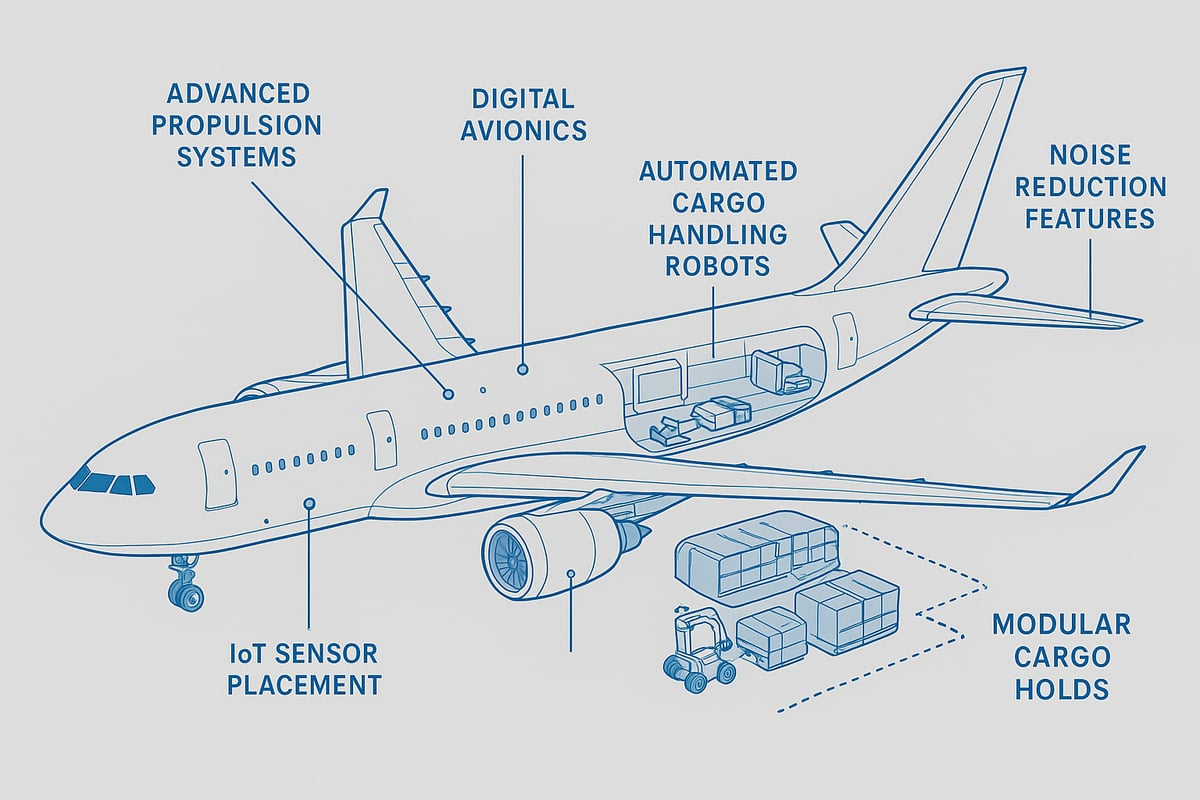
The push for sustainable aviation is transforming transportation aircraft propulsion systems. Hybrid-electric and hydrogen-powered models are in active development, promising lower emissions and increased fuel efficiency. Projects like the Airbus ZEROe concepts and Eviation Alice are leading the way, showcasing real-world trials of alternative energy sources.
Today’s engines use advanced materials and optimised aerodynamics to achieve greater thrust with less fuel. The focus on sustainability is not just about reducing carbon emissions. It also extends to using lightweight composites and recyclable materials in aircraft construction. These steps help transportation aircraft operators meet stricter environmental standards while reducing operational costs.
Digital transformation is accelerating across transportation aircraft operations. AI-driven flight planning tools now optimise routes in real time, saving fuel and improving punctuality. Predictive maintenance systems use data from onboard sensors to identify issues before they cause delays, reducing downtime and repair costs.
Cargo tracking has become smarter with the integration of IoT devices, providing real-time updates to both shippers and operators. Logistics platforms are evolving, and the IATA's 2025 Vision for Air Cargo Facilities outlines how digitalisation is streamlining facility operations and documentation. These advances make transportation aircraft more reliable and responsive to market needs.
Automation is revolutionising how transportation aircraft are loaded and unloaded. Automated systems can move containers and pallets with precision, reducing turnaround times. Robotics are used to handle delicate or hazardous freight, improving safety and efficiency.
DHL’s use of automated guided vehicles (AGVs) in air cargo terminals is a strong example of this trend. These AGVs transport cargo between aircraft and warehouses, minimising manual intervention. As automation spreads, transportation aircraft operators can manage more flights and cargo with fewer errors and delays.
Safety and security remain top priorities for transportation aircraft. Modern avionics provide pilots with advanced situational awareness, while collision avoidance systems reduce the risk of mid-air incidents. Cargo screening technology has evolved, enabling faster and more effective detection of threats without slowing down operations.
International standards from ICAO and IATA set the benchmark for secure and compliant air transport. These protocols ensure that transportation aircraft maintain high levels of safety, even as the industry adopts new technologies. Lessons learned from past incidents continue to shape industry best practices.
Transportation aircraft are now seamlessly connected to global logistics networks. Blockchain technology is being adopted for secure documentation and transparent tracking of cargo. The use of Electronic Air Waybill (E-AWB) has become standard, reducing paperwork and speeding up customs clearance.
Integrating data from multiple sources enables precise monitoring of shipments, improving decision-making for airlines and freight forwarders. This connectivity ensures that transportation aircraft can adapt quickly to changes in demand and supply chain disruptions.
Noise and emissions control are key concerns for transportation aircraft, especially near airports and urban centres. Engine designers are focusing on quieter fan blades, improved nacelles, and advanced combustors to minimise sound pollution. Airframe modifications, such as serrated engine edges and reshaped wingtips, further reduce noise.
Compliance with ICAO Chapter 14 standards is now a requirement for most new transportation aircraft. Emissions reduction is also tackled by using sustainable aviation fuels and optimising flight paths. These efforts benefit both communities and the environment.
The next generation of transportation aircraft will feature modular cargo holds, swappable powertrains, and even autonomous flight systems. These concepts aim to maximise flexibility, allowing operators to quickly adapt to changing market needs.
While some of these innovations are still in the prototype stage, they signal a future where transportation aircraft are more versatile, efficient, and sustainable. As technology continues to evolve, the industry is well positioned to meet the complex challenges of global logistics.
Understanding how to operate transportation aircraft efficiently is key to unlocking their full value in global logistics. The modern air cargo environment demands precision, adaptability, and a clear grasp of regulatory and market requirements.
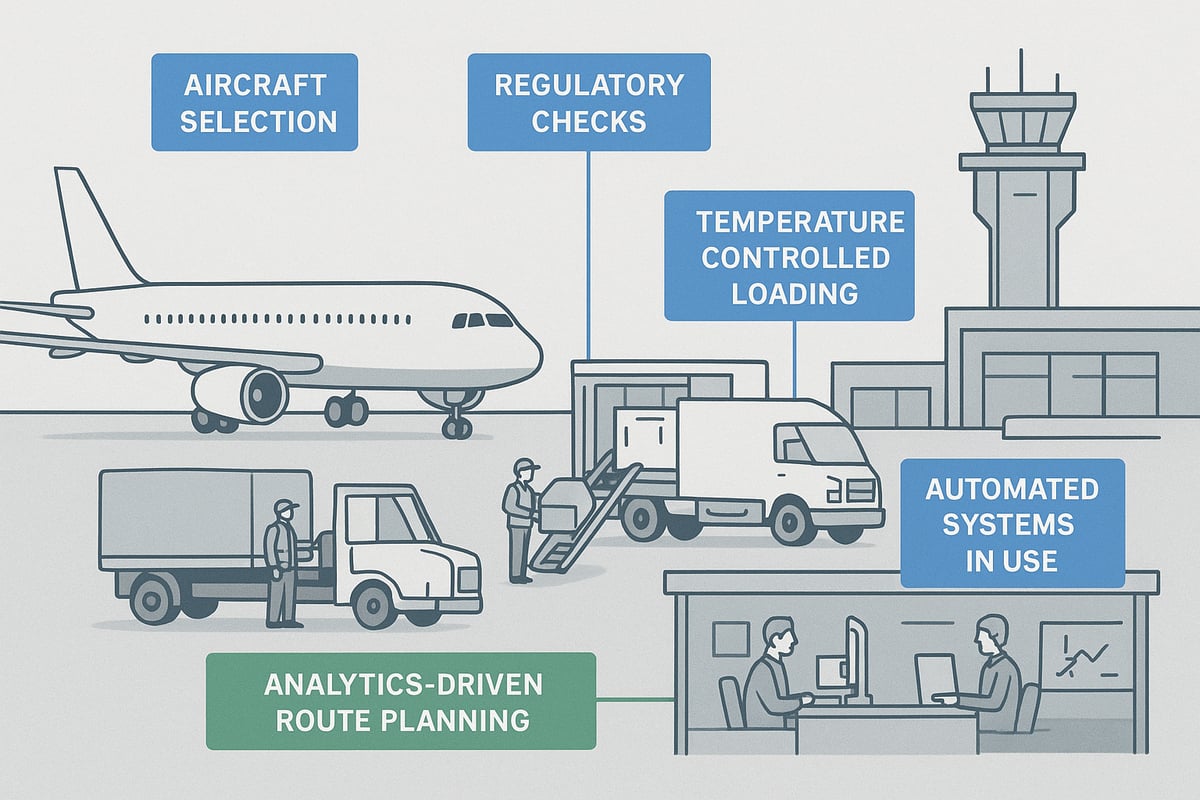
Choosing the right transportation aircraft for each mission requires careful analysis. Operators must match aircraft type to cargo size, weight, and sensitivity. For example, wide-body jets are ideal for high-volume, long-haul shipments, while turboprops excel on short regional hops.
Direct routes offer speed, but hub-and-spoke models can maximise efficiency for less time-sensitive goods. Overflight permissions and airport infrastructure also influence aircraft suitability and operational planning. This selection process is critical for optimising fleet utilisation and meeting diverse customer needs.
Transportation aircraft operators must navigate a complex landscape of international regulations. Compliance with IATA, ICAO, EASA, and FAA standards is essential to ensure safety, security, and environmental stewardship.
Documentation requirements include air waybills, customs declarations, and special permits for dangerous goods. Keeping up with evolving standards, such as stricter emissions limits or digital documentation mandates, is vital for maintaining legal and operational continuity.
Efficient ground handling is fundamental to maximising the productivity of transportation aircraft. Coordination with airports, ground handlers, and freight forwarders ensures rapid turnaround times and minimal delays.
Key tasks include cargo loading and unloading, refuelling, and maintenance checks. Slot management is also crucial for optimising aircraft movement and reducing congestion. Seamless integration with wider logistics networks further enhances reliability and speed.
Different sectors have unique requirements for transportation aircraft. Pharmaceuticals demand strict temperature control and GDP-compliant handling to preserve product integrity. Automotive supply chains rely on just-in-time deliveries, often requiring immediate response to component shortages.
Humanitarian missions prioritise rapid deployment and flexibility to reach remote or disaster-affected regions. For an in-depth look at how temperature-sensitive goods are managed, see Temperature-controlled freight solutions.
Risk management is a core element of transportation aircraft operations. Operators and shippers must assess risks such as cargo damage, theft, and delays. Comprehensive cargo insurance policies help mitigate financial exposure.
Liability considerations vary depending on cargo type and route. Implementing robust packaging, security protocols, and real-time tracking can further reduce operational risks and support claims management.
Controlling costs is a constant focus for transportation aircraft operators. Direct operating expenses include fuel, crew, maintenance, and landing fees. Strategies such as fuel management, load optimisation, and efficient routing deliver significant savings.
Digital platforms now streamline quoting and booking, reducing administrative overhead. These tools enable real-time price comparisons and more agile responses to market demand, supporting profitability.
Harnessing data analytics empowers transportation aircraft operators to make smarter decisions. Predictive maintenance schedules reduce downtime, while route optimisation algorithms identify the most efficient paths.
Many airlines use analytics to anticipate market shifts and adjust fleet deployment proactively. Staying informed with the latest industry data, such as insights from IATA's March 2025 Air Cargo Market Analysis, ensures competitive advantage and resilience in a dynamic air cargo landscape.
The landscape for transportation aircraft is evolving rapidly as we approach 2026. Airlines, cargo operators, and manufacturers are rethinking what is possible, driven by technology, sustainability, and shifting global demands. Understanding these trends is essential for anyone seeking to leverage transportation aircraft for logistics, supply chain resilience, or business growth.
Fleet modernisation is a central focus for transportation aircraft operators worldwide. As older models reach the end of their service lives, the market anticipates a wave of new launches. Notable introductions include the Boeing 777-8F, Airbus A350F, and Embraer E-Freighter, each engineered for improved efficiency and payload.
Operators are also accelerating fleet renewal cycles to benefit from lower fuel consumption and reduced emissions. The push for modernisation is not only about replacing ageing assets but also about adapting to stricter regulations and customer demands.
A comparison of upcoming aircraft shows a clear trend:
| Model | Payload (tonnes) | Range (km) | Notable Feature |
|---|---|---|---|
| Boeing 777-8F | 118 | 8,167 | Advanced fuel efficiency |
| Airbus A350F | 109 | 8,700 | Composite fuselage |
| Embraer E-Freighter | 14 | 2,400 | Regional, fast turnaround |
These advancements are reshaping the capabilities of transportation aircraft, making them more versatile and responsive to market needs.
Sustainability is now at the heart of transportation aircraft development. The industry is striving to meet ambitious CO₂ reduction targets, such as IATA's commitment to Net Zero by 2050. Manufacturers are focusing on the adoption of Sustainable Aviation Fuel (SAF), lightweight materials, and aerodynamic improvements to cut emissions.
Electric and hydrogen propulsion systems are moving from concept to reality. For an in-depth look at these developments, see Are electric planes the future?. Real-world trials are underway, with initiatives like Airbus ZEROe and Eviation Alice leading the field.
Operators are embracing circular economy principles, aiming to reduce waste and improve recycling rates. Sustainability is not just a regulatory requirement, but a competitive differentiator for transportation aircraft providers.
Autonomous technologies are making significant inroads into transportation aircraft operations. Progress in pilotless cargo aircraft, remote fleet management, and advanced autopilot systems is accelerating. These innovations promise to reduce operating costs, enhance safety, and address pilot shortages.
However, regulatory and safety frameworks are still catching up. Authorities are working on certification standards to ensure that autonomous transportation aircraft meet stringent reliability and security benchmarks.
Remote operations also offer new possibilities for fleet optimisation, enabling centralised monitoring and rapid decision-making. As automation becomes more widespread, transportation aircraft are set to become even more efficient and resilient.
Urban air mobility is set to transform last-mile logistics by 2026. The integration of electric vertical take-off and landing (eVTOL) vehicles into urban airspace will make rapid, low-emission deliveries possible within congested cities.
Major trials are ongoing across Europe and Asia, demonstrating the feasibility and public acceptance of this technology. eVTOLs offer a unique solution for time-sensitive shipments and can complement traditional transportation aircraft fleets.
Industry experts anticipate that eVTOLs will soon play a regular role in high-value, short-haul logistics. This shift will require new infrastructure, air traffic management systems, and close collaboration between regulators and operators.
Digital transformation is redefining every aspect of transportation aircraft operations. Airlines and cargo providers are using artificial intelligence for predictive maintenance, route optimisation, and dynamic pricing.
Blockchain and advanced data security measures are streamlining documentation and cargo tracking. The adoption of electronic air waybills and integrated logistics platforms is improving transparency and efficiency.
AI-powered analytics help operators maximise aircraft utilisation and reduce downtime. As digital tools become more sophisticated, transportation aircraft will deliver greater value to shippers and end customers alike.
Geopolitical dynamics are shaping the future of transportation aircraft. Trade policies, supply chain disruptions, and global crises all impact fleet planning and route networks. According to FedEx on Air Freight Trends 2026, the Asia-Pacific, Middle East, and Africa regions are expected to see significant growth in air cargo demand.
Operators are diversifying their fleets and networks to mitigate risks and capture new opportunities. Flexibility and adaptability are now essential traits for successful transportation aircraft strategies.
Market hotspots and regulatory changes will continue to influence investment decisions and operational priorities in the coming years.
Customer expectations for transportation aircraft services are changing rapidly. Shippers now demand real-time visibility, flexible solutions, and strong sustainability credentials from their providers.
Key trends include:
To stay competitive, transportation aircraft operators must invest in technology, customer service, and green initiatives. Meeting these expectations will be crucial for long-term success in a fast-evolving market.
The future of transportation aircraft is shaped by innovation, sustainability, and global collaboration. By staying informed and agile, industry stakeholders can unlock new opportunities and set the standard for air logistics in 2026 and beyond.
As you’ve seen throughout this guide, the world of transportation aircraft is evolving rapidly with new technologies, smarter logistics, and increasing demands for efficiency and reliability. If you’re ready to see how intelligent automation and expert support can transform your own air cargo operations, I encourage you to request a demo. You’ll get a first-hand look at how CharterSync’s platform streamlines booking, matches you with the right aircraft, and provides real-time support—all tailored to help you stay ahead in this dynamic industry.
.png)