.png)
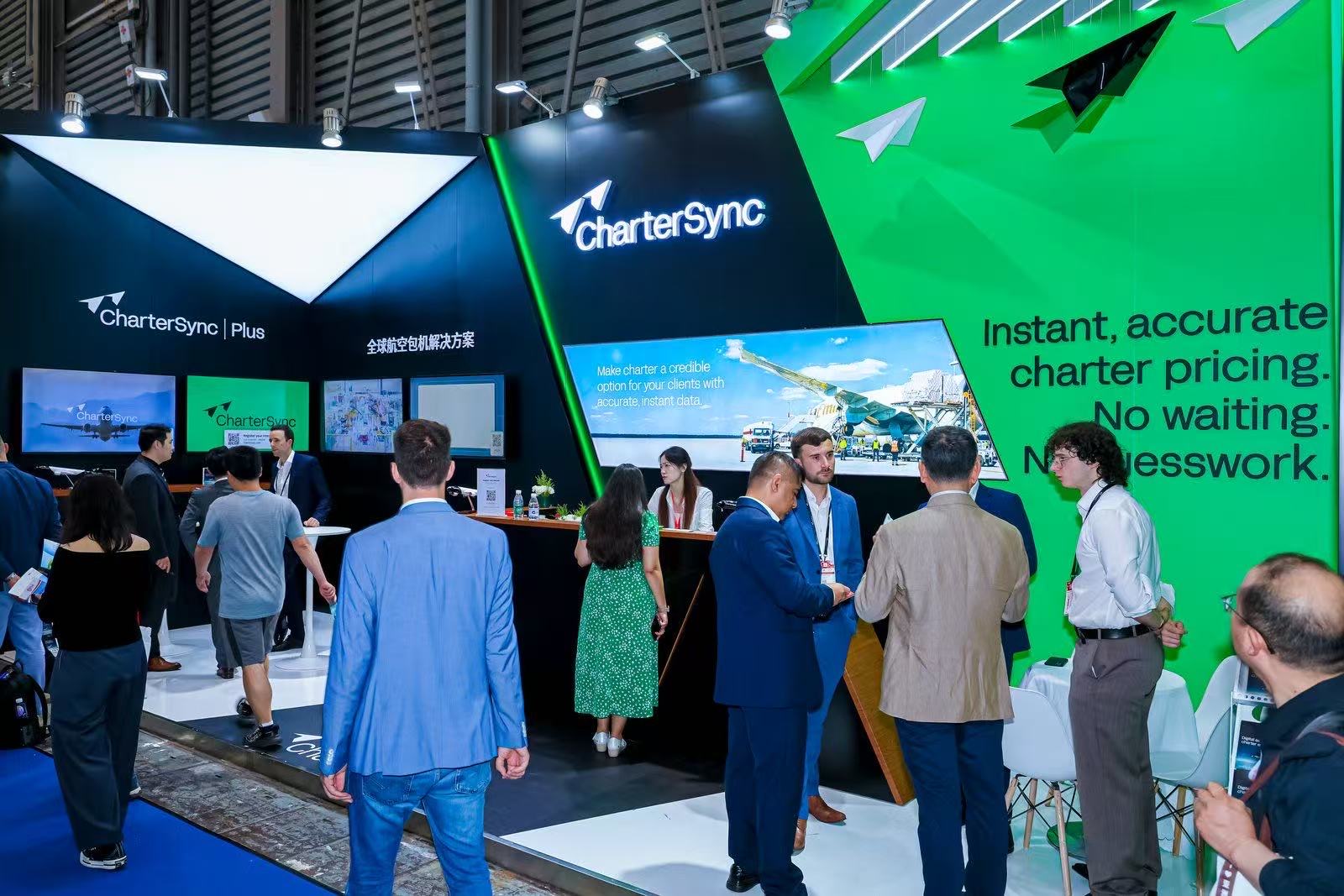
Access to air cargo charter capacity is no longer just an operational requirement — it is becoming a strategic supply chain advantage. That was the theme we heard consistently from airlines, freight forwarders and logistics providers across all three days of Air Cargo China 2026, held alongside Transport Logistic Shanghai at the Shanghai New International Expo Centre from 24–26 June.
It was a fitting backdrop for the conversation. This year's edition set new records for the show, with 939 exhibitors from 57 countries and more than 47,000 trade visitors from 121 countries — an emphatic signal of how central Asia, and China in particular, has become to the global air freight network. Here's what stood out for us, and what it means for how the industry sources aircraft capacity.
From our discussions on the show floor, one point came up again and again: today's supply chains are being shaped by increasing complexity, shifting trade flows, evolving customer expectations and ongoing market uncertainty.
In that environment, the organisations that respond fastest to changing demand are usually the ones with the greatest access to capacity — and the flexibility to deploy it when and where it is needed. For air freight, that means moving beyond traditional procurement models and embracing more connected, transparent and agile ways of sourcing aircraft.
Across our Day 1 conversations, we saw growing demand for:
The headline takeaway from the opening day was that the conversation is no longer just about moving cargo. It's about building resilience, agility and responsiveness into supply chains from the outset — and the ability to secure aircraft charter capacity quickly is fast becoming a competitive differentiator rather than a back-office logistics function.
If Day 1 framed capacity as a strategic advantage, Day 2 made it clear how the industry intends to unlock it: through speed, connectivity and intelligent decision-making.
For decades, sourcing air freight charter capacity has relied on fragmented processes, manual communication and limited visibility. Those approaches served the industry well, but the demands placed on supply chains today are fundamentally different:
What we heard repeatedly is that digitalisation is no longer a future ambition — it is becoming a business necessity. The next generation of air cargo charter procurement is being defined by:
Crucially, technology isn't replacing industry expertise. It is enabling experienced charter professionals to make better decisions, faster.
At CharterSync, we believe the future of air cargo charter lies in combining digital workflows, real-time connectivity and operational expertise to create a more efficient and transparent air cargo ecosystem. The conversations at Air Cargo China 2026 suggest the industry is moving beyond simply digitising existing processes — and towards fundamentally rethinking how capacity is sourced, managed and deployed.
As an air cargo charter broker and technology platform, that's exactly the shift we're built for: giving freight forwarders faster access to aircraft, full visibility across the charter process, and the flexibility to respond when timelines and trade flows change at short notice.
What is an air cargo charter?An air cargo charter is the hire of an entire aircraft to move freight, rather than booking space on a scheduled flight. It's typically used for urgent, oversized, time-critical or specialist shipments where scheduled capacity is unavailable or unsuitable.
Why is access to air cargo charter capacity becoming a strategic advantage?As trade flows shift and supply chains grow more complex, the organisations that can source and deploy aircraft capacity fastest are best placed to respond to demand spikes, disruption and tight delivery windows — turning capacity access into a competitive differentiator.
How is technology changing air cargo charter procurement?Digital platforms are replacing fragmented, manual processes with faster quoting, greater visibility, data-driven decision-making and automation — while keeping experienced charter specialists at the centre of every booking.
What is Air Cargo China?Air Cargo China is one of Asia's leading air freight exhibitions, held alongside Transport Logistic Shanghai at the Shanghai New International Expo Centre. The 2026 edition ran from 24–26 June and set new attendance records.
.png)
