.png)
Mastering booking track systems in 2026 will set you apart in a rapidly changing world. Whether you are an individual or a business, the right booking track approach unlocks efficiency, accuracy, and a crucial competitive edge.
Modern booking track solutions can seem complex. However, with the right guidance, you can transform confusion into confidence and save valuable time.
This essential handbook offers expert insights, clear instructions, and practical tips for navigating any booking track challenge. You will discover how to choose the best system, optimise workflows, solve common issues, and prepare for future trends.
Let’s get started and make booking track success your advantage.
Mastering the booking track landscape in 2026 requires a solid understanding of its foundations. As digital transformation accelerates, knowing the essentials will help you select, implement, and optimise the right system for your needs. This section breaks down the core concepts, features, and innovations shaping the future of booking track solutions.
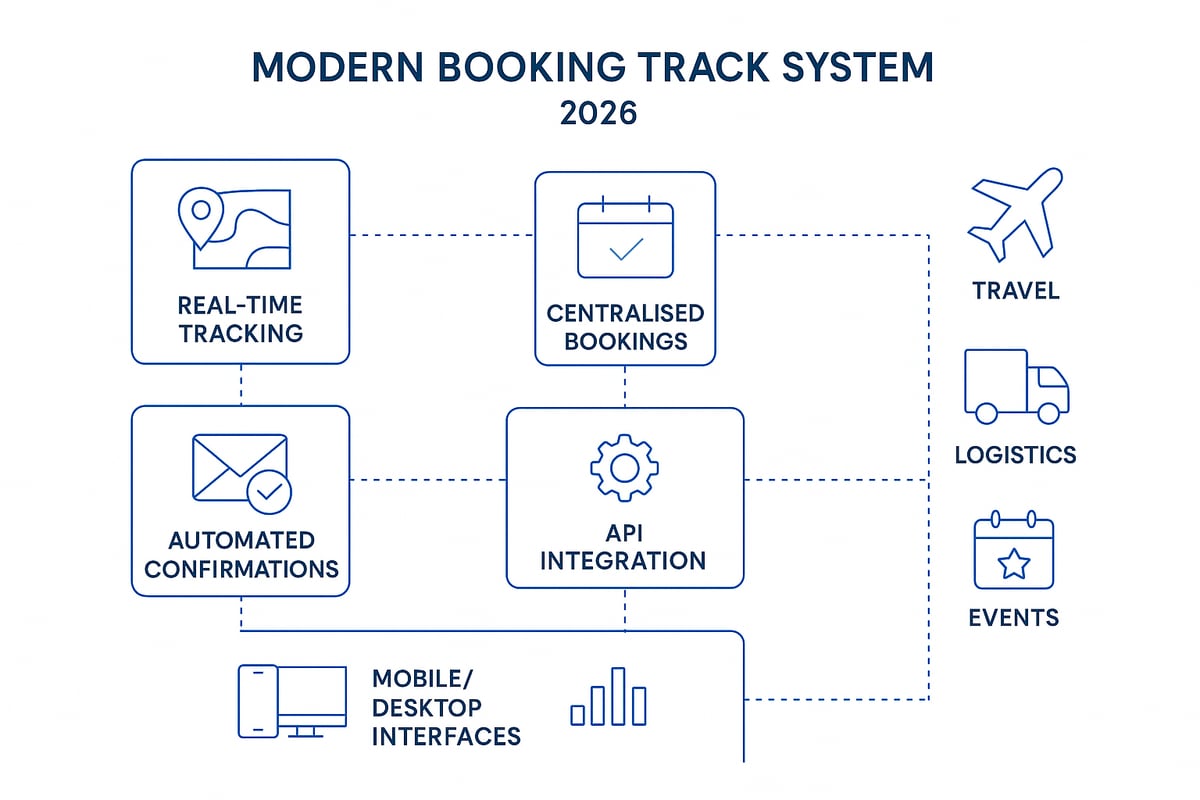
A booking track system is a digital platform designed to manage and monitor bookings across various industries. Its core purpose is to streamline the booking process, providing real-time tracking, centralised management, and automated confirmations. Key features include instant status updates, integration with payment gateways, and user-friendly dashboards.
Industries such as travel, logistics, and events rely heavily on booking track systems. For example, the logistics sector uses these platforms to coordinate shipments, scheduling, and deliveries. To see how this works in practice, read this freight booking process overview for a detailed workflow. The shift from manual to automated systems has reduced errors and increased efficiency, offering significant benefits over traditional methods.
By 2026, the demand for digital-first booking track experiences has surged. According to recent industry reports, 85% of bookings are now managed digitally. Customers expect transparency, speed, and accuracy throughout the process.
A robust booking track system enhances business efficiency and customer satisfaction. It minimises manual work, reduces the risk of double bookings, and ensures compliance with evolving data security standards. As regulations tighten, businesses must prioritise secure and compliant booking track solutions to maintain trust and avoid costly penalties.
There are several types of booking track solutions available, each catering to different needs. Common options include SaaS platforms, on-premise software, and custom integrations. SaaS platforms offer cloud-based benefits like scalability and remote access, making them ideal for growing businesses.
Mobile and desktop applications provide flexibility, while industry-specific solutions address unique requirements in hospitality, transport, or events. Choosing the right booking track solution depends on your operational complexity, desired integrations, and growth plans.
Understanding booking track terminology is crucial for effective implementation. Common terms include booking reference, status updates, and API integration. User roles typically involve administrators, agents, and customers, each with distinct permissions.
Essential modules found in most booking track systems are calendars, payment gateways, and notification systems. Interfaces often display real-time availability, upcoming bookings, and actionable alerts. Familiarity with these components ensures smoother onboarding and management.
The booking track landscape for 2026 is defined by rapid innovation. AI-driven automation and predictive analytics are transforming how bookings are managed and optimised. Integration with IoT and mobile devices enables seamless, real-time updates and connectivity.
Self-service portals and chatbots are on the rise, empowering customers to manage their own bookings efficiently. Staying informed about these trends will help businesses leverage booking track advancements for a competitive edge.
Selecting the best booking track solution is a pivotal decision for any organisation. The right system not only streamlines operations but also supports business growth and enhances customer satisfaction. Understanding your unique requirements and the landscape of available options is essential before making your choice.
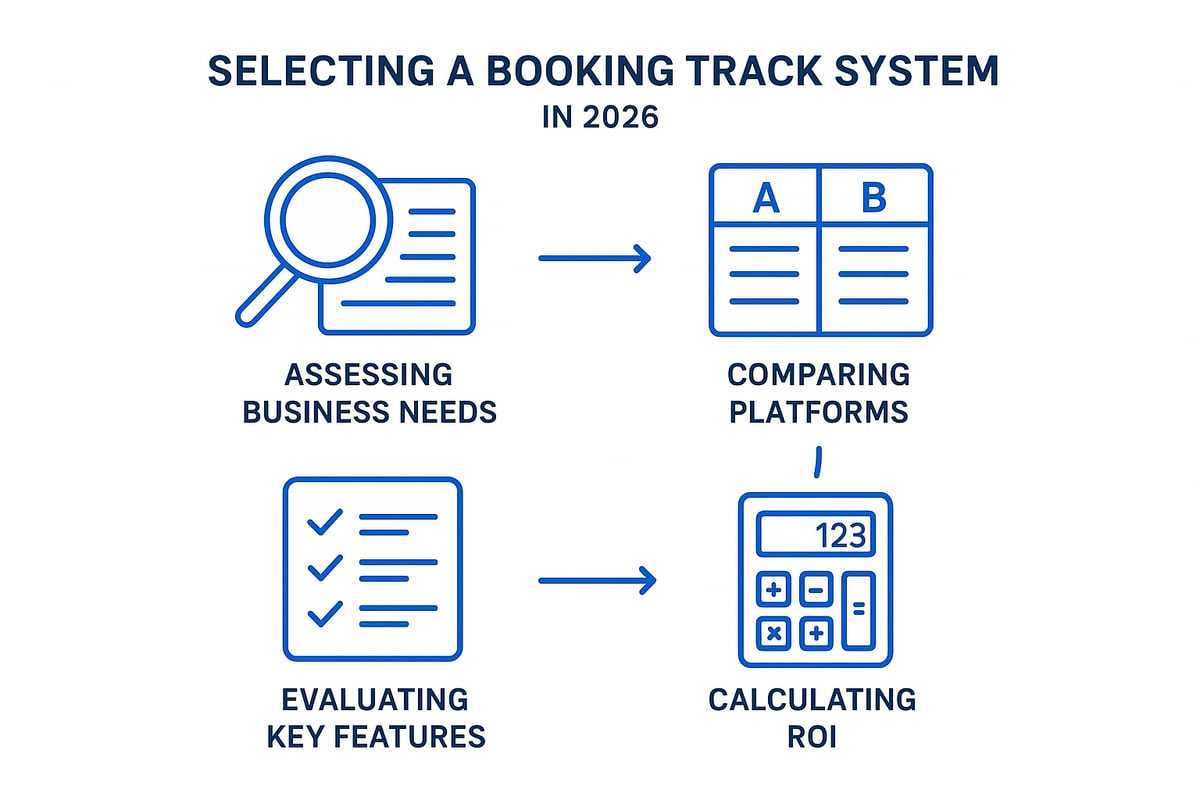
Begin by evaluating your organisation’s specific needs regarding booking track systems. Consider the volume of bookings you process daily and the complexity of your workflows. Identify all user roles involved, such as administrators, agents, and customers, to ensure the system supports each one.
Industry requirements can vary widely. For example, a hotel may prioritise compliance and detailed reporting, while a transport company might focus on real-time tracking. Scalability is also vital. If you plan to expand to multiple locations or anticipate higher demand, your booking track solution must accommodate future growth without disruption.
A thorough comparison of leading booking track platforms will reveal key differences in features, usability, and integration options. Look for systems that have consistently high user ratings and offer robust support. Consider the ease of integrating with your current tools and the quality of customer service provided.
| Platform | Real-time Tracking | Integration Options | Support Quality |
|---|---|---|---|
| System A | Yes | CRM, Payments | 24/7 |
| System B | Yes | API, Webhooks | Business Hours |
| System C | Partial | Accounting, Email | 24/7 |
For those seeking advanced digital automation, exploring air cargo digital solutions can provide valuable insight into how booking track technology is transforming industries with streamlined processes and real-time data.
A major event company recently reported a 30 percent improvement in operational efficiency after switching to a platform with superior integration and support.
Prioritise booking track systems offering real-time availability and status updates. Customisable workflows are crucial for adapting the platform to your processes. Ensure the system includes secure payment processing and complies with data protection regulations.
Look for robust analytics and reporting tools to track performance and identify trends. Features such as automated notifications and an intuitive interface will enhance the experience for both staff and customers. A scalable booking track solution should also support multi-location management and flexible user permissions.
Understanding the pricing models of booking track systems is key to maximising your investment. Common options include monthly subscriptions, per-booking fees, or enterprise licensing. Calculate potential cost savings by estimating reductions in manual work and booking errors.
Industry reports show that businesses adopting automated booking track platforms often experience significant productivity gains. Analysing real-world ROI statistics from competitors can help set realistic expectations. Remember, the right booking track system should deliver long-term value, not just immediate savings.
Mastering the booking track workflow is crucial for operational excellence in 2026. Each phase, from initial setup to post-booking analysis, plays a vital role in maximising efficiency and customer satisfaction. Let us break down the journey step by step, ensuring a smooth path to booking success.
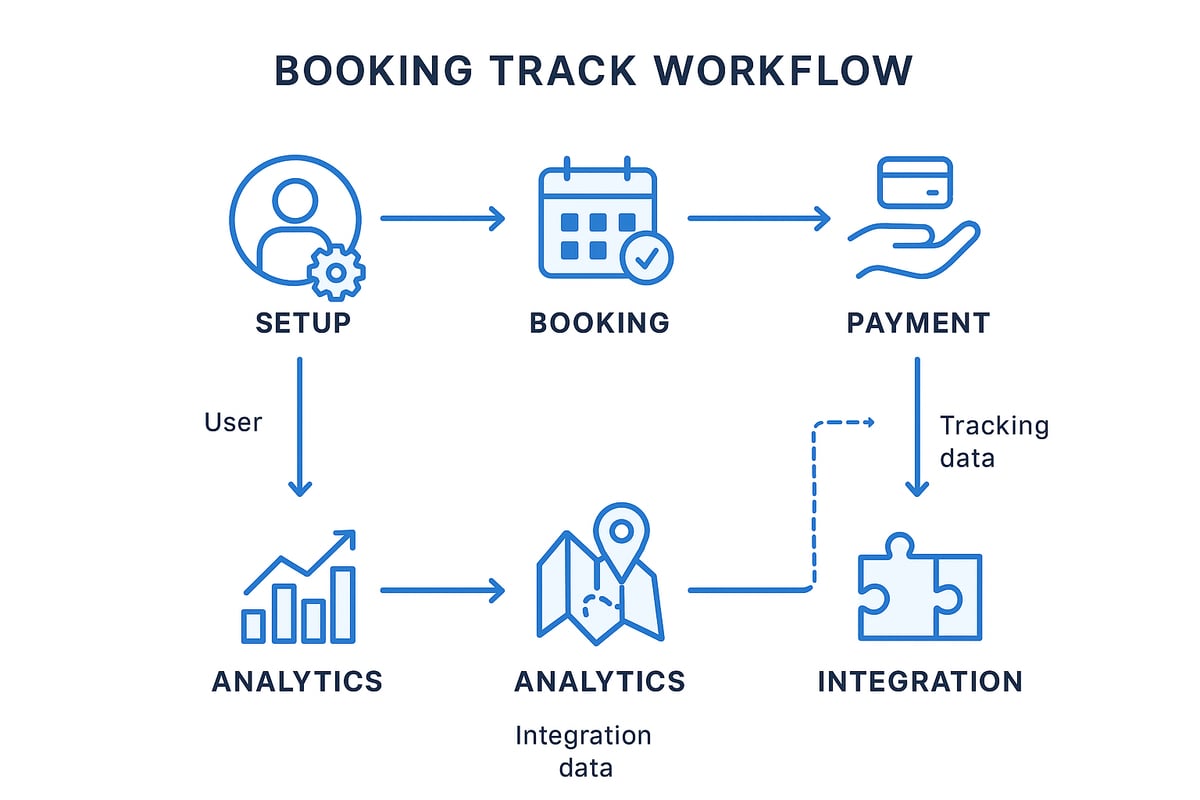
Launching a new booking track system starts with thoughtful configuration. Begin by aligning the interface with your brand, adjusting colour schemes, and uploading logos. Define user roles such as admin, agent, and customer, ensuring each has the right permissions for secure access.
Next, integrate existing tools—like email platforms or payment gateways—for a seamless experience. Import historical booking data to maintain continuity. Comprehensive training is essential, so provide staff with guides, walkthroughs, and hands-on sessions. This foundation ensures your booking track environment is efficient, secure, and ready for daily operations.
Creating bookings in a booking track system can be manual or automated, depending on your needs. Manual entry is ideal for bespoke or complex requests, while automated processes handle recurring or high-volume tasks with ease.
Assign resources, such as rooms or vehicles, and manage their availability using the system’s calendar module. For group or recurring bookings, leverage batch tools to save time. Built-in validation checks prevent conflicts and double bookings, reducing errors. With a streamlined booking track approach, you can adapt to varying booking demands efficiently and accurately.
Seamless payment handling is a cornerstone of any modern booking track workflow. Integrate reliable payment gateways to accept cards, digital wallets, or bank transfers securely. Automated invoicing speeds up payment cycles and ensures customers receive instant receipts.
The system should manage refunds and cancellations transparently, maintaining trust and compliance. Use customisable confirmation messages to reassure clients their booking is secure. With these practices, your booking track system delivers a smooth, professional payment experience from start to finish.
Real-time updates are now standard in any booking track process. Customers expect instant notifications via email or SMS about their booking status, changes, or reminders. Internally, dashboards provide staff with live monitoring of all bookings, highlighting urgent tasks or issues.
In sectors like air cargo, technology is revolutionising tracking and management, as seen in Technology transforming freight forwarding. Leveraging these advancements, your booking track system can enhance transparency, reduce delays, and boost customer satisfaction by keeping everyone informed at every stage.
After completion, effective management of changes, cancellations, and re-bookings is essential for a robust booking track workflow. Use built-in tools to process modifications promptly, ensuring customer needs are always met.
Collect feedback via automated surveys to gain insights into service quality. Analytics modules help identify trends, such as peak booking times or popular services, enabling data-driven decisions. By continuously analysing your booking track performance, you can refine operations and increase future success rates.
Modern booking track solutions thrive on integration. Connecting your system to CRM, accounting, or inventory platforms streamlines operations, ensuring data consistency across all business functions.
Utilise APIs and webhooks to automate workflows, like syncing booking details with ticketing systems for events. For example, an event company can combine ticketing and booking data to provide a unified customer experience. Through smart integrations, your booking track system becomes the backbone of an interconnected digital ecosystem.
Optimising your booking track system is vital for achieving peak efficiency in today’s fast-paced environment. By refining operations, automating processes, and focusing on user needs, businesses can unlock substantial gains in productivity and customer satisfaction. Let’s explore practical strategies to help you get the most from your booking track investment.
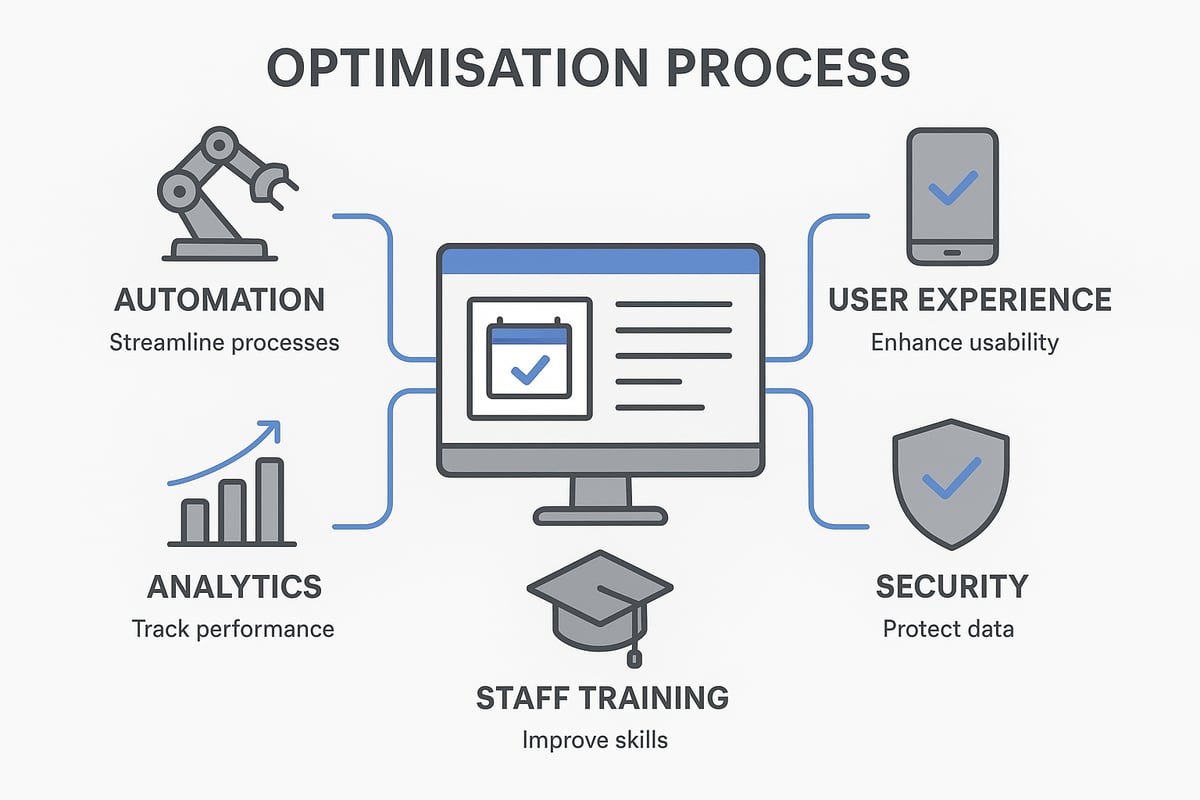
Automation is the cornerstone of an efficient booking track system. By setting up automated reminders, confirmations, and notifications, you eliminate repetitive manual work and reduce errors. Many platforms allow you to auto-assign resources, ensuring that schedules remain optimised without human intervention.
Consider leveraging workflow automation to manage recurring bookings or group reservations. Automation can also streamline payment processing, invoicing, and even customer communications. For industry-specific insights, review Booking freight best practices to understand how automation is transforming freight and logistics bookings.
Key automation benefits include:
A well-automated booking track solution frees your team to focus on higher-value tasks.
A user-friendly interface is essential for any booking track system. Prioritise intuitive design, ensuring that both staff and customers can navigate the platform with minimal training. Responsive design, especially for mobile access, increases adoption and satisfaction.
Personalisation features, such as saved preferences and custom notifications, can set your business apart. Multi-language and accessibility support broaden your reach, making your booking track system inclusive for all users.
Improvements to user experience often lead to higher conversion rates, fewer support requests, and positive feedback. Investing in design and usability is a direct investment in your brand’s reputation.
Harnessing data is crucial for ongoing optimisation. A robust booking track system should offer real-time dashboards, allowing managers to monitor performance and make informed decisions quickly. Predictive analytics can help forecast demand, optimise resource allocation, and identify trends.
Use analytics to refine your pricing strategies, adjust promotions, and understand customer behaviour. Custom reports and visualisations empower teams to spot inefficiencies and act proactively.
Regularly reviewing booking track data ensures your processes remain competitive and aligned with business goals. Data-driven decision-making is the key to sustained growth.
Protecting customer and business data is non-negotiable. Your booking track system must comply with GDPR and other relevant data privacy regulations. Regular security audits, encrypted payment gateways, and secure data storage protocols are essential safeguards.
Establish clear access controls, limiting sensitive data to authorised users only. Schedule routine compliance checks and stay updated on evolving legal requirements. This not only mitigates risk but also builds trust with your clients.
A secure booking track environment is a foundation for long-term success and regulatory peace of mind.
Optimising your booking track system requires a commitment to ongoing staff development. Provide continuous learning opportunities, including certifications and refresher courses, to keep your team up to date.
Change management is equally important. Address resistance by highlighting the benefits of new features and involving staff in the optimisation process. Promote a culture where booking track excellence is everyone’s responsibility.
Well-trained teams can adapt to new technologies and drive innovation, ensuring your booking track system delivers maximum value.
Mastering your booking track system means knowing how to spot, address, and prevent common challenges. Even the most robust solutions can encounter issues, from technical glitches to data inconsistencies. This section will guide you through practical troubleshooting steps, ensuring your booking track processes remain smooth and reliable.
System errors are inevitable in any booking track setup. Common issues include double bookings, downtime, and failed integrations. These can disrupt operations and damage customer trust if not addressed quickly.
A proactive approach involves using real-time diagnostic tools and clear escalation paths. Many platforms now offer automated error detection, with AI-driven alerts that notify administrators instantly. For example, a leading hotel chain reduced booking errors by 40 percent after implementing automated checks and support resources. For more on how AI is transforming error management, see AI's Impact on Hotel Operations.
| Error Type | Impact | Solution |
|---|---|---|
| Double Booking | Overlapping users | Automated conflict checks |
| System Downtime | Missed bookings | Cloud redundancy |
| API Failure | Data loss | Real-time monitoring |
A robust booking track system should make it easy to identify, diagnose, and resolve issues before they escalate.
Handling complaints and cancellations is crucial for maintaining a positive reputation with your booking track. Customers expect timely responses and flexible solutions, especially when plans change unexpectedly.
Effective communication is key. Use automated notifications and clear refund policies to keep customers informed. Empower your team with scripts and escalation guidelines for more complex cases. For instance, a travel agency improved client satisfaction by implementing flexible cancellation options and transparent communication.
Real-world experience shows that a well-managed booking track system, combined with empathy and adaptability, turns dissatisfied customers into loyal advocates.
Accurate data is the backbone of any efficient booking track. Inconsistent or duplicate entries can lead to confusion, missed opportunities, and reporting errors.
Regular audits and automated data cleaning routines are essential. Many booking track solutions now include real-time validation tools that flag incomplete or conflicting bookings at the point of entry. Preventing duplicate records and ensuring up-to-date information not only streamlines operations but also supports compliance with data protection standards.
By prioritising data quality, your booking track system will deliver reliable insights and a seamless customer experience.
Peak seasons and major events can put immense pressure on your booking track system. Without proper scaling, you risk system slowdowns or failures during critical moments.
Cloud-based infrastructure and load balancing are essential for maintaining performance under stress. Prepare for spikes by conducting regular stress tests and ensuring your system can handle increased traffic. According to industry reports, booking surges during holidays or special events can increase volume by up to 300 percent.
Leveraging AI-driven automation, as discussed in AI's Impact on Hotel Operations, helps optimise resource allocation and maintain service quality during busy periods. A scalable booking track system ensures you never miss an opportunity, no matter how high the demand.
The future of booking track is defined by rapid innovation and changing user expectations. As we approach 2026, businesses must embrace new trends and technologies to stay ahead. Below we explore the most significant advancements and predictions shaping booking track solutions for years to come.
Artificial intelligence is transforming booking track systems by automating repetitive tasks and providing smarter recommendations. AI algorithms analyse customer behaviour, predict demand, and optimise resource allocation. For example, predictive booking and dynamic pricing models can adapt to real-time market changes, resulting in higher efficiency and revenue.
Many companies now deploy AI-powered customer service bots to handle routine queries. According to AI in Travel Planning, 42% of travellers used AI tools for itinerary planning in 2025. This trend is set to expand across industries, with the booking track at its core.
Blockchain technology is revolutionising the booking track landscape by creating tamper-proof records and improving transparency. Decentralised systems use smart contracts to automate booking confirmations and payments, reducing the risk of fraud or disputes.
Early adopters in travel and logistics now benefit from faster, more secure transactions. With blockchain, every booking track entry is verified and cannot be altered, ensuring trust between parties. As pilot programmes grow, decentralised booking track systems are expected to become a standard for secure, automated fulfilment.
Customers increasingly expect seamless booking track experiences across devices and platforms. Mobile-first design enables instant access to bookings, updates, and support from anywhere. Voice assistants and chatbots are also being integrated, making the process more accessible and efficient.
The shift towards digital platforms is underscored by projections that online bookings will reach $1.2 trillion by 2026, as highlighted in Global Online Booking Growth. Booking track solutions must adapt, providing consistent, omnichannel experiences to meet evolving customer expectations.
Sustainability is becoming a key differentiator in booking track systems. Companies now offer eco-friendly booking options, such as carbon offsetting and green certifications. Data shows that 60% of customers prefer sustainable choices, influencing how businesses design their services.
Event and travel industries are leading the way with transparent sustainability metrics included in their booking track workflows. These initiatives not only enhance brand reputation but also align with global efforts to reduce environmental impact. Embracing green practices will be crucial for future success.
With new data privacy and security regulations on the horizon, booking track providers must remain vigilant. Anticipated changes will affect how customer data is stored, processed, and shared internationally. Compliance with GDPR and other frameworks will be essential to avoid penalties and build customer trust.
Industry consortia are working towards global standards for interoperability and security. Businesses should monitor regulatory developments closely and update their booking track systems accordingly. Proactive compliance ensures smooth operations and long-term stability.
The pace of technological change is relentless. Booking track systems must support continuous updates to remain competitive. This means training teams to adapt to new tools and fostering a culture of innovation.
Regular system upgrades, combined with ongoing staff education, help future-proof operations. By prioritising agility, organisations can stay ahead of competitors and meet customer needs as technology evolves. Investing in adaptability will define the leaders in booking track for 2026 and beyond.
As you’ve seen throughout this guide, mastering booking track systems in 2026 is all about combining smart automation with the right human expertise to achieve efficiency and reliability. If you’re ready to streamline your booking processes, gain real-time insights, and ensure your operation stays ahead of the curve, why not take the next step? I invite you to request a demo and experience first hand how CharterSync’s intelligent platform can transform your approach to air cargo charter bookings. Let’s make booking management simpler and smarter together.

.png)