.png)

When NASA's Space Launch System (SLS) ignites its engines for the Artemis II mission in April, it will be more than just another space launch. It will be a testament to human ambition, precision engineering, and the power of reimagining what's possible. And while the rocket will soar 280,000 miles to the Moon, the lessons it carries are profoundly relevant here on Earth—especially for industries ready for their own transformative moment.
The Artemis II mission represents decades of meticulous planning, coordination between thousands of engineers and specialists, and the courage to pursue a vision that once seemed impossible. In many ways, this mirrors the challenge that has long faced the air cargo charter industry: a critical mission that demands precision, expertise, and seamless coordination—yet one that has remained stubbornly stuck in outdated, manual processes.
Sending a spacecraft to the Moon is extraordinarily complex. But here's what's striking: for all that complexity, NASA has tools, systems, and technologies that enable it to orchestrate every element with confidence and precision. Mission Control doesn't relay requirements through a single broker. It doesn't wait days for answers. It has integrated systems that analyse countless variables in real time.
Now consider air cargo chartering. Freight forwarders face a mission equally critical: moving urgent cargo across the globe with precision, speed, and confidence. Yet many rely on a process that's largely unchanged from decades past—manual calls to brokers, incomplete information, knowledge gaps, and delays that can cost their clients hundreds of thousands of dollars.
The forwarder understands the logistics mission intimately: weight, dimensions, delivery windows, compliance requirements. But translating that mission into viable charter options? That's where the friction begins. Questions linger: Is this aircraft suitable? What about traffic rights? Can we meet the permit requirements? Without a unified system, finding answers means relying on intermediaries, hoping they've thought of everything, and waiting.
It's a broken coordination system for a mission that demands precision.
What if the air cargo charter industry had its own mission control? What if freight forwarders could access the same kind of intelligent, integrated system that makes space exploration possible?
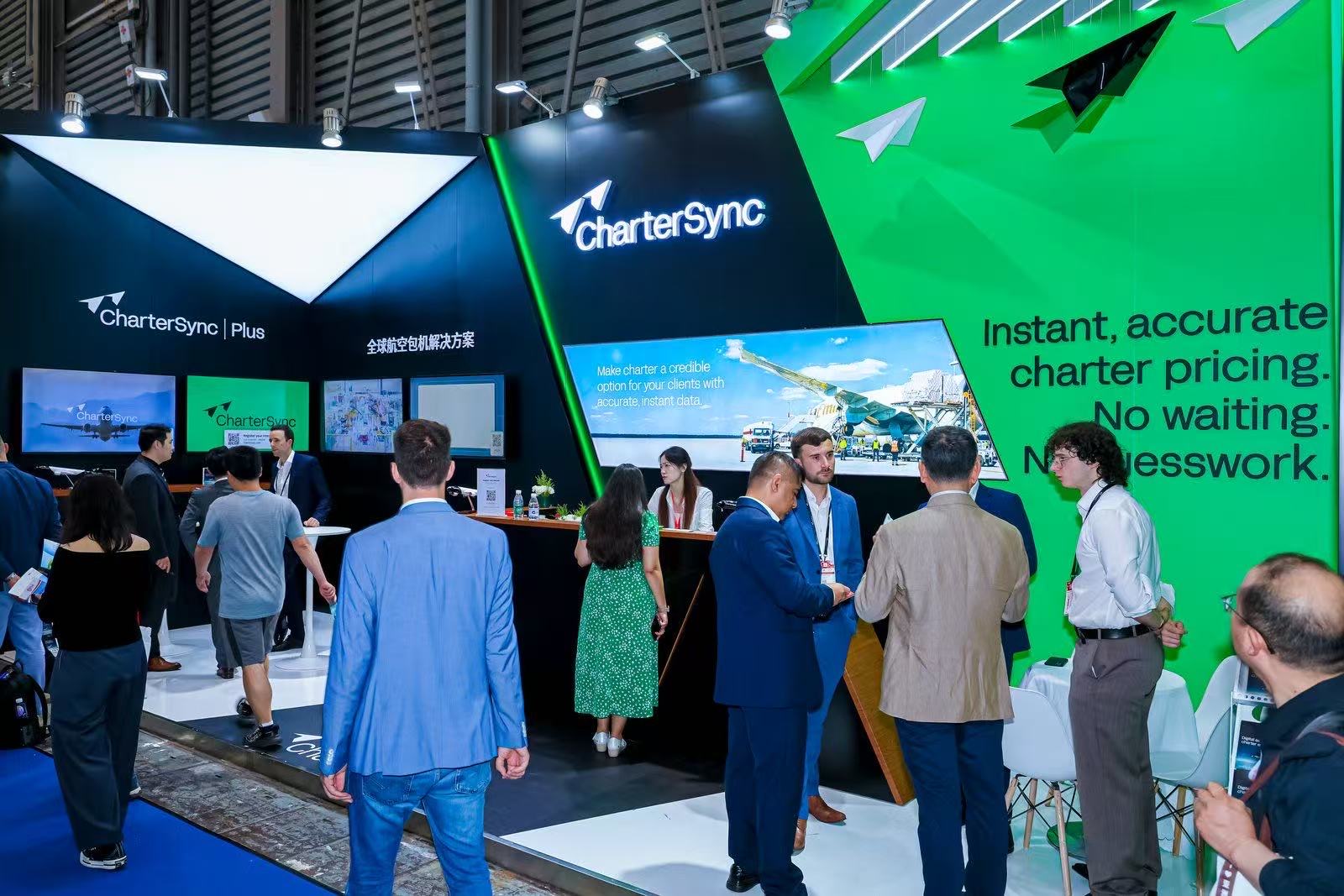
That's the vision behind CharterSync.
Just as NASA's Artemis mission relies on advanced automation and expert human oversight working in tandem, CharterSync combines intelligent digital systems with experienced air charter professionals. The platform acts as a digital co-pilot—automating the complex analysis that has long been hidden in manual processes.
Aircraft suitability? Analysed instantly against your cargo specifications. Traffic rights? Mapped across global regulations. Permit requirements? Cross-checked against destination protocols. All in real time. All transparent.
But here's where CharterSync mirrors NASA's approach most closely: automation serves expertise, not the other way around. Behind every recommendation is the backing of experienced air charter professionals ready to guide every booking with high-touch, concierge-style support. The system presents viable options—often ones that traditional brokers overlook—but humans remain in command, ensuring every mission is understood and expertly executed.
When Artemis II launches, every system will perform flawlessly because precision is non-negotiable. Astronauts' lives depend on it. Billions of dollars depend on it. The entire mission depends on it.
In air cargo chartering, the stakes may be different, but the principle is the same: precision matters. When a pharmaceutical shipment is delayed, lives hang in the balance. When perishables miss their window, fortunes are lost. When emergency supplies are grounded, communities suffer.
Yet the traditional broker-dependent workflow introduces unnecessary risk at every step:
CharterSync restores all three. By automating the complex analysis and presenting comprehensive, transparent options within minutes—not days—freight forwarders regain control of their mission. They respond faster. They choose with greater confidence. They deliver better outcomes for their clients.
Here's what's remarkable about the Artemis program: it didn't emerge from accepting the status quo. NASA asked: "What if we could go back to the Moon? What if we could do it better than before?" That question demanded reimagining everything—new rockets, new systems, new approaches.
The air cargo charter industry is asking a similar question. For decades, manual processes have been the default. Brokers have been the intermediaries. Inefficiency has been accepted as inevitable.
But what if it didn't have to be that way?
What if freight forwarders could access a global network of aircraft with the same seamless confidence they book a flight on commercial airlines? What if charter expertise was democratised, not gatekept? What if speed, transparency, and choice replaced opacity, delay, and limitation?
This is the transformational moment the charter industry is entering. Just as Artemis II represents a new chapter in space exploration, CharterSync represents a new chapter in air cargo chartering—one where digital innovation and human expertise converge to make the impossible routine.
When the Artemis II crew lifts off toward the Moon, they'll carry with them humanity's dream of exploration and discovery. Every system will work in concert. Every variable will be accounted for. Every contingency will be prepared for. This is what precision looks like. This is what transformation looks like.
In the air cargo charter industry, we're witnessing a similar transformation taking flight. The digitisation of charter booking isn't just about efficiency—though it's certainly that. It's about restoring power to freight forwarders. It's about expanding what's possible. It's about proving that even the most complex, manual-dependent processes can be reimagined for a smarter future.
The Moon is within reach. And so is a smarter, simpler, more efficient way to move the world's most critical cargo.
CharterSync is revolutionising air cargo chartering by combining intelligent automation with expert human support. By acting as a digital co-pilot, CharterSync helps freight forwarders respond faster, with greater confidence and transparency. In an industry where precision and speed matter, CharterSync is the platform for the future.
.png)