.png)
Efficient aero cargo shipping has never been more crucial as 2026 sees global trade expand and supply chains evolve. New technologies, tighter regulations, and sustainability targets are rapidly transforming the air freight landscape for businesses everywhere.
To help freight forwarders, shippers, and supply chain managers navigate these changes, this guide delivers expert insights, actionable strategies, and a clear view of future trends. Discover in-depth analysis of industry performance, regulatory essentials, optimisation tactics, technology breakthroughs, sustainability initiatives, and what lies ahead for aero cargo.
The landscape of aero cargo shipping in 2026 is more dynamic than ever. Global trade growth, digital transformation, and shifting market conditions have increased both the complexity and importance of efficient air freight solutions. Stakeholders are navigating an evolving environment where speed, adaptability, and resilience are critical to success.
Major players in the aero cargo market include IATA, leading airlines, and innovative freight forwarders. The industry is witnessing robust growth, with the global market expected to surpass pre-pandemic volumes. Heightened collaboration between carriers and logistics providers is driving operational excellence and expanding service offerings.
Post-pandemic recovery has spurred a surge in aero cargo demand. Companies are diversifying supply chains, seeking reliability and agility to counter disruptions. The rise of nearshoring and regional production is prompting new patterns in global air freight, while resilience strategies are taking centre stage across the sector.
A key distinction within the aero cargo industry lies between dedicated cargo airlines and passenger belly cargo operations. Dedicated freighters offer high-capacity, flexible solutions for heavy and oversized shipments. In contrast, passenger aircraft utilise unused belly space, optimising existing routes and supporting time-sensitive deliveries.
| Feature | Dedicated Cargo Airlines | Passenger Belly Cargo |
|---|---|---|
| Capacity | Large, tailored loads | Limited, variable |
| Frequency | Scheduled, ad hoc | Regular passenger |
| Flexibility | High | Moderate |
| Types of Goods | All, including special | General, perishables |
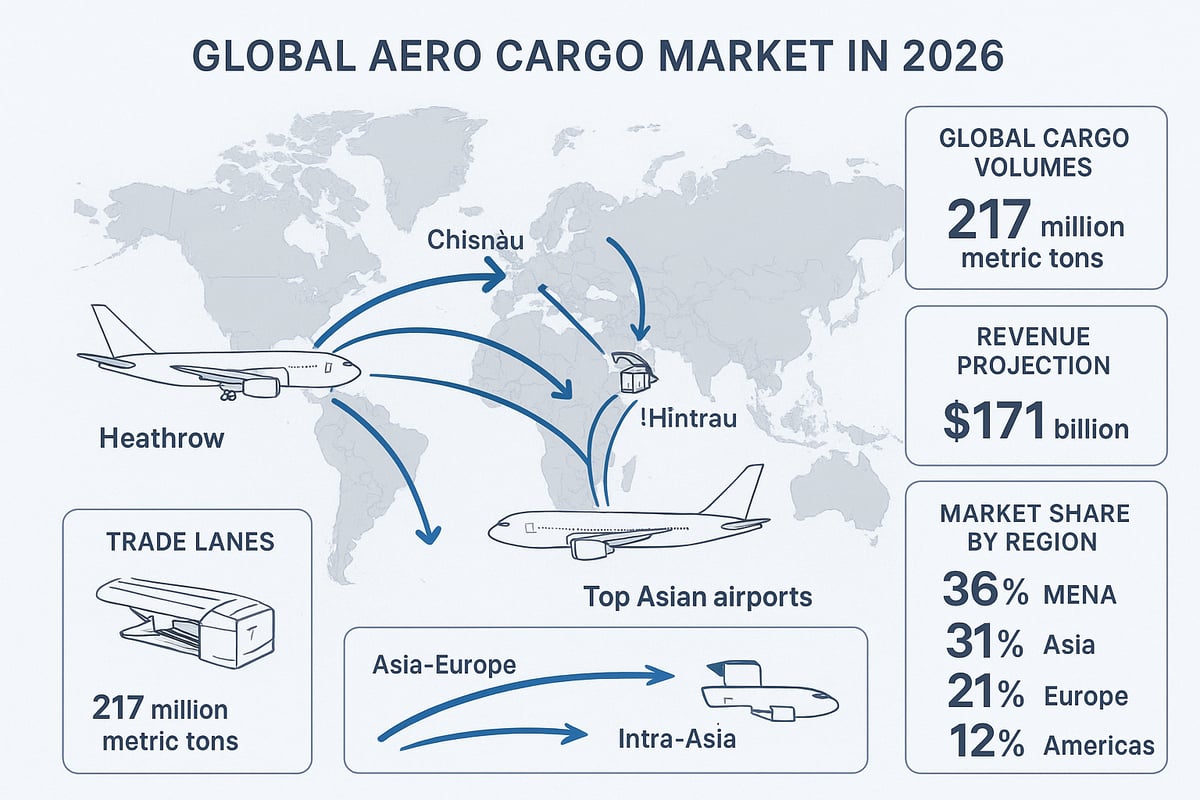
According to IATA's Air Cargo Market Analysis March 2025, global aero cargo volumes are projected to reach new highs, with Asia-Pacific and Europe leading in throughput. Revenue forecasts indicate a steady upward trajectory, as e-commerce and just-in-time manufacturing continue to fuel demand. Regional market shares are shifting, with emerging economies gaining prominence.
E-commerce growth, the need for rapid replenishment, and the transport of perishables and pharmaceuticals are key drivers shaping aero cargo trends. High-value shipments such as electronics and life sciences products require specialised handling and temperature control, further advancing industry standards.
However, the aero cargo sector faces several persistent challenges. Capacity constraints, driven by aircraft shortages and infrastructure bottlenecks, can limit growth. Fuel price volatility impacts operating costs, while geopolitical tensions and regulatory changes add layers of complexity. Companies must remain agile to navigate these uncertainties.
A notable example of industry adaptation is Aerotranscargo’s recent fleet expansion. By investing in next-generation freighters and digital platforms, the company has enhanced its ability to meet fluctuating demand and deliver reliable aero cargo solutions globally. This strategic approach reflects a broader industry commitment to innovation and resilience.
The state of aero cargo shipping in 2026 is defined by transformation, growth, and ongoing challenges. Stakeholders who embrace technology, data-driven decision-making, and collaborative strategies are best positioned to thrive in this fast-moving sector.
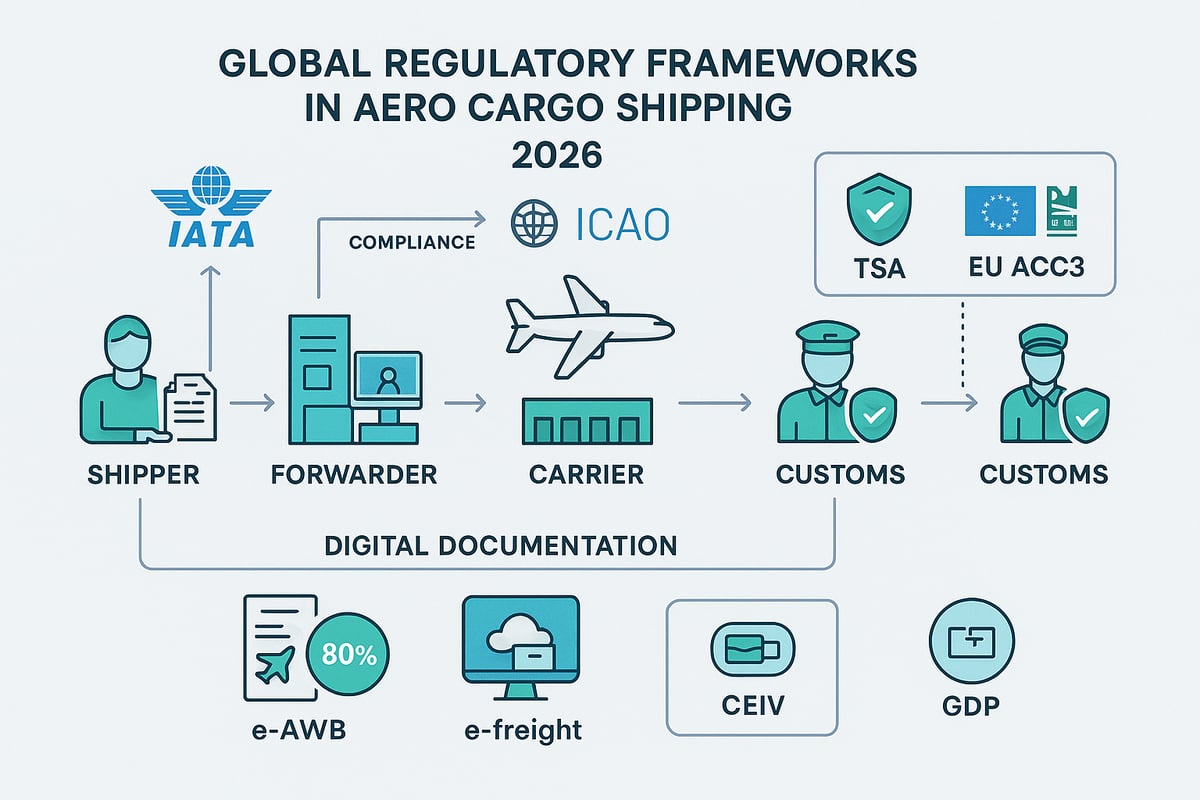
Navigating the complex regulatory landscape is essential for every aero cargo operator in 2026. The global framework is shaped by influential organisations including IATA and ICAO, as well as regional and national authorities. Their regulations are designed to ensure the safe, secure, and efficient movement of goods by air, with compliance being non-negotiable for forwarders, shippers, and carriers.
| Regulatory Body | Main Focus |
|---|---|
| IATA | Industry standards, digitalisation, safety |
| ICAO | Global aviation safety, security, facilitation |
| TSA (US) / EU ACC3 | Security screening and validation |
| Customs (AEO, CTPAT) | Trade facilitation, risk management |
Security remains a top priority in aero cargo, with robust protocols enforced worldwide. Forwarders and shippers must comply with strict screening regimes, such as the TSA in the US or the EU's ACC3 validation for third-country carriers. Safety regulations are equally stringent, particularly for dangerous goods and lithium batteries, which require certified handling and documentation.
Compliance requirements extend to customs, where programmes like AEO (Authorised Economic Operator) and CTPAT (Customs-Trade Partnership Against Terrorism) streamline clearance and reduce risk. For high-value or sensitive shipments, certifications such as IATA CEIV or GDP for pharmaceuticals are increasingly expected, providing assurance of best practice in handling and documentation.
Digital transformation is reshaping regulatory compliance in aero cargo. Initiatives like the electronic Air Waybill (e-AWB) and e-freight are reducing paperwork and improving transparency. As of 2026, over 80% of global air cargo shipments use e-AWB, a trend driven by the need for speed, sustainability, and accuracy. This shift is supported by regulatory encouragement and industry-wide digital platforms.
Recent years have seen significant updates, including new security protocols, enhanced data sharing, and evolving customs requirements. The drive towards paperless processes is highlighted in IATA's 2025 Vision for the Future of Air Cargo Facilities, which underscores the role of technology and innovation in compliance.
Aero Cargo (UK) Ltd serves as an example of best practice, maintaining full certification across security, safety, and customs regimes. Their team undergoes regular training on regulatory updates, and they utilise digital systems for documentation and real-time compliance checks. This proactive approach reduces delays, improves reliability, and builds trust with clients and authorities alike.
For businesses involved in aero cargo, staying ahead of regulatory changes is critical. Regular audits, investment in training, and adoption of digital solutions help ensure ongoing compliance and operational efficiency. The evolving landscape demands agility, but those who master the essentials can turn compliance from a challenge into a competitive advantage.
Mastering efficient aero cargo shipping in 2026 requires a blend of strategic planning, technology adoption, and precise execution. As the landscape evolves, shippers and freight forwarders must adapt their processes to ensure timely, cost-effective, and secure deliveries. Below, we outline key approaches to optimise your aero cargo operations and stay ahead of industry demands.
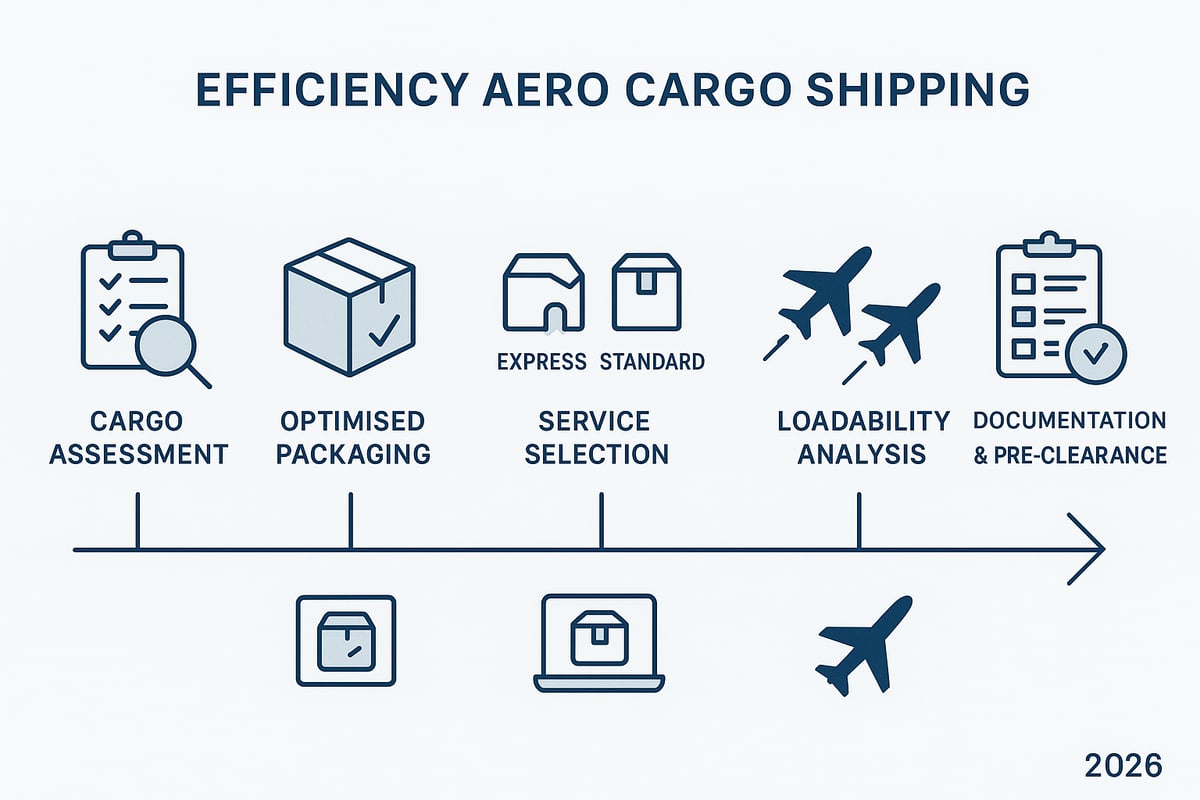
To maximise efficiency in aero cargo shipping, start with a structured approach:
By following these steps, businesses can streamline their aero cargo processes, reduce delays, and improve overall reliability.
Effective cargo planning is essential for both cost control and safety. Prioritise:
Maximising space within unit load devices (ULDs) and pallets helps lower transport costs. For temperature-sensitive or hazardous goods, ensure compliance with industry standards to safeguard your aero cargo throughout its journey.
Choosing the right service impacts speed and budget. Options include:
| Service Type | Speed | Cost | Typical Use |
|---|---|---|---|
| Express | Fastest | Highest | Urgent, high-value |
| Standard | Moderate | Medium | General cargo |
| Charter | Flexible | Variable | Oversize, time-critical |
| Consolidation | Slower | Lowest | Cost-sharing, bulk loads |
Booking can be managed directly with airlines, via digital platforms, or through experienced forwarders. For complex or urgent shipments, consider air cargo charter solutions. Learn more about the benefits of chartering in Why Choose Aircargo Charter.
Selecting the right aircraft type ensures optimal loadability and efficiency. Analyse the compatibility of your aero cargo with available aircraft, considering volume, weight limits, and special requirements.
Ensure all documents—air waybills, customs forms, and security declarations—are accurate and submitted in advance. Pre-clearance and digital documentation reduce bottlenecks at departure and arrival points, safeguarding your shipment against avoidable delays.
A streamlined aero cargo shipment might follow this timeline:
Regular communication with logistics partners and real-time tracking tools help ensure your aero cargo arrives safely and on schedule.
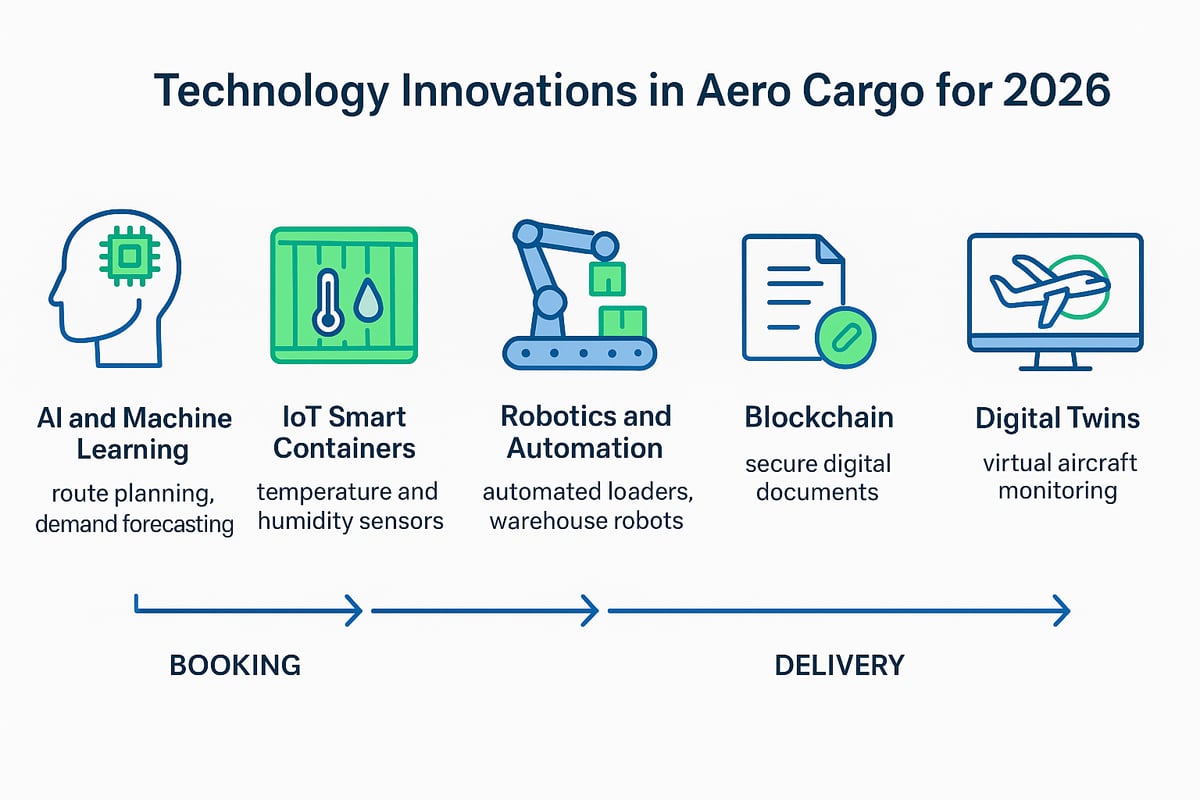
The aero cargo industry in 2026 is experiencing an unprecedented wave of technological transformation. As global trade intensifies and customer expectations rise, airlines and logistics providers are embracing digital tools to streamline operations and enhance efficiency. Technology is now central to every aspect of aero cargo, from planning and booking to tracking and maintenance.
AI, Machine Learning, and Big Data
Artificial intelligence and machine learning are now integral to aero cargo operations. Airlines and forwarders use these technologies for route optimisation, dynamic pricing, and demand forecasting. By analysing historical and real-time data, AI helps predict capacity needs, optimise fuel usage, and reduce empty legs. Big data platforms bring together information from booking systems, weather feeds, and cargo sensors to support better decision-making.
The adoption of AI-driven tools has led to improved on-time performance and cost savings. For instance, predictive analytics can identify bottlenecks before they occur, allowing teams to reroute shipments proactively. According to recent studies, over 70% of leading aero cargo firms now invest in AI-based optimisation.
For a deeper dive into how these technological shifts are reshaping charter operations, see Air Cargo Charter Technology.
IoT-Enabled Smart Containers and Real-Time Monitoring
Internet of Things (IoT) devices have revolutionised cargo visibility. Smart containers equipped with GPS, RFID, and environmental sensors provide real-time tracking of shipment location, temperature, humidity, and security status. This is especially vital for time-sensitive and high-value goods, such as pharmaceuticals or perishables.
With IoT integration, customers and operators can monitor the condition of aero cargo throughout its journey. Alerts are triggered if thresholds are breached, reducing spoilage and loss. This transparency builds trust and enables swift interventions when issues arise.
Robotics and Automation in Handling and Warehousing
Automation is transforming ground operations and warehousing for aero cargo. Robotics systems handle loading, unloading, and sorting with greater speed and precision than manual labour alone. Automated guided vehicles (AGVs) transport pallets and containers across terminals, while robotic arms manage stacking and retrieval.
The result is faster throughput, reduced handling errors, and better use of space. Many major hubs now deploy automated cargo handling systems, cutting turnaround times and improving safety. Robotics also help address workforce shortages and enable 24/7 operations.
Blockchain, Drones, and Unmanned Systems
Blockchain technology is enhancing security and transparency in aero cargo transactions. Digital ledgers enable secure, tamper-proof documentation for air waybills, customs declarations, and payment records. This reduces the risk of fraud and accelerates cross-border clearance.
Drones and unmanned aerial systems are beginning to play a role in last-mile delivery for aero cargo, particularly in remote or congested areas. While regulatory hurdles remain, pilot projects demonstrate the potential for rapid, flexible shipment of critical items. The integration of drones is expected to grow as rules evolve and technology matures.
Digital Twins, Predictive Maintenance, and Investment Trends
A major innovation in aero cargo is the use of digital twins—virtual replicas of aircraft, engines, and cargo systems. These models enable real-time monitoring, predictive maintenance, and scenario testing. By simulating wear and performance, digital twins help prevent breakdowns and minimise downtime.
Investment in digital transformation is accelerating across the industry. According to recent reports, global spending on aero cargo technology is projected to rise by over 20% through 2026. Companies prioritising these innovations are set to gain a competitive edge in reliability, speed, and customer satisfaction.
The future of aero cargo will be shaped by those who embrace and integrate these technologies, ensuring resilience and agility in a rapidly evolving market.
The drive for sustainability in aero cargo is accelerating rapidly, with global industry leaders committing to net zero carbon emissions by 2050. Organisations such as IATA have launched the Fly Net Zero initiative, setting ambitious targets that require coordinated action across all stakeholders. Regulatory bodies and customers alike are demanding cleaner, greener supply chains, pushing airlines and logistics providers to innovate.
A key focus for decarbonising aero cargo is the adoption of sustainable aviation fuel (SAF). SAF can cut lifecycle emissions by up to 80 percent compared to conventional jet fuel. By 2026, the share of SAF in global air freight operations is projected to reach new highs, driven by increased production capacity and government incentives. Major airlines are investing in modern, fuel-efficient fleets to further reduce their carbon footprint.
Green logistics initiatives are also reshaping the aero cargo landscape. Carbon offsetting programmes have become standard practice for many forwarders, allowing businesses to compensate for residual emissions. Additionally, investments in electric ground handling equipment and optimised flight planning are yielding measurable emissions reductions.
Customer expectations are evolving, with a growing preference for sustainable shipping options. Shippers now routinely request emissions data and seek partners who can demonstrate real progress on environmental goals. This shift is particularly evident in regions like Asia-Pacific, where regulations and market pressures are driving rapid change. For more insights on how sustainability is shaping air freight, see FedEx's Air Freight Trends 2026.
Fleet modernisation plays a critical role in achieving sustainability targets. Airlines are retiring older, less efficient aircraft and replacing them with new models that deliver up to 25 percent fuel savings. These upgrades not only cut emissions but also reduce operating costs, making sustainability a commercial imperative for the aero cargo sector.
Below is a summary of leading sustainability initiatives in aero cargo and their impact:
| Initiative | Impact on Emissions | Industry Adoption (2026) |
|---|---|---|
| Sustainable Aviation Fuel | Up to 80% reduction | High, expanding rapidly |
| Fleet Modernisation | 15-25% reduction | Widespread |
| Carbon Offsetting | Neutralises impact | Standard practice |
| Electric Ground Handling | 10-15% reduction | Growing |
| Optimised Flight Planning | 5-10% reduction | Industry-wide |
A compelling case comes from a leading European forwarder that implemented a comprehensive sustainability roadmap. By combining SAF usage, carbon offsetting, and continuous fleet upgrades, they achieved a 30 percent reduction in total aero cargo emissions over three years. Their success illustrates the tangible benefits of a proactive, multi-faceted approach.
As the industry looks to the future, sustainability and decarbonisation are set to become central pillars of competitive advantage in aero cargo. Those who act decisively today will be best positioned to thrive in a market where environmental performance is as critical as speed or reliability.
The future of aero cargo is poised for significant transformation as global supply chains adapt to new economic realities and shifting consumer demands. By 2026, e-commerce continues to be a dominant driver, fuelling rapid growth in parcel and express shipments. Pharmaceuticals and high-value goods, such as electronics and automotive components, are also seeing robust expansion. Emerging markets in Asia, Africa, and Latin America are becoming increasingly vital, with trade flows diversifying beyond traditional corridors.
Aero cargo operators are navigating a complex geopolitical landscape shaped by new trade agreements and ongoing regional tensions. These shifts are redefining major trade lanes, prompting airlines and freight forwarders to reassess their network strategies. As a result, there is a growing emphasis on agility and resilience, with more carriers investing in flexible routing and contingency planning to mitigate potential disruptions.
Customer expectations are evolving rapidly. Shippers and consignees now demand unprecedented levels of speed, transparency, and sustainability from their aero cargo providers. The integration of multimodal logistics is becoming standard practice, enabling seamless transitions between air, road, and sea transport. This holistic approach not only improves efficiency but also enhances visibility and control throughout the shipment journey.
Data-driven decision-making is at the core of innovation within the aero cargo sector. Artificial intelligence, predictive analytics, and automation are helping companies optimise routes, forecast demand, and improve asset utilisation. According to the FAA Aerospace Forecast 2025-2045, global air cargo volumes are projected to grow steadily, with total market value reaching new highs by the end of the decade. Companies leading the way are investing in digital transformation, sustainability initiatives, and tailored charter solutions. For example, the Future of Air Cargo Charters highlights how innovative platforms are enabling rapid, customised responses to evolving market needs.
| Sector | Projected Growth (2026) | Key Drivers |
|---|---|---|
| E-commerce | 10%+ | Online retail, fast delivery |
| Pharmaceuticals | 8% | Global health, temperature control |
| High-value goods | 7% | Electronics, automotive |
| Emerging markets | 12% | Infrastructure, new trade lanes |
As we look ahead, aero cargo companies are reimagining their business models to stay ahead of the curve. By embracing advanced technology, fostering cross-sector partnerships, and prioritising environmental responsibility, industry leaders are preparing for the next decade of growth. Those who adapt quickly and strategically will be best positioned to capitalise on the immense opportunities the future holds for aero cargo.
As we look ahead to the challenges and opportunities in aero cargo shipping for 2026, it’s clear that having the right tools and expert support can make all the difference. If you’re ready to put these insights into action and experience the benefits of automated booking, intelligent aircraft matching, and real time support, why not see how CharterSync can transform your operations? You can discover exactly how our platform streamlines the process for freight forwarders and shippers across industries. To explore what this could look like for your business, simply request a demo.

.png)